Creative Biolabs has a tradition of commitment. To achieve efficient execution and regulatory approval, we offer careful considerations of your program for the development of a cellular or gene therapy product – now and in the future.
EXPLORE MORE HighlightsWe focus on unmet needs and develop novel cellular and gene drugs and solutions that offer significant benefits over existing options.
EXPLORE MORE HighlightsThe advent of Chimeric Antigen Receptor T-cell (CAR-T) therapies has revolutionized the field of oncology, providing new avenues for treating various forms of cancer. Our 20 years of experience in the biotechnology sector have equipped us with the expertise and technological capabilities to support the entire lifecycle of CAR-T products, from early development to commercialization.
EXPLORE MORETo accelerate advanced breakthroughs of your projects, we offer broad range of platforms which enable our clients be free to tackle problems with cutting-edge technologies from different angles and in different methods.
EXPLORE MORE HighlightsUse the resources in our library to help you understand your options and make critical decisions for your study. We offer oncolytic virus, CAR-T, and dendritic cell related documents, as well as newsletter. If you don't find the answers you're looking for, contact us for additional assistance.
EXPLORE MORE HighlightsGet a real taste and understanding of the business and culture of one of the world's great research-based cellular and gene therapy discovery and development companies.
EXPLORE MORE
DC vaccination can help activate the immune system and enhance T cell-mediated antitumor responses. Combining CAR-T cell therapy with peptide-DC vaccination may have the potential to enhance antitumor immune responses and improve treatment outcomes in cancer patients. Using state-of-the-art techniques, scientists at Creative Biolabs are committed to analyzing the activity of CAR-T cells with peptide-DC vaccination in vivo. In vivo CAR-T cell functional analysis typically involves studying the migration, expansion, persistence, and cytotoxicity of these engineered CAR-T cells. We choose the most appropriate animal model based on clients' research goals to assess the cytotoxicity and anti-tumor activity of CAR-T cells in vivo.
Another approach to analyzing CAR-T cell function in vivo is through the use of flow cytometry to quantify the levels of CAR-T cells in different tissues and assess their phenotype and activation status. This technique involves isolating cells from tumor tissues or blood samples and staining them with fluorescently labeled antibodies to specific cell surface markers. We also monitor CAR-T infiltration through immunohistochemistry (IHC) staining. By using specific antibodies against the CAR construct or other markers present on the CAR-T cells, we visualize and quantify the infiltration of CAR-T cells in tumor tissues.
In vivo imaging through bioluminescent imaging allows researchers to track the distribution and persistence of CAR-T cells within the body over time. This technique involves labeling the CAR-T cells with a bioluminescent reporter gene, such as luciferase, and imaging the cells.
We assess the anti-tumor efficacy of CAR-T cells by monitoring and analysis of tumor growth inhibition or regression over time. Tumor size and growth rates are monitored regularly using imaging techniques such as bioluminescence imaging or caliper measurements. Survival analysis is also a crucial aspect of our assessment. In addition, other methods such as ELISA assays, cytokine profiling, and functional assays can be used to assess the cytotoxicity and anti-tumor activity of CAR-T cells in vivo.
In vivo CAR-T persistence assays allow researchers to track the presence of CAR-T cells over time and determine their ability to persist and target tumor cells. We provide several methods for in vivo CAR-T persistence assays, including bioluminescence imaging, flow cytometry analysis of peripheral blood, bone marrow, or tumor tissues, and quantitative PCR for detecting CAR-T cell genomic DNA.
We work closely with our clients to understand your specific requirements and goals, and we customize our services to meet your needs. Please contact us to learn more about our service and how it can benefit your research or experimental needs.
Data 1: Vaccination with DCs loaded with WT1236Y enhanced the therapeutic efficacy of CAR-T cells in a WT1-positive tumor mouse model.
Assays: In vivo anti-tumor activity assay
Detection Methods: Microcaliper
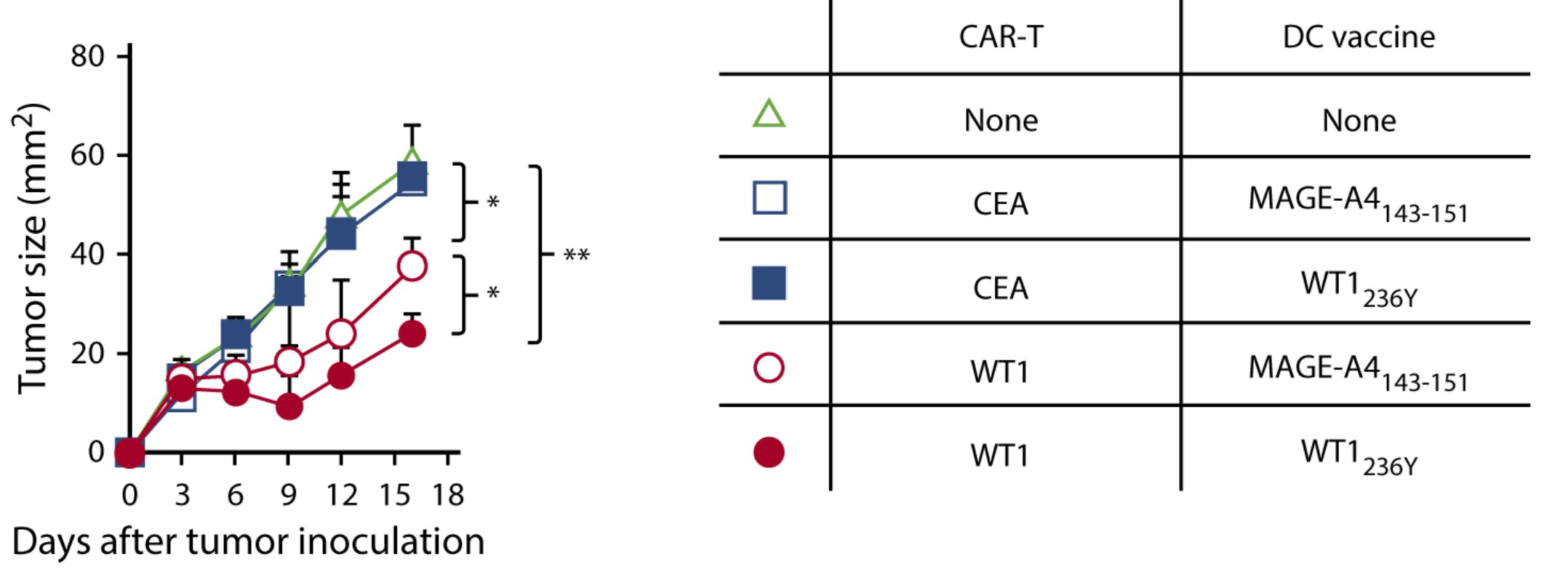 Fig.1 Tumor growth curves.1
Data 2: DC vaccination enhanced the expansion and activation of CAR-T cells.
Assays: CAR-T expansion and activation assay
Detection Methods: Flow cytometry (Fig.2A), IHC (Fig.2B)
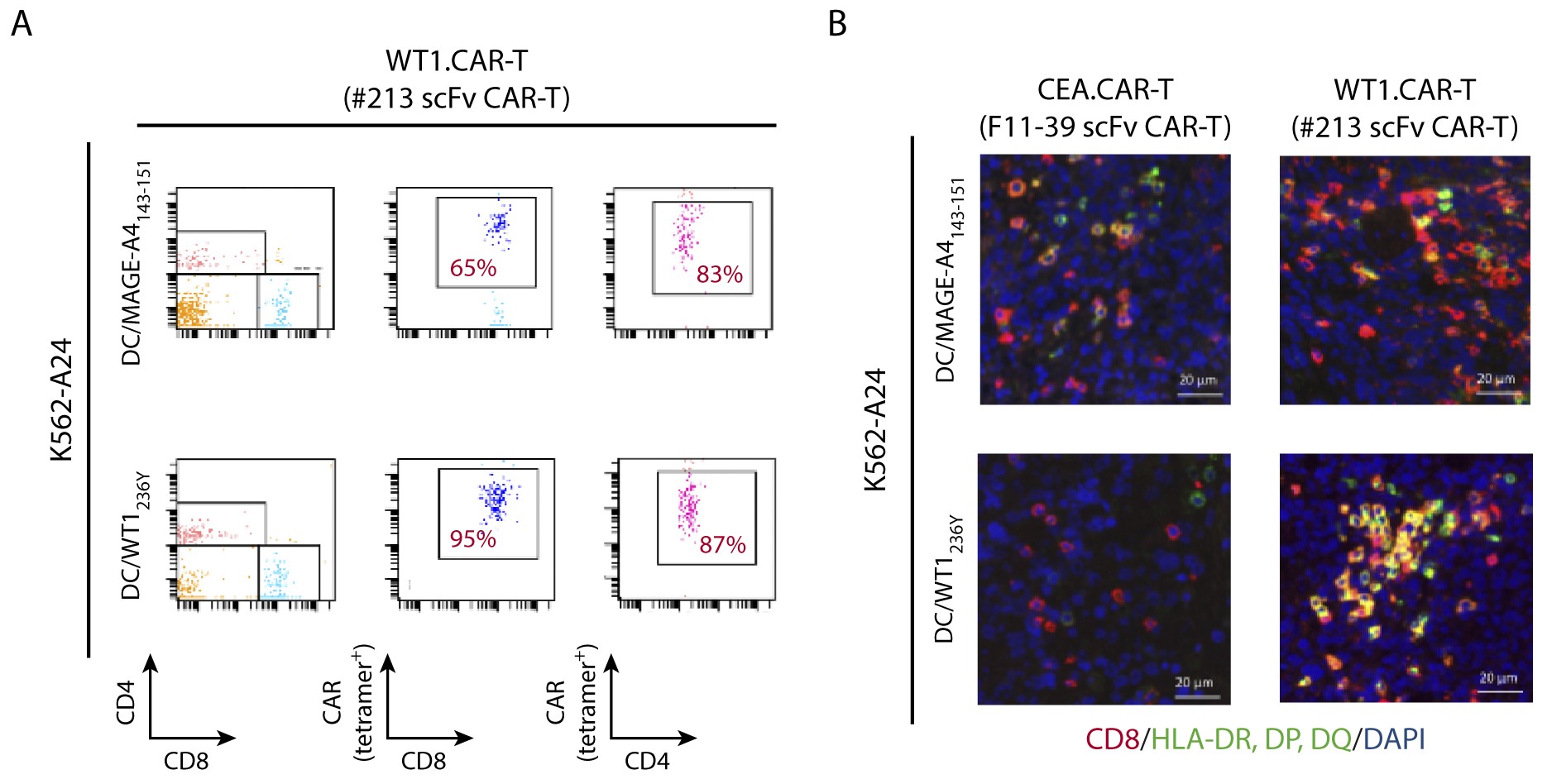 Fig.2 The expansion and activation status of CAR-T cells in peripheral blood (Fig.2A) and tumor tissues (Fig.2B).1
Reference
For any technical issues or product/service related questions, please leave your information below. Our team will contact you soon.
All products and services are For Research Use Only and CANNOT be used in the treatment or diagnosis of disease.
 NEWSLETTER
The latest newsletter to introduce the latest breaking information, our site updates, field and other scientific news, important events, and insights from industry leaders
LEARN MORE NEWSLETTER NEW SOLUTION
CellRapeutics™ In Vivo Cell Engineering: One-stop in vivo T/B/NK cell and macrophage engineering services covering vectors construction to function verification.
LEARN MORE SOLUTION NOVEL TECHNOLOGY
Silence™ CAR-T Cell: A novel platform to enhance CAR-T cell immunotherapy by combining RNAi technology to suppress genes that may impede CAR functionality.
LEARN MORE NOVEL TECHNOLOGY NEW SOLUTION
Canine CAR-T Therapy Development: From early target discovery, CAR design and construction, cell culture, and transfection, to in vitro and in vivo function validation.
LEARN MORE SOLUTION