Creative Biolabs has a tradition of commitment. To achieve efficient execution and regulatory approval, we offer careful considerations of your program for the development of a cellular or gene therapy product – now and in the future.
EXPLORE MORE HighlightsWe focus on unmet needs and develop novel cellular and gene drugs and solutions that offer significant benefits over existing options.
EXPLORE MORE HighlightsThe advent of Chimeric Antigen Receptor T-cell (CAR-T) therapies has revolutionized the field of oncology, providing new avenues for treating various forms of cancer. Our 20 years of experience in the biotechnology sector have equipped us with the expertise and technological capabilities to support the entire lifecycle of CAR-T products, from early development to commercialization.
EXPLORE MORETo accelerate advanced breakthroughs of your projects, we offer broad range of platforms which enable our clients be free to tackle problems with cutting-edge technologies from different angles and in different methods.
EXPLORE MORE HighlightsUse the resources in our library to help you understand your options and make critical decisions for your study. We offer oncolytic virus, CAR-T, and dendritic cell related documents, as well as newsletter. If you don't find the answers you're looking for, contact us for additional assistance.
EXPLORE MORE HighlightsGet a real taste and understanding of the business and culture of one of the world's great research-based cellular and gene therapy discovery and development companies.
EXPLORE MORE
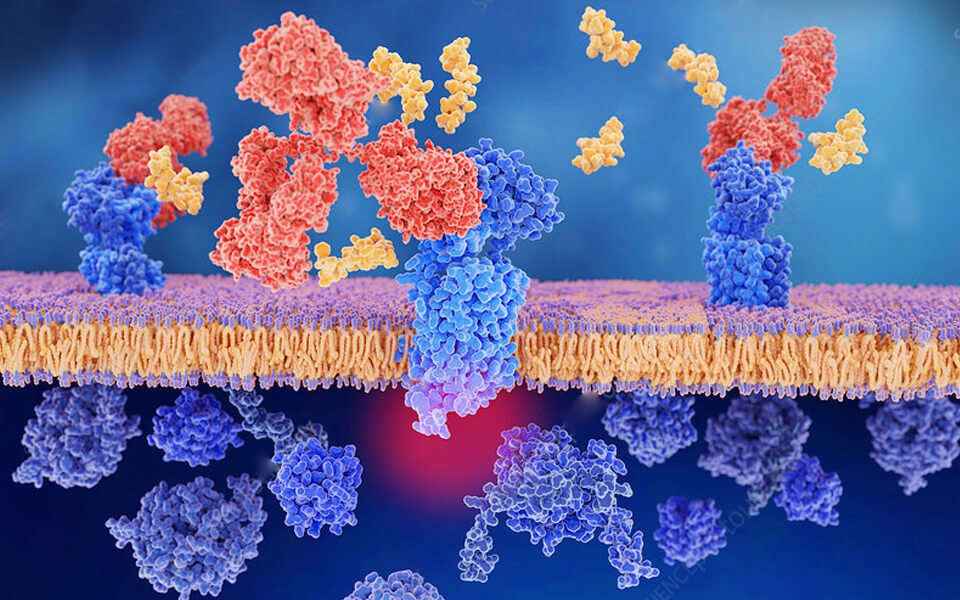
Since CAR-T therapy has achieved great success in adoptive immunotherapy of relapse/refractory cancer, many efforts have been taken to improve the safety, effectiveness, and persistence of the cells to treat complex solid tumors. Recently, a multi-target CAR technology has been developed to direct constant CAR-engineered immune cells toward multiple tumors or targets. This functional CAR is designed by introducing a modified NKG2D (mNKG2D) extracellular domain as a ligand-binding domain to the scFV location of a classic CAR molecular. The mNKG2D-CAR expressing cells are activated by the modified NKG2D ligand fused to antigen-specific antibodies and then attracted to the tumor site and perform antigen-specific cytotoxicity. The mNKG2D-mediated CAR-cell therapy is versatile and flexible under the regulation of different antibodies.
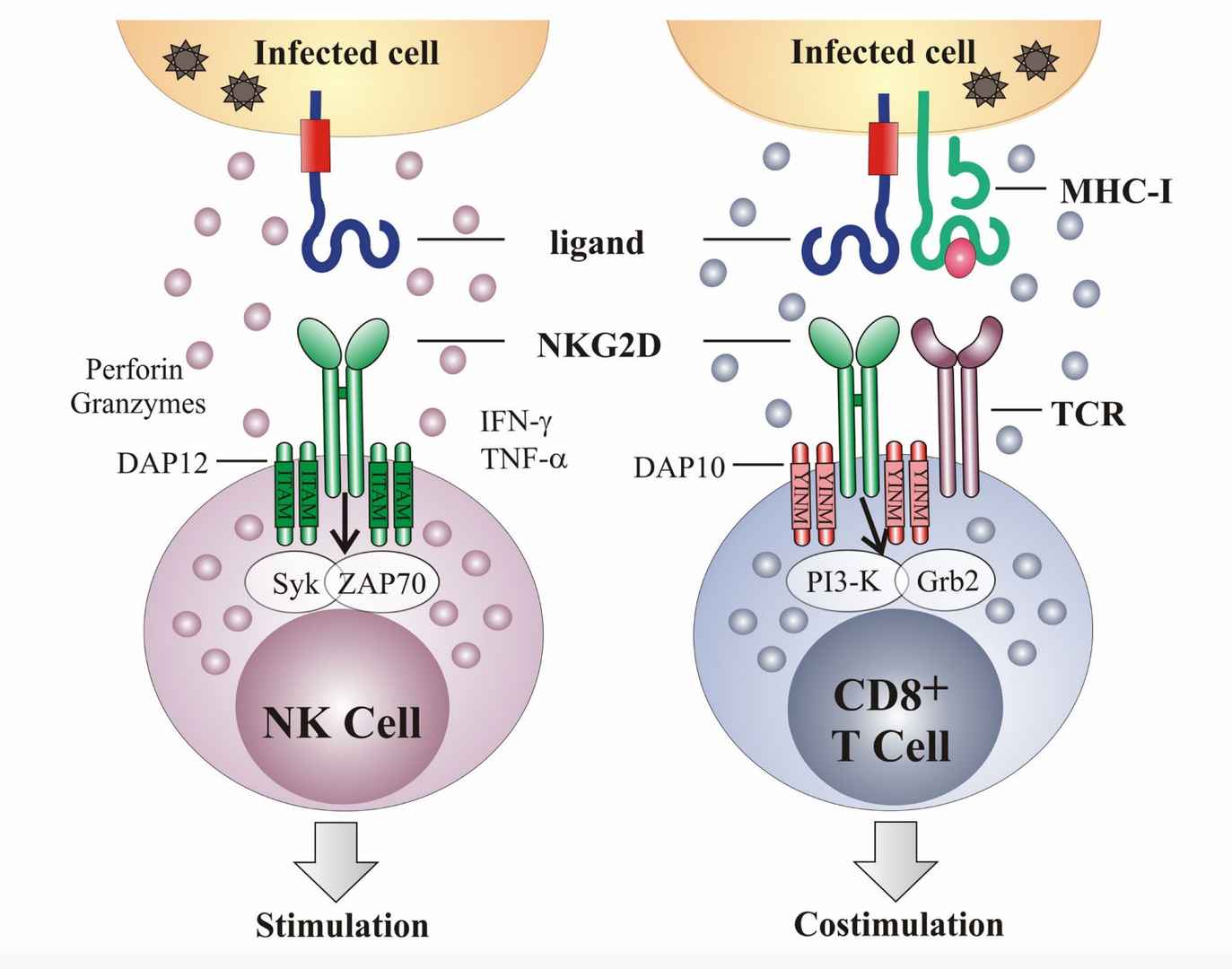 Fig.1 NKG2D on NK and T cells mediated cytotoxicity.1
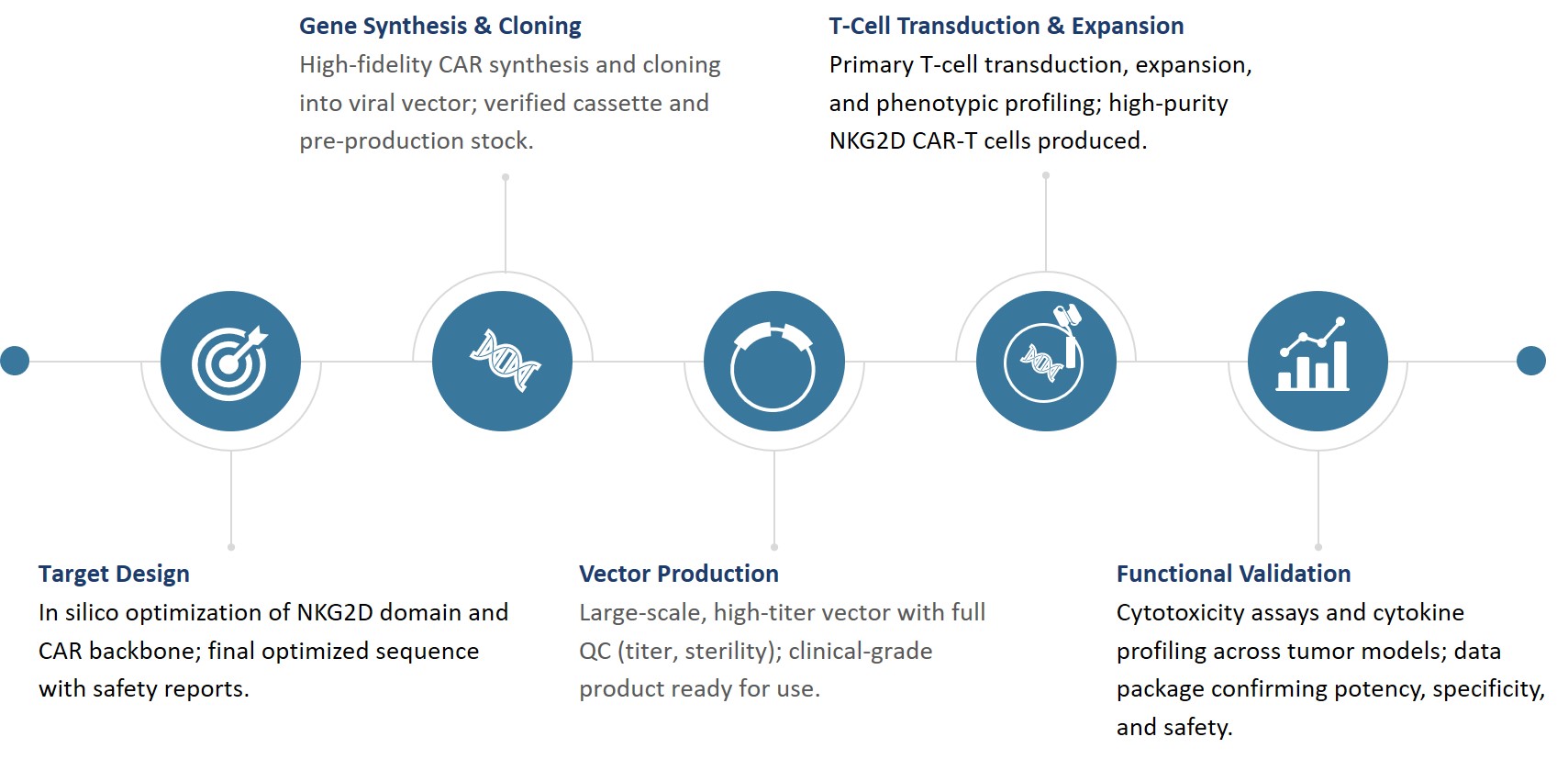
The Creative Biolabs workflow is a phased, transparent process designed for speed, quality, and seamless transition to clinical-scale manufacturing.
Discover How We Can Help - Request a Consultation
We provide multiple downstream services to assess the potency of established CAR constructs.
Interested in our Smart™ CAR construction services? Please send an email to contact us and let our experienced experts accelerate your subject.
Creative Biolabs offers classical CAR vectors design, first through fifth generation, and customized smart CAR design services.
How does the NKG2D-based approach compare to established single-target CAR-T therapies, like anti-CD19?
Anti-CD19 CAR-T has been highly effective in specific hematological malignancies but is limited by single-antigen escape and minimal efficacy in solid tumors. Our NKG2D approach offers a pivotal advantage by targeting a family of ligands, inherently addressing tumor heterogeneity and minimizing the risk of antigen loss-driven relapse. It provides a robust, multi-pronged attack mechanism specifically designed for the complex landscape of solid tumors.
What is the primary precaution regarding potential off-target toxicity with NKG2D-CARs?
Because NKG2D ligands are stress-induced, their expression on healthy, non-stressed tissue is typically negligible, providing a high therapeutic index. However, non-malignant inflammation or tissue damage can temporarily upregulate ligands. Our approach includes rigorous multiplexed in vitro assays against a wide panel of healthy primary cell lines to confirm minimal off-target activity, allowing us to generate the safest possible construct for clinical translation.
Creative Biolabs stands ready to accelerate your journey in immuno-oncology. Our NKG2D-based multi-target CAR construction service provides the critical solution required to defeat tumor heterogeneity, enhance safety, and unlock therapeutic efficacy in challenging solid tumors. By choosing our expert team, you gain access to proven scientific methodology, high-quality vectorology, and a strategic partner dedicated to translating your research into a clinical reality.
Reach out to our team today to discuss how the NKG2D platform can be specifically tailored to your proprietary tumor targets and clinical objectives.
Reference
For any technical issues or product/service related questions, please leave your information below. Our team will contact you soon.
All products and services are For Research Use Only and CANNOT be used in the treatment or diagnosis of disease.
 NEWSLETTER
The latest newsletter to introduce the latest breaking information, our site updates, field and other scientific news, important events, and insights from industry leaders
LEARN MORE NEWSLETTER NEW SOLUTION
CellRapeutics™ In Vivo Cell Engineering: One-stop in vivo T/B/NK cell and macrophage engineering services covering vectors construction to function verification.
LEARN MORE SOLUTION NOVEL TECHNOLOGY
Silence™ CAR-T Cell: A novel platform to enhance CAR-T cell immunotherapy by combining RNAi technology to suppress genes that may impede CAR functionality.
LEARN MORE NOVEL TECHNOLOGY NEW SOLUTION
Canine CAR-T Therapy Development: From early target discovery, CAR design and construction, cell culture, and transfection, to in vitro and in vivo function validation.
LEARN MORE SOLUTION