Tumor RNA Pulsed Dendritic Cell (DC) Development Service: Harnessing Intracellular Antigen
Online Inquiry
Background Service Workflow Highlights FAQs Contact Us
Background

Cancer immunotherapy has made remarkable strides in recent years, largely driven by the understanding of how immune cells, particularly dendritic cells (DCs), can be harnessed to target and eliminate cancer cells. A central challenge in cancer immunotherapy is ensuring that the immune system can recognize and respond to the full spectrum of tumor antigens, especially those that are intracellular in nature. Traditional cancer vaccines often present only surface-level antigens, which may not be sufficient for triggering a broad and effective immune response.
Tumor RNA Pulsed Dendritic Cell (DC) Development Service offers a unique solution by utilizing tumor-derived RNA to load dendritic cells, enabling them to present a wide array of intracellular tumor antigens. By harnessing this method, we can tap into the potential of previously hidden antigens—those found within the tumor cells themselves. This process enables the dendritic cells to stimulate a more robust immune response by activating both CD8+ cytotoxic T cells and CD4+ helper T cells, resulting in enhanced tumor recognition and destruction.
At Creative Biolabs, we offer Tumor RNA Pulsed Dendritic Cell (DC) Development Services designed to provide an optimal strategy for activating the immune system using tumor RNA, ensuring comprehensive antigen presentation and a more potent, targeted immune response against cancer.
Service Overview
Our Tumor RNA Pulsed Dendritic Cell (DC) Development Service combines the powerful antigen-presenting capabilities of dendritic cells with the diverse tumor-specific antigens contained in tumor RNA. By introducing tumor RNA into dendritic cells, we effectively enable these cells to present a broader spectrum of tumor antigens, including those that are typically difficult to access via conventional methods.
Key steps involved in our service include:
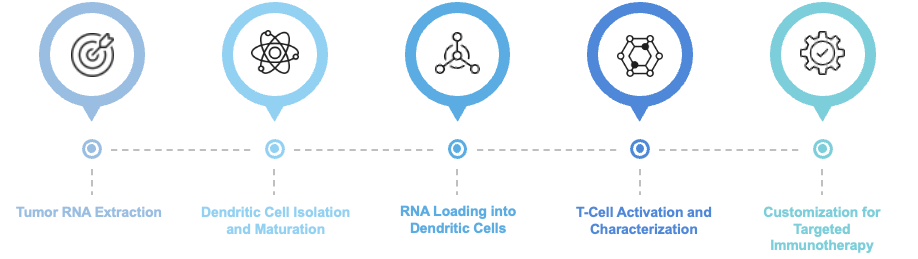
Tumor RNA Isolation and Preparation
Tumor RNA is isolated from patient-derived tumor samples or allogeneic tumor cell lines. This RNA contains a diverse array of tumor-associated antigens, including both surface and intracellular proteins, that are essential for immune recognition and targeting.
Dendritic Cell Isolation and Maturation
Dendritic cells are isolated from the patient's peripheral blood or from other immune cell sources and cultured under specific conditions to ensure they mature into potent antigen-presenting cells. These mature dendritic cells are prepared to process and present a wide range of antigens to T cells.
RNA Loading into Dendritic Cells
The tumor RNA is introduced into the dendritic cells through advanced methods, ensuring efficient uptake and processing of the RNA. The dendritic cells internalize the RNA and begin presenting the tumor-specific antigens to T cells.
Characterization and Quality Control
After the pulsing process, the dendritic cells are thoroughly validated to ensure they are effectively presenting a wide range of tumor antigens. The functionality of the dendritic cells is assessed through T-cell activation assays to confirm their ability to trigger a robust immune response.
Customization for Patient-Specific Tumors
The service can be customized to match the unique characteristics of the patient's tumor. This ensures that the dendritic cells are presenting the most relevant and effective tumor antigens, leading to a more targeted immune response.
Workflow
Highlights
Harnessing Intracellular Antigens
By using tumor RNA, this service enables dendritic cells to present a broad array of tumor-associated antigens, including those that are normally difficult for the immune system to detect. This increases the likelihood of activating a more comprehensive immune response.
Enhanced Immune Activation
The RNA pulsing method activates both CD8+ cytotoxic T cells and CD4+ helper T cells, ensuring a well-rounded immune response that targets both the tumor cells directly and supports overall immune system activation.
Personalized and Targeted Approach
The service can be customized to the individual tumor profile of the patient, ensuring that the dendritic cells present the most relevant tumor antigens, thereby optimizing the therapeutic effect.
Broad Spectrum of Tumor Antigens
Tumor RNA contains both surface and intracellular tumor antigens, providing a more comprehensive antigen presentation. This broadens the immune response and enhances the immune system's ability to target diverse tumor antigens.
Proven Expertise and Quality
Creative Biolabs uses advanced techniques and years of expertise in immuno-oncology to deliver high-quality, reliable services. We ensure that each step of the process, from RNA extraction to dendritic cell maturation, meets the highest standards.
FAQs
Q1. Why is RNA used in this service instead of other antigen sources?
A1: RNA contains a comprehensive profile of both surface and intracellular tumor-associated antigens. This allows dendritic cells to present a broad range of antigens, including those that are typically inaccessible by traditional antigen presentation methods.
Q2. How do dendritic cells contribute to cancer immunotherapy?
A2: Dendritic cells are the most potent antigen-presenting cells in the immune system. When loaded with tumor antigens, they effectively activate T-cells, which in turn target and eliminate cancer cells. This service ensures a more robust immune response by presenting a wider array of tumor antigens.
Q3. Can this service be customized for different tumor types?
A3: Yes, our service is fully customizable. We tailor the RNA loading process based on the specific characteristics of the tumor, ensuring that the dendritic cells present the most relevant and effective antigens for the patient's cancer.
Partner with Creative Biolabs
At Creative Biolabs, we are dedicated to advancing cancer immunotherapy through cutting-edge techniques like our Tumor RNA Pulsed Dendritic Cell (DC) Development Service. If you would like to learn more about how this service can be applied to your cancer research or therapy development, please contact us today.