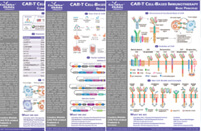
Creative Biolabs has a tradition of commitment. To achieve efficient execution and regulatory approval, we offer careful considerations of your program for the development of a cellular or gene therapy product – now and in the future.
The advent of Chimeric Antigen Receptor T-cell (CAR-T) therapies has revolutionized the field of oncology, providing new avenues for treating various forms of cancer. Our 20 years of experience in the biotechnology sector have equipped us with the expertise and technological capabilities to support the entire lifecycle of CAR-T products, from early development to commercialization.
To accelerate advanced breakthroughs of your projects, we offer broad range of platforms which enable our clients be free to tackle problems with cutting-edge technologies from different angles and in different methods.
Use the resources in our library to help you understand your options and make critical decisions for your study. We offer oncolytic virus, CAR-T, and dendritic cell related documents, as well as newsletter. If you don't find the answers you're looking for, contact us for additional assistance.
Get a real taste and understanding of the business and culture of one of the world's great research-based cellular and gene therapy discovery and development companies.
All products and services are For Research Use Only and CANNOT be used in the treatment or diagnosis of disease.
The anti-IL11Rα chimeric antigen receptor (CAR) THP1 cell line is a stable cell line developed using anti-IL11Rα CAR lentivirus transfection. This transfected CAR lentiviral vector is constructed to express a scfv of anti-IL11Rα antibody (EML432) linked to FcRɣ+PI3K signaling domains.The anti-IL11Rα CAR engineered THP1 cells can be used to be differentiated into macrophage cells for in vitro or in vivo phagocytosis studies. This CAR-THP1 cell line product can be used for the researches of Osteosarcoma.

Specific Inquiry
Add to Cart
Details
Target
IL11Rα
Cell Type
THP1
Cell Background
THP-1 is a human leukemia monocytic cell line, which has been extensively used to study monocyte/macrophage functions, mechanisms, signaling pathways, and nutrient and drug transport. This cell line has become a common model to estimate modulation of monocyte and macrophage activities. CAR engineered THP1 cells can be differentiated into macrophages using PMA (Phorbol 12-myristate 13-acetate). Once differentiated (M0 macrophages), they were incubated with IL-4 and IL-13 in order to obtain M2 polarized macrophages or with IFN-gamma and LPS for classical macrophage activation (M1).
Targeting Diseases
Osteosarcoma
CAR Expression
Positive
CAR Positive Rate
>95% for stable cell pool (please submit an inquiry if single clonal cell line is needed.)
Cell Viability
>90%
Mycoplasma Testing
Negative
Handling Notes
Frozen cells should be thawed immediately upon receipt and grown according to handling procedure to ensure cell viability and proper assay performance. Note: Do not freeze the cells upon receipt as it may result in irreversible damage to the cell line. Disclaimer: We cannot guarantee cell viability if the cells are not thawed immediately upon receipt and grown according to handling procedure.
Safety Consideration
Biosafety Level 1
Restriction
Research use only
Size
2 million cells*2 vials
Storage
Frozen cells should be stored in a liquid nitrogen tank (-150°C~-190°C) for long term.
CAR Components
Promoter
EF1a
scFv
EML432
Hinge
CD8
TM
CD8
ICD
FcRɣ+PI3K
Marker
GFP or N/A
Receptor Construction
scFv-hinge(CD8)-TM(CD8)-ICD(FcRɣ+PI3K)
Discription of Signaling Cassetes
FcRɣ FcRɣ is used as the CAR intracellular signaling domain. As a phagocytosis receptor, FcRɣ has cytosolic Immunoreceptor Tyrosine-based Activation Motifs (ITAMs) that are phosphorylated by Src family kinases. Based on this mechanism, FcRɣ signaling can induce macrophage phagocytosis which has been demonstrated in the published article. Fc gamma receptors belong to the group of non-catalytic tyrosine-phosphorylated receptors which share a similar signalling pathway involving phosphorylation of tyrosine residues. The receptors generate signals within their cells through an important activation motif known as an immunoreceptor tyrosine-based activation motif (ITAM). An ITAM is present in the intracellular tail of FcγRIIA, and its phosphorylation induces phagocytosis in macrophages. FcγRI and FcγRIIIA do not have an ITAM but can transmit an activating signal to their phagocytes by interacting with another protein that does. This adaptor protein is called the Fcγ subunit and, like FcγRIIA, contains the two YXXL sequences that are characteristic of an ITAM.
PI3K Previous work demonstrated that PI3K signaling is important for internalization of large targets. To increase PI3K recruitment to the CAR-P, we fused the portion of the CD19 cytoplasmic domain (amino acids 500 to 534) that recruits the p85 subunit of PI3K to the CAR. A CAR-P containing the p85 recruitment motif alone (CAR-P-PI3K) was able to induce some whole cell engulfment. Assembling an array of motifs designed to recruit distinct phagocytic effectors can increase CAR-P activity.
Target
Target
IL11Rα
Target Species
Human
Clone
EML432
Host
Mouse
Gene Name
Interleukin 11 receptor subunit alpha
Introduction
Interleukin 11 is a stromal cell-derived cytokine that belongs to a family of pleiotropic and redundant cytokines that use the gp130 transducing subunit in their high affinity receptors. This gene encodes the IL-11 receptor, which is a member of the hematopoietic cytokine receptor family. This particular receptor is very similar to ciliary neurotrophic factor, since both contain an extracellular region with a 2-domain structure composed of an immunoglobulin-like domain and a cytokine receptor-like domain. Multiple alternatively spliced transcript variants have been found for this gene.
Cannot find the desired product? Don't worry, just try our online CAR and CAR cell customizing system, which offers full options to meet all unique needs, including but not limited to conventional or unconventional CAR constructs, as well as a variety of vectors and cells. The customization process can be completed with just a few simple clicks, please feel free to try it out.
CAR and CAR Cell Customizing System
Customer Reviews and Q&As
There are currently no customer reviews or questions for Anti-IL11Rα (EML432) ICD(FcRɣ+PI3K) CAR THP1 Cell Line (CARTHP-W1002). Click the button below to contact us or submit your feedback about this product.
For research use only. Not intended for any clinical use. No products from Creative Biolabs may be resold, modified for resale or used to manufacture commercial products without prior written approval from Creative Biolabs.

The latest newsletter to introduce the latest breaking information, our site updates, field and other scientific news, important events, and insights from industry leaders
CellRapeutics™ In Vivo Cell Engineering: One-stop in vivo T/B/NK cell and macrophage engineering services covering vectors construction to function verification.
Silence™ CAR-T Cell: A novel platform to enhance CAR-T cell immunotherapy by combining RNAi technology to suppress genes that may impede CAR functionality.
Canine CAR-T Therapy Development: From early target discovery, CAR design and construction, cell culture, and transfection, to in vitro and in vivo function validation.