Creative Biolabs has a tradition of commitment. To achieve efficient execution and regulatory approval, we offer careful considerations of your program for the development of a cellular or gene therapy product – now and in the future.
EXPLORE MORE HighlightsWe focus on unmet needs and develop novel cellular and gene drugs and solutions that offer significant benefits over existing options.
EXPLORE MORE HighlightsThe advent of Chimeric Antigen Receptor T-cell (CAR-T) therapies has revolutionized the field of oncology, providing new avenues for treating various forms of cancer. Our 20 years of experience in the biotechnology sector have equipped us with the expertise and technological capabilities to support the entire lifecycle of CAR-T products, from early development to commercialization.
EXPLORE MORETo accelerate advanced breakthroughs of your projects, we offer broad range of platforms which enable our clients be free to tackle problems with cutting-edge technologies from different angles and in different methods.
EXPLORE MORE HighlightsUse the resources in our library to help you understand your options and make critical decisions for your study. We offer oncolytic virus, CAR-T, and dendritic cell related documents, as well as newsletter. If you don't find the answers you're looking for, contact us for additional assistance.
EXPLORE MORE HighlightsGet a real taste and understanding of the business and culture of one of the world's great research-based cellular and gene therapy discovery and development companies.
EXPLORE MORE
Are you encountering translational challenges due to the poor clinical concordance of traditional 2D models and the difficulty in predicting off-target toxicity for solid tumor CAR-T therapies? Creative Biolabs' OncoSolid™ Cancer Organoid Model based CAR-T In Vitro Efficacy Assay Services is designed to bridge this gap. We provide high-fidelity, patient-derived 3D co-culture models that fully recapitulate the complex tumor microenvironment (TME), enabling robust and predictive efficacy testing. Our model empowers you to accelerate lead candidate development and streamline patient stratification with greater confidence.
The clinical application of CAR-T therapy is currently constrained by three major factors: the high heterogeneity of solid tumors, the TME, and the lack of preclinical models that accurately mimic the complexity of human physiology. To address these challenges, tumor organoid models, particularly patient-derived organoids (PDOs), have been introduced into the preclinical research framework for CAR-T therapy. These organoid models closely retain the histopathological architecture, genomic features, and specific marker expression profiles of the original tumors, thereby providing a more physiologically relevant evaluation platform that effectively overcomes the limitations of traditional cell lines and patient-derived xenograft (PDX) models in preserving TME integrity.
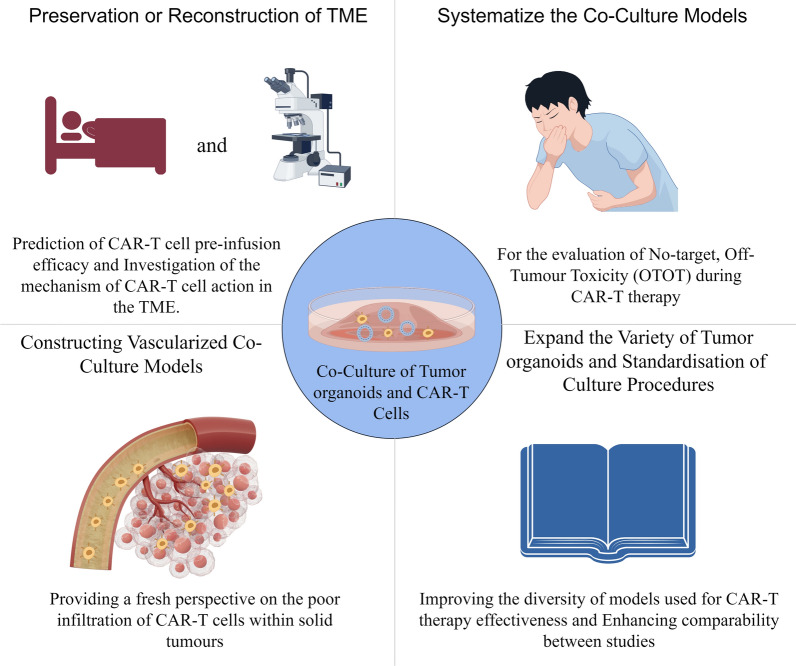 Fig.1 Exploring the potential applications of modified tumor organoids in co-culture models with CAR-T cells.1,3
Creative Biolabs' OncoSolid™ Cancer Organoid Model based CAR-T In Vitro Efficacy Assay Services delivers the critical functional data you need to advance your lead candidates with confidence. We go beyond simplistic cytotoxicity assays to provide a physiologically relevant in vitro system that accurately recapitulates immune cell infiltration, persistence, and functional exhaustion within a complex 3D tumor microenvironment. The result is highly predictive data that directly informs decisive go/no-go decisions for your clinical development pathway.
Our integrated service platform provides a comprehensive suite of solutions for evaluating CAR-T cell efficacy using highly validated cancer organoid models, combining diverse organoid types, advanced culture systems, and multi-dimensional analytical methods to accelerate therapeutic development with physiological relevance and high predictive power.
We offer distinct organoids, enabling researchers to address either clinically representative heterogeneity or specific mechanistic questions.

To balance physiological fidelity with practical scalability, our platform supports multiple culture systems. Each system is optimized to maintain TME complexity and support long-term co-culture with immune cells.
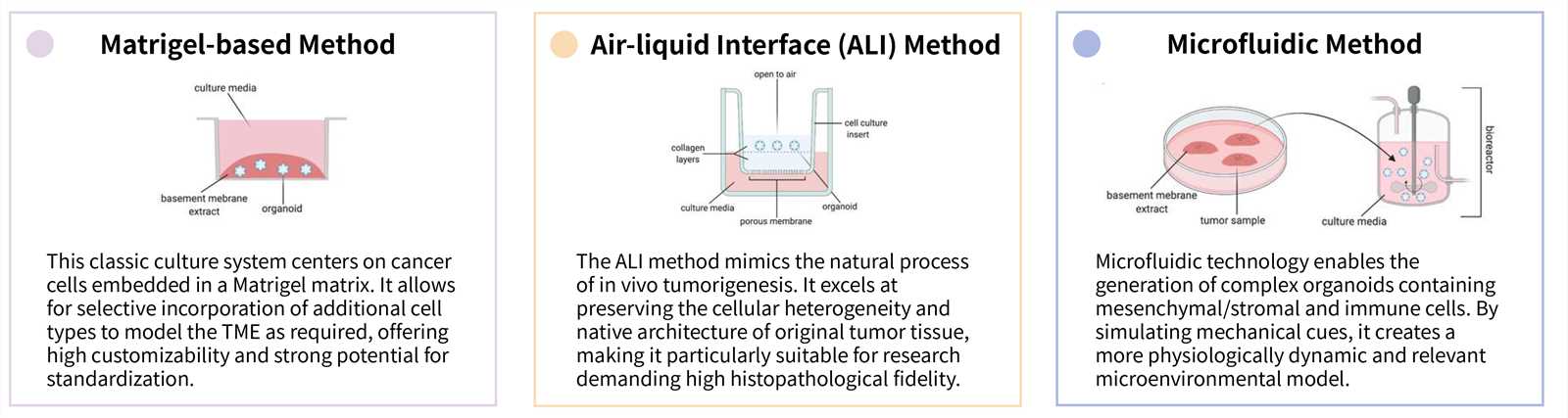 Fig.3 Distinct culture techniques of organoids and immune cells.2,3
Our extensively bio-banked organoid models cover a broad spectrum of cancer types, each rigorously validated at histological and genomic levels. This diversity ensures alignment with specific research needs, whether for population-wide therapeutic screening or rare mutation-specific investigations.
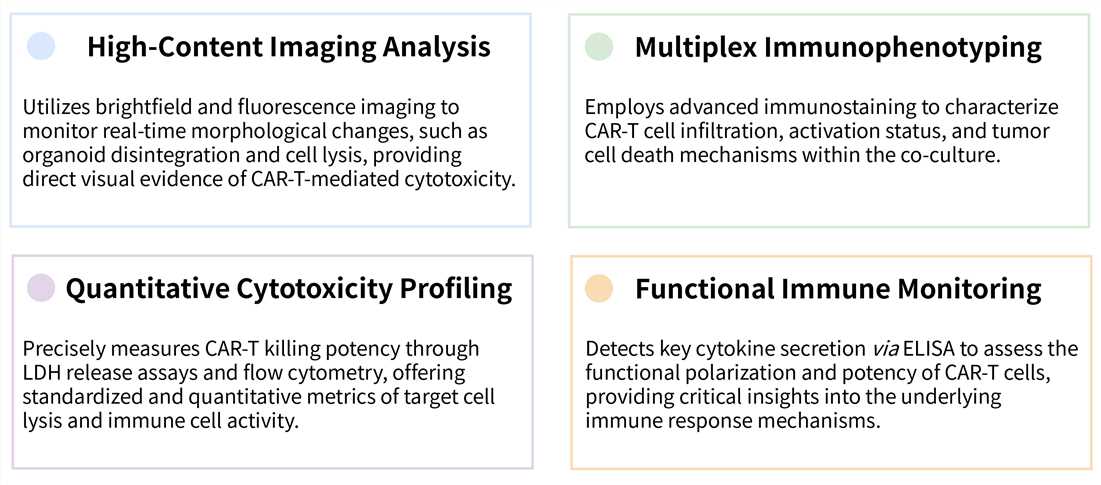
We deliver end-to-end functional analyses through quantitative high-content imaging, allowing real-time monitoring of CAR-T cell infiltration, tumor killing dynamics, and functional immune responses, providing actionable data for efficacy and safety assessment.
We offer an integrated and end-to-end service platform for evaluating CAR-T efficacy using patient-derived cancer organoids.
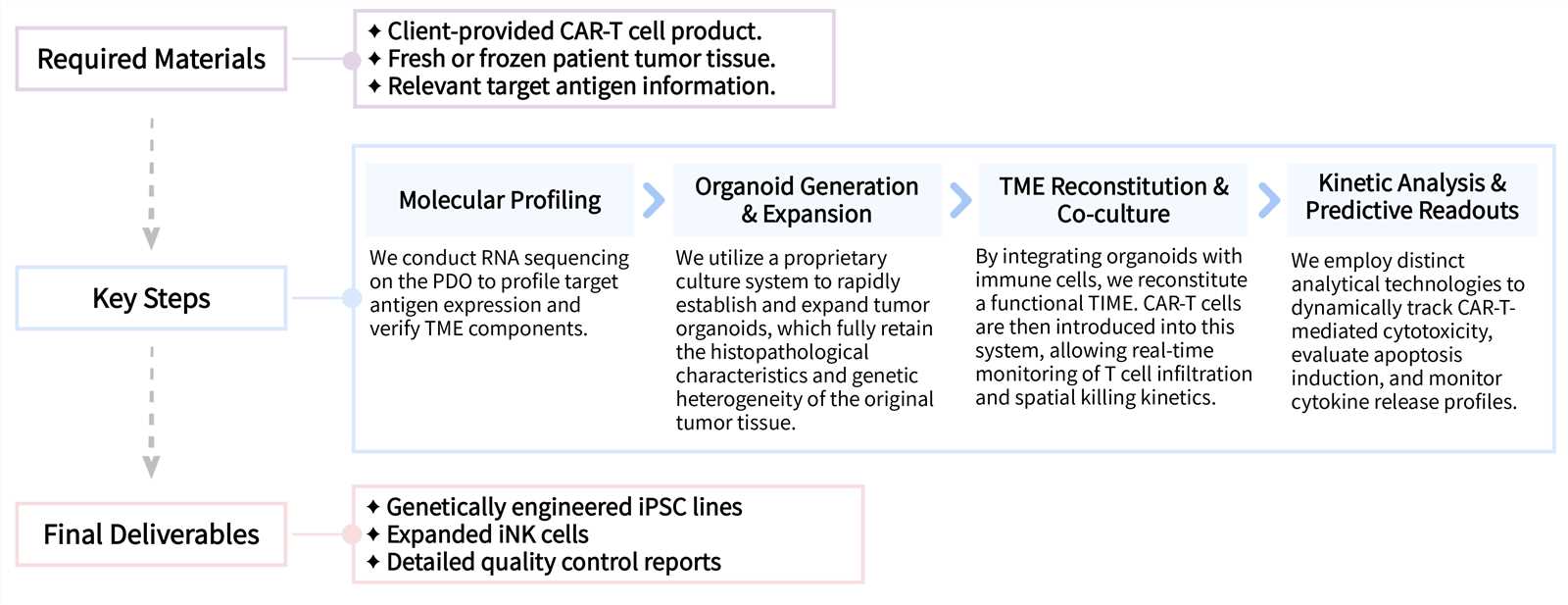
How does the OncoSolid™ service compare to standard 2D co-culture assays or PDX models for CAR-T testing?
Unlike standard 2D co-culture systems, which lack a TME and often yield artificially elevated efficacy readings, the OncoSolid™ platform incorporates a physiologically relevant human TME while maintaining scalability and speed.
What type of immune components can be incorporated into the OncoSolid™ co-culture model?
Our OncoSolid™ system supports a range of immune and stromal components, including autologous patient-derived T cells, healthy donor-derived immune cells (T cells, NK cells, macrophages), and key stromal elements such as cancer-associated fibroblasts (CAFs).
Our OncoSolid™ platform delivers exceptional clinical predictive value by integrating biologically relevant TME with advanced functional assays. We offer unmatched clinical concordance in solid tumor response modeling, proactive toxicity assessment using patient-matched normal organoids and neurotoxicity models, and expert support for combination therapy screening.
"Using Creative Biolabs' OncoSolid™ in our research has significantly improved our ability to model intrinsic resistance. The presence of viable CAFs and the dense ECM layer is crucial; we finally see CAR-T products failing in vitro for the same reasons they fail in the clinic, unlike our old 2D assays."— Dr. Sna, Research Director.
"The comparative analysis against healthy normal organoids provided by Creative Biolabs was essential. We specifically looked at liver and kidney organoid models, which allowed us to identify a systemic toxicity liability in our second-generation CAR before moving to in vivo studies, saving us substantial time and resources"— Jonathan, Translational Lead.
To address the unique challenges in your CAR-T program, we invite you to connect with our specialists. Discover how to leverage the adaptable OncoSolid™ platform to de-risk and accelerate your path to the clinic.
Partner with Our Scientific Team – Receive a Precise Quote for Your Needs.
References
For any technical issues or product/service related questions, please leave your information below. Our team will contact you soon.
All products and services are For Research Use Only and CANNOT be used in the treatment or diagnosis of disease.
 NEWSLETTER
The latest newsletter to introduce the latest breaking information, our site updates, field and other scientific news, important events, and insights from industry leaders
LEARN MORE NEWSLETTER NEW SOLUTION
CellRapeutics™ In Vivo Cell Engineering: One-stop in vivo T/B/NK cell and macrophage engineering services covering vectors construction to function verification.
LEARN MORE SOLUTION NOVEL TECHNOLOGY
Silence™ CAR-T Cell: A novel platform to enhance CAR-T cell immunotherapy by combining RNAi technology to suppress genes that may impede CAR functionality.
LEARN MORE NOVEL TECHNOLOGY NEW SOLUTION
Canine CAR-T Therapy Development: From early target discovery, CAR design and construction, cell culture, and transfection, to in vitro and in vivo function validation.
LEARN MORE SOLUTION