Creative Biolabs has a tradition of commitment. To achieve efficient execution and regulatory approval, we offer careful considerations of your program for the development of a cellular or gene therapy product – now and in the future.
EXPLORE MORE HighlightsWe focus on unmet needs and develop novel cellular and gene drugs and solutions that offer significant benefits over existing options.
EXPLORE MORE HighlightsThe advent of Chimeric Antigen Receptor T-cell (CAR-T) therapies has revolutionized the field of oncology, providing new avenues for treating various forms of cancer. Our 20 years of experience in the biotechnology sector have equipped us with the expertise and technological capabilities to support the entire lifecycle of CAR-T products, from early development to commercialization.
EXPLORE MORETo accelerate advanced breakthroughs of your projects, we offer broad range of platforms which enable our clients be free to tackle problems with cutting-edge technologies from different angles and in different methods.
EXPLORE MORE HighlightsUse the resources in our library to help you understand your options and make critical decisions for your study. We offer oncolytic virus, CAR-T, and dendritic cell related documents, as well as newsletter. If you don't find the answers you're looking for, contact us for additional assistance.
EXPLORE MORE HighlightsGet a real taste and understanding of the business and culture of one of the world's great research-based cellular and gene therapy discovery and development companies.
EXPLORE MORE
Co-stimulatory molecules are essential signals that activate T cells. Artificial T cell Stimulators have proven crucial in boosting the effectiveness and longevity of T cell therapies by offering continuous stimulation and promoting T cell expansion. Research indicates that displaying co-stimulatory molecules on artificial T cell stimulators can enhance T cell activation and improve the capability of artificial T cell stimulators to guide T cell responses toward desired targets. This strategy shows significant promise for advancing immunotherapies against cancer, infectious diseases, and autoimmune disorders by creating strong and specific T cell responses.
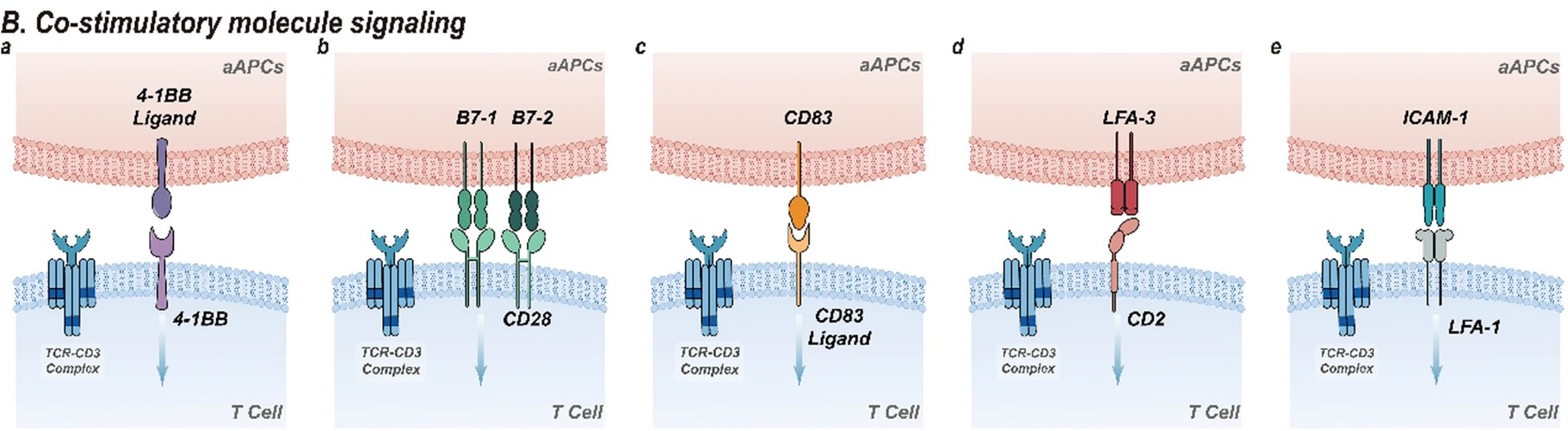 Fig.1 Co-stimulatory signaling expressed artificial T cell stimulators stimulate T cell activation and differentiation.1,3
Creative Biolabs delivers a costimulatory protein-expressed artificial T cell stimulator development service for clients worldwide, aimed at advancing and enhancing T cell therapies. Our service employs specialized expression vectors carrying co-stimulatory molecules to transform/transduce non-antigen presenting cells (non-APCs), allowing them to stably express co-stimulatory molecules and enhance the effector function of T cell activation. By engineering non-APCs to express these critical costimulatory molecules, we strive to replicate the interactions that naturally occur between APCs and T cells within the immune system, without reliance on exogenous cytokines or feeder cells. Leveraging our profound expertise in cell biology, molecular biology, and immunology, we collaborate closely with our clients to develop tailored solutions that align with their research and development objectives.
In addition to the artificial T cell stimulator mentioned above, we can customize and manufacture various types of artificial T cell stimulators based on your experimental design, including but not limited to:
Common Vectors for Costimulatory Protein expressed Artificial T Cell Stimulator Development
Several vector systems are commonly used to express costimulatory proteins on artificial T cell stimulators. These vectors typically include:
Highlight Features
The research focuses on the development of an innovative and universally applicable immunotherapy based on γδ-T lymphocytes. Researchers utilized artificial T cell stimulators to express various co-stimulatory molecules, aiming to assess the polyclonality and activation characteristics of γδ-T cells, as well as their successful expansion. The findings revealed that incorporating co-stimulatory molecules on artificial T cell stimulators significantly promoted the expansion of γδ-T cells.
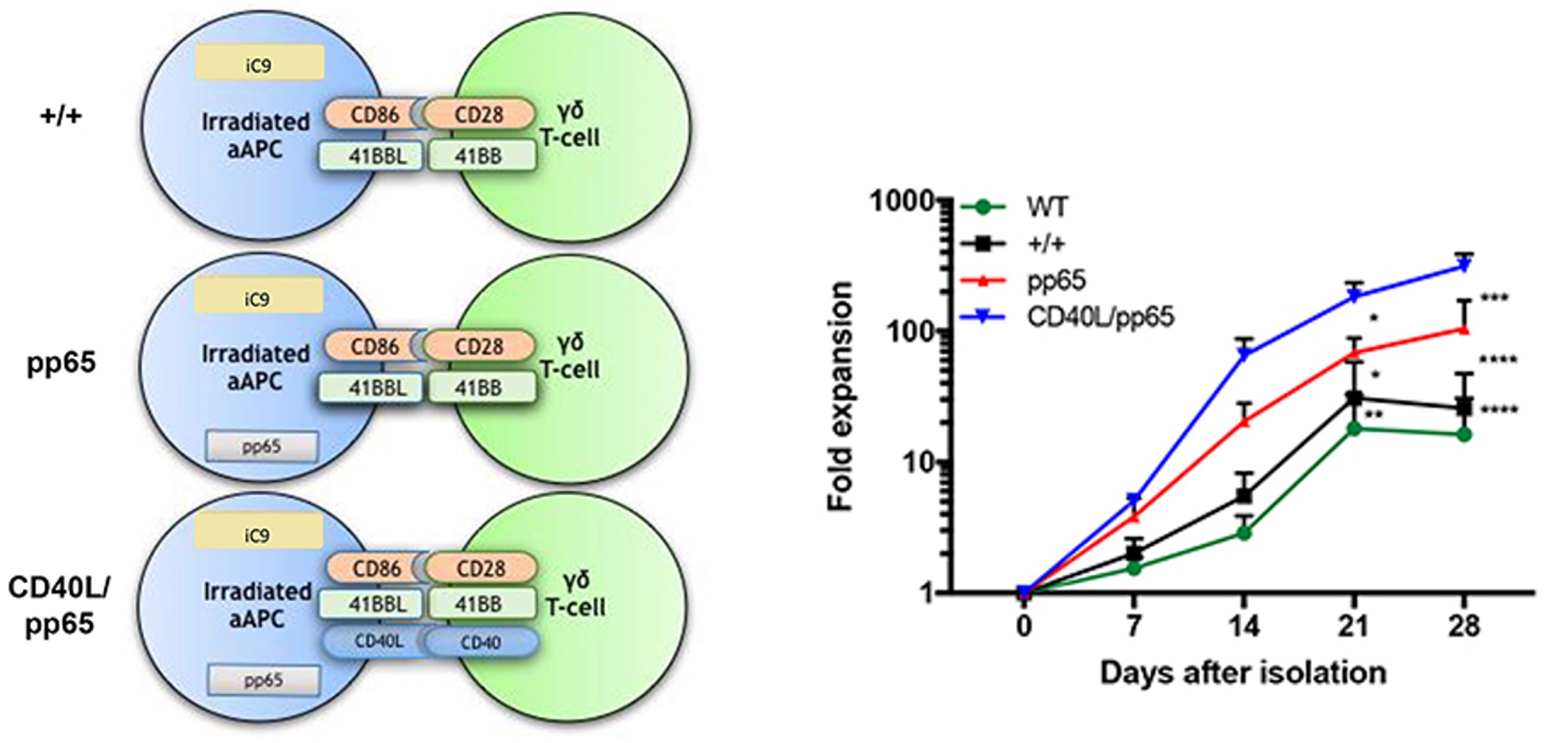 Fig.2 Artificial T cell stimulators design and the expansion of isolated γδ-T cells stimulated with artificial T cell stimulators.2,4
Creative Biolabs possesses a wealth of experience and a robust theoretical foundation in T cell biology, cultivated over many years of dedicated research. This deep understanding, coupled with extensive practical expertise, empowers us to effectively customize and develop high-quality artificial T cell stimulators, thereby precisely meeting your specific research or therapeutic requirements. To explore the full range of possibilities and discuss your unique needs, please don't hesitate to reach out to us for a detailed consultation.
References
For any technical issues or product/service related questions, please leave your information below. Our team will contact you soon.
All products and services are For Research Use Only and CANNOT be used in the treatment or diagnosis of disease.
 NEWSLETTER
The latest newsletter to introduce the latest breaking information, our site updates, field and other scientific news, important events, and insights from industry leaders
LEARN MORE NEWSLETTER NEW SOLUTION
CellRapeutics™ In Vivo Cell Engineering: One-stop in vivo T/B/NK cell and macrophage engineering services covering vectors construction to function verification.
LEARN MORE SOLUTION NOVEL TECHNOLOGY
Silence™ CAR-T Cell: A novel platform to enhance CAR-T cell immunotherapy by combining RNAi technology to suppress genes that may impede CAR functionality.
LEARN MORE NOVEL TECHNOLOGY NEW SOLUTION
Canine CAR-T Therapy Development: From early target discovery, CAR design and construction, cell culture, and transfection, to in vitro and in vivo function validation.
LEARN MORE SOLUTION