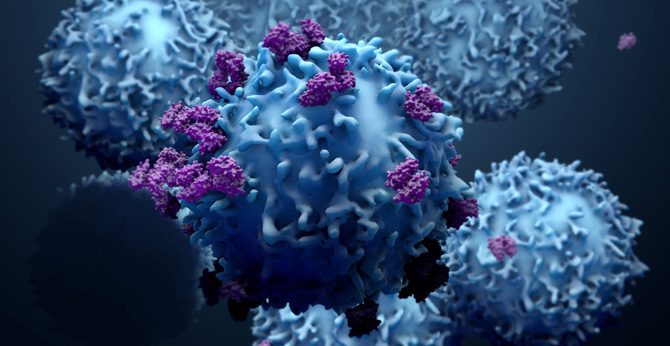
Immune Cell & Blood Cell Interaction Analysis Services
Online Inquiry
Background Service Highlights FAQs Contact Us
Background

Immune effector cell-associated hematotoxicity (ICAHT) represents a multifaceted toxicity scenario where infused CAR-T, CAR-NK, or other engineered immune cells may inadvertently impair hematopoietic regeneration. While some cytopenias stem from transient cytokine-induced suppression, others reflect persistent cellular-level interference between immune effectors and hematopoietic progenitors, stromal elements, or circulating blood cells.
To delineate these mechanisms, it is essential to investigate not only soluble mediators (e.g., cytokines, chemokines) but also direct cellular interactions—including cytotoxic engagement, immune synapse formation, inhibitory signaling, and competition for microenvironmental resources. As part of Creative Biolabs' ICAHT Management Solutions, the Immune Cell and Blood Cell Interaction Analysis Services module provides cutting-edge tools for interrogating these dynamic cell-cell events in vitro and ex vivo. By integrating multiplex co-culture platforms, live-cell tracking, and high-dimensional immunophenotyping, we deliver powerful insights into how immune effector cells modulate hematopoietic lineage survival, differentiation, and recovery.
Services Overview
This service suite is specifically designed to model and analyze the bidirectional interactions between immune effector cells and various blood cell populations, including:
-
Hematopoietic stem and progenitor cells (HSPCs, CD34⁺)
-
Lineage-committed myeloid and erythroid precursors
-
Peripheral blood mononuclear cells (PBMCs)
-
Bone marrow-derived niche-supportive cells
We support IEC construct screening, mechanism elucidation, and mitigation strategy evaluation through the following three core submodules:
This platform models immune–hematopoietic contact and paracrine signaling using configurable in vitro co-culture formats. It allows clients to assess immune cell-induced cytotoxicity, lineage-specific suppression, and cytokine signaling in both 2D and transwell-based systems. Readouts include CFU assays, surface immunophenotyping, viability/apoptosis analysis, and multiplex cytokine profiling. It is ideal for high-throughput construct screening, dose-response evaluation, and mechanism-of-action studies involving physical cell-cell interactions.
This service offers dynamic visualization of immune–hematopoietic interactions in real time using advanced live-cell imaging technologies such as time-lapse microscopy and fluorescent labeling. Researchers can monitor immune synapse formation, sequential killing behavior, effector cell clustering, and HSPC response kinetics. The system supports kinetic cytotoxicity tracking, calcium signaling assays, and apoptotic marker detection, offering critical insights into the temporal dimension of IEC-induced hematotoxicity.
Designed for high-dimensional phenotypic characterization, this platform applies mass cytometry (CyTOF) to profile more than 40 surface and intracellular markers simultaneously. It enables deep immune profiling (activation, exhaustion, checkpoint expression) and precise tracking of HSPC differentiation and response post interaction. This tool is particularly useful for detecting rare subpopulations, monitoring state transitions, and mapping lineage disruption in immune-exposed hematopoietic cells.
Why Choose Us
Multiscale Analysis of Cellular Interactions
Simultaneous assessment of direct contact, paracrine effects, and functional outcomes at cellular, molecular, and temporal levels.
Flexible Target and Effector Cell Sources
Compatible with primary or engineered immune cells (e.g., CAR-T, CAR-NK) and a wide variety of hematopoietic targets (CD34⁺ HSPCs, PBMCs, stromal cells).
Dynamic and Endpoint Readouts
Integrates live-cell behavior tracking, cytotoxicity assessment, cytokine release profiles, and high-dimensional phenotyping.
Cross-Platform Integration
Each submodule can be run independently or combined for a comprehensive interaction landscape, fully compatible with other Creative Biolabs services (e.g., cytokine analysis, transcriptomics).
Construct Optimization Support
Enables side-by-side comparison of different IEC designs or dosing regimens to inform construct refinement for reduced hematopoietic impact.
Publication-Ready Outputs
Provides detailed visualizations (heatmaps, t-SNE plots, cell trajectories) and clean datasets suitable for translational research, grant proposals, or internal reporting.
FAQs
Q1: Are all three submodules required to run together?
A1: Not necessarily. Each module functions independently, though many clients opt for combined analysis to capture both functional and phenotypic changes.
Q2: Can chronic immune suppression be modeled?
A2: Yes, we support extended-duration co-cultures and repeated dosing schemes to simulate long-term immune pressure.
Q3: Is there support for construct comparison studies?
A3: Absolutely. Our workflows are optimized for comparative analysis of multiple IEC formats under standardized assay conditions.
Contact Us
At Creative Biolabs, we are committed to advancing the understanding of immune–hematopoietic crosstalk as part of safer, next-generation cell therapies. Our Immune Cell and Blood Cell Interaction Analysis Services enable in-depth exploration of interaction dynamics, suppression pathways, and toxicity profiles, helping you refine constructs, validate hypotheses, and mitigate risk at the preclinical stage.
We invite academic collaborators, translational researchers, and biopharma innovators to join us in decoding one of the most complex components of immune effector cell toxicity. Together, we can build smarter immunotherapies from the ground up.