Creative Biolabs has a tradition of commitment. To achieve efficient execution and regulatory approval, we offer careful considerations of your program for the development of a cellular or gene therapy product – now and in the future.
EXPLORE MORE HighlightsWe focus on unmet needs and develop novel cellular and gene drugs and solutions that offer significant benefits over existing options.
EXPLORE MORE HighlightsThe advent of Chimeric Antigen Receptor T-cell (CAR-T) therapies has revolutionized the field of oncology, providing new avenues for treating various forms of cancer. Our 20 years of experience in the biotechnology sector have equipped us with the expertise and technological capabilities to support the entire lifecycle of CAR-T products, from early development to commercialization.
EXPLORE MORETo accelerate advanced breakthroughs of your projects, we offer broad range of platforms which enable our clients be free to tackle problems with cutting-edge technologies from different angles and in different methods.
EXPLORE MORE HighlightsUse the resources in our library to help you understand your options and make critical decisions for your study. We offer oncolytic virus, CAR-T, and dendritic cell related documents, as well as newsletter. If you don't find the answers you're looking for, contact us for additional assistance.
EXPLORE MORE HighlightsGet a real taste and understanding of the business and culture of one of the world's great research-based cellular and gene therapy discovery and development companies.
EXPLORE MORE
Despite having obvious therapeutic effects on leukemias, the limited availability of tumor-specific membrane proteins for solid tumor killing limits CAR-T cell therapy. The Peptide-Centric Chimeric Antigen Receptor (PC-CAR) is a novel type of CAR that can detect oncoprotein epitopes displayed on the cell surface by HLAs. Scientists have developed a PC-CAR that targets the neuroblastoma-associated PHOX2B peptide. This makes it easier to kill tumor cells that share two common HLA allotypes. Therefore, peptide-centric CAR construction exhibits a promising strategy to expand CAR-T cell therapy for solid tumors and other types of cancer.
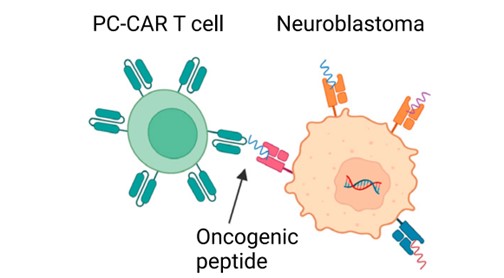 Fig. 1 PC-CARs targeting neuroblastoma's oncogenic peptide.1
Creative Biolabs has developed and widely provides peptide-centric CAR construction services for global customers to aid in your drug development projects. We can design specific PC-CARs targeting tumor-associated proteins according to the diverse needs of customers. Specifically, we provide well-developed several platforms for global customers to screen the appropriate scFv and can customize our service if you have desirable targets. In addition, we also deliver other types of CAR construction services (Leucine Zipper (SUPRA) CAR, Anti-FITC CAR, Convertible CAR, etc.) to support your projects. At Creative Biolabs, we provide full-around peptide-centric CAR construction services ranging from design to evaluation to enable your projects to run smoothly.
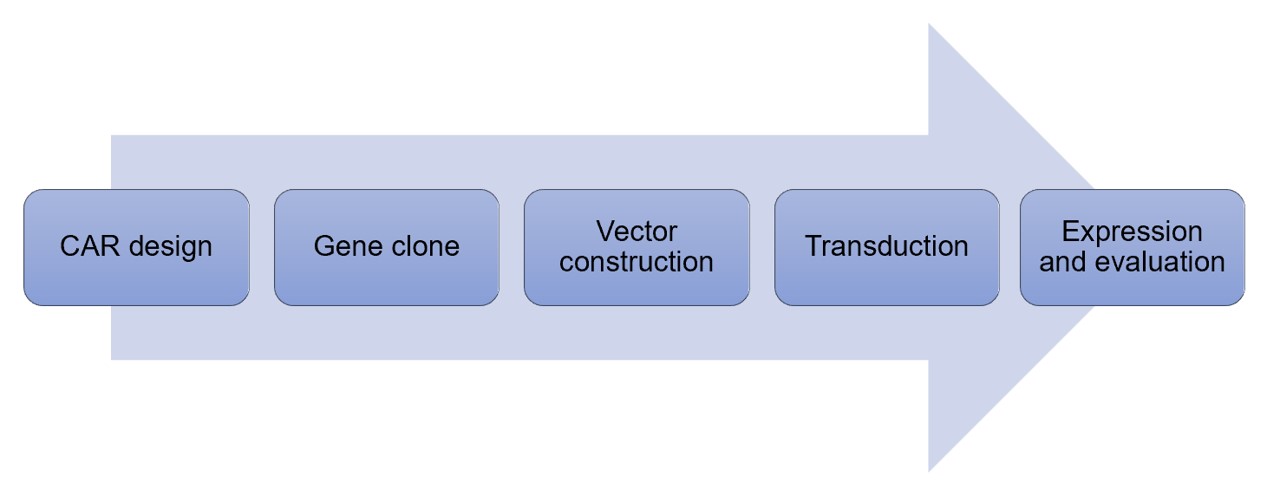 Fig. 2 Workflow of CAR construction services.
Our PC-CAR Construction Service leverages a portfolio of advanced technology platforms to accelerate the development of highly specific and effective immunotherapies. We provide comprehensive support from target discovery to functional validation.
Our comprehensive service workflow is meticulously designed to move your universal CAR candidate from concept to preclinical validation efficiently and reliably.
| Target Discovery and Design | Genetic delivery and production platforms |
|---|---|
|
|
| Peptide-to-CAR integration | In vitro functional assays |
|
|
| In vivo models & safety | Analytics and QC |
|
|
Kindly get in touch with our team to address your individual requirements in detail.
How does Peptide-Centric CAR construction overcome the safety and targeting limitations of traditional CAR-T therapies that target surface antigens?
Traditional CAR-T is restricted to targets found exclusively on the cell surface. Our Peptide-Centric approach allows you to access the vast, hidden intracellular proteome by targeting highly specific peptides presented on the pMHC. This strategy provides access to novel, tumor-specific antigens derived from intracellular oncogenic proteins, dramatically increasing target specificity.
We have a proprietary tumor cell line with a specific, rare MHC-I haplotype. Can your service handle highly customized or non-standard pMHC target identification?
Absolutely. Customization is the foundation of our service. Creative Biolabs does not rely on generic targets. Our robust, integrated Immunopeptidome Analysis platform is designed to isolate, sequence, and validate peptide epitopes from your specific tumor samples, cell lines, or patient-derived xenografts (PDX).
Creative Biolabs' CellRapeutics™ Switchable CAR Construction Service empowers precise, controllable immunotherapy design - offering customizable, drug- or adaptor-responsive CAR systems to enhance safety, flexibility, and therapeutic performance across diverse cell therapy applications.
CellRapeutics™ Soluble Ligand-sensing CAR Construction Service enables the creation of CARs that detect and respond to soluble cues, providing tunable control over immune activation for enhanced therapeutic precision and reduced off-target toxicity.
CellRapeutics™ Synthetic Intramembrane Proteolysis Receptor CAR Construction Service delivers advanced receptor designs utilizing intramembrane proteolysis signaling to achieve precise, signal-dependent immune modulation and next-generation control of CAR cell activation.
The unmutated peptide QYNPIRTTF, which is expressed on HLA-A*24:02, piqued the researchers' curiosity. This peptide is derived from PHOX2B, a neuroblastoma-dependent gene and master transcriptional regulator. Using anticipated possibly cross-reactive peptides, researchers developed peptide-centered chimeric antigen receptors (PC-CARs) by a strategy known as "counter-panning." These results suggest that PC-CARs might be able to add non-immunogenic intracellular oncoproteins to the list of immunotherapy targets. This means that additional HLA isotypes might be exploited for therapeutic targeting.
Our peptide-centric CAR construction services are available for multiple cell types:
We provide rapid and robust virus transduction systems, including both plasmid products and also viral products, to aid in our peptide-centric CAR construction services:
In addition, we also provide full-process function validation (in vitro and in vivo) to evaluate the PC-CAR:
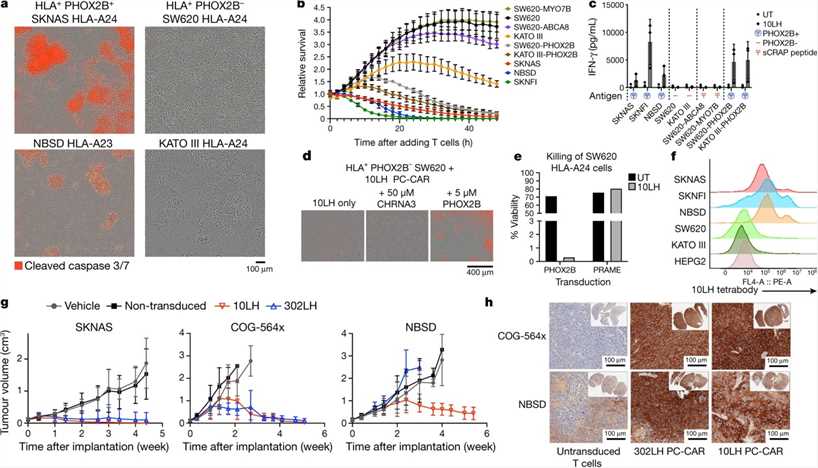 Fig.3 Tumor killing and breakthrough induced by PHOX2B-specific PC-CAR T cells.2
As a leader in immunotherapy development, Creative Biolabs strives to provide CAR construction services to aid in drug development for cancer therapy. If you are interested in our peptide-centric CAR construction services, please contact us for more details at your convenience.
References
For any technical issues or product/service related questions, please leave your information below. Our team will contact you soon.
All products and services are For Research Use Only and CANNOT be used in the treatment or diagnosis of disease.
 NEWSLETTER
The latest newsletter to introduce the latest breaking information, our site updates, field and other scientific news, important events, and insights from industry leaders
LEARN MORE NEWSLETTER NEW SOLUTION
CellRapeutics™ In Vivo Cell Engineering: One-stop in vivo T/B/NK cell and macrophage engineering services covering vectors construction to function verification.
LEARN MORE SOLUTION NOVEL TECHNOLOGY
Silence™ CAR-T Cell: A novel platform to enhance CAR-T cell immunotherapy by combining RNAi technology to suppress genes that may impede CAR functionality.
LEARN MORE NOVEL TECHNOLOGY NEW SOLUTION
Canine CAR-T Therapy Development: From early target discovery, CAR design and construction, cell culture, and transfection, to in vitro and in vivo function validation.
LEARN MORE SOLUTION