Creative Biolabs has a tradition of commitment. To achieve efficient execution and regulatory approval, we offer careful considerations of your program for the development of a cellular or gene therapy product – now and in the future.
EXPLORE MORE HighlightsWe focus on unmet needs and develop novel cellular and gene drugs and solutions that offer significant benefits over existing options.
EXPLORE MORE HighlightsThe advent of Chimeric Antigen Receptor T-cell (CAR-T) therapies has revolutionized the field of oncology, providing new avenues for treating various forms of cancer. Our 20 years of experience in the biotechnology sector have equipped us with the expertise and technological capabilities to support the entire lifecycle of CAR-T products, from early development to commercialization.
EXPLORE MORETo accelerate advanced breakthroughs of your projects, we offer broad range of platforms which enable our clients be free to tackle problems with cutting-edge technologies from different angles and in different methods.
EXPLORE MORE HighlightsUse the resources in our library to help you understand your options and make critical decisions for your study. We offer oncolytic virus, CAR-T, and dendritic cell related documents, as well as newsletter. If you don't find the answers you're looking for, contact us for additional assistance.
EXPLORE MORE HighlightsGet a real taste and understanding of the business and culture of one of the world's great research-based cellular and gene therapy discovery and development companies.
EXPLORE MORE
Suboptimal T cell responses in immunotherapy, challenges with T cell persistence, and drug resistance in immunotherapeutic development are common hurdles. Creative Biolabs provides a fatty acid oxidation (FAO) modulation based CD8+ T cell activation service to accelerate immunotherapeutic discovery and help obtain highly functional, persistent CD8+ T cells through advanced metabolic reprogramming techniques.
The battle against cancer and persistent infections relies heavily on effective T cell immunity. However, CD8+ T cells, the primary cytotoxic effectors, often face significant metabolic hurdles in the suppressive tumor microenvironment. These challenges lead to T cell exhaustion and dampened anti-tumor responses. Research highlights that metabolic reprogramming, particularly through the modulation of fatty acid oxidation (FAO), is critical for enhancing T cell persistence and effector functions. Optimizing FAO pathways ensures T cells maintain their energetic fitness and execute robust, durable responses. This strategy is crucial for overcoming current limitations in adoptive cell therapies and developing more potent immunotherapies.
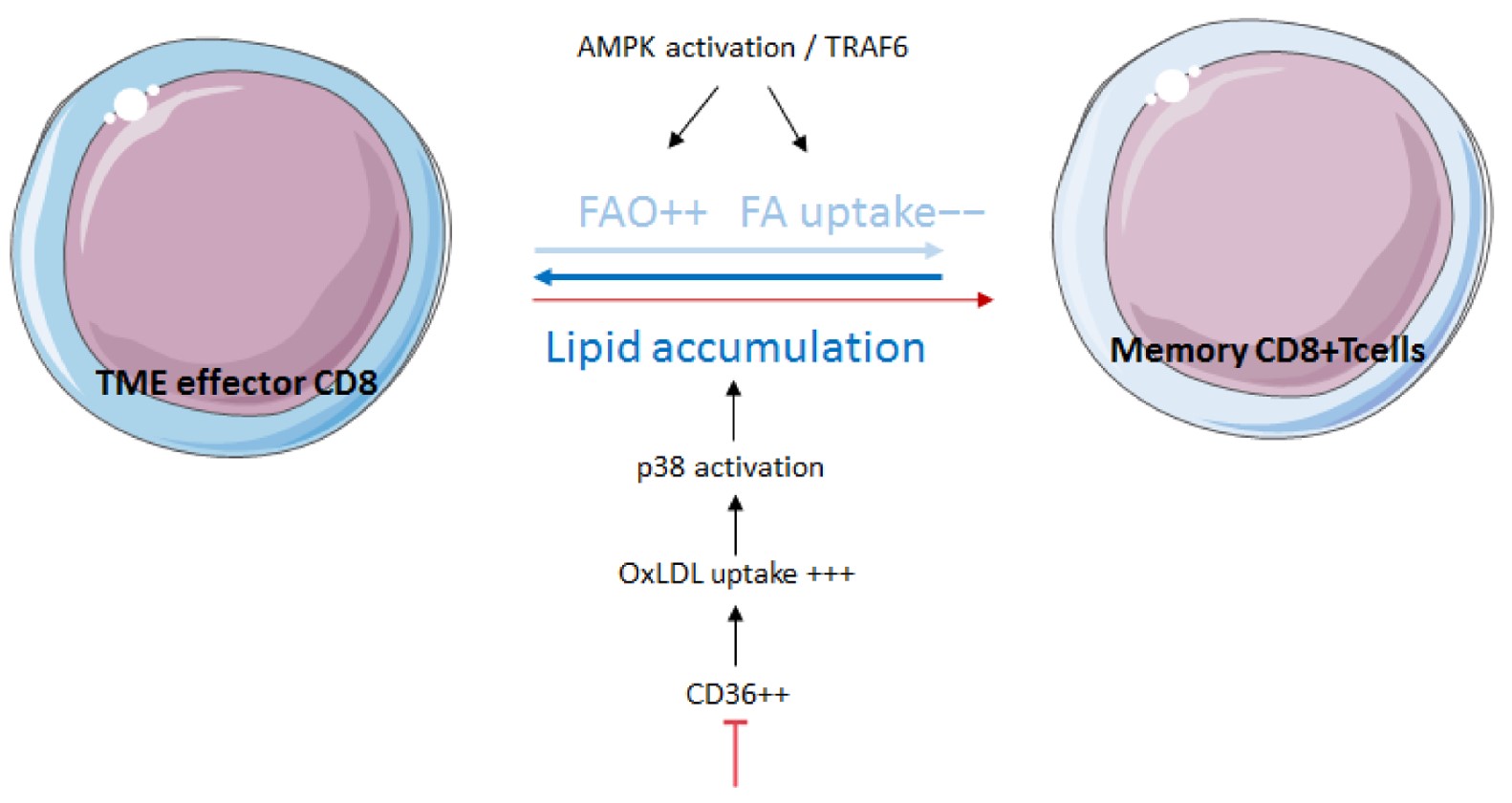 Fig.1 The metabolism of fatty acids affects both effector and memory CD8 T lymphocytes.1
Creative Biolabs' FAO modulation based CD8+ T cell activation service provides targeted solutions to enhance the metabolic fitness and anti-tumor efficacy of your CD8+ T cells. We achieve this through a comprehensive process that includes T cell isolation, metabolic profiling, precise FAO modulation, and rigorous functional assessments, delivering meticulously analyzed data and optimized cell populations tailored to your specific research or therapeutic development needs.
Our thorough workflow is meant to be precise and clear, ensuring that you understand every stage of the process.
We begin by isolating high-purity CD8+ T cells from your provided samples. Comprehensive phenotyping is performed using flow cytometry to confirm cell identity and initial activation status, ensuring a suitable starting population.
Prior to intervention, we conduct baseline metabolic assays to assess the initial FAO and glycolytic activity of your T cells. This establishes a metabolic fingerprint for subsequent comparison.
CD8+ T cells are co-cultured with specific stimuli in the presence of FAO modulators (inhibitors or activators). This stage focuses on optimizing the metabolic environment to drive robust activation and expansion while promoting a desired metabolic phenotype.
Post-modulation, we rigorously evaluate T cell function. This includes assays for proliferation (e.g., CFSE dilution), cytokine production (e.g., intracellular cytokine staining, ELISA), and cytotoxicity (e.g., granzyme B release, killing assays against target cells).
Advanced metabolic analysis (e.g., metabolomics, gene expression profiling of metabolic enzymes) is performed to confirm successful FAO modulation and characterize the resulting metabolic state of the T cells.
We assess the differentiation status of the modulated T cells, focusing on markers associated with memory T cell formation and exhaustion. This ensures the generation of persistent, functional cells.
Q1: What is FAO Modulation and why is it important for CD8+ T cells?
A1: FAO Modulation involves manipulating the metabolic pathways that control how CD8+ T cells utilize fatty acids for energy. This is crucial because memory and persistent effector T cells heavily rely on FAO for their long-term survival and function. By optimizing FAO, we can enhance T cell persistence, reduce exhaustion, and boost their anti-tumor efficacy.
Q2: Can this service be customized for specific disease models or therapeutic targets?
A2: Absolutely. Our service is highly customizable. We work closely with our clients to tailor the experimental design, including antigen specificity, specific FAO modulators, and downstream functional assays, to align precisely with your research goals and therapeutic targets in cancer, infectious diseases, or autoimmune disorders.
Q3: How long does it usually take for FAO modulation to start showing results?
A3: The typical timeframe for our FAO Modulation based CD8+ T Cell Activation Service ranges from 6 to 10 weeks, depending on the scope and complexity of your project. This includes initial characterization, modulation, and comprehensive functional assays. We strive to provide efficient and timely data delivery.
To further support your immunotherapy research and development, Creative Biolabs offers a suite of complementary services:
Creative Biolabs is your trusted partner in advancing immunotherapeutic solutions. Our FAO modulation based CD8+ T cell activation service, combined with our extensive portfolio, empowers you to achieve unprecedented results in T cell engineering and application. We are devoted to pushing the frontiers of scientific discovery in order to expedite your discoveries. Contact us right away to discuss your unique requirements and understand how our service might help your study.
Reference
For any technical issues or product/service related questions, please leave your information below. Our team will contact you soon.
All products and services are For Research Use Only and CANNOT be used in the treatment or diagnosis of disease.
 NEWSLETTER
The latest newsletter to introduce the latest breaking information, our site updates, field and other scientific news, important events, and insights from industry leaders
LEARN MORE NEWSLETTER NEW SOLUTION
CellRapeutics™ In Vivo Cell Engineering: One-stop in vivo T/B/NK cell and macrophage engineering services covering vectors construction to function verification.
LEARN MORE SOLUTION NOVEL TECHNOLOGY
Silence™ CAR-T Cell: A novel platform to enhance CAR-T cell immunotherapy by combining RNAi technology to suppress genes that may impede CAR functionality.
LEARN MORE NOVEL TECHNOLOGY NEW SOLUTION
Canine CAR-T Therapy Development: From early target discovery, CAR design and construction, cell culture, and transfection, to in vitro and in vivo function validation.
LEARN MORE SOLUTION