Creative Biolabs has a tradition of commitment. To achieve efficient execution and regulatory approval, we offer careful considerations of your program for the development of a cellular or gene therapy product – now and in the future.
EXPLORE MORE HighlightsWe focus on unmet needs and develop novel cellular and gene drugs and solutions that offer significant benefits over existing options.
EXPLORE MORE HighlightsThe advent of Chimeric Antigen Receptor T-cell (CAR-T) therapies has revolutionized the field of oncology, providing new avenues for treating various forms of cancer. Our 20 years of experience in the biotechnology sector have equipped us with the expertise and technological capabilities to support the entire lifecycle of CAR-T products, from early development to commercialization.
EXPLORE MORETo accelerate advanced breakthroughs of your projects, we offer broad range of platforms which enable our clients be free to tackle problems with cutting-edge technologies from different angles and in different methods.
EXPLORE MORE HighlightsUse the resources in our library to help you understand your options and make critical decisions for your study. We offer oncolytic virus, CAR-T, and dendritic cell related documents, as well as newsletter. If you don't find the answers you're looking for, contact us for additional assistance.
EXPLORE MORE HighlightsGet a real taste and understanding of the business and culture of one of the world's great research-based cellular and gene therapy discovery and development companies.
EXPLORE MORE
In the tumor microenvironment, CD8+ T cells play a critical role in attacking cancer, but their success largely depends on metabolic dynamics. When CD8+ T effector cells are active, they depend on glycolysis to fuel their tumor-killing functions. If this energy pathway falters, so does their ability to eliminate cancer cells. On the other hand, tumor cells often flood the environment with lactate, a glycolysis byproduct. Excess lactate buildup can block CD8+ T cells from exporting it, stifling their growth and weakening their cancer-fighting power. This metabolic battle—where nutrients are fiercely competed over and toxic metabolites like lactate pile up—creates a harsh landscape that cripples CD8+ T cells' ability to effectively combat tumors.
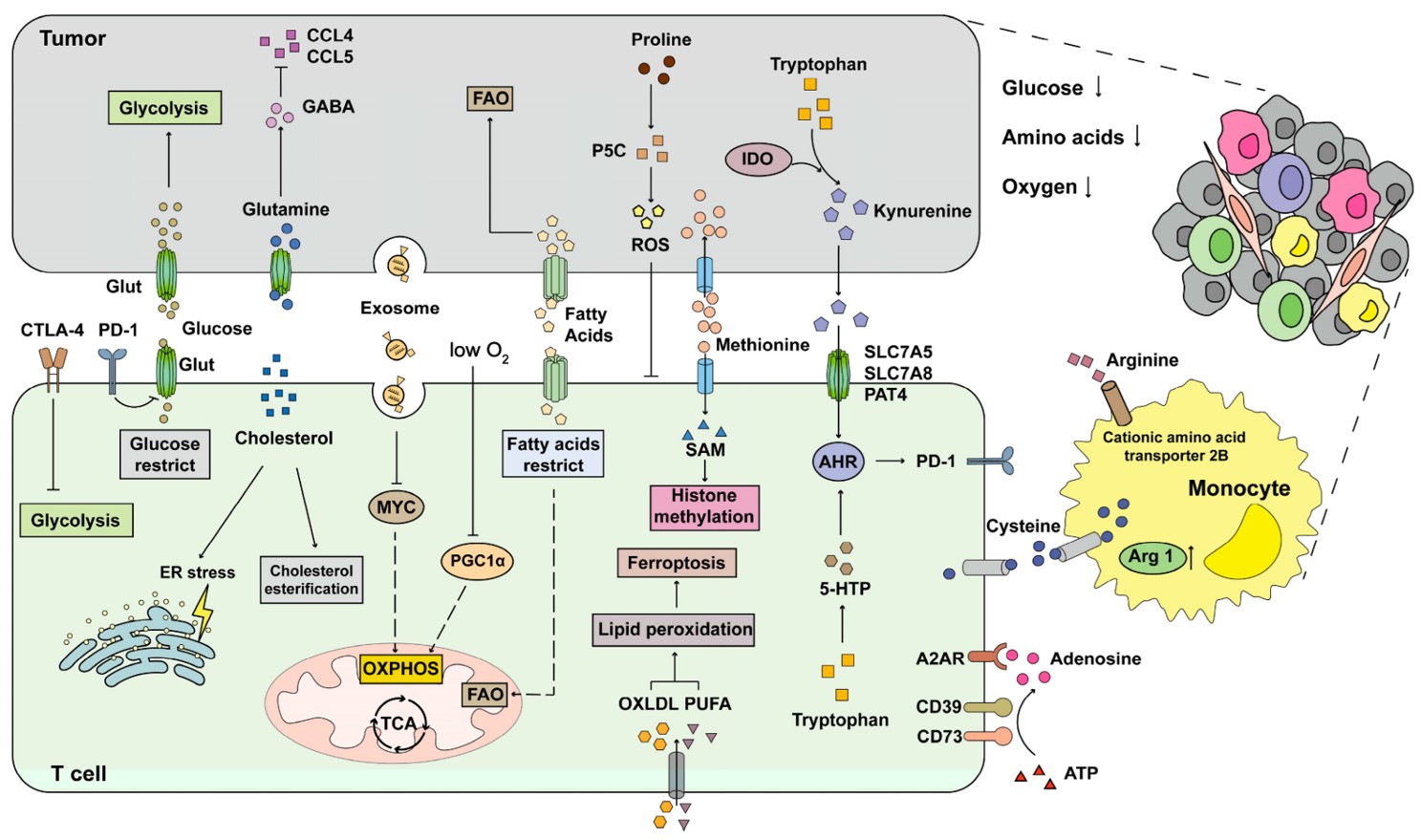 Fig.1 The metabolic interaction between tumor cells and T effector cells.1,3
To comprehensively identify CD8+ T cell metabolism in TME, Creative Biolabs delivers a cost-effective TME CD8+ T cell metabolic profiling service to assist global customers in therapeutic target discovery and targeted therapeutics development.
In particular, our service provides a comprehensive analysis of CD8+ T cells within the TME to uncover key insights for therapeutic development. We begin by isolating and enriching CD8+ T cells from tumor tissue. Next, we delve into the metabolic landscape of these cells to quantify critical processes and intracellular metabolite levels. Meanwhile, we examine the genetic underpinnings of these metabolic states and immune responses. Specifically, we evaluate gene expression profiling to reveal the expression of metabolic pathway genes and immune checkpoint-related genes while assessing cytokine production, cytotoxicity, and proliferation to understand the functional implications. Altogether, our integrated profiling enables customers to identify key signatures and potential therapeutic targets, ultimately promoting targeted immunotherapeutics discovery and development.
Comprehensive Analysis
Targeted Therapeutic Development
Cost-Effective Solution
Expertise and Integration
Global Accessibility
|
|
|
|
|
|
|
|
|
|
Moving beyond standard TME CD8+ T cell metabolic profiling, our services explore the intricate interplay of metabolic rewiring in these immune effectors. We deliver comprehensive characterization of physiological metabolic adaptations triggered by diverse stimuli, shedding light on their adaptation mechanisms across diverse physiological contexts. Our customized analytical framework incorporates specialized metrics—from real-time amino acid utilization rates to glucose transporter dynamics—that pinpoint nutrient dependencies and expose metabolic liabilities governing CD8+ T cell efficacy. This granular, pathway-centric approach empowers researchers to map rate-limiting metabolic nodes and engineer precision interventions for fine-tuning T cell behavior in both homeostasis and disease pathogenesis.
If you are looking for a reliable company to characterize interested TME CD8+ T cells and evaluate the effectiveness of developed therapeutics, please don't hesitate to get in touch with us.
Reference
For any technical issues or product/service related questions, please leave your information below. Our team will contact you soon.
All products and services are For Research Use Only and CANNOT be used in the treatment or diagnosis of disease.
 NEWSLETTER
The latest newsletter to introduce the latest breaking information, our site updates, field and other scientific news, important events, and insights from industry leaders
LEARN MORE NEWSLETTER NEW SOLUTION
CellRapeutics™ In Vivo Cell Engineering: One-stop in vivo T/B/NK cell and macrophage engineering services covering vectors construction to function verification.
LEARN MORE SOLUTION NOVEL TECHNOLOGY
Silence™ CAR-T Cell: A novel platform to enhance CAR-T cell immunotherapy by combining RNAi technology to suppress genes that may impede CAR functionality.
LEARN MORE NOVEL TECHNOLOGY NEW SOLUTION
Canine CAR-T Therapy Development: From early target discovery, CAR design and construction, cell culture, and transfection, to in vitro and in vivo function validation.
LEARN MORE SOLUTION