
The primary application is maximizing the oral absorption of drugs with low aqueous solubility (BCS Class II) and drugs with poor permeability and high first-pass metabolism (BCS Class IV). This is critical for converting previously injectable-only therapies into more patient-friendly oral dosage forms.
Lipotome based Targeted Drug Delivery Solution
In the pursuit of groundbreaking oral therapeutics, the journey from a promising molecule to a viable treatment often stalls at two key obstacles: poor aqueous solubility and rapid first-pass metabolism. Our Lipotomes-based Delivery Systems Solution helps you maximize drug bioavailability and achieve precise lymphatic targeting through advanced lipid engineering and dual-action nanocarrier formulation. We offer a specialized platform designed to overcome the limitations of conventional liposomes, accelerating your drug candidates toward clinical success.
Click Here to View more about our Services
Introduction to Lipotomes Delivery Systems
Liposomes have long been the gold standard for nanocarrier-based delivery, known for their versatility in encapsulating both hydrophilic and hydrophobic compounds. However, standard liposomes often struggle with stability and efficient absorption when administered orally due to GI degradation and poor ability to traverse the intestinal barrier.
Lipotomes represent an innovative evolution in lipid-based nanocarrier technology, specifically designed to address these oral delivery shortcomings. Structurally, a Lipotome is defined as a dual-functioning nanocarrier. Unlike conventional liposomes, which primarily consist of a phospholipid bilayer encapsulating an aqueous core, Lipotomes utilize a solid-lipid core (or highly stable matrix) stabilized by optimized surfactants.
This core-shell architecture is strategically employed to combine the advantages of solid lipid nanoparticles (SLNs)—drug protection and sustained release—with the stability and targeted delivery potential afforded by a sophisticated stabilizing layer. The careful selection and ratio of components are scientifically validated to achieve synergistic effects: the lipophilic solid matrix drives lymphatic uptake, while the surfactant layer ensures high drug dissolution and sustained release. This breakthrough enables superior pharmacokinetics, demonstrated in published data where Lipotomes successfully enhanced the oral bioavailability of poorly soluble drugs far exceeding commercial products.
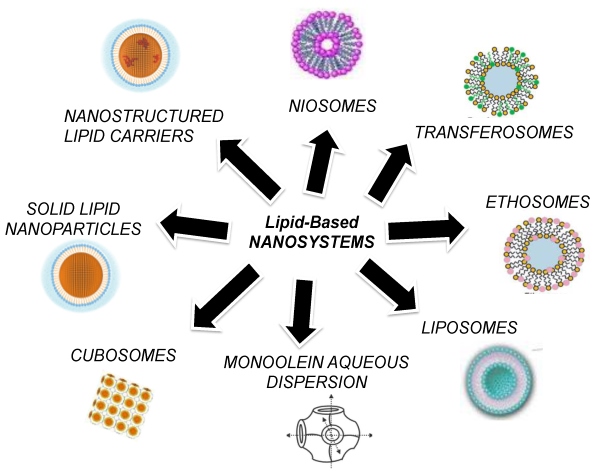 Fig.1 Schematic of LBNs.1
Application of Advanced Dual-Action Nanocarriers
The dual functionality of Lipotomes unlocks significant potential across multiple therapeutic areas, particularly where conventional delivery methods fail:
Oral Bioavailability Enhancement
Targeted Lymphatic Delivery
Lipotomes are uniquely suited for targeting diseases that involve the lymphatic system, such as metastatic cancers, infectious diseases (e.g., HIV/AIDS), and immunomodulation. By promoting uptake into the intestinal lymphatic system, the therapeutic agent is concentrated directly at the site of pathology or bypasses the systemic circulation entirely.
Delivery of Biologic Payloads
Beyond small molecules, the stable, controlled release environment of the Lipotome core can be engineered to protect and deliver sensitive biologics, including peptides, proteins, and nucleic acid drugs, offering a robust oral delivery alternative for these fragile macromolecules.
Sustained and Controlled Release
The solid lipid component of the Lipotome matrix provides inherent sustained release characteristics, leading to prolonged drug exposure and reduced dosing frequency, which can dramatically improve patient compliance and therapeutic outcomes.
What We Can Offer
Creative Biolabs' specialized Lipotomes-based Delivery Systems are engineered to solve the most persistent challenges associated with oral administration of Class II and Class IV drugs (poor solubility, poor permeability) and to enable strategic drug accumulation in the lymphatic system.
This system provides a potent, two-pronged solution:
Enhanced Solubility and Stability
The unique dual composition of the Lipotome, incorporating both a lipophilic solid matrix and an optimized surfactant component, dramatically increases the solubilization capacity for hydrophobic drugs. This structured protection shields the payload from the harsh acidic and enzymatic environment of the gastrointestinal (GI) tract, ensuring stability and maximizing the available drug concentration for absorption.
Increased Bioavailability via Lymphatic Transport
The lipophilic core components within the Lipotome formulation are recognized by the body's natural lipid absorption pathways. This mechanism facilitates the uptake of the intact nanocarrier by the lymphatic vessels in the intestine, offering a direct route to bypass hepatic first-pass metabolism. This is crucial for improving the systemic bioavailability of drugs susceptible to liver inactivation.
We deliver fully characterized Lipotome formulations, supported by comprehensive data on particle size, zeta potential, drug loading, and in vitro release kinetics, providing a clear path from proof-of-concept to preclinical validation.
FAQs
How do these specialized nanocarriers improve upon traditional liposomes for oral drug delivery?
Traditional liposomes, composed of phospholipid bilayers, often struggle against the digestive enzymes and bile salts present in the GI tract, leading to poor stability and premature drug release. These specialized carriers incorporate a solid, lipophilic core stabilized by surfactants, granting them a dual advantage: greater structural resilience against enzymatic degradation and a mechanism that actively promotes absorption via the intestinal lymphatic system, bypassing destructive first-pass liver metabolism.
What types of therapeutic payloads are most suitable for this delivery system?
This platform is particularly effective for highly lipophilic small molecules that suffer from low aqueous solubility (like many BCS Class II drugs) and any drug, whether small molecule or biologic, that is highly susceptible to rapid metabolic inactivation in the liver (first-pass effect). It is also an excellent choice for agents specifically targeting immune cells or lymph-resident cancers.
What is the typical development timeline from initial concept to a validated in vitro formulation?
While timelines vary significantly depending on the complexity and novelty of the drug molecule, our structured, multi-stage development process—involving initial material screening, statistical optimization of component ratios, and comprehensive in vitro characterization—can typically deliver a lead optimized formulation within a few months, ready for preclinical efficacy testing.
Is there a trade-off between enhancing lymphatic uptake and the overall toxicity profile?
No. A primary design principle for these nanocarriers is the use of non-toxic, biocompatible, and generally recognized as safe (GRAS) lipids and surfactants. By increasing targeted accumulation and reducing the systemic exposure to non-target tissues, the system inherently aims to reduce systemic toxicity compared to administering the free drug, even while promoting lymphatic transport.
Can the final formulation be adapted for large-scale manufacturing and clinical use?
Absolutely. Our development protocols are implemented using scalable techniques such as thin-film hydration followed by homogenization or high-pressure methods. We specifically identify cryoprotectants and employ processes like lyophilization to ensure the final product maintains its physicochemical integrity and long-term shelf stability, making the transition to clinical production manageable.
Lipotomes-based Delivery Systems offer a scientifically superior pathway for addressing the most critical challenges in oral drug development, providing robust protection and targeted delivery capabilities far exceeding conventional approaches. Creative Biolabs delivers fully customized, validated, and scalable Lipotome formulations designed to enhance the bioavailability of your most challenging therapeutic assets.
Reference
- Sguizzato, Maddalena et al. "Lipid-Based Nanosystems as a Tool to Overcome Skin Barrier." International journal of molecular sciences vol. 22,15 8319. 2 Aug. 2021, Distributed under Open Access license CC BY 4.0, without modification. https://doi.org/10.3390/ijms22158319
Our services are For Research Use Only. We do not provide services to individuals.
Online Inquiry