
The solid lipid matrix acts as a robust physical barrier, preventing the encapsulated drug from chemical degradation, oxidation, and enzymatic breakdown. This is particularly crucial for fragile biopharmaceuticals.
Solid Lipid Nanoparticle (SLN) based Targeted Drug Delivery Solution
The evolution of nanomedicine hinges on developing highly stable and efficient carriers to protect and guide fragile therapeutics. Solid Lipid Nanoparticles (SLNs)-based Delivery Systems Solution represents a critical advancement, merging the biocompatibility of traditional lipid vesicles with the stability of polymeric nanoparticles. Our SLNs-based Delivery Systems Solution helps you accelerate drug development and maximize therapeutic efficacy through advanced lipid engineering and site-specific targeting technology. This platform is designed to overcome solubility, stability, and bioavailability challenges, delivering your therapeutic payload safely and precisely to its target.
Click Here to View more about our Services
Introduction of Solid Lipid Nanoparticles (SLNs)
Solid Lipid Nanoparticles (SLNs) were pioneered in the early 1990s as a novel colloidal drug carrier system, effectively bridging the gap between liposomes (which can lack physical stability) and polymeric nanoparticles (which often have toxicity or regulatory concerns related to non-physiological polymers). The fundamental structure of an SLN is a spherical carrier system, typically ranging from 50 to 1000 nm in size, built upon a matrix of solid lipids that remain solid at both room and body temperatures.
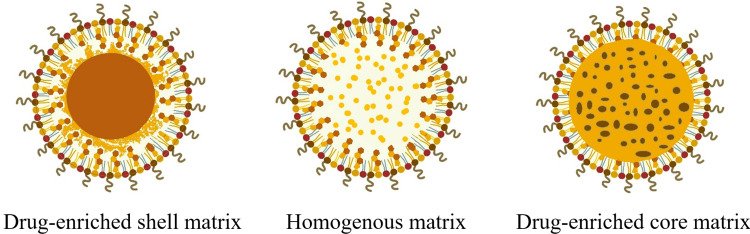 Fig.1 Solid lipid nanoparticles.1,4
The core components—solid lipids (e.g., glyceryl monostearate, stearic acid), emulsifiers/surfactants (e.g., Poloxamer 188, phospholipids), and the aqueous dispersion medium—are all selected for high biocompatibility and biodegradability. This composition confers several critical functional advantages:
Drug Protection
Controlled Release
The highly ordered crystalline structure of the solid lipid limits drug mobility, facilitating sustained and controlled drug release profiles over extended periods, which is essential for chronic disease management and reducing dosing frequency. The specific organization of the drug within the lipid matrix (e.g., homogeneous dispersion, drug-enriched shell, or drug-enriched core) dictates the release pattern.
Site-Specific Targeting Potential
The particle surface is readily modifiable, allowing for the attachment of targeting ligands (peptides, antibodies, aptamers) to achieve active targeting to specific cells or receptors, enhancing therapeutic precision.
SLNs overcome many of the limitations associated with their predecessors, offering improved physical stability (avoiding leakage and fusion seen in liposomes), ease of large-scale manufacturing, and the use of generally recognized as safe (GRAS) materials, which expedites regulatory pathways.
Application in Nanomedicine
SLNs are highly versatile nanocarriers with established utility across numerous therapeutic fields, primarily due to their capacity for high drug loading of lipophilic compounds and the flexibility to be administered via diverse routes. The following applications highlight the transformative potential of SLNs:
Oncology and Cancer Therapeutics
SLNs are widely utilized in cancer treatment to improve the therapeutic index of chemotherapeutic agents. In passive targeting, the particle size (typically below 200 nm) allows SLNs to accumulate preferentially in tumor tissue via the Enhanced Permeability and Retention (EPR) effect, which exploits the leaky vasculature and poor lymphatic drainage characteristic of solid tumors. Furthermore, SLNs can be modified for active targeting, incorporating ligands that bind to overexpressed tumor cell receptors (e.g., folate receptors), leading to highly specific drug accumulation and overcoming multidrug resistance pathways.
Neuro-Pharmaceutical Delivery
One of the most significant challenges in treating CNS disorders is crossing the Blood-Brain Barrier (BBB). SLNs have demonstrated superior capability in traversing this barrier, often through mechanisms like endocytosis or by leveraging the physiological lipid components that are recognized by brain endothelial cells. This makes them a promising system for delivering treatments for diseases such as Alzheimer's, Parkinson's, and various brain cancers.
Oral, Topical, and Pulmonary Delivery
The solid matrix protects drugs from the harsh environment of the gastrointestinal tract, making SLNs an excellent choice for improving the oral bioavailability of poorly soluble drugs (BCS Class II and IV). For topical applications, SLNs enhance skin penetration and provide localized drug delivery with a sustained-release profile, suitable for dermatological and cosmetic uses. They are also being developed for pulmonary and ocular delivery, where their biocompatibility and ability to encapsulate various compounds are highly advantageous.
Practical Research and Experimental Case Studies
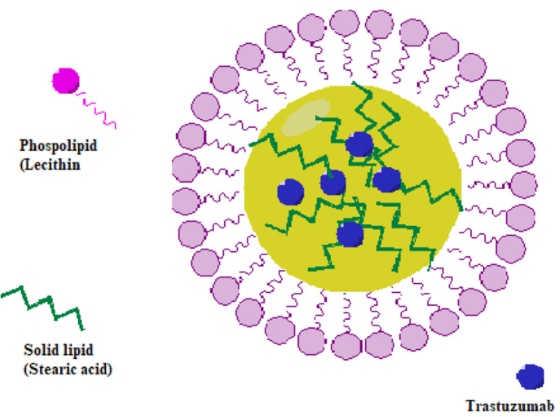
Targeted Oncology (Breast Cancer Theranostics)
The study developed Radiolabeled Trastuzumab Solid Lipid Nanoparticles as a theranostic agent for HER2-positive breast cancer. The SLNs, sized below 100 nm, showed high stability and encapsulation of the radiolabeling component. Compared to the free drug, the SLN formulation exhibited a sustained release profile in the bloodstream of rats. These findings indicate that TRZ-SLNs are promising for both diagnosing (via the radiolabel) and treating HER2-positive breast cancer with controlled systemic exposure.2,4
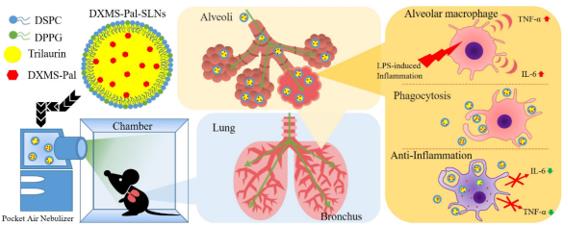
Pulmonary Delivery (Anti-inflammatory)
This study developed DXMS-Pal-SLNs for treating pulmonary inflammation, such as pneumonia, via nebulization. The formulation exhibited high drug loading and stability during nebulization, designed to target alveolar macrophages in the deep lung region. In vitro and in vivo results showed that administering DXMS-Pal-SLNs significantly reduced the secretion of pro-inflammatory cytokines (TNF-α and IL-6) in the lungs of mice with induced pulmonary inflammation. This confirms SLNs' potential for efficient local delivery to treat respiratory diseases.3,4
What We Can Offer
Solid Lipid Nanoparticles (SLNs) stand as a pivotal "first generation" technology in lipid-based nanocarriers, offering a robust alternative to conventional systems like liposomes and emulsions. Composed of a solid lipid core, stabilized by surfactants in an aqueous environment, SLNs encapsulate both hydrophilic and lipophilic Active Pharmaceutical Ingredients (APIs). The solid state of the lipid matrix at physiological temperature is the key differentiator, providing superior protection against chemical and enzymatic degradation and facilitating controlled drug release kinetics.
At Creative Biolabs, our expertise lies in leveraging this solid matrix advantage to transform challenging drug candidates into viable biopharmaceutical products. We address common project roadblocks such as:
Low Bioavailability
We formulate poorly water-soluble drugs into SLNs, significantly improving their solubility and absorption across biological barriers, including the gastrointestinal tract and the Blood-Brain Barrier (BBB).
Rapid Clearance and Degradation
The solid core protects sensitive molecules (peptides, nucleic acids) from the body's natural defense mechanisms, ensuring longer circulation times and higher systemic exposure.
Non-Specific Toxicity
Through surface modification, we enable precise, targeted delivery, concentrating the drug at the diseased site (e.g., tumors via the Enhanced Permeability and Retention (EPR) effect or actively targeted cells), thereby minimizing off-target toxicity to healthy tissues.
Our proprietary process involves meticulous selection of physiologically compatible lipids (such as glycerides, fatty acids, and waxes) and GRAS-status surfactants, followed by scalable preparation techniques like High-Pressure Homogenization (HPH) or ultrasonication. We ensure rigorous characterization of particle size (typically 50–1000 nm), polydispersity index (PDI), and zeta potential to guarantee batch-to-batch consistency and stability.
FAQs
What is the primary difference between Solid Lipid Nanoparticles and traditional liposomes, and why would I choose SLNs?
The main difference lies in the matrix core. Liposomes have a fluid core (aqueous or gel), which can lead to stability issues like drug leakage and fusion over time. SLNs have a solid lipid core that is stable at body temperature. This solid matrix offers superior physical stability, better protection for the encapsulated drug against degradation, and allows for more reliably sustained and controlled drug release profiles, making them ideal for long-term storage and efficacy.
How does the formulation of SLNs address the poor solubility and low bioavailability of certain therapeutic agents?
Many promising drugs are highly lipophilic and poorly water-soluble. SLNs address this by dissolving or dispersing the drug within the solid lipid matrix itself. This encapsulation greatly increases the drug's effective surface area, enhancing its solubility in the physiological environment and facilitating its absorption across biological membranes, such as the intestinal barrier after oral administration.
Can SLNs be modified for targeted delivery, or do they only rely on passive accumulation?
SLNs can be engineered for both passive and active targeting. They passively target tumors by exploiting the natural enhanced permeability and retention (EPR) effect due to their size. For active targeting, the surface of the SLN can be chemically modified by attaching targeting ligands (like peptides or antibodies) that specifically bind to receptors overexpressed on the target cell, ensuring precise delivery and maximizing therapeutic efficacy while sparing healthy tissue.
What are the main challenges in developing an optimal SLN system, and how are these typically managed?
Two key challenges are limited drug loading capacity (especially for highly crystalline lipids) and the potential for drug expulsion during storage due to changes in the lipid's crystalline structure (polymorphism). These are managed through careful selection of the lipid blend—sometimes incorporating a small percentage of liquid lipid to create a less ordered matrix (Nanostructured Lipid Carriers or NLCs)—and by optimizing the preparation method and cooling conditions to control the final crystalline state and drug distribution within the nanoparticle.
Is it possible to use SLNs for different routes of administration, such as oral, topical, or parenteral injections?
Yes, the versatility of SLNs is one of their major strengths. Their robust nature makes them suitable for oral delivery, protecting the drug through the GI tract. They enhance penetration for topical/dermal delivery. Furthermore, they are highly stable in dispersion, making them excellent candidates for parenteral (e.g., intravenous) administration, where they can be formulated for controlled systemic release.
The development of successful, clinically viable therapeutics demands drug delivery systems that are both effective and reliable. Creative Biolabs' Solid Lipid Nanoparticles (SLNs)-based Delivery Systems Solution provides the stability, targeting capabilities, and controlled release kinetics essential for today's complex drug molecules. We offer specialized expertise in lipid selection, formulation optimization, and scalable manufacturing to transition your therapeutic candidate from concept to clinical reality.
Reference
- M, Navaneetha Krishnan et al. "The Science of Solid Lipid Nanoparticles: From Fundamentals to Applications." Cureus vol. 16,9 e68807. 6 Sep. 2024, https://doi.org/10.7759/cureus.68807.
- Ozgenc, Emre et al. "Radiolabeled Trastuzumab Solid Lipid Nanoparticles for Breast Cancer Cell: in vitro and in vivo Studies." ACS omega vol. 7,34 30015-30027. 19 Aug. 2022, https://doi.org/10.1021/acsomega.2c03023.
- Chen, Hsin-Hung et al. "Solid Lipid Nanoparticles Loaded with Dexamethasone Palmitate for Pulmonary Inflammation Treatment by Nebulization Approach." Pharmaceutics vol. 16,7 878. 29 Jun. 2024, https://doi.org/10.3390/pharmaceutics16070878.
- Distributed under Open Access license CC BY 4.0, without modification.
Our services are For Research Use Only. We do not provide services to individuals.
Online Inquiry