
The bioadhesive properties of the lipid matrix aid in enhanced mucosal uptake and stability against degradation in the gastrointestinal tract, significantly boosting the oral bioavailability of low-solubility drugs and sensitive macromolecules like insulin peptides.
Cubosome based Targeted Drug Delivery Solution
In the pursuit of advanced therapies, challenges like poor drug solubility and non-specific biodistribution often hinder promising molecules. Our Cubosomes-based Delivery Systems Solution helps you enhance bioavailability and target precision for challenging therapeutics through advanced liquid crystalline phase technology and highly tailored formulations. We provide thermodynamically stable, high-capacity nanocarriers designed to dramatically improve the pharmacokinetic profile and efficacy of your payload.
Click Here to View more about our Services
Introduction of Cubosomes-based Delivery Systems
Cubosomes represent an advanced class of nanosized, liquid-crystalline particles that are self-assembled by certain amphiphilic lipids—most commonly monoglycerides like monoolein (glycerol monooleate, GMO)—in the presence of a block copolymer stabilizer and excess water. These unique carriers are defined by their internal bicontinuous cubic phase, a thermodynamically stable structure where a single, curved, continuous lipid bilayer separates two non-intersecting aqueous channels.
Typically ranging from 50 to 500nm in diameter, cubosomes possess a high surface area and a geometrically intricate internal architecture that sets them apart from liposomes and micelles, making them exceptionally promising for the delivery of diverse therapeutic molecules.
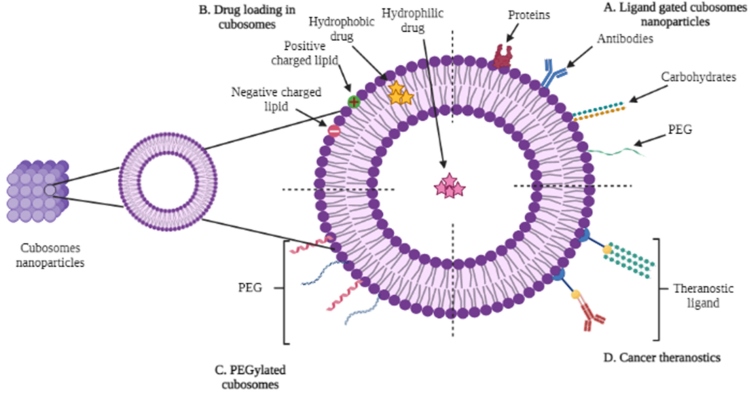 Fig.1 Cubosomes exhibiting internal and cubic structures with potential of drug delivery.1,4
Key Features
Versatile Drug Encapsulation
The internal network of channels—one polar (aqueous) and one non-polar (lipid)—allows for efficient encapsulation of drugs with varying solubility, including highly hydrophilic (in the aqueous channels), highly hydrophobic (in the lipid bilayer), and amphiphilic molecules.
High Stability
Cubosomes exhibit superior thermodynamic stability compared to liposomes or classical emulsions. Their rigid, bicontinuous structure minimizes leakage and fusion, providing a robust platform that is less susceptible to degradation in vivo and during storage.
Large Internal Surface Area
Cubosomes possess an exceptionally large internal interface, maximizing the interaction and loading capacity for stabilizing and solubilizing therapeutic agents.
Diffusion through Tortuous Channels
Drug molecules must navigate the complex, high-surface-area internal channels of the cubic lattice. This tortuous pathway significantly increases the diffusion path length, leading to a zero-order or pseudo-zero-order release profile, effectively sustaining drug concentration over time.
Applications in Modern Therapeutics
The structural versatility and stability of Cubosomes-based Delivery Systems have opened critical avenues across various therapeutic modalities and administration routes:
Oral Drug Delivery
Cancer Therapeutics
Cubosomes are highly effective carriers for chemotherapeutics, offering high payload capacity and sustained release directly into the tumor microenvironment. When functionalized with tumor-targeting ligands, they leverage the Enhanced Permeability and Retention (EPR) effect while improving therapeutic efficacy, as demonstrated in preclinical models against various cancers (Published Data).
Transdermal and Ophthalmic Delivery
The lipid structure of cubosomes bears a resemblance to the skin's stratum corneum, enabling them to enhance penetration deep into dermal layers. This makes them ideal for topical treatments, reducing the need for systemic administration and minimizing side effects. For ocular delivery, their bioadhesive nature improves drug retention time on the eye surface.
Delivery of Biologics
The cubic matrix offers robust protection for sensitive biologics, including proteins, peptides, and gene therapy payloads (siRNA, plasmid DNA), shielding them from enzymatic hydrolysis until they reach the target cell. Specific formulations incorporating cationic lipids can be optimized for nucleic acid delivery.
Practical Research Case Studies
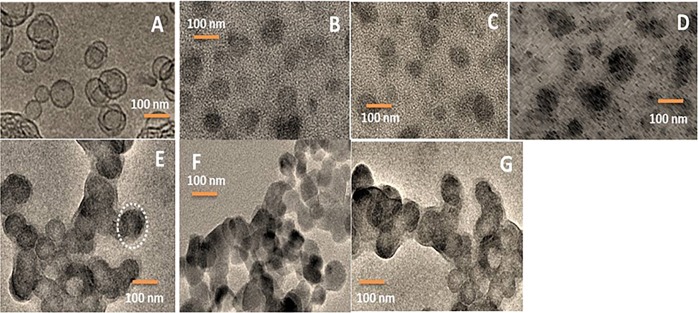
Theranostic combinatorial drug-loaded coated cubosomes for enhanced targeting and efficacy against cancer cells
This study created dual drug-loaded cubosomes (cisplatin and paclitaxel) coated with poly-ε-lysine for sustained cancer therapy. The coating successfully prevented the initial burst release and ensured uniform drug dispersion in a non-crystalline state. In in vitro tests on resistant HeLa cells, the coated cubosomes exhibited significantly higher therapeutic efficacy and prolonged cellular impairment than uncoated systems, confirming the coating's success in improving delivery kinetics.2,4
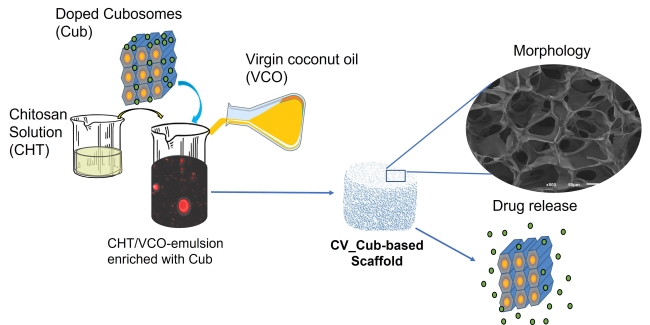
Chitosan/Virgin-Coconut-Oil-Based System Enriched with Cubosomes: A 3D Drug-Delivery Approach
Researchers engineered a Chitosan/Virgin Coconut Oil (CV)-based emulsion scaffold, integrating phytantriol cubosomes to deliver diclofenac. The cubosomes enhanced the mechanical stability of the 3D architecture. Importantly, the formulation showed improved diclofenac release, which was attributed to the migration of short-chain fatty acids from the oil phase to the cubosomes, demonstrating a synergistic delivery mechanism for sustained release of lipophilic agents.3,4
What We Can Offer
Cubosomes represent a powerful leap beyond conventional liposomes, offering a uniquely structured platform to address the most persistent formulation and delivery problems in biopharma. Our solutions are specifically designed for payloads that are difficult to handle, including highly potent small molecules, large peptides, and delicate nucleic acids.
We assist your project by delivering:
Superior Encapsulation for Complex Payloads
Cubosomes' bicontinuous internal structure provides distinct lipid and aqueous domains, allowing for the simultaneous, high-efficiency loading of both hydrophilic and hydrophobic molecules—a capability essential for combination therapies.
Sustained and Controlled Release Kinetics
The tortuous, nanoscale water channels within the cubic lattice enforce a diffusion-mediated release mechanism, providing significantly prolonged drug release profiles compared to simple vesicular systems. This leads to reduced dosing frequency and improved therapeutic windows.
Enhanced Bioavailability
By stabilizing poorly soluble APIs within the liquid crystalline matrix and promoting interaction with mucosal or dermal barriers (due to their bioadhesive nature), cubosomes dramatically improve systemic or localized drug uptake.
Tailored Targeting Potential
We develop surface-modified cubosomes functionalized with targeting ligands (peptides, antibodies, aptamers), allowing your therapeutic agent to precisely localize at the site of disease, maximizing efficacy while minimizing off-target toxicity.
FAQs
How do these nanocarriers handle both water-soluble and fat-soluble drugs simultaneously, and what is the benefit of this?
These systems possess a unique internal structure known as a bicontinuous cubic phase. This architecture creates two distinct, non-mixing environments: aqueous channels for hydrophilic drugs and the surrounding lipid bilayers for hydrophobic drugs. This ability to encapsulate both types of molecules simultaneously is essential for developing synergistic combination drug therapies, maximizing the therapeutic potential of the final formulation.
Given the complexity of the internal structure, how is the drug release rate controlled and sustained over time?
Drug release is primarily governed by diffusion through the nanoscale aqueous channels and the lipid matrix. The channels are tortuous and tightly regulated by the lipid curvature, acting like a molecular sieve. By modifying the composition of the lipid mixture or the stabilizing polymer, the size and structure of these channels can be precisely tuned, allowing for highly predictable and sustained release profiles that can last for days, dramatically improving patient compliance.
Are these lipid systems more stable than simple vesicles, and what measures are in place to prevent aggregation or leakage?
Yes, they are generally thermodynamically more stable. They are formed from a liquid crystalline phase which gives them a high resistance to osmotic stress and dilution. Stability is actively maintained by incorporating specialized polymeric surfactants (stabilizers) that form a protective steric layer on the particle surface. This layer prevents particle-to-particle aggregation and helps preserve the integrity of the cubic structure in complex biological media.
What are the main challenges when scaling up the production of these systems, and what methods address them?
The primary challenge is the high viscosity of the initial bulk cubic phase, which makes large-scale mixing difficult. This is overcome by employing two main strategies: the Top-Down approach uses high-shear methods to fragment the bulk phase into nanoparticles, while the Bottom-Up approach involves spontaneous self-assembly through controlled dilution of lipid precursors in hydrotropes. Selecting the appropriate low-energy, scalable method is essential for cost-effective mass production.
Can these nanocarriers be modified to target a specific tissue, such as a tumor or an inflamed area?
Absolutely. The outer surface of the carrier can be functionalized through the incorporation of specialized lipids that act as anchors for targeting ligands. These ligands, which could be peptides, antibodies, or small molecules, bind specifically to receptors overexpressed on the target cell surface. This surface engineering capability allows for sophisticated, active targeting, minimizing systemic exposure and focusing the therapeutic effect where it is needed most.
Creative Biolabs' Cubosomes-based Delivery Systems Solution provides a robust, state-of-the-art platform for tackling the most challenging drug delivery obstacles. By harnessing the unique bicontinuous cubic liquid crystalline structure, we offer superior encapsulation, enhanced stability, and precisely controlled release kinetics, ensuring your therapeutic candidates reach their full potential.
Reference
- Umar, Hassaan et al. "Cubosomes: Design, Development, and Tumor-Targeted Drug Delivery Applications." Polymers vol. 14,15 3118. 31 Jul. 2022, https://doi.org/10.3390/polym14153118
- Zhang, Leilei et al. "Theranostic combinatorial drug-loaded coated cubosomes for enhanced targeting and efficacy against cancer cells." Cell death & disease vol. 11,1 1. 2 Jan. 2020, https://doi.org/10.1038/s41419-019-2182-0
- Silva, Simone S et al. "Chitosan/Virgin-Coconut-Oil-Based System Enriched with Cubosomes: A 3D Drug-Delivery Approach." Marine drugs vol. 21,7 394. 6 Jul. 2023, https://doi.org/10.3390/md21070394
- Distributed under Open Access license CC BY 4.0, without modification.
Our services are For Research Use Only. We do not provide services to individuals.
Online Inquiry