
Polymersomes excel in both passive and active targeting strategies. Their optimized size (typically 100-200 nm) facilitates passive accumulation in solid tumors via the Enhanced Permeability and Retention (EPR) effect. Furthermore, conjugation of tumor-specific ligands enables active targeting, greatly improving the local concentration of highly potent chemotherapies, immunotherapies, or radiotherapeutics, while sparing healthy tissue.
Polymersome based Targeted Drug Delivery Solution
In the challenging pursuit of advanced therapeutics, the integrity and precision of drug delivery are paramount. Our Polymersome-based Delivery Systems Solution helps you accelerate therapeutic candidate development through advanced polymer assembly and customized functionalization techniques, securing complex payloads and ensuring targeted, controlled release at the desired biological site.
Click Here to View more about our Services
Introduction to Polymersome Delivery Systems
Polymersomes are synthetic nanovesicles formed by the self-assembly of amphiphilic block copolymers in an aqueous environment, conceptually analogous to liposomes but offering superior chemical and physical tunability. Unlike lipids, the polymeric building blocks (monomers) possess high molecular weights, which covalently link to form hydrophobic and hydrophilic blocks. This design results in a bilayer membrane that is typically 5 to 30 nm thick, substantially more robust and less permeable than the typical 3-5 nm phospholipid bilayer found in liposomes.
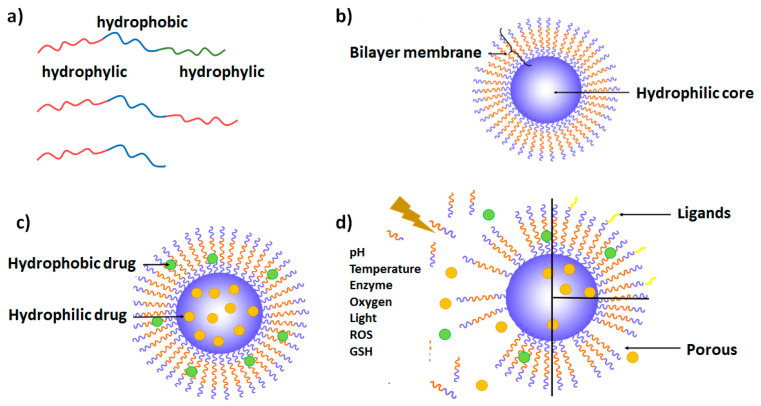 Fig.1 Polymersome.1,4
The critical characteristic of polymersomes lies in the vast chemical space of available block copolymers (e.g., PEG-PCL, PEO-PCL). This chemical versatility allows for precise control over key properties:
Stability and Toughness
The high molecular weight and covalent backbone impart exceptional mechanical strength, allowing polymersomes to remain stable for extended periods, even at ambient temperatures, overcoming the shelf-life and in vivo stability issues often associated with lipid nanoparticles (LNPs) and liposomes.
Tunable Permeability
By adjusting the chemistry and length of the block copolymers, the membrane permeability can be finely tuned to regulate the diffusion of encapsulated hydrophilic agents from the aqueous core, enabling sustained-release profiles.
Dual Encapsulation Capability
Their structure, featuring a hydrophilic core and a hydrophobic bilayer, permits the co-encapsulation of both hydrophilic and hydrophobic therapeutic agents, opening avenues for synergistic combination therapies.
This platform represents a critical advancement, moving drug delivery from simple shielding towards truly programmed therapeutic intervention.
Application of Polymersome Nanocarriers
The unique characteristics of polymersomes have positioned them as a cutting-edge platform across several biomedical frontiers:
Targeted Cancer Therapy
Nucleic Acid and Gene Delivery
The high stability of the polymersome core makes it an excellent sanctuary for fragile payloads like mRNA, siRNA, or plasmid DNA. Polymersomes can be engineered to efficiently escape the endosome, a major barrier in gene therapy, thereby maximizing the cytoplasmic availability of the therapeutic genetic material.
Theranostics and Bioimaging
By simultaneously encapsulating a therapeutic agent and a diagnostic imaging agent (e.g., contrast dyes or quantum dots) within the same nanocarrier, polymersomes enable theranostic applications. This allows for real-time tracking of the drug distribution, monitoring of treatment response, and precise visualization of the target site.
Vaccine Development
The particulate nature and the ability to encapsulate antigens within the aqueous core or incorporate them into the membrane make polymersomes effective adjuvant and delivery vehicles for novel subunit and mRNA vaccines, promoting robust and targeted immune responses.
Practical Research Case Studies
Glioblastoma Targeted Delivery
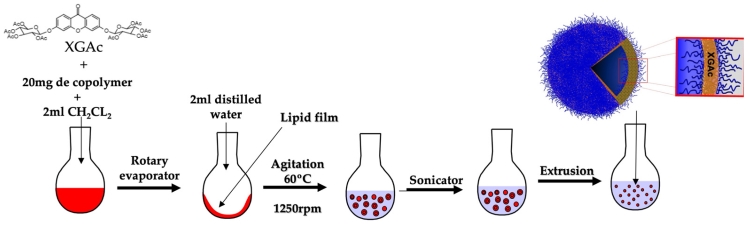
The Synthesis and Characterization of a Delivery System Based on Polymersomes and a Xanthone with Inhibitory Activity in Glioblastoma
This study focused on delivering 3,6-bis(2,3,4,6-tetra-O-acetyl-β-glucopyranosyl)xanthone (XGAc), a cytotoxic compound, using poly(ethylene glycol)-ε-caprolactone (PEG-PCL) polymersomes. The formulation achieved 80% encapsulation and protected healthy cerebral endothelial cells from XGAc's toxicity, while maintaining high lethality toward glioblastoma (GBM) cells. The system demonstrated efficient cargo release triggered by the acidic intratumoral pH, highlighting a promising, protected, and targeted approach for brain cancer therapy.2,4
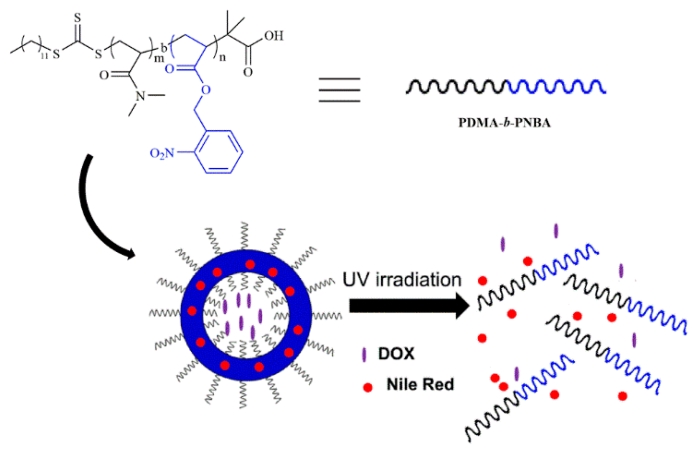
Photo-Responsive Dual-Drug Release
Photo-Responsive Polymersomes as Drug Delivery System for Potential Medical Applications
Researchers developed polymersomes based on o-nitrobenzyl chemistry that are sensitive to light. These vesicles co-loaded both hydrophobic and hydrophilic drugs, storing them in the membrane and aqueous core, respectively. External light irradiation (365 nm) triggers a photocleavage reaction of the o-nitrobenzyl groups, causing the polymersome to dissociate. This allows for the simultaneous, on-demand release of the co-loaded drug cargoes, demonstrating a precise, smart nanocarrier design for combination therapy.3,4
What We Can Offer: Custom Polymersome Development Services
Navigating the complexities of in vivo stability, systemic toxicity, and optimal therapeutic efficacy often requires moving beyond traditional lipid-based carriers. Creative Biolabs' Polymersome-based Delivery Systems Solution addresses these formidable challenges directly. We engineer polymeric vesicles (polymersomes) with significantly enhanced mechanical strength and controlled permeability, making them ideal carriers for sensitive biomolecules and combination therapies.
Our primary solutions include:
Enhanced Payload Protection
Designing polymersomes with thicker, more robust bilayers that shield delicate cargos (such as nucleic acids or proteins) from enzymatic degradation and harsh environments during systemic circulation.
Precision Targeting
Customizing the polymersome surface with specific targeting ligands (peptides, antibodies, aptamers) to achieve high-fidelity accumulation in diseased tissues, maximizing therapeutic efficacy while minimizing off-target effects.
Triggered Release Mechanisms
Implementing stimuli-responsive polymers that disassemble or alter permeability in response to endogenous cues (e.g., pH changes in tumors or endosomes, high redox potential within cells) or exogenous triggers (e.g., light or temperature), ensuring controlled drug release exactly when and where it is needed.
We deliver fully characterized, optimized formulations ready for preclinical testing, significantly de-risking your development pathway.
FAQs
How do polymeric nanovesicles offer better protection for sensitive payloads, such as mRNA or therapeutic proteins, compared to traditional carriers?
These vesicles are constructed from high-molecular-weight amphiphilic polymers rather than smaller lipids. This results in a thicker, much more mechanically tough, and less permeable bilayer membrane. This robust wall acts as a superior barrier, effectively shielding fragile nucleic acids and macromolecules from degradation by systemic enzymes and minimizing premature leakage in the bloodstream, ensuring that the therapeutic dose remains intact until it reaches the target tissue.
What methods are used to achieve specific targeting with these systems, and how reliable are they in minimizing off-target effects?
Specificity is achieved through active targeting, where the outer surface of the nanocarrier is precisely functionalized with targeting ligands that recognize receptors highly expressed on the surface of diseased cells (e.g., tumor cells). This targeted approach drastically increases the local concentration of the drug at the pathological site while keeping the systemic dose low, which is the key mechanism for reducing adverse effects on healthy tissues.
What is the primary difference in functional properties when choosing a polymersome over a liposome for drug encapsulation?
The main functional distinction is the tunability and stability of the membrane. The polymersome's synthetic nature allows researchers to fine-tune the membrane thickness, fluidity, and polymer composition. This control facilitates highly precise regulation of cargo retention and release rate, and enables the incorporation of sophisticated stimuli-responsive features (like pH sensitivity) that are challenging to implement reliably in lipid-only systems.
Can these nanocarriers be engineered to carry both a hydrophilic small molecule drug and a hydrophobic imaging agent simultaneously?
Absolutely. The unique structure of these nanovesicles, which features an inner aqueous cavity and a hydrophobic bilayer membrane, is naturally suited for dual payload encapsulation. Hydrophilic molecules are sequestered in the aqueous core, while hydrophobic molecules partition effectively into the polymer membrane itself. This simultaneous loading capability is fundamental to developing effective combination therapies and theranostic systems.
What are the key considerations for selecting the right polymer composition to ensure both effectiveness and patient safety?
The selection process is critical and focuses on biocompatibility and biodegradability. Polymers must be chosen based on their established low immunogenicity and their ability to be safely broken down and cleared from the body post-delivery. Comprehensive in vitro and in vivo toxicity screening is essential to confirm that the chosen polymer chemistry is biologically inert and that the degradation products are non-toxic, securing a favorable safety profile for clinical translation.
Creative Biolabs' Polymersome-based Delivery Systems Solution provides the stability, targeting, and controlled release capabilities necessary to realize the potential of complex therapeutic candidates. We offer full-spectrum support, including custom polymer synthesis, advanced formulation, stimuli-responsive design, and comprehensive characterization. Partner with our experts to transform your payload into a viable, high-performance nanomedicine.
Reference
- Fonseca, Mariana et al. "Polymersomes as the Next Attractive Generation of Drug Delivery Systems: Definition, Synthesis and Applications." Materials (Basel, Switzerland) vol. 17,2 319. 8 Jan. 2024, https://doi.org/10.3390/ma17020319
- Alves, Ana et al. "The Synthesis and Characterization of a Delivery System Based on Polymersomes and a Xanthone with Inhibitory Activity in Glioblastoma." Life (Basel, Switzerland) vol. 14,1 132. 17 Jan. 2024, https://doi.org/10.3390/life14010132
- Hou, Wanting et al. "Photo-Responsive Polymersomes as Drug Delivery System for Potential Medical Applications." Molecules (Basel, Switzerland) vol. 25,21 5147. 5 Nov. 2020, https://doi.org/10.3390/molecules25215147
- Distributed under Open Access license CC BY 4.0, without modification.
Our services are For Research Use Only. We do not provide services to individuals.
Online Inquiry