

Cerasomes are highly effective carriers for chemotherapeutics. Their enhanced stability prevents premature drug leakage, ensuring higher drug concentrations reach the tumor site via the Enhanced Permeation and Retention (EPR) effect. Furthermore, the robust surface is easily modified with targeting ligands (e.g., antibodies against tumor antigens) for active delivery. Cerasomes can also be designed as theranostic agents, co-loading anti-cancer drugs and imaging contrast agents (like magnetic particles), enabling simultaneous treatment and real-time monitoring of therapeutic efficacy.
Cerasome based Targeted Drug Delivery Solution
In the pursuit of groundbreaking therapies, the durability and precision of the delivery vehicle are paramount. Fragile payloads, like nucleic acids or proteins, require protection from enzymatic degradation and premature leakage in the bloodstream. Our Cerasomes-based Delivery Systems Solution helps you achieve superior therapeutic stability and sustained, targeted release through the engineering of novel organic-inorganic nanohybrid carriers. This advanced platform is designed to overcome the limitations of conventional liposomes, significantly improving drug half-life and therapeutic index for complex payloads.
Click Here to View more about our Services
Introduction to Cerasomes Delivery Systems
Cerasomes represent a sophisticated class of organic-inorganic hybrid nanocarriers, conceived as an evolution of traditional liposomes. They maintain the fundamental vesicular structure—an aqueous core enclosed by a lipid bilayer—but differentiate themselves through the incorporation of a polyorganosiloxane network (a ceramic surface) derived from sol-gel chemistry on the exterior. This hybrid architecture fuses the biocompatibility and flexibility of lipids with the high chemical and mechanical stability of inorganic materials.
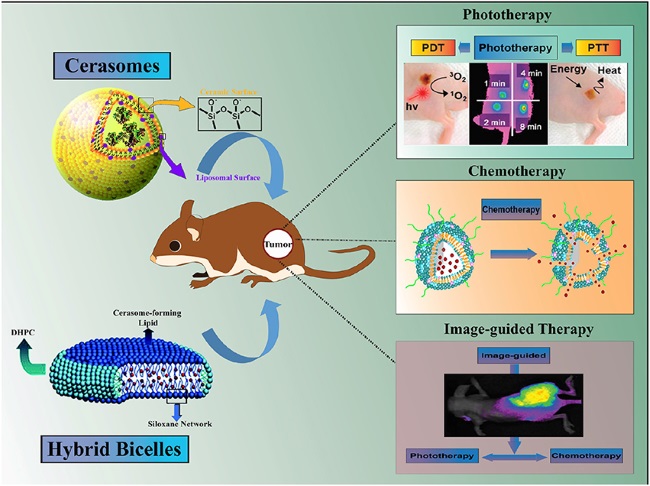 Fig.1 Cerasomes and Bicelles with Silica-like Surface in Cancer Theranostics.1,4
The formation process involves the self-assembly of specially engineered cerasome-forming lipids (CFLs), which possess an alkoxysilane head group. Under controlled conditions, these head groups hydrolyze and condense, forming a dense, covalent siloxane framework on the surface of the vesicles. This ceramic shell acts as a molecular "armor," dramatically reinforcing the carrier's integrity.
Research confirms that Cerasomes offer significant pharmacological advantages. Studies comparing Cerasomes to conventional liposomes (as demonstrated in published pharmacokinetic analyses) show that the external siloxane network provides superior morphological stability against membrane destabilization factors like surfactants and heat. Furthermore, Cerasomes have been successfully engineered to co-encapsulate diverse payloads (hydrophilic, hydrophobic, and amphiphilic drugs like doxorubicin or paclitaxel) and functional materials (like Fe₃O₄ nanoparticles for magnetic targeting), resulting in increased drug half-life, reduced systemic toxicity, and improved efficacy in vivo. This technological advancement positions Cerasomes as morphologically durable, biocompatible carriers with immense potential for advanced drug and gene delivery, particularly in conditions requiring extended circulation or triggered release.
Applications of Cerasomes in Advanced Nanomedicine
The superior stability and versatility afforded by the Cerasome architecture unlock critical applications across various biomedical fields, solving persistent challenges associated with sensitive payloads.
Oncology and Cancer Theranostics
Gene and Nucleic Acid Delivery
Delivering sensitive payloads like siRNA, antisense oligonucleotides, or plasmid DNA requires a carrier capable of resisting degradation by nucleases in the circulation. The polyorganosiloxane network provides this essential barrier. Cationic Cerasomes can effectively complex with nucleic acids, protecting them until cellular internalization, resulting in more potent gene silencing or expression than achieved with less stable carriers.
Transdermal and Topical Administration
For dermatological conditions or cosmetic applications, Cerasomes show a high affinity for keratin in the stratum corneum. This intrinsic property facilitates deep penetration and localized drug concentration in skin layers or hair follicles. Applications include enhanced delivery of anti-inflammatory compounds or small molecules (like cryptotanshinone) for treating conditions such as acne, significantly improving therapeutic outcomes compared to traditional gels or emulsions.
Practical Research Case Studies
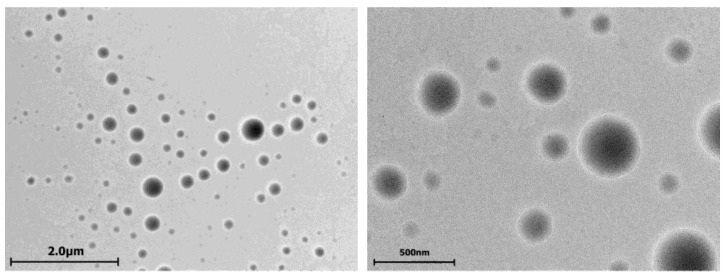
Brain Delivery for Glioma Therapy
Cerasomes were developed to encapsulate the antitumor agent paclitaxel (PTX) for effective delivery across the blood-brain barrier (BBB) to treat glioblastoma. In in vitro tests on T98G glioblastoma cells, the PTX-loaded cerasomes exhibited an antitumor effect 36 times greater than free PTX. Studies in Wistar rats also confirmed that the morphologically stable cerasomes successfully transported fluorescent dye rhodamine B past the BBB, demonstrating superior efficacy for brain tumor treatment.2,4
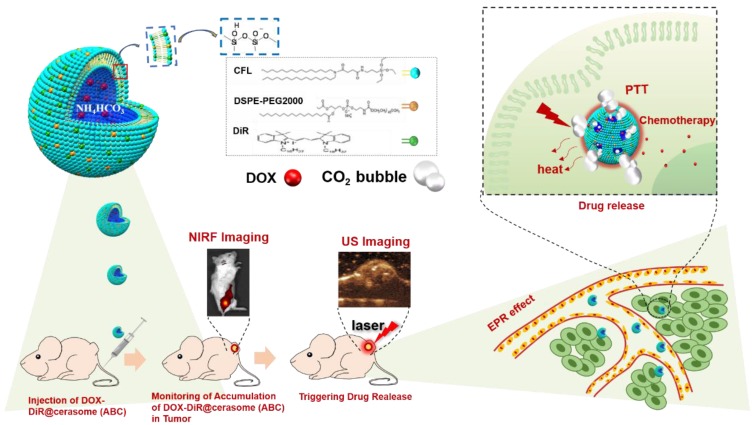
Thermo-Responsive Chemo-Photothermal Therapy
This study developed a smart, thermosensitive cerasome containing Doxorubicin (DOX) and a photothermal agent for dual-mode chemo-photothermal synergistic therapy. Near-Infrared (NIR) light exposure heated the system, causing an encapsulated agent to decompose and generate CO₂ bubbles. This bubble generation created permeable channels in the cerasome's silicate shell, triggering the rapid and highly localized release of DOX directly at the tumor site, minimizing systemic toxicity in mice models.3,4
What We Can Offer: Custom Cerasomes Services
The most formidable challenges in targeted drug development—poor stability, rapid clearance, and off-target toxicity—are directly addressed by our Cerasomes platform. By utilizing a core lipid bilayer reinforced with a ceramic-like polyorganosiloxane network, Creative Biolabs provides nanocarriers with dramatically enhanced morphological and chemical resilience.
We specialize in tailoring the Cerasome composition (cerasome-forming lipids, phospholipids, and targeting ligands) to fit your specific payload and therapeutic environment. Our solutions are designed to:
Enhance Systemic Stability
Provide unparalleled protection against plasma surfactants, temperature fluctuations, and pH changes, ensuring the integrity of the encapsulated cargo (e.g., small molecules, proteins, or siRNA) during prolonged circulation.
Achieve Sustained Release
Precisely control the release kinetics of your therapeutic agent, extending its exposure window at the disease site while minimizing peak systemic concentrations that drive toxicity.
Enable Multifunctional Theranostics
Integrate imaging agents (like quantum dots or superparamagnetic iron oxide nanoparticles) and therapeutic agents into a single, stable platform for simultaneous diagnosis and treatment, particularly in areas like oncology.
Optimize Targeting Efficiency
Surface modification with specific peptides, antibodies, or aptamers allows for highly selective active targeting, ensuring drug concentration is maximized at the target tissue (e.g., tumors or inflammatory sites).
We view Cerasomes as the evolution of liposomal technology, providing a robust foundation for next-generation nanomedicine. If your current delivery strategy is hindered by stability or efficacy issues, the ceramic-reinforced architecture of our Cerasomes is the solution.
FAQs
How do these hybrid carriers offer better protection for sensitive drugs compared to standard vesicles?
The enhanced protection comes from the incorporation of an inorganic oxide framework, typically a polyorganosiloxane network, which cross-links the outer surface of the carrier. This ceramic-like shell acts as a structural reinforcement, providing superior resistance to shear stress, surfactants, and environmental changes (like pH fluctuations) that would typically cause conventional vesicles to rupture or leak prematurely.
Can a single nanocarrier deliver both a therapeutic drug and an imaging agent simultaneously?
Yes, absolutely. These nanohybrid systems are highly adaptable. They are explicitly designed for theranostic applications by co-encapsulating both hydrophobic drugs within the lipid bilayer and hydrophilic agents (or imaging contrast materials) within the aqueous core, creating a stable, multifunctional particle capable of both diagnosis and treatment.
What factors primarily influence the drug release rate from these advanced nanocarriers?
The drug release kinetics are chiefly determined by two factors: the chemical composition of the lipid components (which affects membrane permeability) and the density or thickness of the external reinforcing network. By manipulating the ratio of cerasome-forming lipids to traditional phospholipids, we can precisely tune the integrity of the shell and the permeability of the membrane to achieve the desired sustained or triggered release profile.
Is there a trade-off between the increased stability and the system's biocompatibility or immunogenicity?
A key benefit of this hybrid design is that it maintains the high biocompatibility of the core lipid structure while significantly boosting stability. The components are generally composed of natural, biodegradable lipids and silica derivatives, which are widely accepted in biomedical applications. The material composition is carefully chosen to minimize potential toxicity or immune system activation.
For targeted delivery, how is the active targeting module attached to this highly stable surface?
The inherent siloxane groups (Si-OH) on the carrier's surface are highly reactive and provide a facile chemical handle for functionalization. This allows for robust and stable covalent conjugation of various targeting ligands—such as antibodies, peptides, or small molecules—using well-established silane chemistry, ensuring the targeting specificity is maintained throughout the carrier's circulation time.
Creative Biolabs' Cerasomes-based Delivery Systems Solution represents the forefront of targeted nanocarrier technology. By merging the stability of ceramic frameworks with the biocompatibility of liposomes, we offer bespoke solutions for drug loading, stability enhancement, sustained release, and multifunctional theranostic development, empowering your complex therapeutic programs.
Reference
- Hameed, Sadaf et al. "Cerasomes and Bicelles: Hybrid Bilayered Nanostructures With Silica-Like Surface in Cancer Theranostics." Frontiers in chemistry vol. 6 127. 18 Apr. 2018, https://doi.org/10.3389/fchem.2018.00127
- Pavlov, Rais et al. "The Formation of Morphologically Stable Lipid Nanocarriers for Glioma Therapy." International journal of molecular sciences vol. 24,4 3632. 11 Feb. 2023, https://doi.org/10.3390/ijms24043632
- Sun, Suhui et al. "Bubble-Manipulated Local Drug Release from a Smart Thermosensitive Cerasome for Dual-Mode Imaging Guided Tumor Chemo-Photothermal Therapy." Theranostics vol. 9,26 8138-8154. 18 Oct. 2019, https://doi.org/10.7150/thno.36762
- Distributed under Open Access license CC BY 4.0, without modification.
Our services are For Research Use Only. We do not provide services to individuals.
Online Inquiry