
This remains a primary application. By targeting conserved microbial glycans, DectiSomes provide a pan-antifungal or pan-antibacterial strategy that is highly effective against drug-resistant strains and biofilms.
DectiSome based Targeted Drug Delivery Solution
The quest for breakthrough medicines often falters because a major hurdle remains: achieving precise delivery. Safeguarding delicate therapeutic cargo and directing treatments precisely to the necessary site of action are crucial factors determining a project's success or failure. Our DectiSomes-based Delivery Systems Solution helps you accelerate therapeutic candidate translation through a highly precise, C-type lectin receptor-inspired targeting mechanism that concentrates cargo at the disease site while minimizing off-target toxicity.
Click Here to View more about our Services
Introduction to DectiSomes-based Delivery Systems
DectiSomes represent a next-generation class of immuno-liposomes specifically engineered for enhanced targeted drug delivery. The fundamental design is based on functionalizing conventional liposomal carriers with the Carbohydrate Recognition Domains (CRDs) of mammalian C-type Lectin Receptors (CLRs), such as Dectin-1 or Dectin-2.
Structure and Function: The core of a DectiSome is a robust liposome, capable of encapsulating both hydrophilic and hydrophobic drugs. The key functional feature is the incorporation of CLR-CRDs on the liposomal surface. These domains are naturally involved in the host immune response, specifically recognizing conserved sugar moieties (glycans, oligomannans, glucans) expressed abundantly on the cell walls, exopolysaccharide matrices, and biofilms of various pathogens or tumor surfaces. By displaying these CLR-CRDs, DectiSomes essentially mimic the host's natural targeting mechanism, achieving high specificity for the target structure. This leads to a massive increase in drug concentration at the infection or disease site.
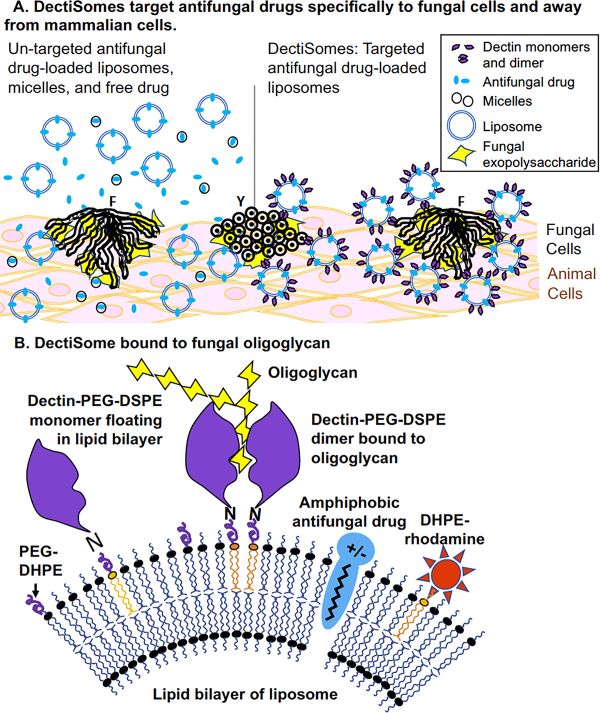 Fig.1 DectiSomes designed to target antifungal drugs specifically to fungal cells.1,4
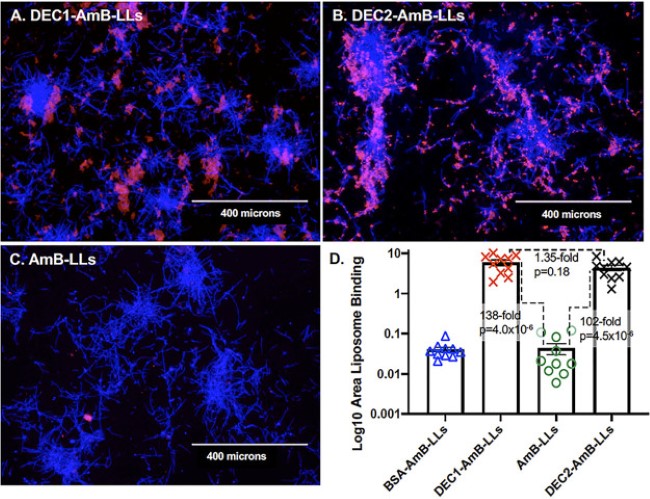
Credibility in Targeted Therapy: Literature cited in this field demonstrates that this targeted approach dramatically improves therapeutic efficacy and reduces systemic toxicity. For instance, studies have shown that Dectin-decorated liposomes loaded with Amphotericin B exhibit over a hundred-fold greater binding efficiency to fungal hyphae compared to untargeted liposomal formulations. By concentrating the drug locally, DectiSomes overcome common drug resistance mechanisms and permit the use of lower, safer effective doses, leading to significantly better clinical outcomes in various infection models.
Applications in Precision Therapeutics
The versatility of the DectiSomes platform, driven by the modular nature of lectin receptor targeting, extends far beyond its initial development as an anti-infective agent. Creative Biolabs' customized solutions enable broad application across multiple therapeutic areas requiring precision delivery.
Infectious Disease Treatment
Oncology (Cancer Targeting)
Many cancer cells overexpress specific carbohydrate antigens (e.g., tumor-associated glycans). We can engineer DectiSomes using CLRs or other lectin-like domains that recognize these specific tumor glycans, delivering chemotherapeutics or immune-modulating agents directly to the malignant cells, minimizing impact on healthy tissues.
Vaccine and Immunotherapy Delivery
DectiSomes can be utilized as effective adjuvants or delivery vehicles for vaccines. By targeting antigens to antigen-presenting cells (APCs), which naturally express CLRs like Dectin-1 and Dectin-2, the platform can initiate potent and specific innate and adaptive immune responses, enhancing vaccine efficacy.
Delivery to Immunologically Privileged Sites
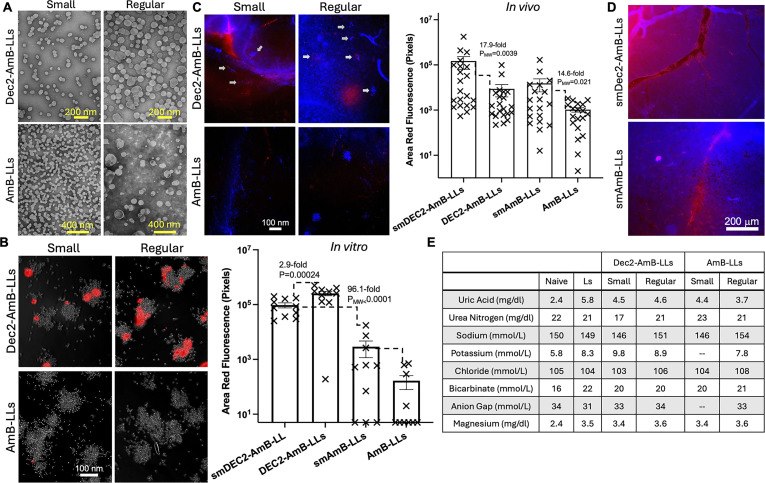
Recent advances have shown that tuning the particle size of DectiSomes (e.g., to ~50 nm) can significantly enhance tissue penetration, notably improving efficacy in treating systemic infections affecting difficult-to-reach organs, such as the brain.
Practical Research Case Studies
Disseminated Candidiasis Treatment
DectiSomes: Glycan Targeting of Liposomal Drugs Improves the Treatment of Disseminated Candidiasis.
Researchers explored Dectin-1 (DEC1) and Dectin-2 (DEC2) targeted liposomes for treating disseminated candidiasis in neutropenic mice. The study confirmed that both DEC1- and DEC2-DectiSomes bound over 100-fold more efficiently to C. albicans hyphae in vitro than untargeted liposomes. Critically, a single low dose (0.2 mg/kg) of the DectiSomes reduced the kidney fungal burden several-fold better than conventional liposomal Amphotericin B, highlighting the potential for dose reduction and decreased systemic toxicity in severe, immunosuppressed infections.2,4
Optimization for Cryptococcal Meningitis
Small but mighty: targeted antifungal liposomes of a smaller size are superior in treating cryptococcal meningitis.
Targeting cryptococcal meningitis (a CNS infection) presents unique challenges. This case study compared regular (~100 nm) and smaller (~50 nm) Dectin-2-DectiSomes. The results showed that the smaller formulation significantly outperformed both regular DectiSomes and untargeted liposomes in reducing fungal burden across various organs, including the brain, and dramatically improved animal survival. This demonstrated that optimizing physical parameters, like nanocarrier size, is crucial for improving targeted delivery systems, especially for accessing difficult-to-reach infection sites like the central nervous system.3,4
What We Can Offer
Creative Biolabs provides an integrated suite of services for the design, synthesis, and characterization of customized DectiSomes-based delivery systems. Our offerings are tailored to accelerate your research from concept to clinical-grade candidate.
Custom DectiSome Design & Formulation
Optimization of lipid composition (e.g., phospholipids, cholesterol, PEG-lipids) and molar ratios to achieve desired stability, circulation time, and release kinetics.
Targeting Ligand Conjugation
Efficient and scalable conjugation of chosen C-type Lectin Receptor domains (or other specific targeting proteins/peptides/aptamers) to the liposome surface via proprietary coupling chemistries.
Payload Encapsulation & Loading Optimization
Techniques (e.g., remote loading, passive loading) optimized for various cargo types, including small molecules, peptides, proteins, and nucleic acids (e.g., mRNA, siRNA, pDNA).
Advanced Physicochemical Characterization
High-resolution analysis of critical quality attributes (CQAs) including size (DLS, cryo-EM), charge (Zeta potential), and encapsulation efficiency (EE%).
Stability and Release Studies
Comprehensive evaluation of DectiSome stability in various biological media, including shelf-life prediction and in vitro controlled-release profiling.
Preclinical Efficacy and Toxicity Assessment
Customizable in vitro binding assays and preliminary in vivo efficacy studies to validate targeted delivery performance.
FAQs
What types of therapeutic agents can be successfully loaded into these advanced delivery systems?
The core carrier system is highly versatile and capable of encapsulating a diverse range of cargo. This includes small molecule drugs (both hydrophilic and hydrophobic), peptides, and complex nucleic acids like mRNA, siRNA, and plasmids. The final formulation and loading method are always tailored to the unique physiochemical properties of your specific molecule to ensure maximum encapsulation efficiency and stability.
How is the stability of the loaded cargo maintained during circulation in vivo and at the target site?
Stability is managed through meticulous control over the carrier's physical characteristics. This involves optimizing the lipid composition, ensuring a tight bilayer structure, and often incorporating stealth elements like PEGylation to evade immune recognition and extend blood half-life. Furthermore, the targeted binding mechanism ensures rapid uptake at the disease site, limiting the duration of exposure to systemic degradation factors.
What is the main scientific advantage of using a targeted liposome system over a standard, non-targeted liposome?
The primary advantage is specificity and dose reduction. Standard liposomes rely on passive accumulation, which is often inefficient. By engineering specific targeting ligands onto the surface, the delivery system actively recognizes and binds to the intended cell or tissue. This increases the local concentration of the drug by potentially hundreds of times, leading to enhanced therapeutic effect and significantly minimizing drug exposure and toxicity in healthy organs.
Are there limitations regarding the size of the target molecule or the complexity of the targeting ligand used?
While the system is highly flexible, the size and complexity of the payload influence the required carrier dimensions and loading method. Similarly, the targeting mechanism must be robust. We perform extensive feasibility assessments to ensure that the chosen targeting moiety—whether a small peptide or a complex protein domain—can be successfully conjugated to the particle surface while retaining its high-affinity binding function.
What critical characterization data should I expect to validate the targeting efficiency before moving to in vivo studies?
Before animal studies, you should demand comprehensive validation metrics. These include confirmation of targeting ligand integrity (via SDS-PAGE or western blot), precise quantification of surface ligand density, high-resolution measurements of particle size and polydispersity, and robust in vitro kinetic studies that demonstrate significantly enhanced binding and cellular uptake in target cells compared to non-target cells.
Creative Biolabs' DectiSomes-based Delivery Systems Solution offers a robust, scientifically grounded platform for active targeted delivery. By harnessing the high-affinity recognition principles of C-type Lectin Receptors, we provide customized liposomal formulations that dramatically improve drug specificity, enhance therapeutic efficacy, and reduce systemic toxicity for applications across infectious disease, oncology, and vaccine development. Partner with our team of experts to unlock the full potential of your therapeutic pipeline.
Reference
- Meagher, Richard B et al. "Aiming for a bull's-eye: Targeting antifungals to fungi with dectin-decorated liposomes." PLoS pathogens vol. 17,7 e1009699. 22 Jul. 2021, https://doi.org/10.1371/journal.ppat.1009699
- Ambati, Suresh et al. "DectiSomes: Glycan Targeting of Liposomal Drugs Improves the Treatment of Disseminated Candidiasis." Antimicrobial agents and chemotherapy vol. 66,1 (2022): e0146721. https://doi.org/10.1128/AAC.01467-21
- Pham, Tuyetnhu et al. "Small but mighty: targeted antifungal liposomes of a smaller size are superior in treating cryptococcal meningitis." mBio vol. 15,12 (2024): e0250724. https://doi.org/10.1128/mbio.02507-24
- Distributed under Open Access license CC BY 4.0 without modification.
Our services are For Research Use Only. We do not provide services to individuals.
Online Inquiry