Creative Biolabs has a tradition of commitment. To achieve efficient execution and regulatory approval, we offer careful considerations of your program for the development of a cellular or gene therapy product – now and in the future.
EXPLORE MORE HighlightsWe focus on unmet needs and develop novel cellular and gene drugs and solutions that offer significant benefits over existing options.
EXPLORE MORE HighlightsThe advent of Chimeric Antigen Receptor T-cell (CAR-T) therapies has revolutionized the field of oncology, providing new avenues for treating various forms of cancer. Our 20 years of experience in the biotechnology sector have equipped us with the expertise and technological capabilities to support the entire lifecycle of CAR-T products, from early development to commercialization.
EXPLORE MORETo accelerate advanced breakthroughs of your projects, we offer broad range of platforms which enable our clients be free to tackle problems with cutting-edge technologies from different angles and in different methods.
EXPLORE MORE HighlightsUse the resources in our library to help you understand your options and make critical decisions for your study. We offer oncolytic virus, CAR-T, and dendritic cell related documents, as well as newsletter. If you don't find the answers you're looking for, contact us for additional assistance.
EXPLORE MORE HighlightsGet a real taste and understanding of the business and culture of one of the world's great research-based cellular and gene therapy discovery and development companies.
EXPLORE MORE
Despite their remarkable clinical efficacy, autologous CAR-T therapies are hindered by high manufacturing costs, prolonged vein-to-vein times, and batch-to-batch variability, while allogeneic approaches face the persistent risks of graft-versus-host disease and rapid immune rejection. Our CRISPR-Based Universal CAR-T (UCAR-T) Platform combines multiplexed gene editing with streamlined, scalable vector engineering to generate off-the-shelf, healthy-donor-derived T cells. We offer a fully customizable service, from gRNA design and delivery to CAR construction and clonal selection, tailored to your specific target antigen and regulatory requirements. Our platform ensures high editing efficiency, minimal off-target effects, and robust in vivo persistence, thereby accelerating development timelines, reducing costs, and delivering consistent, high-quality UCAR-T products ready for preclinical and translational research.
Allogeneic universal CAR-T (UCAR-T) therapies, derived from healthy donor T cells, represent a paradigm shift in adoptive cell therapy by enabling off-the-shelf availability, standardized manufacturing, and immediate treatment access, thereby circumventing the logistical and biological constraints inherent to patient-specific autologous products. The integration of CRISPR-enabled genome engineering into the UCAR-T development platform has further revolutionized this field, allowing for precise, multiplexed genetic modifications, such as simultaneous disruption of the T cell receptor alpha chain (TRAC), HLA class I molecules, and immune checkpoint genes, to mitigate graft-versus-host disease, reduce immune rejection, and enhance antitumor functionality, yielding a more potent, persistent, and broadly applicable therapeutic product with predictable performance across diverse patient populations.
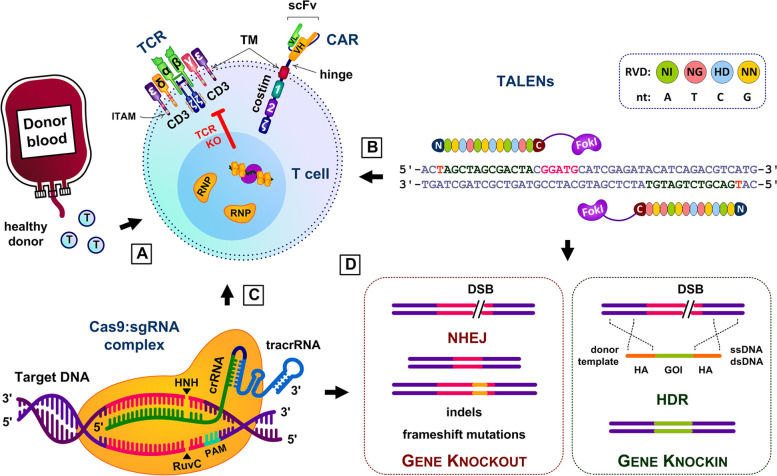 Fig.1 Engineering universal CAR-T cells using genome editing.1
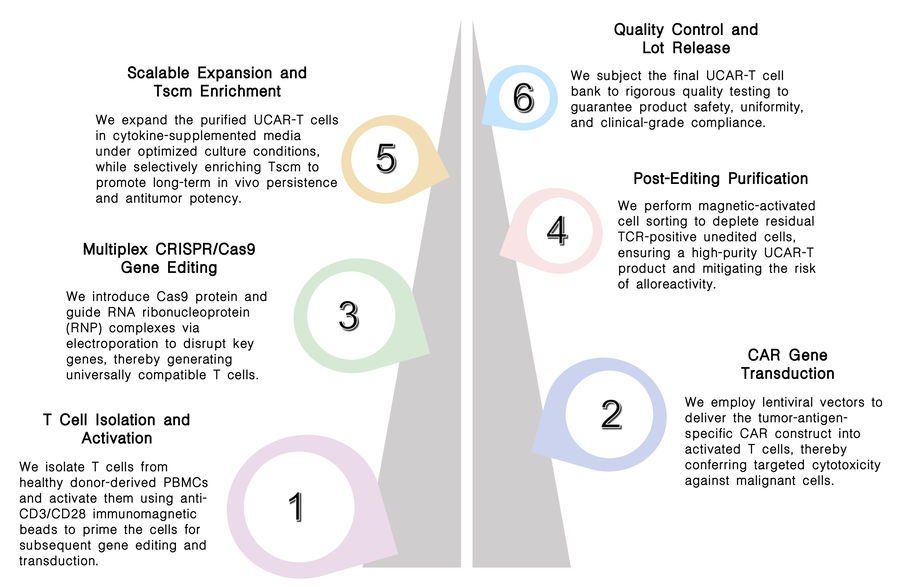
Our platform leverages precise multiplex gene editing to engineer off-the-shelf, allogeneic T cell therapies from healthy donor-derived PBMCs. By disrupting TCR and HLA expression, we eliminate GvHD and minimize host rejection, enabling scalable, cost-effective manufacturing. We provide end-to-end development from gene editing and CAR transduction to rigorous quality control, delivering high-purity, ready-to-infuse cell banks with safety and efficacy data to accelerate your translational programs.
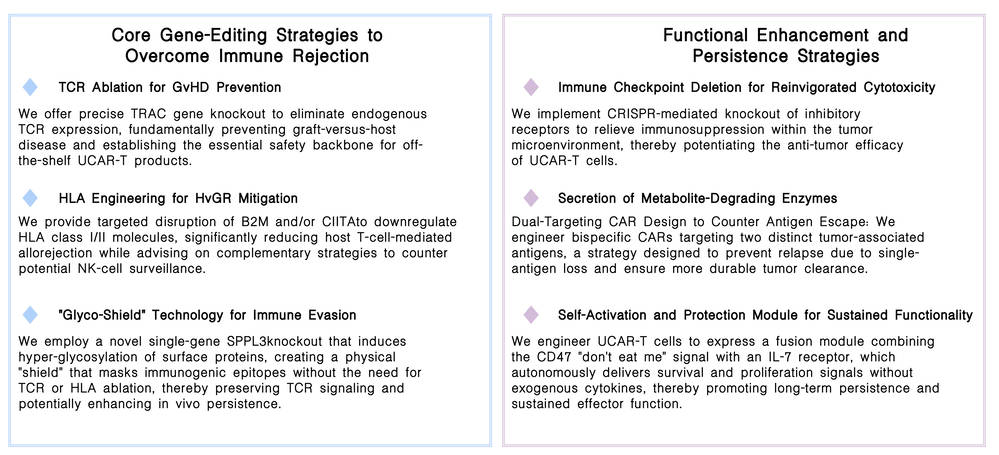
Our platform offers a complete suite of CRISPR-based engineering strategies, from foundational immune-evasive edits to advanced functional modules, enabling the development of next-generation universal CAR-T cells with enhanced safety, persistence, and potent antitumor activity against relapse.
Q1: How does the platform prevent GvHD?
A1: The platform uses CRISPR/Cas9 to disrupt the T cell receptor (TCR) alpha chain constant region (TRAC), which prevents the donor T cells from recognizing and attacking the patient's healthy tissues—the primary cause of GvHD.
Q2: What are the potential safety risks of using CRISPR in UCAR-T?
A2: Primary concerns include off-target editing and the potential for genotoxicity, such as chromosomal rearrangements at the cut sites. These risks are mitigated through rigorous target design, advanced nucleases to improve specificity, and screening protocols.
Our CRISPR-based UCAR-T Platform delivers truly off-the-shelf, cost-effective cellular therapeutics. By leveraging multiplex genome editing, we eliminate GvHD and resist host rejection, ensuring enhanced persistence. Our advanced engineering also incorporates pharmacological control and combats tumor escape, offering a superior, scalable, and safer solution for next-generation cancer immunotherapy.
"Our team has utilized this CRISPR-based UCAR-T Platform for over eighteen months to generate allogeneic candidates. The multiplex gene-editing workflow is exceptionally streamlined, allowing us to simultaneously disrupt TCR and HLA molecules with minimal off-target effects. Using this service has accelerated our preclinical timelines, enabling rapid progression from concept to functional validation." Dr. A* K*.
"We employed this development platform to engineer UCAR-T cells targeting solid tumor antigens. The precision of the CRISPR system, combined with the proprietary delivery method, yielded editing efficiencies exceeding 90% across multiple donor batches. Using this service gave us consistent, reproducible results that were critical for our comparative efficacy studies in murine xenograft models." James H. M*.
Are you poised to advance your next-generation cell therapy initiative?
Our scientific and commercial strategy experts are prepared to engage with you on every stage of your program, from early target substantiation through to clinical-scale production. We invite you to connect with us to examine how our CRISPR-powered UCAR-T architecture can bolster your development portfolio. All inquiries receive rapid, personalized responses, accompanied by custom-fit technical documentation aligned with your objectives.
Reference
For any technical issues or product/service related questions, please leave your information below. Our team will contact you soon.
All products and services are For Research Use Only and CANNOT be used in the treatment or diagnosis of disease.
 NEWSLETTER
The latest newsletter to introduce the latest breaking information, our site updates, field and other scientific news, important events, and insights from industry leaders
LEARN MORE NEWSLETTER NEW SOLUTION
CellRapeutics™ In Vivo Cell Engineering: One-stop in vivo T/B/NK cell and macrophage engineering services covering vectors construction to function verification.
LEARN MORE SOLUTION NOVEL TECHNOLOGY
Silence™ CAR-T Cell: A novel platform to enhance CAR-T cell immunotherapy by combining RNAi technology to suppress genes that may impede CAR functionality.
LEARN MORE NOVEL TECHNOLOGY NEW SOLUTION
Canine CAR-T Therapy Development: From early target discovery, CAR design and construction, cell culture, and transfection, to in vitro and in vivo function validation.
LEARN MORE SOLUTION









