Creative Biolabs has a tradition of commitment. To achieve efficient execution and regulatory approval, we offer careful considerations of your program for the development of a cellular or gene therapy product – now and in the future.
EXPLORE MORE HighlightsWe focus on unmet needs and develop novel cellular and gene drugs and solutions that offer significant benefits over existing options.
EXPLORE MORE HighlightsThe advent of Chimeric Antigen Receptor T-cell (CAR-T) therapies has revolutionized the field of oncology, providing new avenues for treating various forms of cancer. Our 20 years of experience in the biotechnology sector have equipped us with the expertise and technological capabilities to support the entire lifecycle of CAR-T products, from early development to commercialization.
EXPLORE MORETo accelerate advanced breakthroughs of your projects, we offer broad range of platforms which enable our clients be free to tackle problems with cutting-edge technologies from different angles and in different methods.
EXPLORE MORE HighlightsUse the resources in our library to help you understand your options and make critical decisions for your study. We offer oncolytic virus, CAR-T, and dendritic cell related documents, as well as newsletter. If you don't find the answers you're looking for, contact us for additional assistance.
EXPLORE MORE HighlightsGet a real taste and understanding of the business and culture of one of the world's great research-based cellular and gene therapy discovery and development companies.
EXPLORE MORE
Cytokines are molecular messengers that are important in cell signaling. Numerous cytokines play an important role in shaping the tumor microenvironment (TME). Tumor cells produce various cytokines and growth factors to recruit and reprogram other cells and establish a pro-tumor microenvironment. These cells in turn produce a variety of cytokines with different functions. These secreted cytokines enable the rapid propagation of immune signaling in a complex yet efficient manner and thus can generate a potent and coordinated immune response to target antigens, thus inhibiting cancer development and progression. However, in the malignant scenario, cytokines can profoundly affect tumor cells directly and TME, thereby suppressing anti-tumor immunity and exerting direct tumor-promoting signals, inducing proliferation, angiogenesis and metastasis. Cytokines and their receptors have been extensively investigated as either cancer targets or cancer treatments.
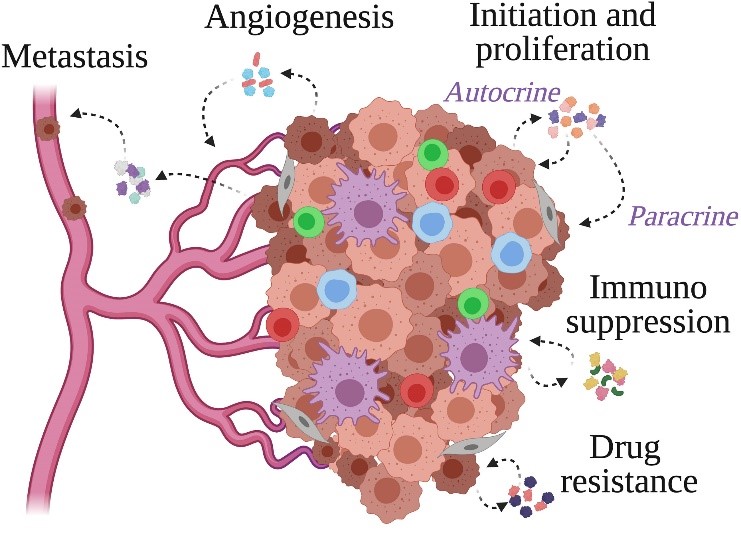 Fig.1 Cytokine actions within the TME.1,4
Both tumor cells and other intratumoral cells release a plethora of protumorigenic and proangiogenic cytokines/chemokines. These cytokines and chemokines influence cancer-related inflammation and immune evasion processes and help in the development and progression of many tumors and resistance to anti-cancer drugs. For example, epidermal growth factor (EGF), platelet-derived growth factor (PDGF), and transforming growth factor β (TGF-β) can help to induce epithelial-mesenchymal transition (EMT). Secretion of interleukin-4 (IL-4) and IL-10 by cancer cells has been shown to confer drug-induced resistance. Cytokines are also associated with phenotypes of cells in the TME, such as tumor-associated macrophages (TAM). Angiogenesis is induced by several cytokines including vascular endothelial growth factor (VEGF) and fibroblast growth factor (FGF), IL-8 and TGF-β, mainly secreted by cancer cells, but also TAMs, endothelial cells, and fibroblasts in the TME.
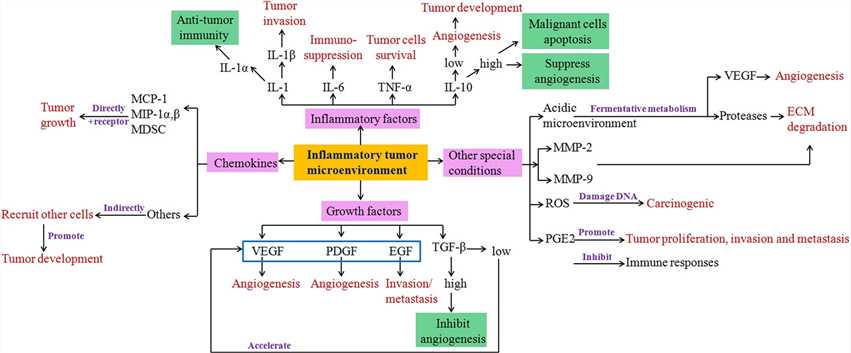 Fig.2 The main cytokines and special conditions in the TME.2,4
Based on the powerful immune regulation capacity, immunotherapy of cancers with cytokines has been attempted for decades. Cytokines are ambivalent molecules that can exert pro- and anti-tumor activities, depending on context and elements in the TME. Cytokines have been dichotomized into immunostimulatory cytokines (blue) and immunosuppressive cytokines (red) (Fig.3). Therefore, cytokines and their inhibitors can effectively treat cancer. Current cytokine therapies are designed to alter immune homeostasis with the tumor and provoke or disinhibit immune effectors. Targeted delivery of cytokines to the TME can trigger strong antitumor immunity and turn so-called immunologically "cold" tumors into "hot" tumors with high immune cell infiltration. Cytokines in the TME are mainly derived from immune/inflammatory cells and tumor cells. Granulocyte-colony-stimulating factor (G-CSF), granulocyte-macrophage colony-stimulating factor (GM-CSF), VEGF, IL-2 and interferon-γ (IFN-γ) are the five most studied cytokines. Yet, to date, only two cytokines are FDA-approved: IFN-α and IL-2.
However, cytokines as monotherapy have not fulfilled their early promise. Yet despite their biological importance and clinical utility, cytokine immunotherapies suffer from intrinsic challenges that limit their therapeutic potential including poor circulation, systemic toxicity, and low tissue- or cell-specificity. Cytokines are being investigated clinically in combination therapy with checkpoint inhibitors, anticancer monoclonal antibodies, CAR-T therapy to facilitate more effective tumor-specific immune responses.
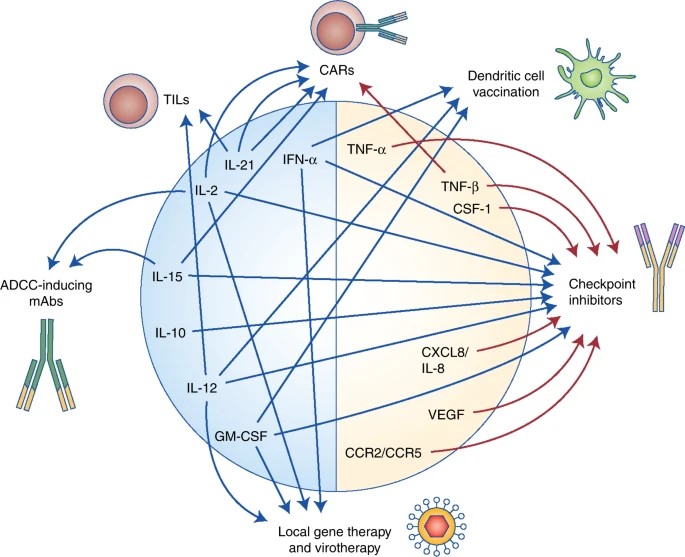 Fig.3 Potential combinations of cytokine-based drugs with other modalities of cancer immunotherapy.3,4
As a leader in immunotherapy solution provider, Creative Biolabs assist our clients to develop cytokine-based strategies for TME reshaping. With the help of our professional scientists, we are committed to providing cytokine-based products and services. We also offer services including cytokine neutralization assay, cytokine release assay, etc. Please feel free to contact us with your projects.
References
For any technical issues or product/service related questions, please leave your information below. Our team will contact you soon.
All products and services are For Research Use Only and CANNOT be used in the treatment or diagnosis of disease.
 NEWSLETTER
The latest newsletter to introduce the latest breaking information, our site updates, field and other scientific news, important events, and insights from industry leaders
LEARN MORE NEWSLETTER NEW SOLUTION
CellRapeutics™ In Vivo Cell Engineering: One-stop in vivo T/B/NK cell and macrophage engineering services covering vectors construction to function verification.
LEARN MORE SOLUTION NOVEL TECHNOLOGY
Silence™ CAR-T Cell: A novel platform to enhance CAR-T cell immunotherapy by combining RNAi technology to suppress genes that may impede CAR functionality.
LEARN MORE NOVEL TECHNOLOGY NEW SOLUTION
Canine CAR-T Therapy Development: From early target discovery, CAR design and construction, cell culture, and transfection, to in vitro and in vivo function validation.
LEARN MORE SOLUTION