Creative Biolabs has a tradition of commitment. To achieve efficient execution and regulatory approval, we offer careful considerations of your program for the development of a cellular or gene therapy product – now and in the future.
EXPLORE MORE HighlightsWe focus on unmet needs and develop novel cellular and gene drugs and solutions that offer significant benefits over existing options.
EXPLORE MORE HighlightsThe advent of Chimeric Antigen Receptor T-cell (CAR-T) therapies has revolutionized the field of oncology, providing new avenues for treating various forms of cancer. Our 20 years of experience in the biotechnology sector have equipped us with the expertise and technological capabilities to support the entire lifecycle of CAR-T products, from early development to commercialization.
EXPLORE MORETo accelerate advanced breakthroughs of your projects, we offer broad range of platforms which enable our clients be free to tackle problems with cutting-edge technologies from different angles and in different methods.
EXPLORE MORE HighlightsUse the resources in our library to help you understand your options and make critical decisions for your study. We offer oncolytic virus, CAR-T, and dendritic cell related documents, as well as newsletter. If you don't find the answers you're looking for, contact us for additional assistance.
EXPLORE MORE HighlightsGet a real taste and understanding of the business and culture of one of the world's great research-based cellular and gene therapy discovery and development companies.
EXPLORE MORE
Oncolytic or "cancer-killing" viruses (OVs) are a class of self-replicating immunotherapeutic agents that uses viruses to infect and destroy cancer cells. Their antitumor effects include direct tumor-selective oncolysis, as well as activation of host systemic innate and adaptive immune responses resulting in the recruitment of diverse immune cell types, including lymphocytes, into the tumor microenvironment (TME). OVs are increasingly considered appealing therapeutic agents. Although numerous naturally occurring OVs exist, genetically modifying OVs creates new cancer therapeutics to let them replicate only in transformed cells.
OVs mediate tumor cell destruction by two main mechanisms: direct lysis of infected cells (oncolysis) and indirect augmentation of host antitumor immunity. These specific functions mainly include:
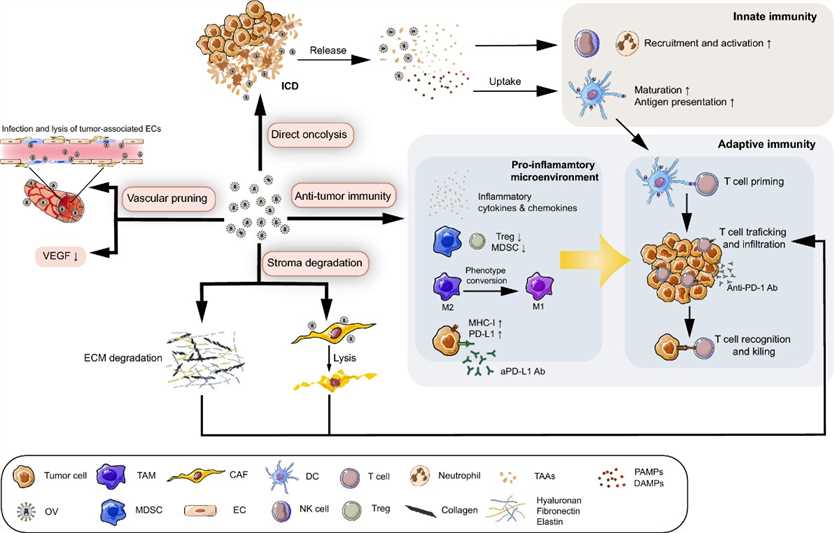 Fig.1 Mechanism of OVs targeting the TME.1,3
OVs can stimulate the immune system which is recruited into the tumor, skewing the neoplastic mass from an immuno-suppressive environment to an inflammatory site and mediating the conversion of "cold" tumors into "hot" tumors.
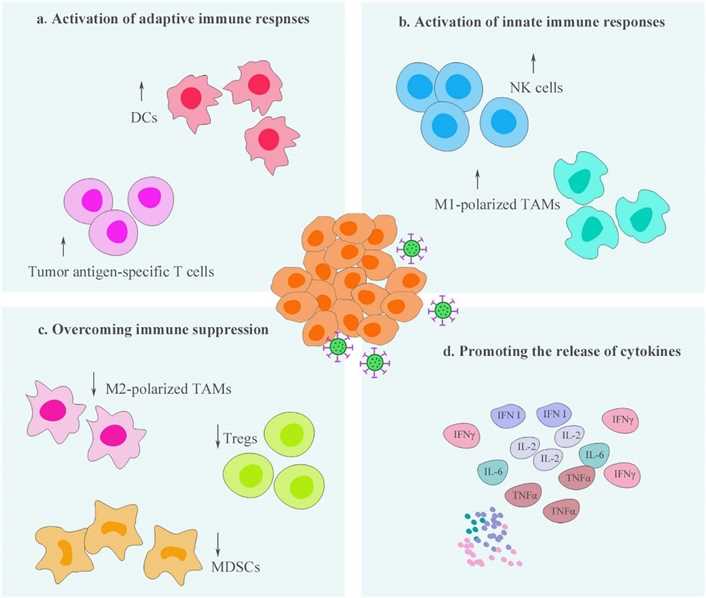 Fig.2 Oncolytic virotherapy process the ability to remodel the tumor immune microenvironment.2,3
After OV infection, the innate immune system rapidly recognizes virus particles and promotes DC maturation. DCs can deliver OVs to the TME aiding OV-mediated oncolysis and the generation of anti-tumor immunity; while OVs can overturn impaired antigen presentation of DCs, promote DC maturation, and recruit more immune cells to the TME.
OVs possess the capacity to enhance T cell activation. Mature dendritic cells will present tumor-associated and virus antigens to local and distant T cells. Concurrently, the ongoing virus infection attracts T cells to the tumor site. These responses also shift tumors from cold (immune desert) to hot (inflamed) tumors, thereby allowing cytotoxic T cells to infiltrate the TIME and perform tumor cell killing.
NK cells are activated and participate in tumor clearance following OV infection. OVs tackle the exclusion of NK cells from the TME, by increasing the production of chemokines that promote NK cell recruitment in the TME. In addition, OVs directly increase the susceptibility of cancer cells to NK killing by modulating the expression of activating and inhibitory NK ligands in cancer cells.
OVs are beneficial to induce polarization of tumor-associated macrophages (TAMs) toward M1 type together with the expression of proinflammatory cytokines, but the mechanisms remain uncertain. The generation of an antitumor immune response mediated by OVs infection also counteracts the immune suppression associated with Tregs and MDSCs.
Today, many OVs platforms such as adenoviruses, herpes viruses, measles viruses, coxsackieviruses, polioviruses, picornavirus, reoviruses, poxviruses, vaccinia virus, and Newcastle disease viruses, are under preclinical and clinical development for cancer therapy. In addition to natural OVs, many genetically modified OVs with enhanced tumor targeting, antitumor efficacy, and safety have been generated.
With the help of our professional scientists, Creative Biolabs is committed to providing Oncolytic Virus Therapy Development services to accelerate the discovery, development, and manufacturing of your OV therapies. To date, we have already established a specified oncolytic virus construction process for different kinds of species. We offer many genetically modified OVs to meet your custom needs, such as cytokine/chemokine-expressing OVs, antibody-expressing OVs, immune checkpoint inhibitor-expressing OVs, etc. Our services include but not limited to:
References
For any technical issues or product/service related questions, please leave your information below. Our team will contact you soon.
All products and services are For Research Use Only and CANNOT be used in the treatment or diagnosis of disease.
 NEWSLETTER
The latest newsletter to introduce the latest breaking information, our site updates, field and other scientific news, important events, and insights from industry leaders
LEARN MORE NEWSLETTER NEW SOLUTION
CellRapeutics™ In Vivo Cell Engineering: One-stop in vivo T/B/NK cell and macrophage engineering services covering vectors construction to function verification.
LEARN MORE SOLUTION NOVEL TECHNOLOGY
Silence™ CAR-T Cell: A novel platform to enhance CAR-T cell immunotherapy by combining RNAi technology to suppress genes that may impede CAR functionality.
LEARN MORE NOVEL TECHNOLOGY NEW SOLUTION
Canine CAR-T Therapy Development: From early target discovery, CAR design and construction, cell culture, and transfection, to in vitro and in vivo function validation.
LEARN MORE SOLUTION