Creative Biolabs has a tradition of commitment. To achieve efficient execution and regulatory approval, we offer careful considerations of your program for the development of a cellular or gene therapy product – now and in the future.
EXPLORE MORE HighlightsWe focus on unmet needs and develop novel cellular and gene drugs and solutions that offer significant benefits over existing options.
EXPLORE MORE HighlightsThe advent of Chimeric Antigen Receptor T-cell (CAR-T) therapies has revolutionized the field of oncology, providing new avenues for treating various forms of cancer. Our 20 years of experience in the biotechnology sector have equipped us with the expertise and technological capabilities to support the entire lifecycle of CAR-T products, from early development to commercialization.
EXPLORE MORETo accelerate advanced breakthroughs of your projects, we offer broad range of platforms which enable our clients be free to tackle problems with cutting-edge technologies from different angles and in different methods.
EXPLORE MORE HighlightsUse the resources in our library to help you understand your options and make critical decisions for your study. We offer oncolytic virus, CAR-T, and dendritic cell related documents, as well as newsletter. If you don't find the answers you're looking for, contact us for additional assistance.
EXPLORE MORE HighlightsGet a real taste and understanding of the business and culture of one of the world's great research-based cellular and gene therapy discovery and development companies.
EXPLORE MORE
Creative Biolabs delivers specialized functional screening services centered on cellular avidity quantification to de-risk candidate pipelines in TCR-T, CAR-T, and antibody-based cell engager development. Conventional monovalent affinity metrics routinely fail to predict true clinical potency, cell-killing kinetics, or tumor eradication due to their omission of membrane dynamics, receptor clustering, and co-stimulatory coordination. Advanced microfluidic hydrodynamic retention arrays and precision shear-stress detachment systems resolve this barrier by measuring collective intercellular mechanical engagement under physiological flow.
Cellular avidity quantifies the cumulative intercellular binding strength established between an effector immune cell and its cognate target cell across the assembled immunological synapse. Landmark studies demonstrate that conventional biophysical methods, including monovalent surface plasmon resonance and fluorescent multimers, often fail to predict anti-tumor cytotoxicity, cytokine secretion, and persistence. By integrating the concerted effects of receptor density, membrane compliance, co-receptor clustering, and cytoskeletal tension under controlled fluid shear stress, cellular avidity serves as an accurate functional biomarker of T-cell potency.
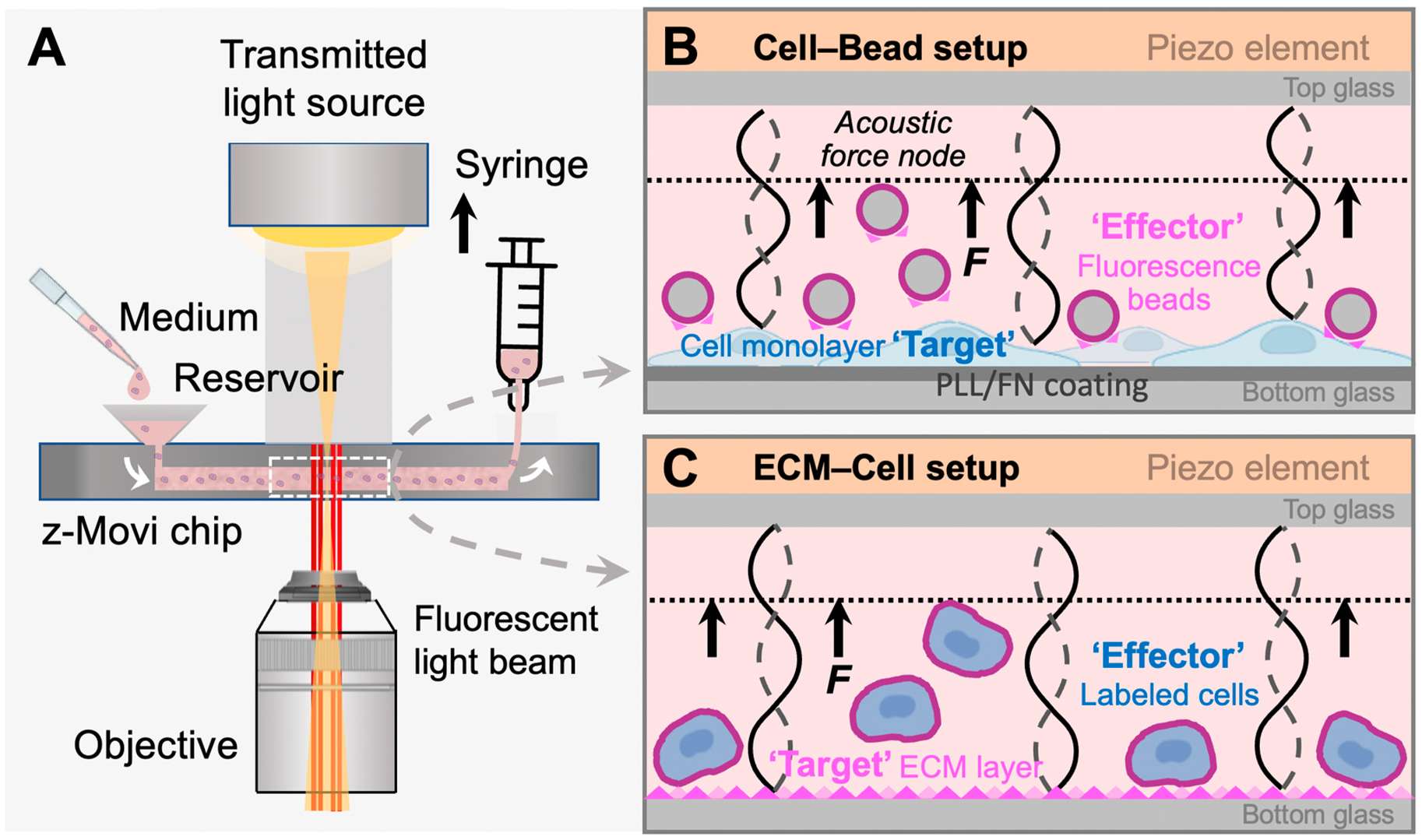 Fig.1 The operational mechanism for cell avidity analysis.1
Creative Biolabs provides an integrated biophysical evaluation pipeline designed to rescue developmental programs from the pitfalls of single-molecule affinity assays. Traditional surface plasmon resonance and soluble multimer staining measure isolated molecular kinetics that neglect the complex geometry of the immunological synapse, the mechanical stabilization provided by co-receptors, and integrin-mediated adhesion cascades. By transitioning from molecular affinity to true cellular avidity, our service resolves critical developmental bottlenecks for research teams engineering modern cellular immunotherapies.
Discover How We Can Help - Request a Consultation.
Creative Biolabs provides a suite of advanced, non-infringing biophysical platforms engineered to profile cell-cell adhesion dynamics across diverse biological matrices and solid-tumor formats:
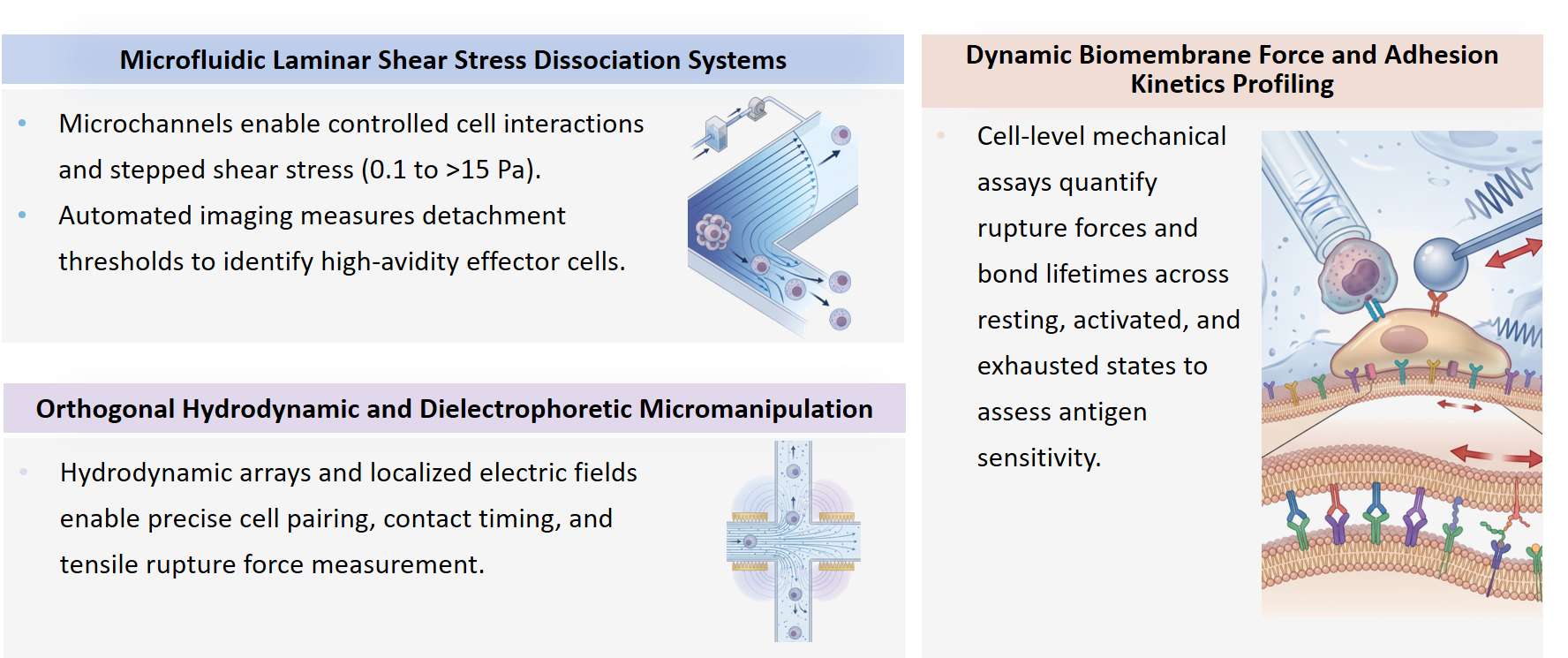
To initiate an avidity profiling campaign, clients provide characterized biological specimens aligned with project specifications:
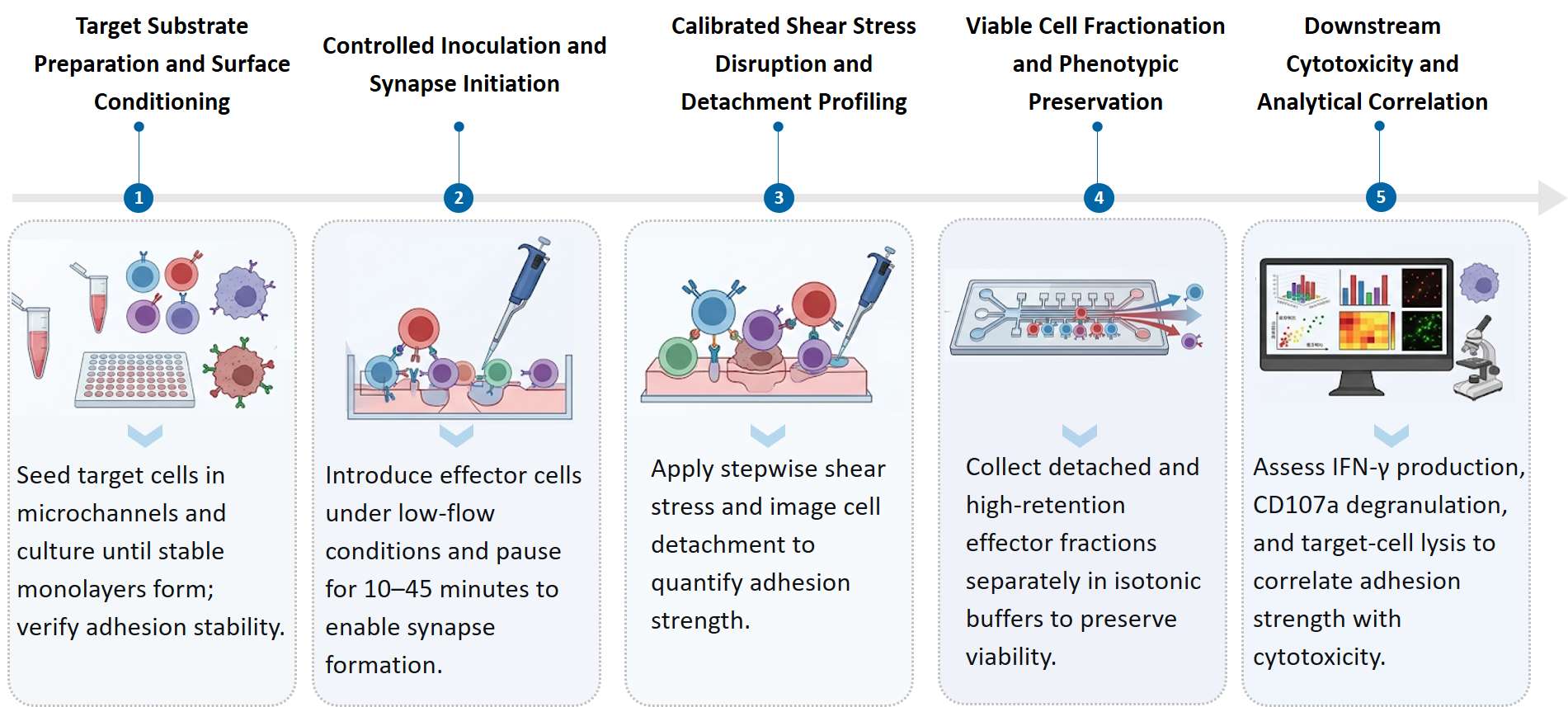
Final Deliverables:
Q: How does cellular avidity measurement differ from surface plasmon resonance (SPR)?
A: Surface plasmon resonance assesses the 1:1 binding affinity between isolated, immobilized recombinant proteins and soluble ligands in an artificial environment. In contrast, our cellular avidity platform measures the cumulative physical binding force between intact, living immune cells and target cells. This captures crucial biological factors that SPR cannot measure, such as local receptor density, spatial reorganization within the immunological synapse, membrane fluidity, and co-receptor stabilization.
Q: Why is high cellular avidity a more reliable predictor of in vivo efficacy than multimer staining?
A: Soluble peptide-MHC multimers measure receptor dissociation rates against engineered peptide complexes, but they cannot assess whether an effector cell can form a stable, functional immunological synapse with a living tumor cell expressing endogenous, low-density antigens. Cells that stain strongly for multimer may still fail to kill tumor targets in vivo if co-stimulatory interactions are defective. By directly quantifying the mechanical force sustained by the complete, functional synapse, cellular avidity provides a clinically relevant metric that correlates strongly with tumor clearance and overall survival in preclinical animal models.
Creative Biolabs operates as a specialized biophysical and immunology partner, providing end-to-end cellular avidity platforms, customized microfluidics solutions, and comprehensive functional screening workflows. Our scientific team supports your project from initial experimental architecture through to advanced downstream clonal recovery, delivering actionable data that accelerates lead discovery and mitigates translational risk. Connect directly with our immunology team to schedule a technical evaluation and discover how our cellular avidity platform can accelerate your therapy pipeline.
Reference
For any technical issues or product/service related questions, please leave your information below. Our team will contact you soon.
All products and services are For Research Use Only and CANNOT be used in the treatment or diagnosis of disease.
 NEWSLETTER
The latest newsletter to introduce the latest breaking information, our site updates, field and other scientific news, important events, and insights from industry leaders
LEARN MORE NEWSLETTER NEW SOLUTION
CellRapeutics™ In Vivo Cell Engineering: One-stop in vivo T/B/NK cell and macrophage engineering services covering vectors construction to function verification.
LEARN MORE SOLUTION NOVEL TECHNOLOGY
Silence™ CAR-T Cell: A novel platform to enhance CAR-T cell immunotherapy by combining RNAi technology to suppress genes that may impede CAR functionality.
LEARN MORE NOVEL TECHNOLOGY NEW SOLUTION
Canine CAR-T Therapy Development: From early target discovery, CAR design and construction, cell culture, and transfection, to in vitro and in vivo function validation.
LEARN MORE SOLUTION