Creative Biolabs has a tradition of commitment. To achieve efficient execution and regulatory approval, we offer careful considerations of your program for the development of a cellular or gene therapy product – now and in the future.
EXPLORE MORE HighlightsWe focus on unmet needs and develop novel cellular and gene drugs and solutions that offer significant benefits over existing options.
EXPLORE MORE HighlightsThe advent of Chimeric Antigen Receptor T-cell (CAR-T) therapies has revolutionized the field of oncology, providing new avenues for treating various forms of cancer. Our 20 years of experience in the biotechnology sector have equipped us with the expertise and technological capabilities to support the entire lifecycle of CAR-T products, from early development to commercialization.
EXPLORE MORETo accelerate advanced breakthroughs of your projects, we offer broad range of platforms which enable our clients be free to tackle problems with cutting-edge technologies from different angles and in different methods.
EXPLORE MORE HighlightsUse the resources in our library to help you understand your options and make critical decisions for your study. We offer oncolytic virus, CAR-T, and dendritic cell related documents, as well as newsletter. If you don't find the answers you're looking for, contact us for additional assistance.
EXPLORE MORE HighlightsGet a real taste and understanding of the business and culture of one of the world's great research-based cellular and gene therapy discovery and development companies.
EXPLORE MORE
Creative Biolabs delivers specialized assay services to resolve common challenges seen in preclinical cell therapy research. Complex trial workflows, latent safety risks, and inaccurate efficacy predictions stemming from imperfect animal models have long troubled researchers, and our flow cytometry-based testing platform effectively streamlines trial operations while generating solid, actionable predictive data. Leveraging multi-dimensional unicellular analysis alongside proprietary syngeneic cell tracking techniques, we accelerate the functional validation process for CAR-T cells inside living subjects. This service boosts the overall efficiency and safety of your cellular immunotherapy pipeline, and creates a solid foundation for the smooth implementation of your therapeutic strategies.
All preclinical adoptive cell therapy projects require solid evidence of cytotoxic performance in complex biological environments. Research shows that in vitro tests alone do not reflect the actual performance of therapeutic cells, as factors like endogenous immune components, physical barriers, and target antigen expression significantly influence outcomes. Studies suggest that tunable regulatory systems can optimize central memory cell phenotypes, and engineered CAR constructs can release active cytotoxic extracellular vesicles. Our team translates these complexities into quantifiable readouts using high-precision flow cytometry for unicellular functional validation, ensuring the practical value of your preclinical cell therapy candidates.
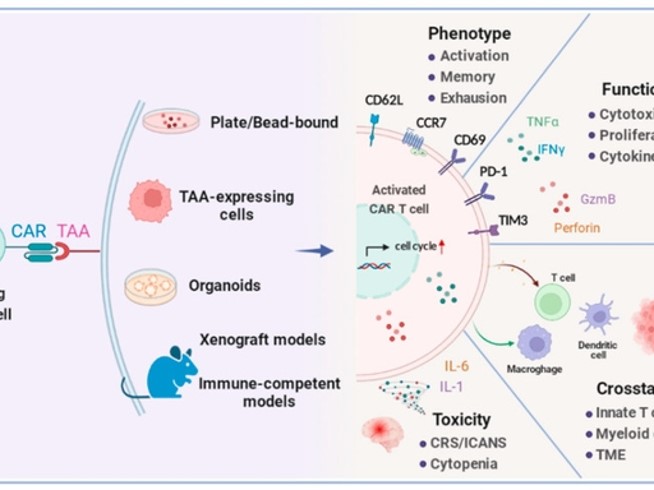 Fig.1 Schematic of functional parameters on activated CAR T cells.1
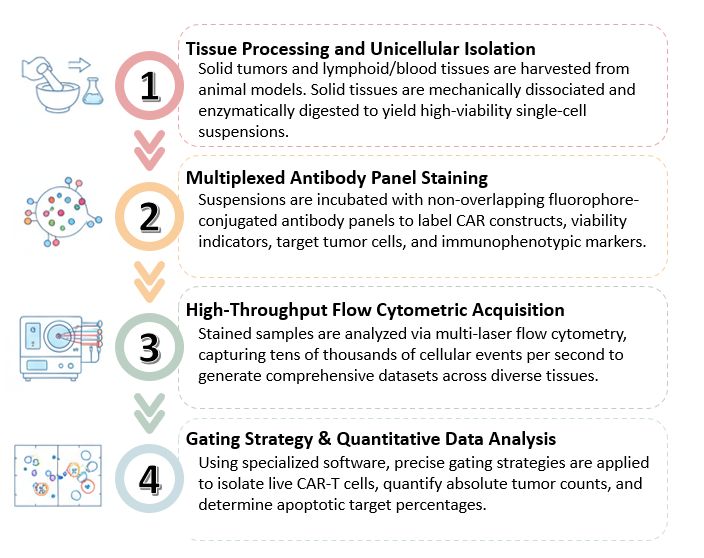
Evaluating CAR-T efficacy in animal models requires high-precision analytical tools. We develop tailored flow cytometry protocols to track, quantify, and characterize the cytotoxic dynamics of engineered CAR-T cells in vivo. Unlike conventional Cr-51 labeling or bioluminescence imaging, our platform directly samples animal tissues to deliver absolute single-cell quantification of tumor elimination, tissue-specific homing, and target cell apoptosis, providing intuitive data that fully reflects CAR-T cell functionality.
We utilize multicolor fluorophore antibody panels to analyze diverse cellular interactions within complex tissue microenvironments. This in-depth analysis ensures your lead CAR constructs possess stable target-binding ability before human clinical trials. By providing a comprehensive understanding of tumor microenvironments and CAR-T cell behaviors, we support rational treatment optimization and drive progress across cancer immunotherapy research.
Discover How We Can Help — Request a Consultation
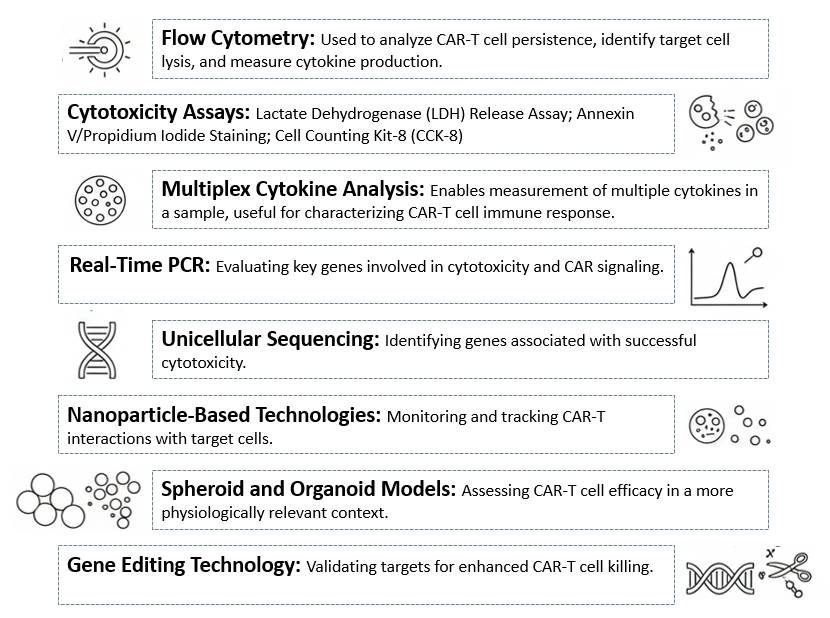
To fully unlock the therapeutic potential of your research programs, we provide a full spectrum of testing solutions customized to match unique project goals. Since each cell therapy candidate carries distinct characteristics, our testing platform adopts a modular design to support fully personalized assay setups.
Q1: How does flow cytometry distinguish host immune cells from infused CAR-T cells?
A: We use specialized anti-idiotype antibodies or fluorescent tags targeting the extracellular CAR domain. Combined with pan-T markers (CD3, CD4, CD8), this clearly isolates and quantifies engineered CAR-T cells versus native immune cells.
Q2: Can your killing assays accommodate solid tumor tissue matrices?
A: Yes. We use mild, efficient enzymatic dissociation to extract intact cells from solid tumors (e.g., melanoma, carcinoma) without damaging surface antigens, ensuring accurate quantification of surviving tumor cells.
Q3: What precautions prevent artificial cell death during sample processing?
A: To protect data integrity, samples are processed using pre-chilled nutrient buffers, low-speed centrifugation, and shortened timelines. We also include fixable viability dyes to exclude artifacts and focus solely on genuine in vivo target clearance.
Q4: How does this service compare to standard BLI for in vivo monitoring?
A: While BLI excels at whole-animal tracking, it lacks unicellular resolution and suffers from signal loss. Our flow cytometry serves as a definitive endpoint assay, delivering exact cell counts, detailed phenotyping (memory vs. exhausted), and direct evidence of organ-specific apoptosis.
Q5: Can we analyze multi-antigen targeting or switchable CAR systems?
A: Yes. Our multi-laser cytometers support multiplexed antibody panels to simultaneously monitor dual-antigen expression on tumor cells, track switchable antibody binding, and analyze their impact on effector cell activation or exhaustion.
We have developed advanced flow cytometry testing solutions dedicated to evaluating cytotoxic performance and overall functionality of CAR-T cells within living organisms. Our mature technical system meets researchers' demands for accurate, referenceable efficacy data under complex biological conditions. Powered by multi-dimensional unicellular analysis and exclusive cell tracking technologies, we conduct real-time monitoring of CAR-T cell activities, including tumor elimination rates and target cell apoptosis. The resulting data offers reliable guidance for clinical trial design. Our professional team helps researchers overcome obstacles in preclinical development and maximize the therapeutic value of cell therapy candidates.
Contact our team to discuss project requirements, custom assay designs, data analysis plans and full-spectrum support solutions for your CAR-T therapy research. Through rigorous validation work, we aim to improve the safety and clinical value of your therapeutic products.
Reference
For any technical issues or product/service related questions, please leave your information below. Our team will contact you soon.
All products and services are For Research Use Only and CANNOT be used in the treatment or diagnosis of disease.
 NEWSLETTER
The latest newsletter to introduce the latest breaking information, our site updates, field and other scientific news, important events, and insights from industry leaders
LEARN MORE NEWSLETTER NEW SOLUTION
CellRapeutics™ In Vivo Cell Engineering: One-stop in vivo T/B/NK cell and macrophage engineering services covering vectors construction to function verification.
LEARN MORE SOLUTION NOVEL TECHNOLOGY
Silence™ CAR-T Cell: A novel platform to enhance CAR-T cell immunotherapy by combining RNAi technology to suppress genes that may impede CAR functionality.
LEARN MORE NOVEL TECHNOLOGY NEW SOLUTION
Canine CAR-T Therapy Development: From early target discovery, CAR design and construction, cell culture, and transfection, to in vitro and in vivo function validation.
LEARN MORE SOLUTION









