Creative Biolabs has a tradition of commitment. To achieve efficient execution and regulatory approval, we offer careful considerations of your program for the development of a cellular or gene therapy product – now and in the future.
EXPLORE MORE HighlightsWe focus on unmet needs and develop novel cellular and gene drugs and solutions that offer significant benefits over existing options.
EXPLORE MORE HighlightsThe advent of Chimeric Antigen Receptor T-cell (CAR-T) therapies has revolutionized the field of oncology, providing new avenues for treating various forms of cancer. Our 20 years of experience in the biotechnology sector have equipped us with the expertise and technological capabilities to support the entire lifecycle of CAR-T products, from early development to commercialization.
EXPLORE MORETo accelerate advanced breakthroughs of your projects, we offer broad range of platforms which enable our clients be free to tackle problems with cutting-edge technologies from different angles and in different methods.
EXPLORE MORE HighlightsUse the resources in our library to help you understand your options and make critical decisions for your study. We offer oncolytic virus, CAR-T, and dendritic cell related documents, as well as newsletter. If you don't find the answers you're looking for, contact us for additional assistance.
EXPLORE MORE HighlightsGet a real taste and understanding of the business and culture of one of the world's great research-based cellular and gene therapy discovery and development companies.
EXPLORE MORE
Overcoming critical challenges such as tumor immune escape, inconsistent CAR-T potency, and the "on-target, off-tumor" toxicity remains a major hurdle in developing safe and effective immunotherapies. To address this, we provide precise Quantification of Induced Antigen Density and CAR-T Activation Thresholds to de-risk your therapeutic development. Our service leverages advanced bioluminescence-based tracking and synthetic biology optimization to deliver high-precision antigen profiling and signaling pathway analysis. This approach empowers you to maximize the therapeutic window, minimize off-tumor effects, and ensure robust clinical efficacy for next-generation CAR-T products.
Antigen density, defined as the number of target epitopes presented on the surface of a malignant or normal cell, and the CAR-T activation threshold, representing the minimal antigen density required to trigger downstream signaling and effector functions, are fundamental biophysical parameters governing therapeutic efficacy. Quantifying these parameters is essential for deconvoluting the heterogeneous clinical responses to immunotherapy, as it enables the stratification of patients based on target expression, predicts susceptibility to on-target off-tumor toxicity, and facilitates the rational design of CAR constructs with optimized sensitivity to discriminate between malignant and benign tissues, ultimately guiding strategies to overcome resistance mechanisms and establish a predictive framework for precise T-cell engagement.
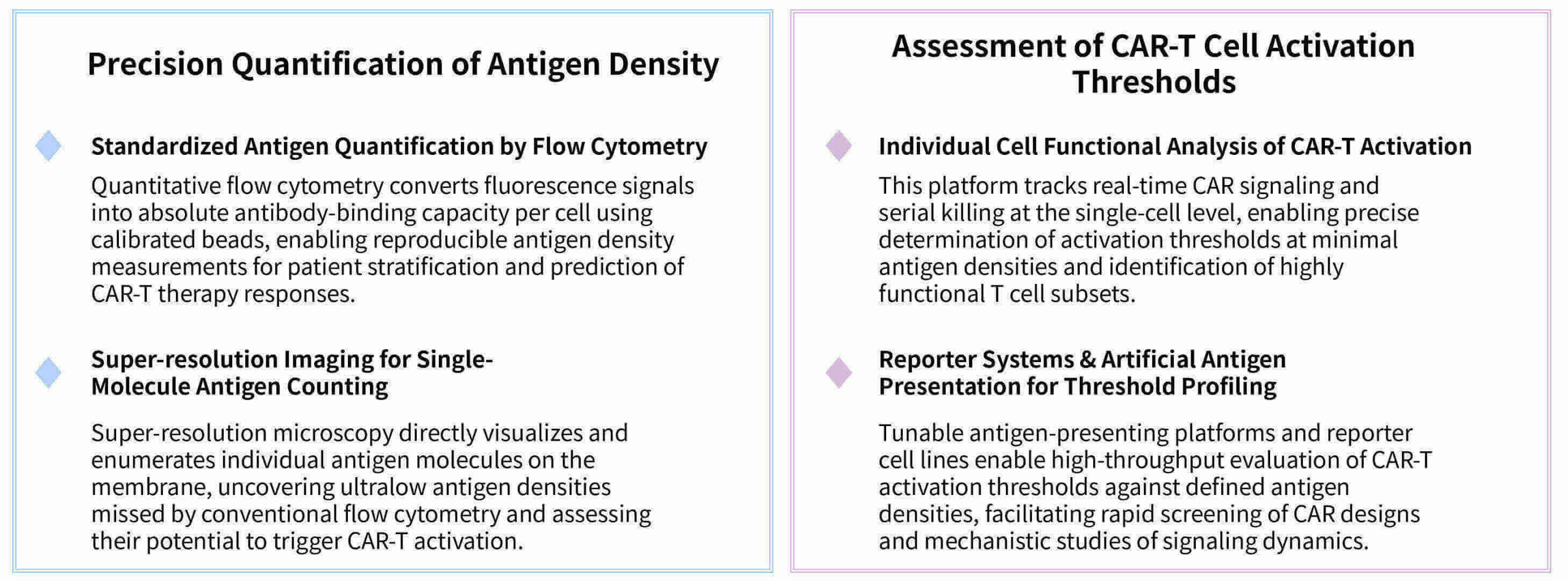
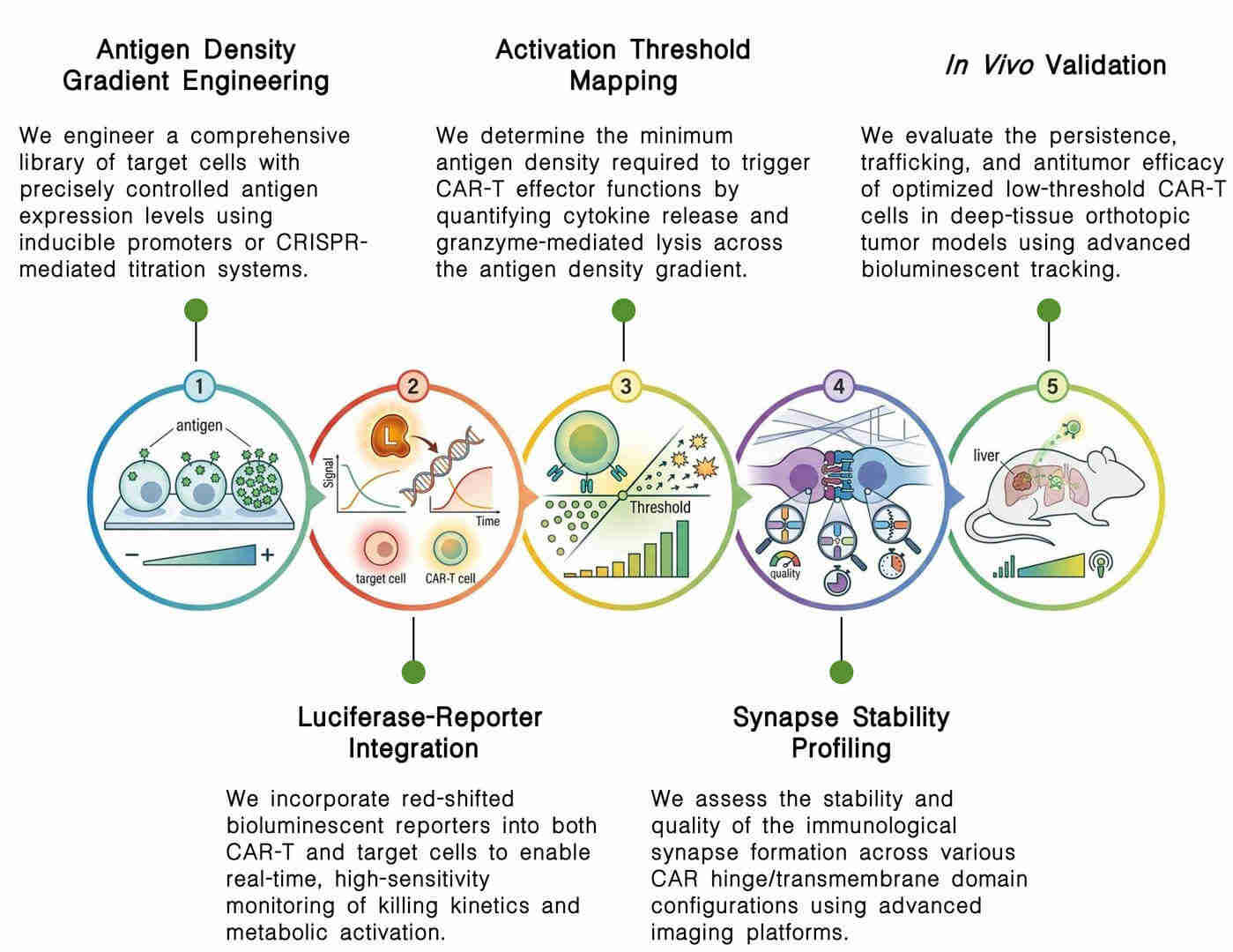
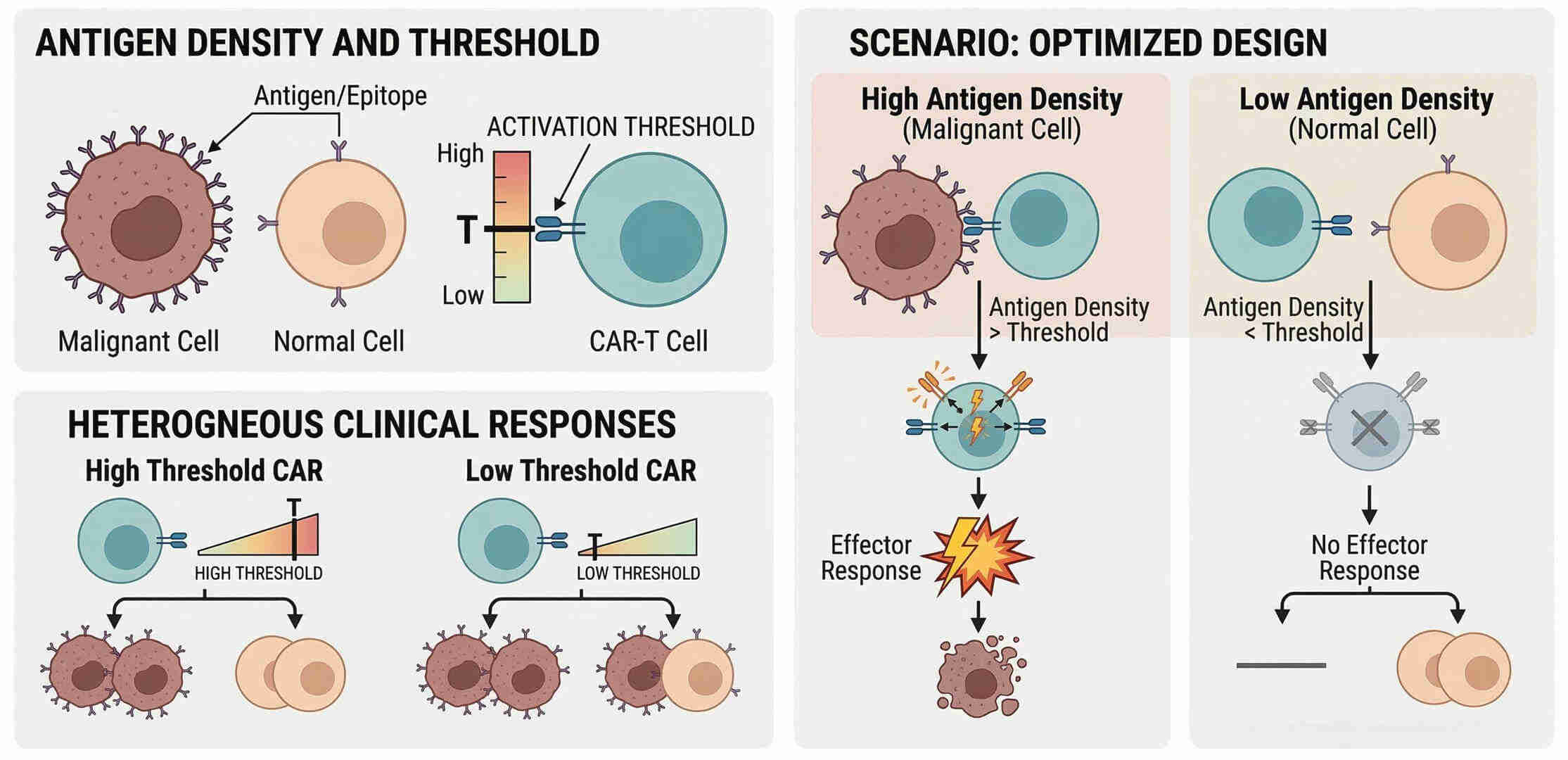 Fig.1 Measurement of target antigen density and CAR-T cell activation thresholds.
Our service delivers unparalleled clarity into the quantitative interface between your CAR-T construct and its target cell. This enables you to finely discriminate between conditions that maximize on-target activity and those that minimize off-tumor recognition. By quantifying the precise antigen density thresholds necessary for cytolytic triggering, we empower you to prioritize the most promising candidates earlier in the pipeline.
We offer an integrated suite of advanced technologies for the precision quantification of target antigen density and the functional assessment of CAR-T cell activation thresholds, enabling deep mechanistic insights and the identification of predictive biomarkers for immunotherapy response.
Final Deliverables:
Q1: Why is antigen density quantification essential for CAR-T therapy development?
A1: Tumors exploit antigen downregulation as a key immune evasion mechanism under therapeutic pressure. Precisely quantifying the target density is critical, as it enables the rational design of CAR-T cells with calibrated sensitivity to recognize and eliminate subclonal populations with diminished antigen expression, thereby enabling prophylactic targeting of reservoirs that would otherwise drive antigen-low relapse.
Q2: Is it possible to modulate CAR-T sensitivity to mitigate on-target off-tumor toxicity?
A2: Absolutely. This is a cornerstone of synthetic biology-based safety engineering. By strategically elevating the activation stringency, for instance, through modifications to the CAR's signaling domains or affinity tuning, we can establish a higher therapeutic window. This allows the CAR-T cell to remain inert at sites with permissible, low-level antigen expression on healthy tissue while reserving its cytotoxic function exclusively for malignant cells exhibiting the high antigen density characteristic of tumors.
We offer unparalleled precision in defining the antigen thresholds that govern CAR-T efficacy. By decoupling cytotoxic potential from cytokine-driven toxicity, our platform enables the rational design of next-generation therapeutics with optimized sensitivity, enabling predictive control over on-target activity and durable responses while mitigating antigen escape.
"The analytical rigor of Creative Biolabs' antigen quantification platform has dramatically improved the translational relevance of our preclinical efficacy data. Furthermore, their red-shifted luciferase system enables in vivo tracking with a depth and sensitivity that far exceeds the capabilities of traditional flow cytometry." Dr. A***n L.
"Insights derived from their immune synapse profiling were instrumental in optimizing our HER2-directed CAR. By guiding the structural shift from a CD8 to a CD28 hinge-transmembrane domain, we achieved markedly superior synaptic stability and functional responsiveness against tumor cells with low antigen density." Sarah K***r.
"The quantitative tools provided by Creative Biolabs enabled non-invasive monitoring of metabolic dynamics within engineered tissues, leveraging the caffeic acid-based autoluminescent cycle with remarkable precision." Prof. M***o R.
Creative Biolabs provides a state-of-the-art platform for the precise quantification of induced antigen density and CAR-T activation thresholds. Through the integration of tunable synthetic biology constructs and advanced bioluminescent assays, our approach delivers critical insights to facilitate the seamless transition of therapies from research to clinical application.
For further details or to discuss your specific project needs, please contact our team.
For any technical issues or product/service related questions, please leave your information below. Our team will contact you soon.
All products and services are For Research Use Only and CANNOT be used in the treatment or diagnosis of disease.
 NEWSLETTER
The latest newsletter to introduce the latest breaking information, our site updates, field and other scientific news, important events, and insights from industry leaders
LEARN MORE NEWSLETTER NEW SOLUTION
CellRapeutics™ In Vivo Cell Engineering: One-stop in vivo T/B/NK cell and macrophage engineering services covering vectors construction to function verification.
LEARN MORE SOLUTION NOVEL TECHNOLOGY
Silence™ CAR-T Cell: A novel platform to enhance CAR-T cell immunotherapy by combining RNAi technology to suppress genes that may impede CAR functionality.
LEARN MORE NOVEL TECHNOLOGY NEW SOLUTION
Canine CAR-T Therapy Development: From early target discovery, CAR design and construction, cell culture, and transfection, to in vitro and in vivo function validation.
LEARN MORE SOLUTION