Creative Biolabs has a tradition of commitment. To achieve efficient execution and regulatory approval, we offer careful considerations of your program for the development of a cellular or gene therapy product – now and in the future.
EXPLORE MORE HighlightsWe focus on unmet needs and develop novel cellular and gene drugs and solutions that offer significant benefits over existing options.
EXPLORE MORE HighlightsThe advent of Chimeric Antigen Receptor T-cell (CAR-T) therapies has revolutionized the field of oncology, providing new avenues for treating various forms of cancer. Our 20 years of experience in the biotechnology sector have equipped us with the expertise and technological capabilities to support the entire lifecycle of CAR-T products, from early development to commercialization.
EXPLORE MORETo accelerate advanced breakthroughs of your projects, we offer broad range of platforms which enable our clients be free to tackle problems with cutting-edge technologies from different angles and in different methods.
EXPLORE MORE HighlightsUse the resources in our library to help you understand your options and make critical decisions for your study. We offer oncolytic virus, CAR-T, and dendritic cell related documents, as well as newsletter. If you don't find the answers you're looking for, contact us for additional assistance.
EXPLORE MORE HighlightsGet a real taste and understanding of the business and culture of one of the world's great research-based cellular and gene therapy discovery and development companies.
EXPLORE MORE
The efficacy of cell therapies against solid tumors is severely limited by the physical and biochemical barriers of the Tumor Microenvironment (TME), including dense stroma, immunosuppressive signals, and poor nutrient availability. Creative Biolabs' TME Penetration & Functional Analysis Service directly addresses these translational hurdles by providing a physiologically relevant, multi-dimensional evaluation platform. Utilizing proprietary 3D organoid models and advanced mechanobiological assays, we simulate the complex in vivo TME to quantify T-cell infiltration, persistence, and cytotoxic function. This enables us to deliver critical, predictive data that identifies superior TAC-T candidates and guides optimization strategies, accelerating your development of robust solid tumor immunotherapies.
TAC-T (T Cell Antigen Coupler) therapy is an advanced adoptive cell therapy that redirects the specificity of T cells against tumors by genetically engineering them to express a synthetic antigen-binding receptor which co-opts the natural TCR-CD3 signaling complex. TME Penetration & Functional Analysis for TAC-T therapy constitutes a critical preclinical evaluation platform designed to quantitatively assess a candidate therapy's ability to infiltrate, survive, and function within the immunosuppressive and biophysically hostile solid TME, thereby predicting its clinical efficacy.
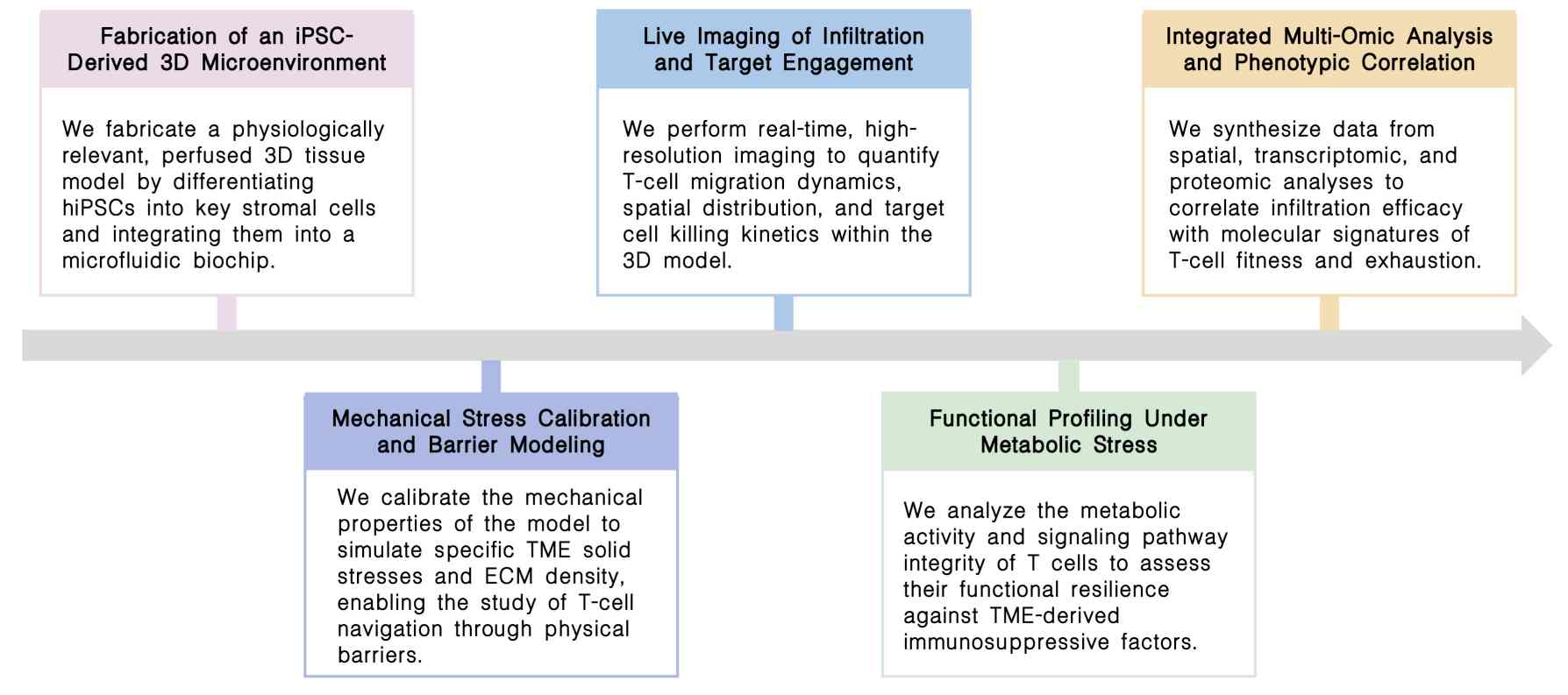
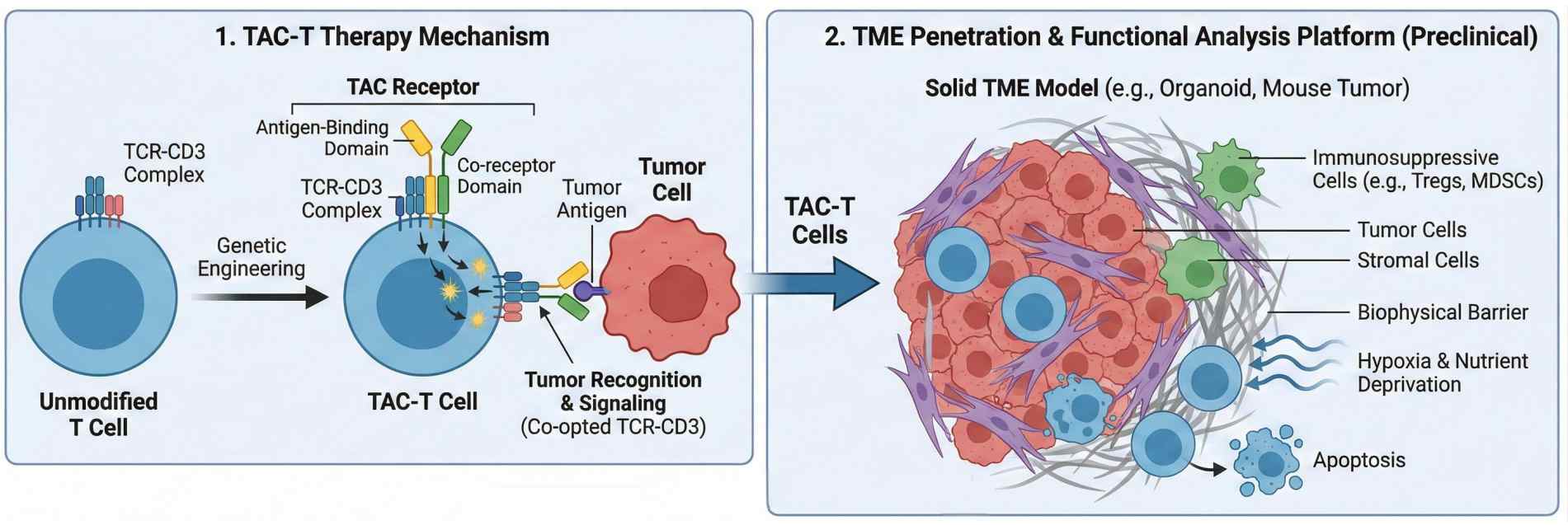 Fig.1 Solid tumor TME penetration and functional assessment for TAC-T immunotherapy.
The primary obstacle for TAC-T therapy in solid tumors is the "physical and metabolic fortress" of the TME. Creative Biolabs provides a comprehensive suite of deliverables, including high-resolution infiltration kinetics, metabolic exhaustion profiles, and mechanotransduction analysis to ensure your TAC-T constructs can penetrate and persist within the tumor.
Our service delivers a comprehensive analysis platform that bridges 3D tissue engineering with advanced cellular analytics to interrogate every critical aspect of TAC-T cell function within the solid tumor microenvironment.
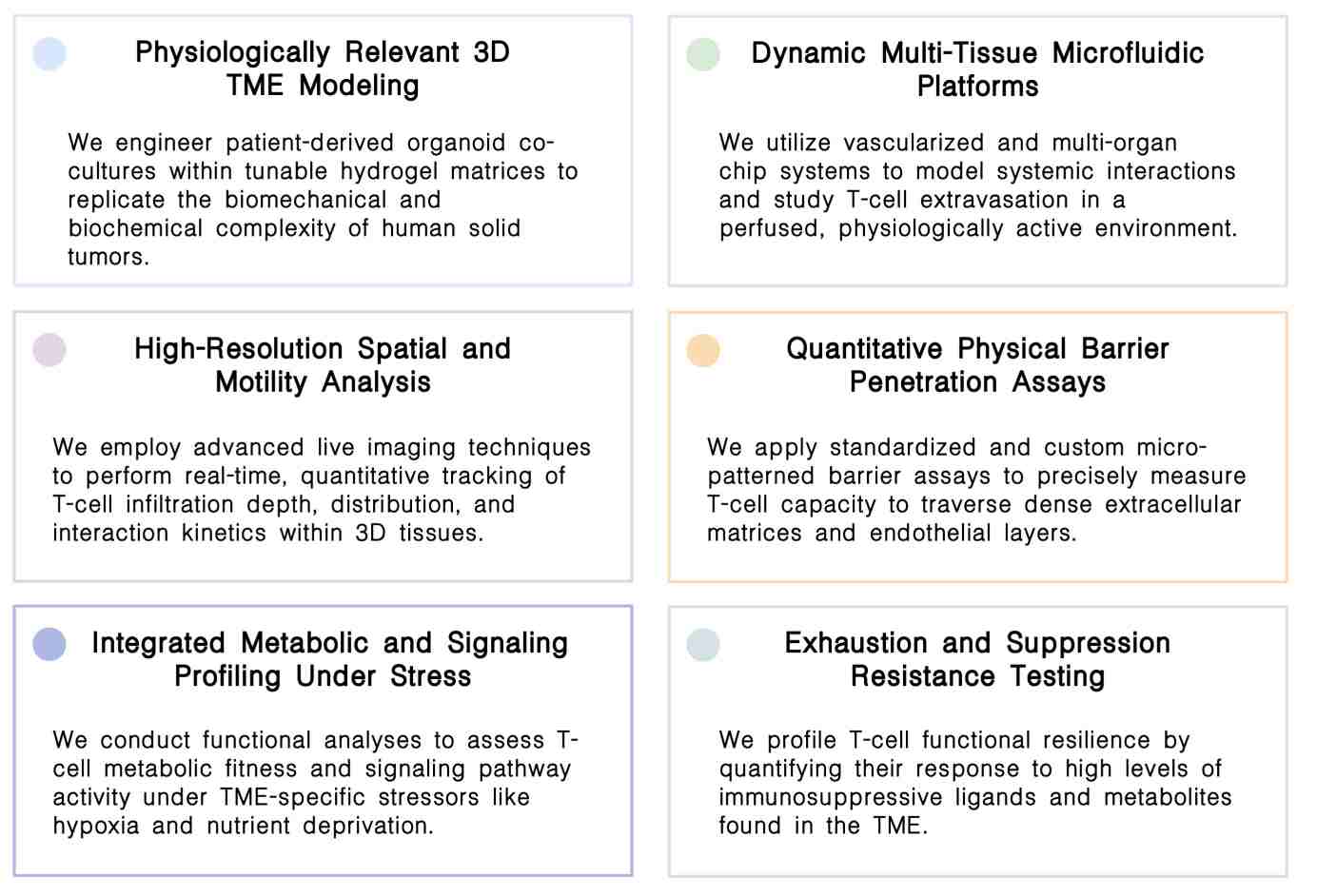
Required Starting Materials:
Key Steps:
Final Deliverables:
Q1: How does TAC-T penetration analysis differ from conventional CAR-T functional assays?
A1: Our analysis is specifically designed to evaluate the unique biology of TAC-T cells, which function by co-opting the endogenous TCR-CD3 complex. We employ perfused 3D microphysiological systems that accurately replicate the architectural and biophysical barriers of solid tumors. This platform enables the specific assessment of how TCR-mediated signaling influences infiltration, spatial distribution, and sustained function—parameters not captured by traditional 2D cytotoxicity assays used for CAR-T.
Q2: What is the primary advantage of using a Liver-on-a-Chip model for TME studies?
A2: The key advantage is the ability to apply physiologically relevant, continuous fluid shear stress, which is a critical signal for the metabolic and functional maturation of hepatocytes. This results in a more authentic liver TME that exhibits adult-like phenotypes, zonation, and metabolic activity, thereby generating significantly more clinically predictive data for immunotherapy evaluation compared to static culture systems.
We uniquely integrate iPSC-derived, fluidically matured 3D human tissue models to provide unmatched biological fidelity for TAC-T evaluation. Our platform validates that your candidate's penetration, persistence, and safety profile are clinically predictive, de-risking translation where traditional 2D assays fail.
"This service enabled a deep mechanistic investigation into the IL-11/STAT3 immunosuppressive pathway. The comprehensive multi-omics dataset was instrumental in validating our hypothesis and securing subsequent project funding."
"Creative Biolabs' TME analysis platform provided unprecedented insight into how our TAC-T cells engage with functionally mature liver tissue. The physiologically relevant shear stress on-chip was crucial for obtaining meaningful CYP induction data."
"The capacity to precisely modulate ECM stiffness was pivotal. The analysis revealed that mechanical resistance, not antigen loss, was the primary barrier to our TAC-T efficacy, fundamentally redirecting our development strategy."
Creative Biolabs delivers an industry-leading TME Penetration & Functional Analysis platform, uniquely engineered to de-risk solid tumor TAC-T development. By integrating physiologically matured microtissues with advanced biomechanical profiling, we transform critical efficacy and safety barriers into actionable, predictive data.
Contact our scientific team to explore a tailored analysis for your therapeutic program.
For any technical issues or product/service related questions, please leave your information below. Our team will contact you soon.
All products and services are For Research Use Only and CANNOT be used in the treatment or diagnosis of disease.
 NEWSLETTER
The latest newsletter to introduce the latest breaking information, our site updates, field and other scientific news, important events, and insights from industry leaders
LEARN MORE NEWSLETTER NEW SOLUTION
CellRapeutics™ In Vivo Cell Engineering: One-stop in vivo T/B/NK cell and macrophage engineering services covering vectors construction to function verification.
LEARN MORE SOLUTION NOVEL TECHNOLOGY
Silence™ CAR-T Cell: A novel platform to enhance CAR-T cell immunotherapy by combining RNAi technology to suppress genes that may impede CAR functionality.
LEARN MORE NOVEL TECHNOLOGY NEW SOLUTION
Canine CAR-T Therapy Development: From early target discovery, CAR design and construction, cell culture, and transfection, to in vitro and in vivo function validation.
LEARN MORE SOLUTION