Creative Biolabs has a tradition of commitment. To achieve efficient execution and regulatory approval, we offer careful considerations of your program for the development of a cellular or gene therapy product – now and in the future.
EXPLORE MORE HighlightsWe focus on unmet needs and develop novel cellular and gene drugs and solutions that offer significant benefits over existing options.
EXPLORE MORE HighlightsThe advent of Chimeric Antigen Receptor T-cell (CAR-T) therapies has revolutionized the field of oncology, providing new avenues for treating various forms of cancer. Our 20 years of experience in the biotechnology sector have equipped us with the expertise and technological capabilities to support the entire lifecycle of CAR-T products, from early development to commercialization.
EXPLORE MORETo accelerate advanced breakthroughs of your projects, we offer broad range of platforms which enable our clients be free to tackle problems with cutting-edge technologies from different angles and in different methods.
EXPLORE MORE HighlightsUse the resources in our library to help you understand your options and make critical decisions for your study. We offer oncolytic virus, CAR-T, and dendritic cell related documents, as well as newsletter. If you don't find the answers you're looking for, contact us for additional assistance.
EXPLORE MORE HighlightsGet a real taste and understanding of the business and culture of one of the world's great research-based cellular and gene therapy discovery and development companies.
EXPLORE MOREAll products and services are For Research Use Only and CANNOT be used in the treatment or diagnosis of disease.
VivoCAR™ Anti-CD37 (B2) h(CD28-41BB-CD3z) CAR circRNA leverages the B2 clone, specifically engineered for its deep lymphatic tissue penetration. In the context of in vivo CAR-T generation, the B2 clone is significant for its ability to recognize CD37 epitopes that remain accessible even after anti-CD20 therapy failure. By utilizing the stable circRNA scaffold, this product enables endogenous T cells to maintain persistent surveillance within the lymph nodes. This transient, non-integrating approach allows for iterative dosing, providing a safe and flexible strategy for managing refractory B-cell malignancies without permanent genomic modification.
There are currently no customer reviews or questions for VivoCAR™ Anti-CD37 (B2) h(CD28-41BB-CD3z) CAR circRNA (XS-1225-YX63). Click the button below to contact us or submit your feedback about this product.
For research use only. Not intended for any clinical use. No products from Creative Biolabs may be resold, modified for resale or used to manufacture commercial products without prior written approval from Creative Biolabs.

For any technical issues or product/service related questions, please leave your information below. Our team will contact you soon.
 NEWSLETTER
The latest newsletter to introduce the latest breaking information, our site updates, field and other scientific news, important events, and insights from industry leaders
LEARN MORE NEWSLETTER NEW SOLUTION
CellRapeutics™ In Vivo Cell Engineering: One-stop in vivo T/B/NK cell and macrophage engineering services covering vectors construction to function verification.
LEARN MORE SOLUTION NOVEL TECHNOLOGY
Silence™ CAR-T Cell: A novel platform to enhance CAR-T cell immunotherapy by combining RNAi technology to suppress genes that may impede CAR functionality.
LEARN MORE NOVEL TECHNOLOGY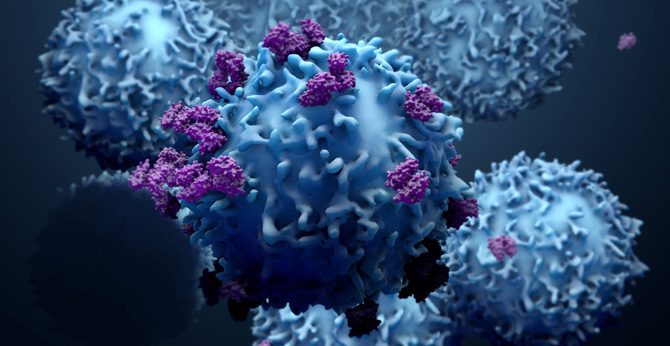 NEW SOLUTION
Canine CAR-T Therapy Development: From early target discovery, CAR design and construction, cell culture, and transfection, to in vitro and in vivo function validation.
LEARN MORE SOLUTION