
Strategic Overview: Solving the Bottlenecks of Neoantigen-Specific ACT
Precision NeoTCR-T Engineering for Personalized Immunotherapy Research
T-cell receptor engineered T cell (TCR-T) therapy represents a major leap in adoptive cell transfer (ACT). By targeting tumor-specific neoantigens, researchers can exploit the immune system's natural ability to distinguish mutant cells from healthy tissue with absolute specificity. However, the path from mutation discovery to a functional TCR-T candidate is fraught with technical hurdles, including low precursor frequencies in peripheral blood and the premature exhaustion of highly activated T cells.
Recent scientific guidelines emphasize that the success of a NeoTCR-T program depends on three pillars: 1) the sensitivity of discovery tools, 2) the fidelity of the TCR activation profile, and 3) the resilience of the final engineered product under chronic antigen exposure. Creative Biolabs provides the expertise to optimize these pillars through an entity-agnostic approach.
- Core Preclinical Objectives Supported by Our Platform:
- Systematic discovery of rare, tumor-restricted TCR clonotypes from blood or metastatic lysates.
- Comparative transcriptomic profiling of TCR activation states to predict in vivo persistence.
- Engineering TCR-T cells with balanced structural avidity for multi-entity anti-tumor activity.
Preclinical End-to-End NeoTCR-T Service Modules
Our modular service architecture allows researchers to plug into any stage of the NeoTCR-T pipeline, from initial target discovery to longitudinal in vivo validation.
| Service Module | Detailed Technical Description | Service Highlights |
|---|---|---|
|
Targeting Neoepitope discovery & Validation |
Identification of somatically mutated ligands via LC-MS/MS and proprietary in silico prediction models. We support HLA-matched B-cell lymphoma and melanoma cell line minigene construction for precise epitope presentation. |
• MS-validated epitope mapping • HLA-A*03/B*27 specific models • Minigene engineering |
|
Profiling High-Res Activation Characterization |
Integrating transcriptomic profiling and immune repertoire sequencing at individual cell resolution following antigen-specific restimulation. We perform clustering based on GZMA, LAG3, and TIGIT expression to distinguish cytotoxic, inhibitory, and proliferative states of each clonotype. |
• Cell-level GEX/VDJ integration • CD137+ activation enrichment • Trajectory analysis for T-cell fate |
|
Synthesis TCR Optimization & Engineering |
Retroviral or site-specific orthotopic TCR replacement (OTR) into the TRAC locus. We offer sequence optimization, including murinized constant regions and cysteine bridge introduction, to maximize TCR surface density and prevent mispairing. |
• TRAC-locus orthotopic insertion • TCRmu density quantification • Retroviral/Lentiviral transduction |
|
Longevity Resilience & Rechallenge Assessment |
Measuring T-cell performance under chronic antigen pressure using in vitro real-time impedance-based killing monitoring and in vivo xenograft rechallenge models. We analyze IL-10 protective signaling and memory preservation. |
• Repeated tumor challenge models • Longitudinal killing assays • Cytokine polyfunctionality index |
Optimized Preclinical NeoTCR-T Development Workflow
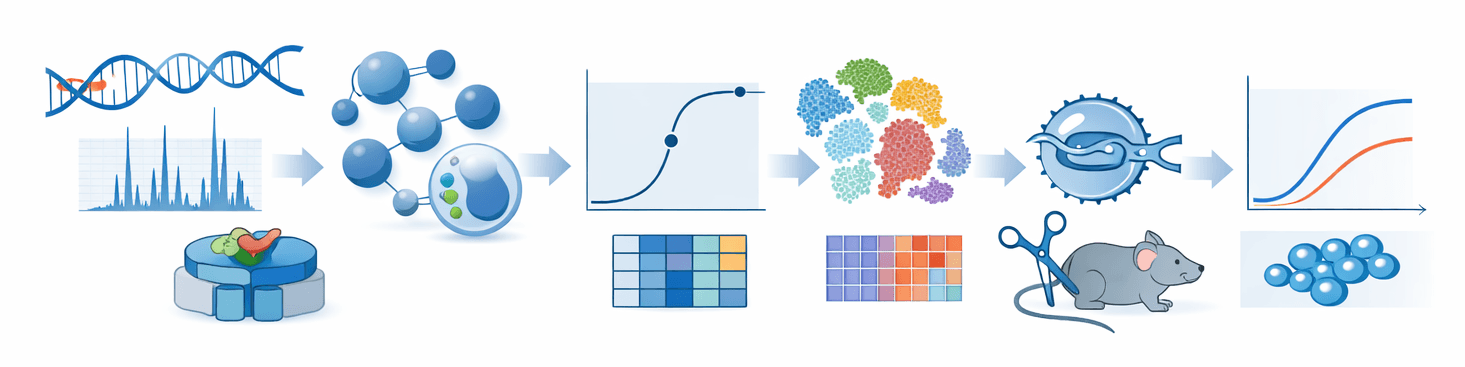
Phase 1 — Neoepitope Identification & Target Mapping
We begin by screening tumor-normal sequencing data to identify somatic point mutations. These candidates are validated via LC-MS/MS of HLA peptide complexes to ensure natural presentation. We then construct HLA-matched target cell lines (e.g., U698M lymphoma) expressing tandem minigenes encoding the mutated epitopes.
Phase 2 — Antigen-Specific scTCR Discovery
PBMCs or TILs are specifically restimulated with validated neoantigens. CD137+ activated T cells are magnetically enriched and expanded. We then deploy combined unit-level GEX and scTCR-seq to capture the full V(D)J repertoire of reactive clones, identifying rare but potent TCR sequences even at ultra-low precursor frequencies.
Phase 3 — High-Resolution Functional Ranking
Each identified clonotype undergoes transcriptomic profiling to determine its activation signature. We rank TCRs not just by functional avidity ($EC_{50}$) but by their molecular state. This stage distinguishes between "exhaustion-prone" strong activators and "resilience-ready" moderate activators, providing a data-driven basis for lead candidate selection.
Phase 4 — Orthotopic & Viral TCR Engineering
Lead TCR sequences are optimized (codon optimization, cysteine bridging, murinization) and synthesized. We offer two parallel engineering paths: retroviral transduction for high-throughput screening or orthotopic TCR replacement (OTR) via nuclease-mediated genome editing into the TRAC locus to achieve near-physiological regulation and eliminate chain mispairing.
Phase 5 — Longitudinal Persistence & Resilience Validation
The final engineered TCR-T cells are tested in a xenograft rechallenge model. We mimic chronic antigen exposure by generating TIL products (TIL-P) from primary tumor explants and re-injecting them into secondary tumor-bearing hosts. This ensures the selection of TCRs that maintain cytotoxicity and IL-10 mediated resilience over multiple challenge cycles.
Preclinical Proprietary Technology Platforms
High-Precision Neoantigen Discovery Engine
Utilizing multi-omics integration and LC-MS/MS immunopeptidomics to identify naturally presented mutated ligands on tumor cells, ensuring highly accurate therapeutic target selection.
Cell-level TCR High-Resolution Profiling Platform
Simultaneous assessment of V(D)J clonotype frequency and global gene expression at the cell-level level to identify TCRs with optimal activation/exhaustion ratios.
Preclinical TCR-T Resilience Assessment Platform
Specialized in vivo models designed for repeated tumor challenge, providing longitudinal data on T-cell functional persistence, memory preservation, and therapeutic durability.
Research Insight: Moderate TCR Activation Links to Increased Resilience
High-Resolution Profiling of Neoantigen-Specific TCR Activation
The following insights are derived from a high-resolution analysis of neoantigen-specific T-cells (neoTCRs) from melanoma patients, revealing that intrinsic TCR characteristics qualitatively determine in vivo persistence.1
-
Heterogeneous Activation Spectrum: TCRs recognizing a common neoepitope (e.g., KIF2CP13L) demonstrate a broad spectrum of activation, from "initially strong" activators to "moderately activated" clonotypes.
-
Strong vs. Moderate Profiles: TCRs with initially strong activation signatures often upregulate inhibitory receptors (LAG3, TIGIT) and proinflammatory markers (XCL1, CCL3) early on, leading to functional impairment during repeated stimulation.
-
Protective Resilience of Moderate TCRs: In contrast, TCRs with moderate stimulation signatures (like KIF-P2) show superior anti-tumor control in vivo upon repeated rechallenge. This resilience is associated with the upregulation of the anti-inflammatory cytokine IL-10.
-
Structural Avidity Compensation: Some rare TCRs (like KIF-P1) exhibit increased structural avidity (9-fold increase in koff rate) which may compensate for low surface expression, allowing for potent in vivo killing capacity.
-
Strategic Implications: For therapeutic engineering, TCR selection must look beyond simple functional avidity (EC50) and prioritize clonotypes with moderate activation patterns that correlate with sustained long-term tumor control.
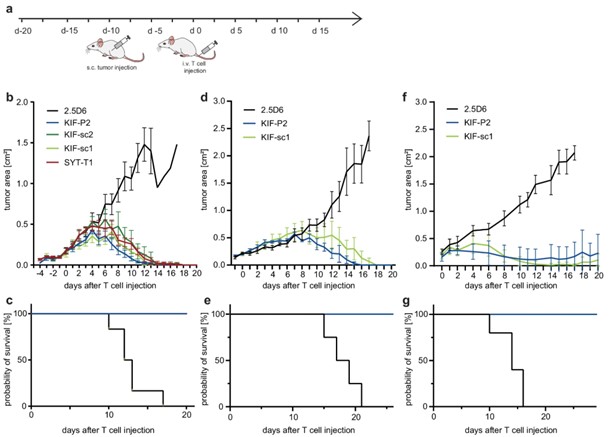
Fig. 1 NeoTCR‑tg T cells exhibit comparable primary tumor rejection in vivo irrespective of activation patterns.1,2