Preclinical Cancer Stem Cell (CSC) Targeted Vaccine Development Solution
Cancer Stem Cells (CSCs) represent a resilient subpopulation within tumors, characterized by self-renewal, multi-lineage differentiation, and an innate resistance to conventional chemotherapy and radiation. Targeting CSCs is widely regarded as the "holy grail" for preventing tumor recurrence and metastasis. Creative Biolabs provides a comprehensive, end-to-end preclinical platform for cancer stem cell targeted vaccine development. Our solutions bridge the gap between high-purity CSC enrichment and the construction of potent vaccine candidates, supporting researchers in eradicating the roots of malignancy.
Rooting Out Malignancy: Why Target CSCs?
Overcoming Therapy Resistance & Metastasis
Conventional cancer vaccines often target bulk tumor antigens, which may leave behind the critical CSC reservoir. These "seeds" of cancer drive epithelial-mesenchymal transition (EMT) and re-establish tumors after initial remission. Our CSC-targeted approach focuses on functionally vital markers (e.g., ALDH, CD133, CD44, Survivin) and embryonic-like antigens that are overexpressed in the stem-like state.
By inducing specific T-cell and B-cell responses against the CSC population, we can effectively deplete the tumor-initiating cells, leading to a significant reduction in metastatic potential and long-term tumor control in preclinical models.
- Key Challenges We Solve:
- Precise enrichment of rare CSC populations (ALDHhigh, CD133+).
- Selection of highly immunogenic CSC-specific neoepitopes.
- Optimal antigen loading and DC maturation strategies.
- In vivo validation of recurrence and metastasis prevention.
Differentiating Bulk-Tumor vs. CSC-Targeted Preclinical Approaches
| Parameter | Bulk Tumor Vaccines | CSC-Targeted Vaccines |
|---|---|---|
| Target Population | Differentiated tumor cells (mass). | Rare tumor-initiating cells (roots). |
| Antigen Selection | Shared TAA or Bulk lysates. | Functional stemness markers (ALDH/Nanog). |
| Metastasis Control | Limited; often fails to prevent EMT. | High; directly targets metastatic precursors. |
| Resistance Profile | Susceptible to chemotherapy escape. | Designed to overcome chemo-radio resistance. |
Preclinical CSC Vaccine Development Modules
CSC Enrichment & Characterization
Building the foundation with high-purity CSC-enriched populations.
- ALDEFLUOR assay-based sorting of ALDHhigh populations.
- Magnetic/Flow-activated sorting for CD133, CD44, and CD24 markers.
- In vitro stemness validation via sphere-formation assays.
- Genomic profiling for stemness-related gene expression (Sox2, Oct4).
Antigen Discovery & Epitope Mapping
Identifying the most vulnerable targets on the CSC surface.
- Differential transcriptome analysis: CSC vs. Non-CSC.
- In silico MHC-binding prediction for CSC-specific neoepitopes.
- Epitope prioritization based on HLA binding and immunogenicity.
- Mass Spectrometry-based immunopeptidomics for ligand validation.
CSC-DC & Viral Vector Platform
Engineering the delivery vehicle for maximum immune priming.
- DC pulsing with ALDHhigh lysates or CSC-specific SLPs.
- mRNA electroporation for full CSC-antigen processing.
- Lentiviral/Adenoviral vector construction for stemness antigen delivery.
- Optimized DC maturation cocktails (TLR agonists + Cytokines).
Functional & Potency Assays
Rigorously verifying the vaccine's ability to trigger immune killing.
- IFN-γ/IL-2 ELISpot for antigen-specific T-cell frequencies.
- In vitro cytotoxicity assays against CSC and Non-CSC targets.
- Intracellular cytokine staining (ICS) for CD4+/CD8+ profiling.
- CSC-specific antibody titer measurement via ELISA.
Standard Preclinical Workflow for CSC Vaccine Development
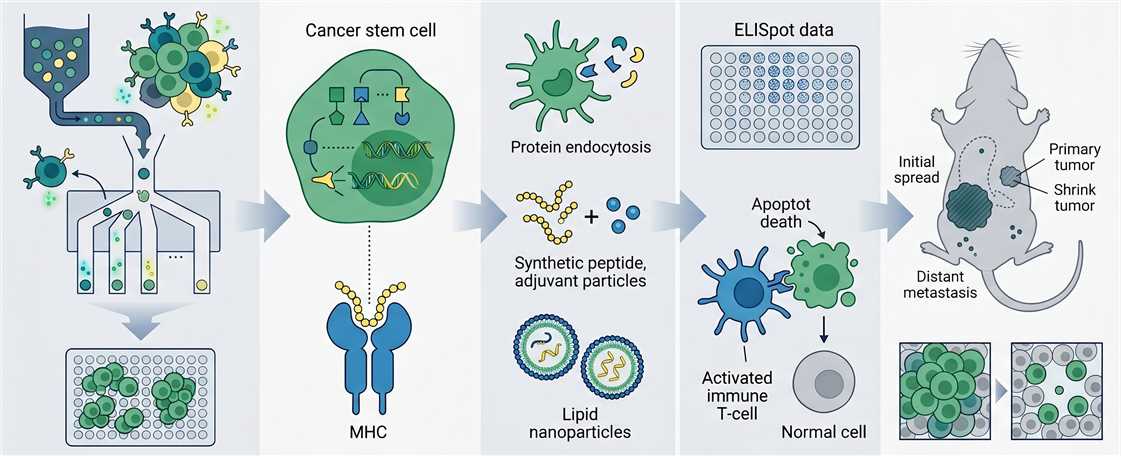
Step 1 — CSC Isolation & Stemness Verification
We utilize the ALDEFLUOR assay and surface markers (CD133/CD44) to enrich CSCs from tumor lines or patient-derived samples. Success is verified through in vitro sphere-formation and functional stemness assays.
Specialized Technologies for CSC Vaccine Precision
Why Choose Creative Biolabs for CSC Vaccine Projects?
Our scientists possess specialized insights into CSC self-renewal pathways and resistance mechanisms, ensuring highly relevant target selection.
We utilize high-resolution ALDEFLUOR sorting and multi-marker FACS to isolate rare CSC populations with unparalleled purity and viability.
From biomimetic vesicles to engineered viral vectors, we offer fully flexible delivery modules tailored to bypass the immunosuppressive TME.
We provide complete traceability and rigorous potency validation, ensuring a streamlined path from discovery to efficacy reports.
Research Insight: Strategic Advances in Delivery Carriers for CSC Eradication
Navigating the TME via Multimodal & Biomimetic Systems
According to the latest review by Wu et al. (2025), the efficacy of therapeutic cancer vaccines is critically dependent on their ability to navigate the immunosuppressive tumor microenvironment (TME) and reach privileged niches such as the CSC reservoir.
-
Active & Passive Synergy: Passive targeting via EPR effects augmented with active ligand conjugation (e.g., antibodies) targeting CSC markers.
-
Biomimetic "Trojan Horses": Membrane-derived vesicular carriers combining natural homing with synthetic tunability.
-
Bacterial & Viral Engineering: Specialized vectors engineered to exploit hypoxic regions where CSCs reside.
-
TME Reprogramming: Next-generation carriers (like SORT LNPs) designed to transform "cold" niches into "hot" zones.
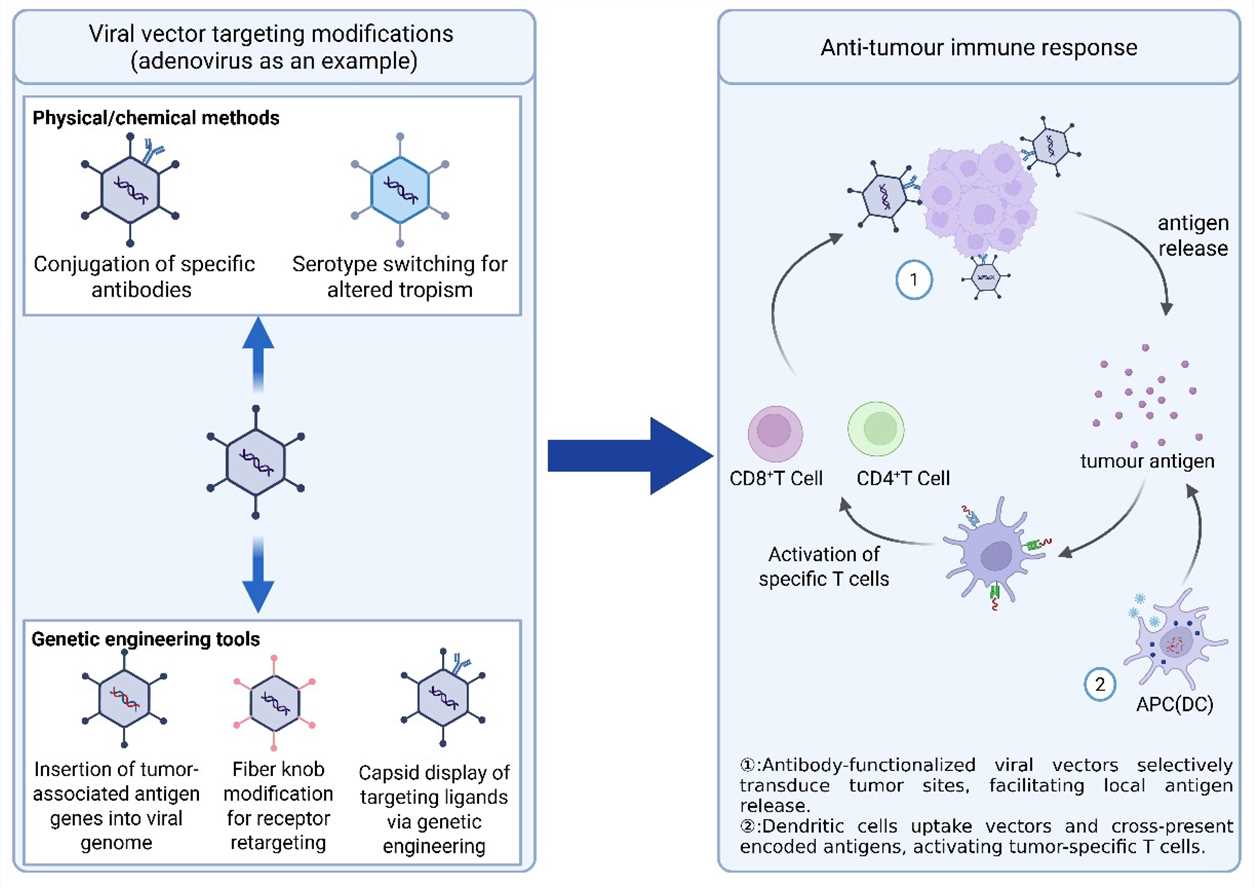
Fig.1 Vector retargeting and antitumor immune activation.1,2