Next-Generation Allogeneic Cell Vaccine Design & Modification Solution
Creative Biolabs is at the forefront of immunotherapy innovation, providing a comprehensive, end-to-end preclinical solution for the allogeneic cell vaccine design & modification. Unlike autologous approaches, our allogeneic platform leverages high-yield, characterized tumor cell lines that are genetically engineered and in vitro stimulated to provide a broad spectrum of shared tumor-associated antigens (TAAs). By integrating sophisticated gene editing, cytokine enhancement, and proprietary "Stimulated Tumor Cell" (STC) technologies, we help global researchers bypass the logistical hurdles of personalized medicine while maximizing anti-tumor immunogenicity.
Allogeneic "Off-the-Shelf" Precision: Breaking Immunotherapy Barriers
The Multi-Antigen Factory
Allogeneic cell vaccines function as a complex factory of immunogenic signals. By utilizing established cell lines, we ensure high antigen density and product consistency. Our "Design & Modification" philosophy focuses on two pillars: Broad Antigen Coverage (using multi-cell line cocktails) and Enhanced Adjuvanticity (through genetic and chemical modifications).
Our preclinical experts utilize in vitro stress induction—incorporating thermal and radiological stimuli—to upregulate Damage-Associated Molecular Patterns (DAMPs) and Heat Shock Proteins (HSPs), ensuring the vaccine cells effectively prime the host's dendritic cells (DCs).
- Unique Features of Our Platform:
- 3CL Hybrid Strategy: Using cocktails of 3 distinct cell lines to maximize TAA breadth.
- STC Engineering: Proprietary stimulation matrices to mimic tumor plasticity.
- Chemical Haptenation: Enhancing foreignness of tumor proteins for T cell education.
- Integrated Multi-Omics: Proteomic validation of "stressed" antigen expression.
Superiority of Engineered Allogeneic Cell Vaccines
| Parameter | Whole Cell (Untreated) | Design & Modified Allogeneic Solution |
|---|---|---|
| Immunogenicity Level | Low; immune tolerance potential. | High; via STC stress & Haptenation. |
| T cell Priming | Limited APC activation. | Robust; engineered Cytokine expression. |
| Antigen Spectrum | Narrow. | Wide; synergistic 3CL cocktail. |
| Scalability | Patient-dependent. | High; "Off-the-shelf" Master Cell Banks. |
Comprehensive Preclinical Modification Modules
Genetic Immune Enhancement
Optimizing vaccine cells through vector-mediated transgene expression.
- Constitutive or inducible expression of cytokines (e.g., GM-CSF, IL-2, IL-12).
- Overexpression of co-stimulatory molecules (CD80/CD86, 4-1BBL).
- In vitro verification of secretion levels and membrane stability.
Genome Editing
Precise knockout of immune-evasion pathways within the vaccine vehicle.
- Knockout of MHC-inhibitory factors to prevent immune masking.
- Enhancement of phagocytic signals (e.g., SIRPα axis modulation).
- Genomic stability assessment and off-target analysis.
STC Matrix & Surface Engineering
Physio-chemical modification to break self-tolerance.
- In vitro thermal/radiological stress induction (10-25 Gy).
- DFNB-based chemical haptenation for enhanced antigenic recognition.
- Membrane anchoring of adjuvants and toll-like receptor (TLR) agonists.
Potency & Safety Validation
Integrated assessment of vaccine efficacy and mechanism of action.
- In vitro APC-T cell co-culture & IFN-γ ELISpot assays.
- In vivo syngeneic tumor challenge & protection models.
- TIL (Tumor Infiltrating Lymphocyte) and cytokine profiling.
Standardized Preclinical Development Workflow
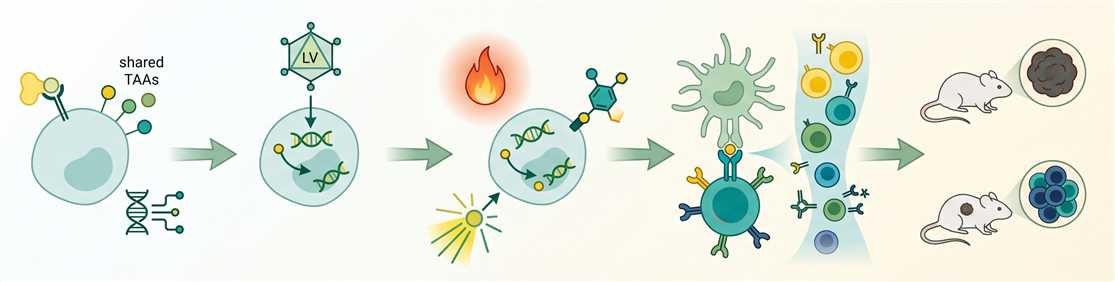
Step 1 — Antigen Profiling & Cell Line Selection
Selection of allogeneic cell lines based on HLA-independent shared TAAs. We utilize NGS and WES to profile established lines (e.g., CT26, MC38, CMT-93) to ensure maximum coverage of resistance-related proteins.
Enabling Technologies for Allogeneic Excellence
Why Choose Creative Biolabs?
Leveraging a decade of immunotherapy research, our scientists possess deep insights into allogeneic cell biology and tumor immunology.
Our platform integrates NGS-based discovery with mass spectrometry validation, providing higher accuracy in ranking and verifying TAAs.
From specific stimulation matrices to unique genetic engineering strategies, we offer fully flexible modules tailored to your project goals.
We provide complete traceability and rigorous QC for every step, offering a streamlined path from design to final preclinical efficacy reports.
Research Insight: Allogeneic STC Vaccines in CRC Preclinical Models
Key Findings from STC Platform Efficacy Studies
Recent studies on allogeneic cancer cell vaccines have highlighted their potential in treating "cold" tumors or those resistant to immune checkpoint inhibitors (ICI). Our platform mirrors the findings from the latest research using the CT26 and MC38 models.
-
3CL Superiority: In vivo studies show that a 3-cell line (3CL) cocktail significantly improves survival and retards tumor growth compared to cell (1CL) versions, attributed to a wider quality range of tumor-related proteins.
-
Reversing Resistance: In MC38 anti-PD-1 resistant models, vaccination with modified allogeneic cells induced a 60% response rate, including complete regressions.
-
Immune Remodeling: Mechanism of action studies revealed a significant increase in CD8+ lymphocyte infiltration and a phenotypic shift toward M1 macrophages in the tumor microenvironment.
-
Haptenation Potency: Combining stress with chemical haptenation results in a synergistic reduction of average tumor volume (*p* < 0.003) compared to untreated control groups.1
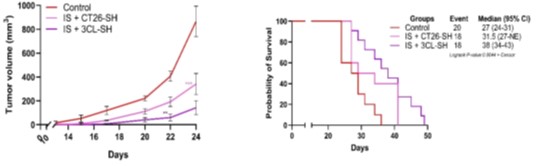
Fig.1 Bioactivity evaluation of stimulated and haptenated cell line-based vaccines.1.2