
Preclinical GM-CSF-Secreting Tumor Cell Vaccine Development Solution
Creative Biolabs is a global pioneer in cancer immunotherapy innovation, providing a sophisticated, end-to-end platform for the development of GM-CSF-secreting tumor cell vaccines (GVAX-like platforms). By genetically modifying tumor cells to secrete Granulocyte-Macrophage Colony-Stimulating Factor (GM-CSF), this next-generation whole-cell vaccine strategy converts the tumor cells into localized "bioreactors" that actively recruit and activate Dendritic Cells (DCs). This approach ensures the processing and presentation of the full spectrum of tumor antigens—including TAAs, neoantigens, and cancer stem cell markers—thereby bypassing the limitations of single-antigen peptide vaccines and inducing robust, adaptive anti-tumor immunity.
Localized Cytokine Delivery: The Key to Immunogenic Reversal
Orchestrating the Tumor Immune Microenvironment
Dendritic cells (DCs) are the central orchestrators of antitumor immunity. GM-CSF-secreting vaccines exploit this by releasing high concentrations of GM-CSF locally at the vaccination site. This localized signal recruits professional APCs, ensuring high-efficiency antigen uptake and cross-presentation to both CD4+ and CD8+ T cells. Unlike systemic cytokine therapy, this whole-cell platform achieves a "Goldilocks effect"—providing enough stimulus to prime the immune system while avoiding systemic immune exhaustion and CRS risks.
Traditional whole-cell vaccines often suffer from poor immunogenicity. By adding localized GM-CSF secretion, the engineered cells actively "call" the immune system to the antigen source, ensuring that the entire tumor antigenic profile is captured in a highly stimulatory environment.
- Core Preclinical Challenges We Address:
- Engineering stable cell chassis with high-level GM-CSF secretion ex vivo.
- Optimizing irradiation doses to arrest proliferation while preserving metabolic bioactivity.
- Verifying secretion stability post-thaw and post-irradiation for preclinical lot release.
- Quantifying antigen-specific T cell activation using complex co-culture assays in vitro.
Unique Advantages: GM-CSF-Secreting Whole-Cell Vaccines
| Key Parameter | Traditional Whole-Cell Vaccines | GM-CSF-Secreting Platform |
|---|---|---|
| DC Recruitment | Passive; dependent on injection site context. | Active; cytokine-driven massive DC infiltration. |
| Antigen Spectrum | Limited to dominant TAAs/Neoepitopes. | Full whole-tumor profile (HLA-independent). |
| T-cell Polarization | Often weak or prone to Treg induction. | Potent Th1/CD8 activation via active cross-priming. |
| Biological Durability | Rapid antigen washout. | Sustained secretion bioreactor post-irradiation. |
Comprehensive Preclinical Development Service Modules
Cell Engineering & Secretion Optimization
Selection and genetic modification of the ideal whole-cell vaccine chassis.
- Primary tumor separation/enrichment or selection of optimal cell lines.
- High-efficiency stable modification (Lentiviral, Retroviral, or non-viral systems).
- Iterative screening for "Super-Secretor" clones post-engineering.
- Genetic stability and identity verification via STR and NGS profiling.
Inactivation & Process Validation
Precision inactivation protocols to balance safety and cytokine release potency.
- Optimization of irradiation dose (X-ray or Gamma) for lethal arrest.
- Verification of 100% "No-Growth" status via 14-21 day extended culture.
- Quantification of GM-CSF secretion mass (ELISA/MSD) post-irradiation.
- Formulation development for enhanced viability post-thaw and transport.
Biological Potency & Mechanism Study
Bridging the gap between protein mass and immune activation signal.
- In vitro DC recruitment and functional maturation (CD80/83/86 profiling).
- PBMC/T-cell co-culture assays to track antigen-specific priming.
- ELISpot/FluoroSpot for IFN-γ and TH1/TH2 cytokine release profiling.
- Verification of antigen cross-presentation pathways in MHC-I/II context.
In Vivo Efficacy & Safety Evaluation
Comprehensive validation in immune-competent models for preclinical POC.
- Syngeneic mouse tumor models (Preventive, Therapeutic, and Re-challenge).
- Deep profiling of TILs and suppression of MDSCs via flow cytometry.
- Safety screening including toxicology, pathology, and biodistribution.
- Synergy evaluation with immune checkpoint inhibitors (anti-PD-1/PD-L1).
Optimized Preclinical GM-CSF Vaccine Development Workflow
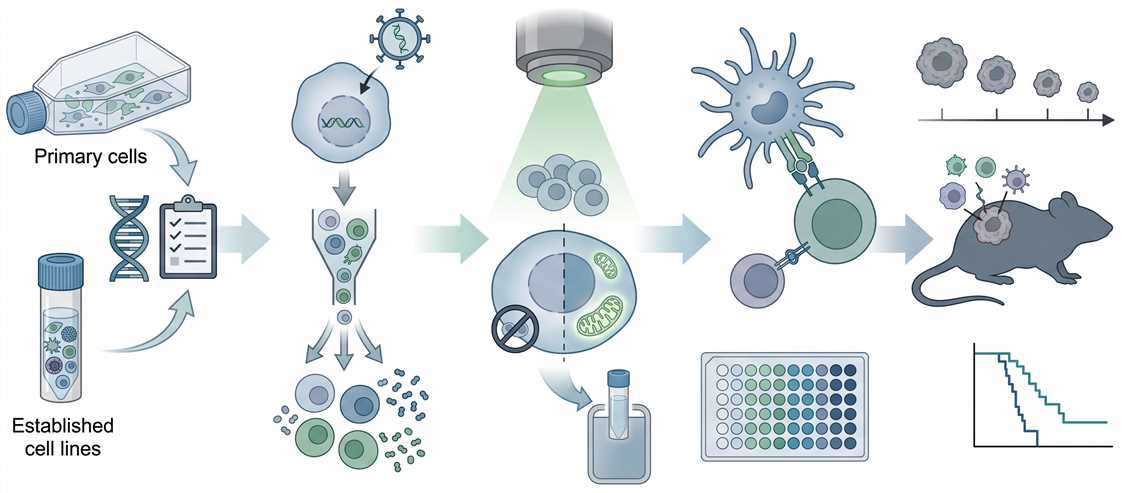
Phase 1 — Project Strategy & Cell Selection
Evaluation of cancer indications and selection of appropriate cell sources (primary dissociation vs. established lines). Definition of the Target Product Profile (TPP) and identification of Critical Quality Attributes (CQAs) for secretion Mass.
Enabling Platforms for Whole-Cell Innovation
Why Choose Creative Biolabs?
Over a decade of expertise in cellular engineering and whole-cell immunology, ensuring stable product characteristics.
Analytical and process development strategies that align with preclinical evidence requirements and regulatory gaps.
Flexible modules from primary cell dissociation to complex in vivo syngeneic models tailored to your indication.
Comprehensive documentation packages including batch records, analytical validation, and final preclinical efficacy reports.
Research Insight: GM-CSF as a Double-Edged Sword in the TME
Navigating Myeloid Homeostasis for Vaccine Design
According to recent literature in Frontiers in Immunology (2022), GM-CSF exerts complex dualistic roles. While low concentrations support basic cell survival via PI3K signaling, high localized concentrations—like those achieved with secreting whole-cell vaccines—trigger the JAK2-STAT5 pathway required for professional APC maturation.
-
TME Repolarization: Local GM-CSF secretion can reprogram M2-like macrophages toward an anti-tumorigenic M1-like MHC-IIhi phenotype, re-sensitizing "cold" tumors to immune checkpoint inhibitors.
-
Avoiding Suppression: Preclinical strategies must carefully titrate secretion levels; excessive chronic exposure may promote MDSC recruitment or EMT transition. Our platform optimizes the localized "pulse" of secretion post-irradiation.
-
Synergy with CAR-T & ICI: Integrated studies show that GM-CSF whole-cell vaccines can expand the T-cell repertoire while ICI prevents subsequent exhaustion, leading to target lesion regression in resistant models.1
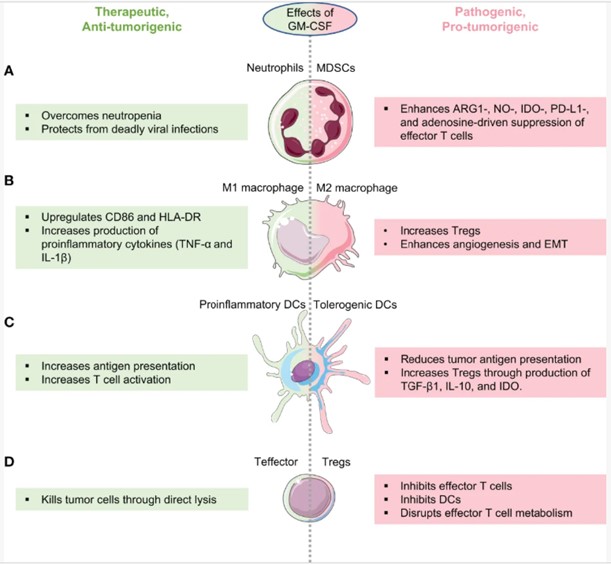
Fig.1Dual therapeutic and pathogenic roles of GM-CSF in anti-tumor immune surveillance.1,2