






Chimeric Costimulatory Antigen Receptor-T Construction Service enables the engineering of dual-receptor T cells that separate activation and co-stimulation, achieving superior precision, safety, and functional control in adoptive cell therapy.
Creative Biolabs has a tradition of commitment. To achieve efficient execution and regulatory approval, we offer careful considerations of your program for the development of a cellular or gene therapy product – now and in the future.
EXPLORE MORE HighlightsWe focus on unmet needs and develop novel cellular and gene drugs and solutions that offer significant benefits over existing options.
EXPLORE MORE HighlightsThe advent of Chimeric Antigen Receptor T-cell (CAR-T) therapies has revolutionized the field of oncology, providing new avenues for treating various forms of cancer. Our 20 years of experience in the biotechnology sector have equipped us with the expertise and technological capabilities to support the entire lifecycle of CAR-T products, from early development to commercialization.
EXPLORE MORETo accelerate advanced breakthroughs of your projects, we offer broad range of platforms which enable our clients be free to tackle problems with cutting-edge technologies from different angles and in different methods.
EXPLORE MORE HighlightsUse the resources in our library to help you understand your options and make critical decisions for your study. We offer oncolytic virus, CAR-T, and dendritic cell related documents, as well as newsletter. If you don't find the answers you're looking for, contact us for additional assistance.
EXPLORE MORE HighlightsGet a real taste and understanding of the business and culture of one of the world's great research-based cellular and gene therapy discovery and development companies.
EXPLORE MORE
Chimeric antigen receptors (CAR) T cell immunotherapy has made significant advancements in the treatment of various malignancies, particularly hematologic malignancies. However, there can be challenges with CAR-T cell therapy such as the failure of CAR-T cells to persist and remain functional in vivo, which limits their antitumor efficacy. To overcome these challenges, various strategies are being investigated, such as the modification of CAR-T cells to express cytokine receptors that can enhance their survival and functionality.
Cytokines and their receptors play a crucial role in the survival, proliferation, and function of CAR-T cells. Chimeric cytokine receptors are a novel technology applied in the field of immunotherapy, specifically in enhancing the function of CAR-T cells. By incorporating these chimeric receptors into CAR-T cells, we can control the activation and expansion of CAR-T cells. The specific design of these receptors is dependent on the cytokine of interest.
Chimeric cytokine receptors allow for more precise control over CAR-T cell activation and behavior, making therapies more effective and reducing potential side effects. They combine elements of a cytokine receptor with another different receptor, creating a new receptor that can respond to a specific ligand. At Creative Biolabs, we offer a cutting-edge design service specializing in chimeric cytokine receptor engineering. Our team maintains clear communication with our clients to ensure that the final chimeric cytokine receptor design aligns with their expectations.
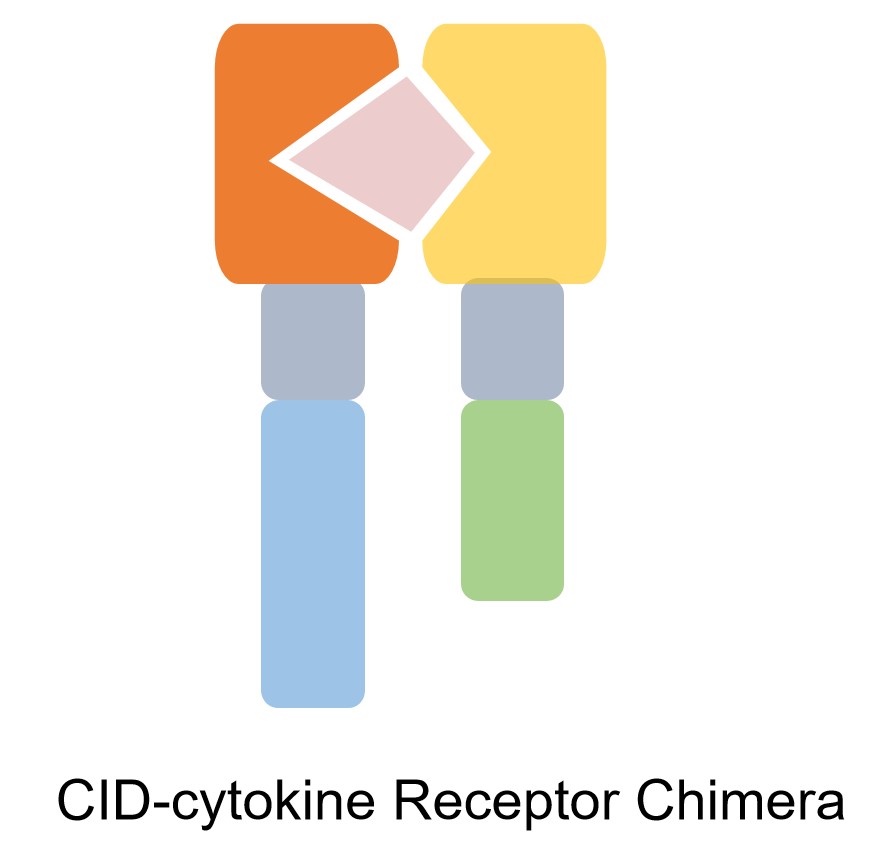
CID-cytokine Receptor Chimera stands for chemically induced dimerization cytokine receptor chimera. This is a type of chimeric receptor that can be specifically activated by a small molecule, which induces dimerization of receptors. This technique allows the regulation of CAR-T cell activity in response to small-molecule drugs.
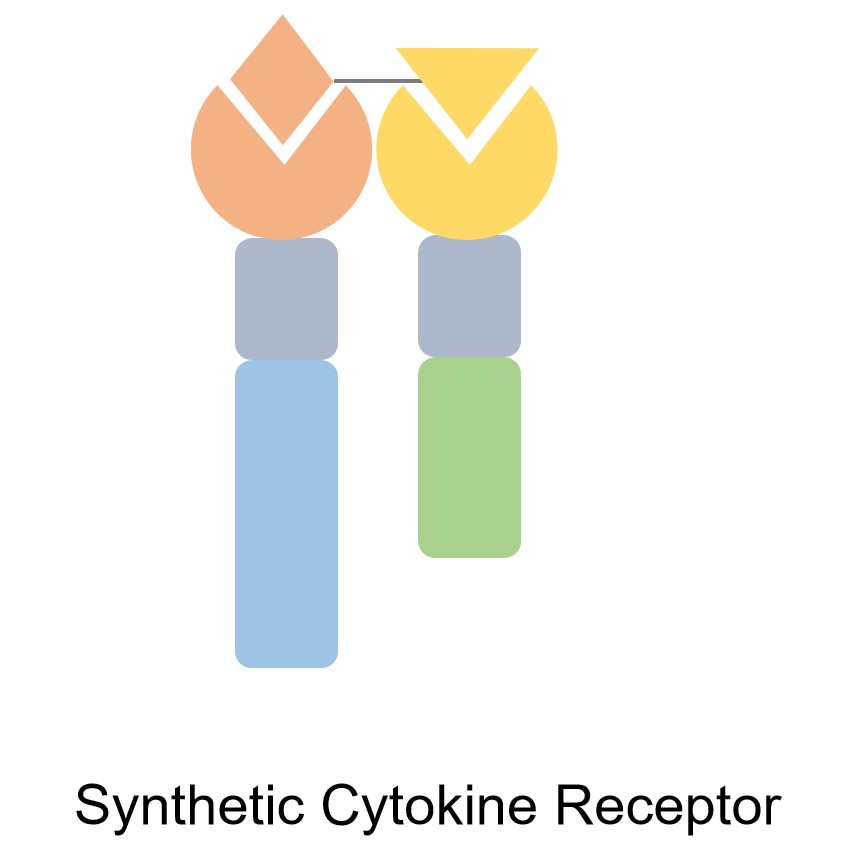
Synthetic cytokine receptors are engineered receptors that can be designed to respond to signals or ligands that are not naturally recognized by immune cells. With the use of artificial ligands, SCRs can selectively stimulate therapeutic cells without affecting other cells in the body. This can significantly improve the safety and precision of therapeutics, especially in cancer immunotherapy including CAR-T cell therapy.
In addition, we provide orthogonal cytokine-receptor pairs construction for CAR T-cell development. Orthogonal cytokine-receptor pairs are specifically designed to interact with each other using molecular engineering techniques that involve amino acid substitutions. These engineered pairs transmit native cytokine signals but do not interact with their natural counterparts, thereby enabling selective stimulation of targeted cells in vivo.
Whether you require novel chimeric receptor constructs, modifications for CAR-T cells, or other customized designs, our experts provide tailored, high-quality solutions for your research. Contact us to work with our experienced team closely on your next chimeric cytokine design project.
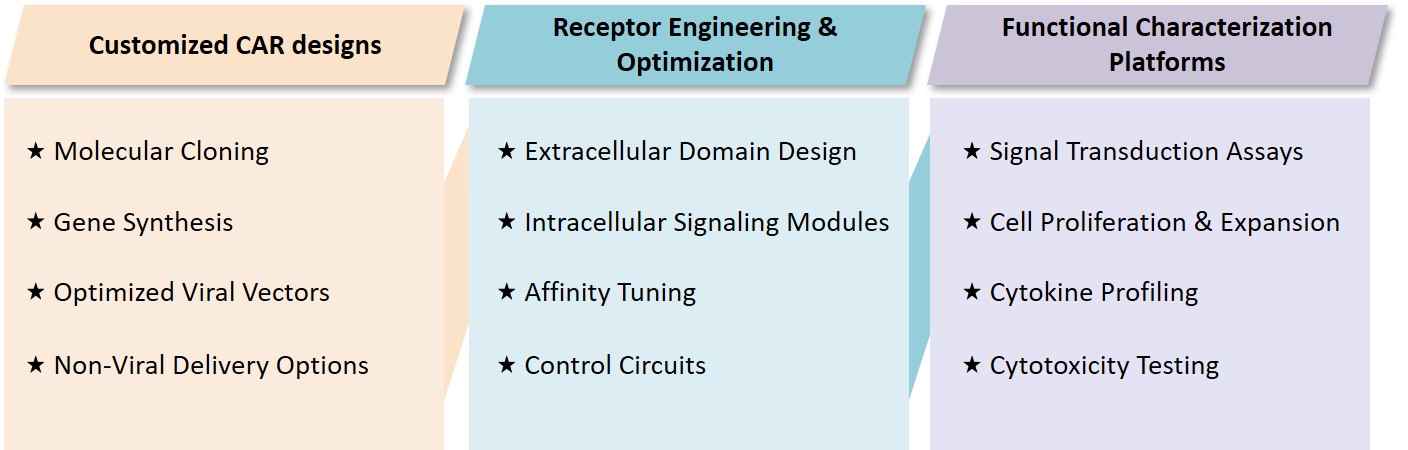
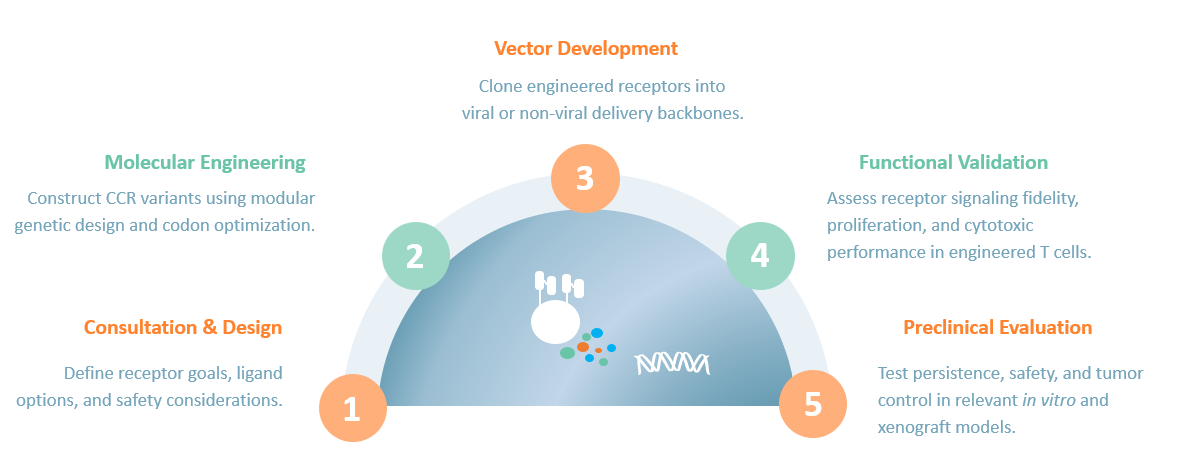
Final deliverables: a validated chimeric cytokine receptor, functional assay data, and a technical report.
Kindly contact us to arrange a confidential consultation and get a detailed technical proposal.
How do chimeric cytokine receptors improve CAR-T therapy?
They provide sustained proliferative and survival signals, enhance persistence in vivo, and reduce dependence on systemic cytokine administration.
Are these receptors safe for clinical translation?
Yes, designs prioritize ligand specificity and controlled signaling, minimizing off-target activation and systemic toxicity.
Can the receptors be customized for different cancer types?
Absolutely - CCR designs can be tailored to match the tumor microenvironment and therapeutic goals, whether for solid tumors or hematologic cancers.
Chimeric Costimulatory Antigen Receptor-T Construction Service enables the engineering of dual-receptor T cells that separate activation and co-stimulation, achieving superior precision, safety, and functional control in adoptive cell therapy.
Co-Stim CAR Design Service provides customizable CAR architectures integrating optimized costimulatory domains to boost persistence, cytotoxicity, and long-term efficacy of engineered immune cells against challenging malignancies.
Reference
For any technical issues or product/service related questions, please leave your information below. Our team will contact you soon.
All products and services are For Research Use Only and CANNOT be used in the treatment or diagnosis of disease.
 NEWSLETTER
The latest newsletter to introduce the latest breaking information, our site updates, field and other scientific news, important events, and insights from industry leaders
LEARN MORE NEWSLETTER NEW SOLUTION
CellRapeutics™ In Vivo Cell Engineering: One-stop in vivo T/B/NK cell and macrophage engineering services covering vectors construction to function verification.
LEARN MORE SOLUTION NOVEL TECHNOLOGY
Silence™ CAR-T Cell: A novel platform to enhance CAR-T cell immunotherapy by combining RNAi technology to suppress genes that may impede CAR functionality.
LEARN MORE NOVEL TECHNOLOGY NEW SOLUTION
Canine CAR-T Therapy Development: From early target discovery, CAR design and construction, cell culture, and transfection, to in vitro and in vivo function validation.
LEARN MORE SOLUTION