Creative Biolabs has a tradition of commitment. To achieve efficient execution and regulatory approval, we offer careful considerations of your program for the development of a cellular or gene therapy product – now and in the future.
EXPLORE MORE HighlightsWe focus on unmet needs and develop novel cellular and gene drugs and solutions that offer significant benefits over existing options.
EXPLORE MORE HighlightsThe advent of Chimeric Antigen Receptor T-cell (CAR-T) therapies has revolutionized the field of oncology, providing new avenues for treating various forms of cancer. Our 20 years of experience in the biotechnology sector have equipped us with the expertise and technological capabilities to support the entire lifecycle of CAR-T products, from early development to commercialization.
EXPLORE MORETo accelerate advanced breakthroughs of your projects, we offer broad range of platforms which enable our clients be free to tackle problems with cutting-edge technologies from different angles and in different methods.
EXPLORE MORE HighlightsUse the resources in our library to help you understand your options and make critical decisions for your study. We offer oncolytic virus, CAR-T, and dendritic cell related documents, as well as newsletter. If you don't find the answers you're looking for, contact us for additional assistance.
EXPLORE MORE HighlightsGet a real taste and understanding of the business and culture of one of the world's great research-based cellular and gene therapy discovery and development companies.
EXPLORE MORE
Creative Biolabs delivers preclinical biodistribution and target localization assessment solutions for in vivo CAR constructs, aiding the advancement of cell therapies with enhanced safety and predictable in vivo behavior. This suite of services resolves core developmental bottlenecks, including ambiguous tissue distribution patterns, insufficient data on in vivo target-binding potency, risks of unintended off-target gene transfer, and obstacles to measuring how long CAR-engineered vectors persist and are cleared from biological systems.
As in vivo CAR technologies continue to advance, biodistribution and targeting assessments have become essential components of preclinical development. Published studies have demonstrated that therapeutic constructs can exhibit dynamic distribution patterns across blood, lymphoid organs, target tissues, and non-target organs following administration. Recent scientific literature highlights the importance of evaluating tissue exposure, persistence, clearance kinetics, and target engagement using molecular, imaging, and histological approaches. These findings support the use of comprehensive biodistribution and targeting studies to improve candidate selection, optimize delivery strategies, and enhance overall development confidence.
Successful in vivo CAR development requires a clear understanding of where therapeutic constructs distribute, how efficiently target cells are modified, and whether non-target tissues are exposed. Creative Biolabs provides comprehensive non-clinical evaluation solutions designed to generate actionable data supporting candidate selection, safety assessment, and translational development.
Our services enable clients to characterize whole-body biodistribution after administration, evaluate tissue targeting efficiency and target cell binding, analyze cell persistence, clearance and dynamic distribution, detect off-target exposure and non-specific transduction, compare different delivery approaches and doses, and produce complete data sets to support preclinical research and regulatory filings.
Discover How We Can Help - Request a Consultation.
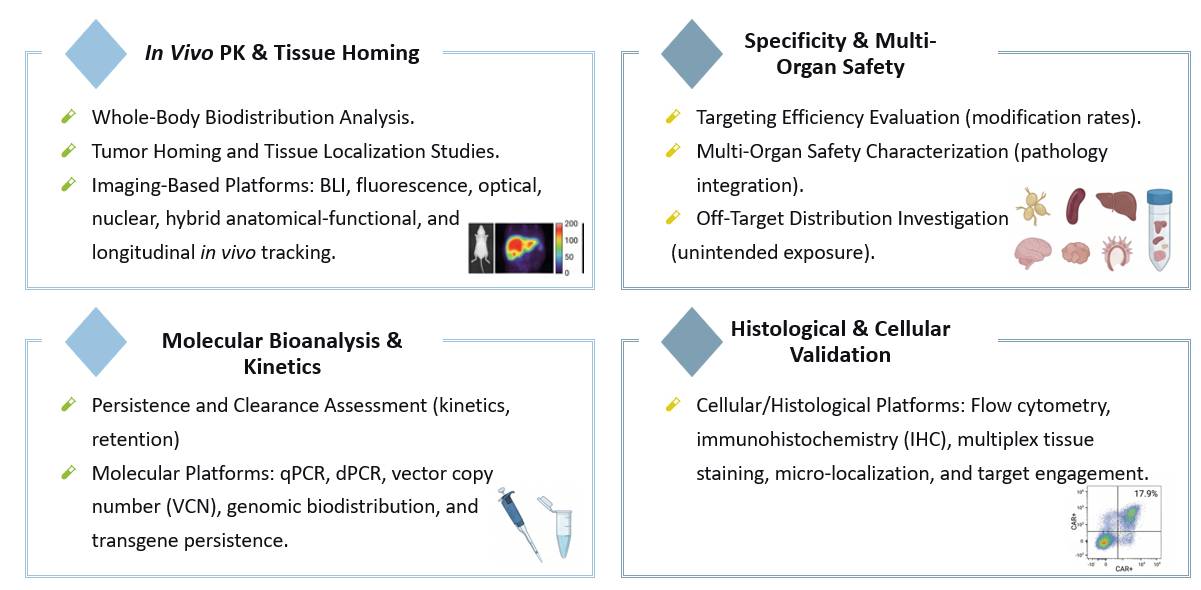
We conduct full biodistribution analysis covering organs and lesion sites, measuring targeting efficiency, cell persistence, clearance and off-target distribution alongside tumor homing and multi-organ safety. Our toolkit combines longitudinal optical/nuclear imaging, and flow cytometry, multiplex staining for histological and cellular assessment.
To start our biodistribution and targeting evaluation, clients shall supply CAR construct and delivery system details, test therapeutic preparations, plus target background, animal models, administration plans and study goals.
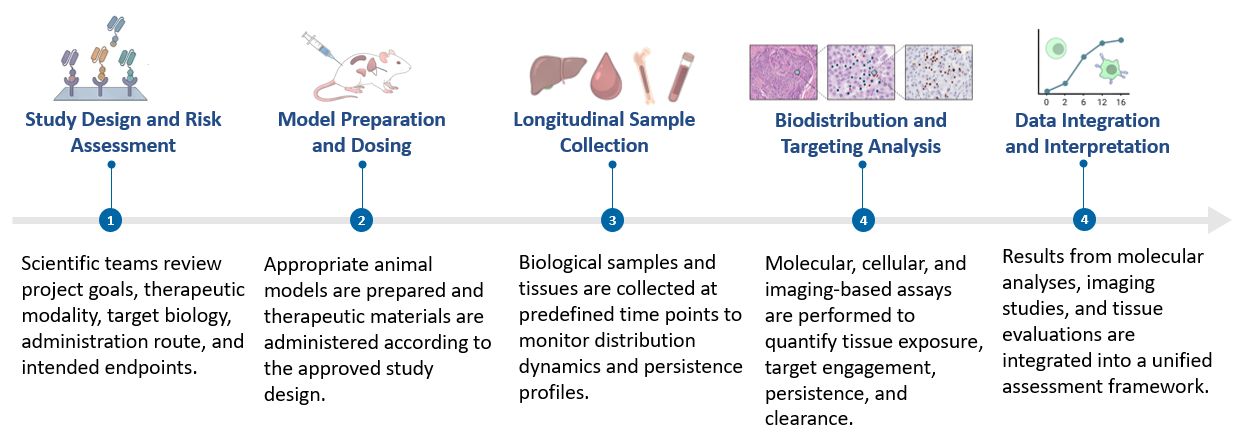
You will receive full biodistribution reports, organ quantitative data, targeting and persistence analyses, imaging visuals, histological results, plus statistical data and research conclusions.
Employing ultra-sensitive tracking, this service maps systemic vector distribution across vital organs. It systematically identifies off-target delivery and unintended gene expression, providing critical specificity data to ensure patient safety and meet strict regulatory standards.
Learn More →To eliminate reproductive and neurological risks, our platform performs rigorous molecular assays detecting vector leakage into germlines and dorsal root ganglia. This specialized screening guarantees definitive safety profiling, safeguarding your therapeutic design before clinical translation.
Learn More →Q: What information can biodistribution studies provide for in vivo CAR programs?
A: These studies provide insights into tissue distribution, targeting efficiency, persistence, clearance behavior, and potential off-target exposure. Such information can support candidate selection and development planning.
Q: Which tissues are commonly analyzed?
A: Depending on project objectives, analyses may include blood, liver, spleen, lung, kidney, lymphoid tissues, bone marrow, target tissues, and additional organs of interest.
Q: What methods are available for tracking distribution in vivo?
A: A combination of molecular quantification, imaging technologies, cellular analysis, and tissue-based evaluations can be utilized to generate complementary datasets.
Q: How are off-target distribution risks assessed?
A: Off-target assessment typically involves evaluating non-target tissues using quantitative molecular assays, tissue localization analyses, and histological examination to identify unintended exposure patterns.
This study uses non-invasive zirconium isotope imaging to observe different doses of lymphoma-targeted CAR-T cells in tumor-bearing mice, without harming cells. Cells stay in lungs for hours then move to liver and spleen for days. Medium and high doses gather more in tumors. Verified by separate tissue tests, this imaging method tracks cell distribution to guide treatment.
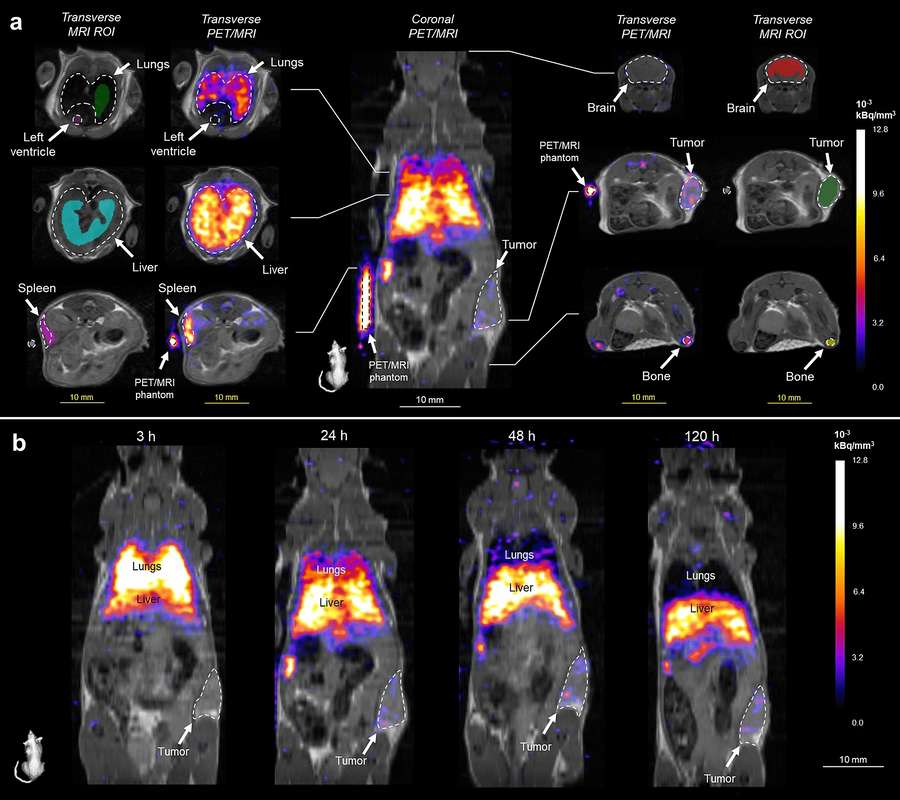 Fig.1 Quantitative image evaluation of in vivo CAR-T cells.1
Creative Biolabs provides comprehensive Non-Clinical Biodistribution & Targeting Evaluation Services for In Vivo CAR programs, supporting the characterization of tissue distribution, targeting efficiency, persistence, clearance, and off-target exposure. Through integrated molecular, imaging, cellular, and histological evaluation platforms, we help researchers generate robust datasets for informed development decisions. For detailed information regarding our Non-Clinical Biodistribution & Targeting Evaluation Services for In Vivo CAR, please contact our scientific team.
Reference
For any technical issues or product/service related questions, please leave your information below. Our team will contact you soon.
All products and services are For Research Use Only and CANNOT be used in the treatment or diagnosis of disease.
 NEWSLETTER
The latest newsletter to introduce the latest breaking information, our site updates, field and other scientific news, important events, and insights from industry leaders
LEARN MORE NEWSLETTER NEW SOLUTION
CellRapeutics™ In Vivo Cell Engineering: One-stop in vivo T/B/NK cell and macrophage engineering services covering vectors construction to function verification.
LEARN MORE SOLUTION NOVEL TECHNOLOGY
Silence™ CAR-T Cell: A novel platform to enhance CAR-T cell immunotherapy by combining RNAi technology to suppress genes that may impede CAR functionality.
LEARN MORE NOVEL TECHNOLOGY NEW SOLUTION
Canine CAR-T Therapy Development: From early target discovery, CAR design and construction, cell culture, and transfection, to in vitro and in vivo function validation.
LEARN MORE SOLUTION









