Creative Biolabs has a tradition of commitment. To achieve efficient execution and regulatory approval, we offer careful considerations of your program for the development of a cellular or gene therapy product – now and in the future.
EXPLORE MORE HighlightsWe focus on unmet needs and develop novel cellular and gene drugs and solutions that offer significant benefits over existing options.
EXPLORE MORE HighlightsThe advent of Chimeric Antigen Receptor T-cell (CAR-T) therapies has revolutionized the field of oncology, providing new avenues for treating various forms of cancer. Our 20 years of experience in the biotechnology sector have equipped us with the expertise and technological capabilities to support the entire lifecycle of CAR-T products, from early development to commercialization.
EXPLORE MORETo accelerate advanced breakthroughs of your projects, we offer broad range of platforms which enable our clients be free to tackle problems with cutting-edge technologies from different angles and in different methods.
EXPLORE MORE HighlightsUse the resources in our library to help you understand your options and make critical decisions for your study. We offer oncolytic virus, CAR-T, and dendritic cell related documents, as well as newsletter. If you don't find the answers you're looking for, contact us for additional assistance.
EXPLORE MORE HighlightsGet a real taste and understanding of the business and culture of one of the world's great research-based cellular and gene therapy discovery and development companies.
EXPLORE MORE
Despite remarkable clinical responses, CAR-T therapy faces persistent challenges including unpredictable in vivo expansion, heterogeneous differentiation fates, and a lack of reliable surrogate biomarkers that link early cellular kinetics to durable remission or toxicity. Our CAR-Mediated Pharmacodynamics (PD) & Immune Phenotypical Biomarker Analysis platform offers an integrated, multi-dimensional assessment of CAR-T cell behavior and host immune remodeling across the entire therapeutic timeline. Our service combines high-parameter flow cytometric phenotyping, absolute lymphocyte subset quantitation, and high-resolution immune repertoire sequencing to deliver a cohesive view of both CAR-specific and global immune dynamics. By bridging cellular pharmacodynamics with systems-level immune architecture, we empower you to deconvolve response heterogeneity, rationalize combination regimens, and identify early predictive biomarkers that guide clinical decision-making and accelerate candidate advancement.
CAR therapy represents a paradigm-shifting immunotherapeutic modality that redirects polyclonal T cell cytotoxicity against tumor-associated antigens through engineered receptor signaling domains, yet its clinical efficacy remains inherently heterogeneous across patients and cancer types. Biomarkers, ranging from baseline tumor microenvironmental features and systemic inflammatory indices to post-infusion soluble factors and surface protein dynamics, have emerged as critical correlates of response and resistance, offering both prognostic stratification and mechanistic insight into therapy outcome. Complementing these static or dynamic readouts, pharmacokinetic (PK) profiling of CAR‑T cells, encompassing expansion, persistence, and trafficking kinetics, provides an indispensable quantitative framework that bridges cellular behavior with exposure‑response relationships.
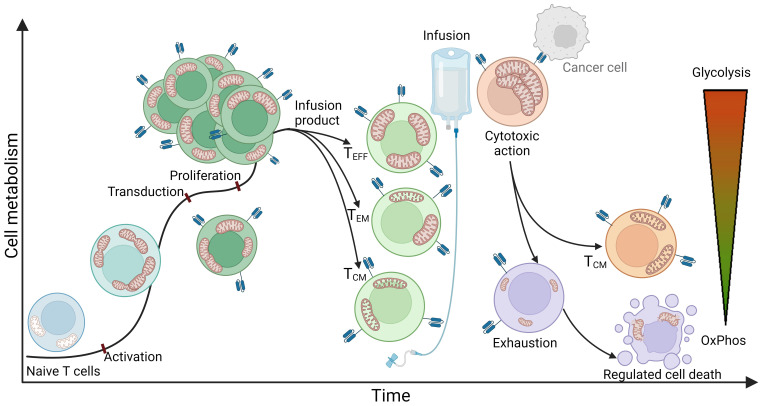 Fig.1 Biomarkers are key factors in predicting CAR T therapy outcomes. 1
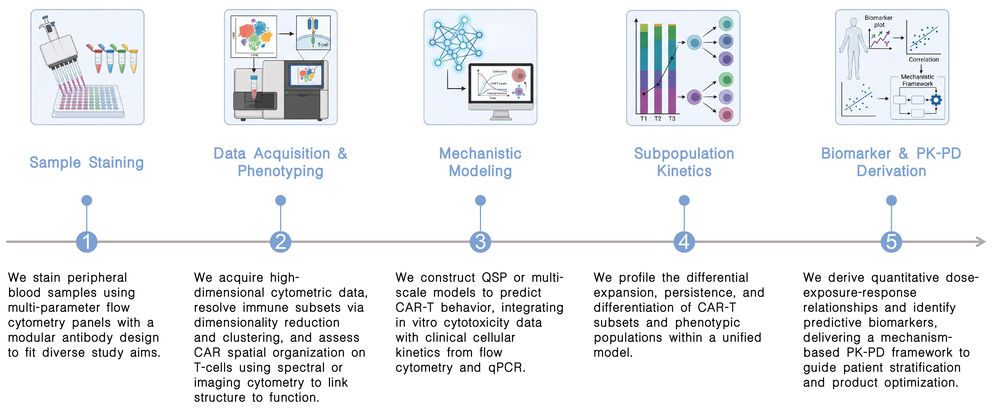
Our platform integrates CAR-T functional kinetic profiling with exhaustion-state mapping and high-dimensional immunophenotyping to yield quantitative PD readouts. By converting dynamic cellular behaviors into clinically interpretable biomarkers, we enable refined patient stratification, early response forecasting, and biology-informed trial design, all delivered with validated, submission-ready analytical standards to expedite your immuno-oncology development.
Our service provides a foundational immunophenotypic baseline and longitudinal tracking of major lymphocyte compartments through multiparameter flow cytometry with absolute quantitation. It enables precise monitoring of immune reconstitution, lymphodepletion efficiency, and homeostatic shifts post-CAR infusion, while also serving as a critical quality-control anchor for interpreting downstream functional and phenotypic readouts.
Learn More →Our service focuses on the dynamic characterization of engrafted CAR+ T cells directly ex vivo, profiling their surface marker signatures, exhaustion status, activation states, and memory/differentiation hierarchies without in vitro manipulation. By capturing the actual differentiation trajectory and functional fitness of CAR+ cells in the host microenvironment, this analysis reveals critical determinants of persistence, proliferative capacity, and cytotoxic potential.
Learn More →Our service leverages high-throughput sequencing of rearranged immunoglobulin and T cell receptor loci to decode the global architecture of adaptive immune diversity following CAR therapy, with particular emphasis on clonal expansion dynamics, repertoire evenness, and shared public clones. It enables tracking of CAR-induced T cell clonal dominance, emergence of tumor-reactive bystander clones, and potential B cell aplasia-associated repertoire contraction, while also uncovering oligoclonal patterns that may correlate with cytokine release syndrome or neurotoxicity.
Learn More →
Q1: Which biomarkers predict severe CRS and ICANS?
A1: Baseline systemic inflammation markers predict both poor efficacy and severe CRS. Notably, a higher proportion of naïve/stem-cell memory T cells in the product correlates with enhanced efficacy yet a reduced risk of severe CRS and ICANS.
Q2: What baseline biomarkers predict CAR-T efficacy?
A2: Efficacy prediction hinges on three factors: (1) a higher frequency of early-memory T cells (Tcm/Tscm) in the product, with non-exhausted effector-memory-like cells driving low-dose efficacy; (2) elevated baseline IL-6, CRP, and ferritin signaling inferior survival; and (3) CAR-structure specificity—predictive T cell signatures differ between CD28- and 4-1BB-costimulated products, necessitating stratified modeling.
Our platform integrates real-time CAR-T pharmacodynamic profiling with high-dimensional immune phenotyping, linking effector kinetics to biomarker-driven responses. We deliver actionable insights through validated assays, precise data normalization, and translational analytics, accelerating your candidate selection, dosing strategies, and patient stratification with reproducibility and regulatory-grade rigor.
Interested in advancing your CAR-T candidate? Our scientific liaisons are available for private, project-focused discussions. Expect tailored assay blueprints, prompt budgetary estimates, and informed strategic input—all aligned with your development milestones. Reach us via email to arrange an initial technical briefing.
Reference
For any technical issues or product/service related questions, please leave your information below. Our team will contact you soon.
All products and services are For Research Use Only and CANNOT be used in the treatment or diagnosis of disease.
 NEWSLETTER
The latest newsletter to introduce the latest breaking information, our site updates, field and other scientific news, important events, and insights from industry leaders
LEARN MORE NEWSLETTER NEW SOLUTION
CellRapeutics™ In Vivo Cell Engineering: One-stop in vivo T/B/NK cell and macrophage engineering services covering vectors construction to function verification.
LEARN MORE SOLUTION NOVEL TECHNOLOGY
Silence™ CAR-T Cell: A novel platform to enhance CAR-T cell immunotherapy by combining RNAi technology to suppress genes that may impede CAR functionality.
LEARN MORE NOVEL TECHNOLOGY NEW SOLUTION
Canine CAR-T Therapy Development: From early target discovery, CAR design and construction, cell culture, and transfection, to in vitro and in vivo function validation.
LEARN MORE SOLUTION









