Creative Biolabs has a tradition of commitment. To achieve efficient execution and regulatory approval, we offer careful considerations of your program for the development of a cellular or gene therapy product – now and in the future.
EXPLORE MORE HighlightsWe focus on unmet needs and develop novel cellular and gene drugs and solutions that offer significant benefits over existing options.
EXPLORE MORE HighlightsThe advent of Chimeric Antigen Receptor T-cell (CAR-T) therapies has revolutionized the field of oncology, providing new avenues for treating various forms of cancer. Our 20 years of experience in the biotechnology sector have equipped us with the expertise and technological capabilities to support the entire lifecycle of CAR-T products, from early development to commercialization.
EXPLORE MORETo accelerate advanced breakthroughs of your projects, we offer broad range of platforms which enable our clients be free to tackle problems with cutting-edge technologies from different angles and in different methods.
EXPLORE MORE HighlightsUse the resources in our library to help you understand your options and make critical decisions for your study. We offer oncolytic virus, CAR-T, and dendritic cell related documents, as well as newsletter. If you don't find the answers you're looking for, contact us for additional assistance.
EXPLORE MORE HighlightsGet a real taste and understanding of the business and culture of one of the world's great research-based cellular and gene therapy discovery and development companies.
EXPLORE MORE
The reliable production of cell and gene therapies is often hindered by critical challenges, including the need to monitor acute host tissue toxicities during in vivo genetic modification and to enforce rigorous quality control over the integrity of targeting ligands and encapsulation consistency of viral coats or LNP formulations. To address these hurdles, we offer our specialized Host Cell Residual Impurity Quantification (HCD & HCP) Service. Our service provides precise, high-sensitivity analytical solutions tailored specifically for the detection and quantification of host cell DNA and proteins. By leveraging advanced methodologies and stringent quality standards, our service ensures robust safety profiling and process consistency, ultimately delivering the critical data you need to accelerate program timelines and satisfy regulatory requirements with confidence.
Residual host-cell DNA (HCD) is a critical safety contaminant in In vivo CAR therapy products, carrying potential oncogenic and infectious risks that demand rigorous clearance monitoring. Host-cell proteins (HCPs), as the major process-related impurities, pose significant immunogenicity concerns and can compromise product stability and biological activity if not adequately controlled. Quantitative analysis of both HCD and HCP residuals therefore serves as an indispensable quality attribute assessment, providing essential safety and purity data that guide process development, establish clearance validation, and support regulatory filings for submissions.
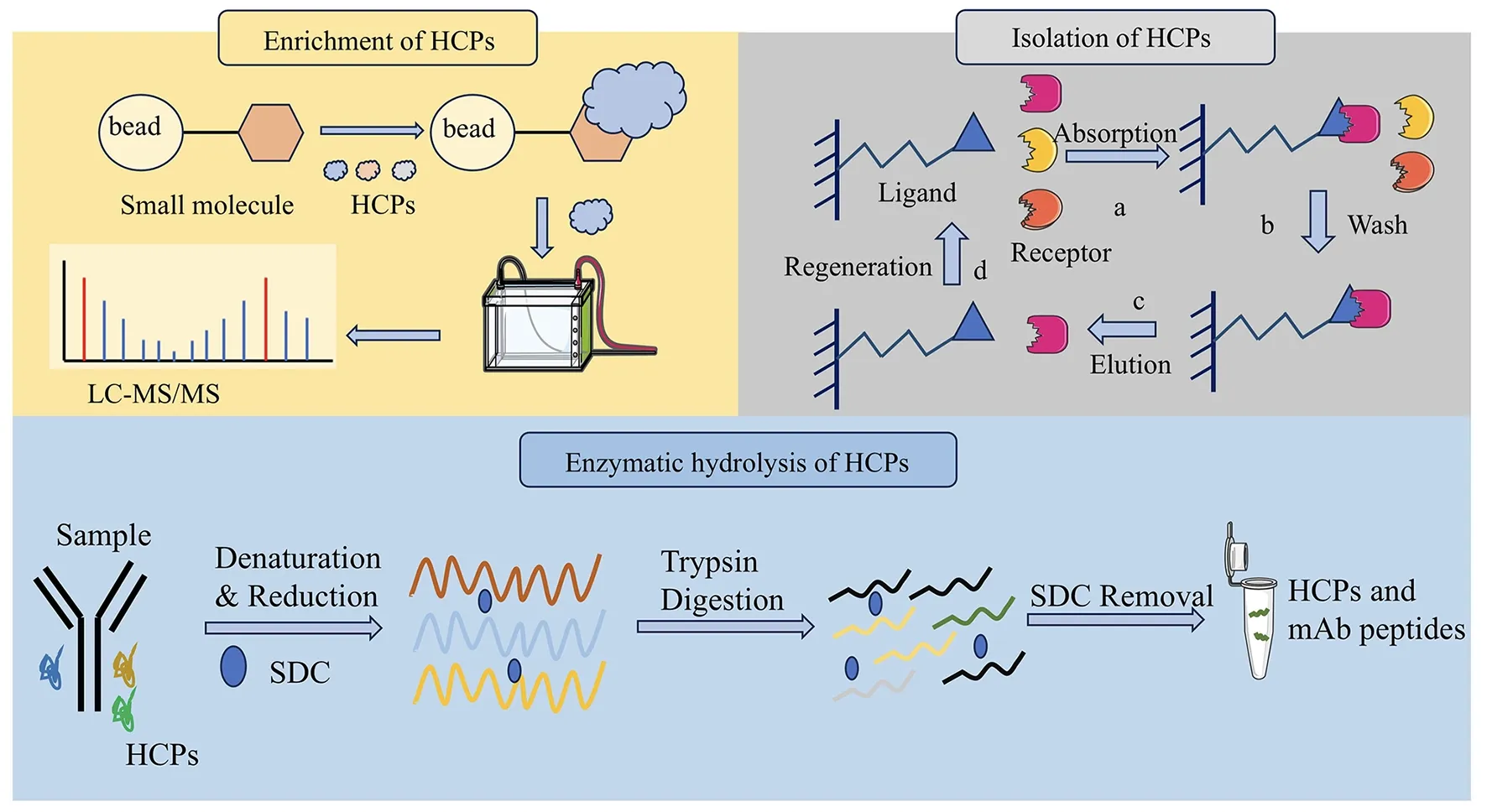 Fig.1 Three pretreatment strategies for the analysis of host-cell proteins.1
Our Host Cell Residual Impurity Quantification Service for In vivo CAR therapy delivers precise, regulatory-ready detection of residual HCD and HCPs across all stages of vector and cell product development. Leveraging validated platforms, we provide high-sensitivity, matrix-compatible analysis that ensures product safety, minimizes immunogenicity risks, and accelerates your studies with reliable, actionable data.
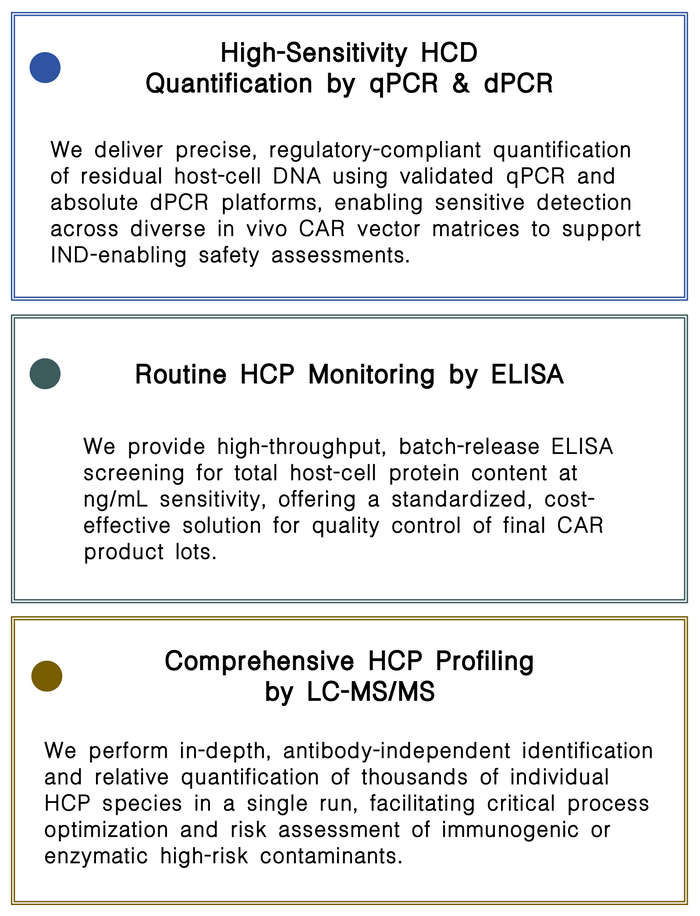
Our service delivers a fully integrated suite of orthogonal analytical solutions for host cell impurity quantification, combining regulatory-ready HCD detection with complementary HCP screening and deep-profiling capabilities to ensure product safety, purity, and process consistency for your in vivo CAR therapy programs.
Q1: What host cell impurities are typically targeted in these assays?
A1: Our service primarily quantifies two categories of residual impurities derived from the production cell line. The first is HCD, measured via quantitative PCR (qPCR) to monitor both residual amount and fragment size distribution. The second is HCP, assessed using ELISA with broadly representative, high-sensitivity antibody kits to ensure comprehensive coverage of potential immunogenic species.
Q2: What methodological requirements must be considered for in vivo CAR products?
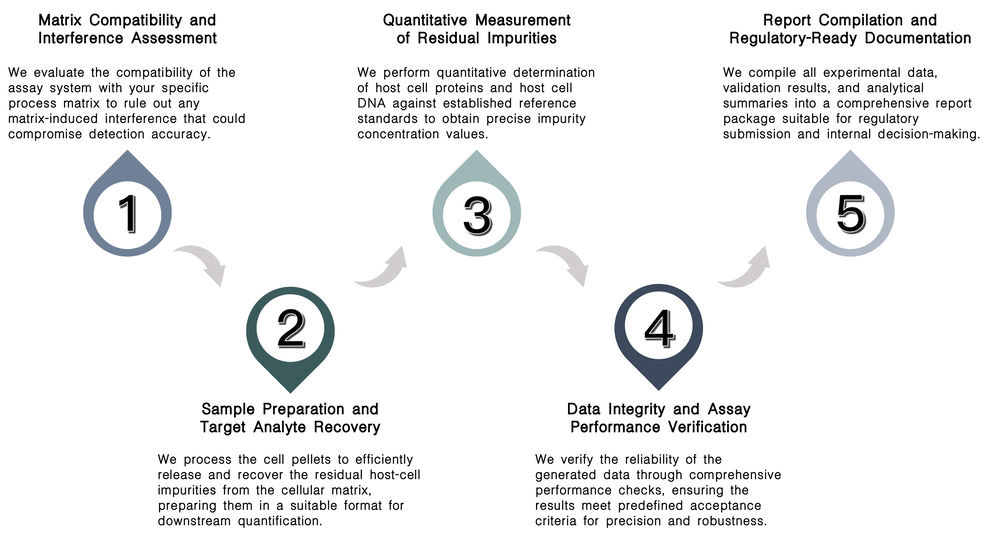
A2: Given the direct systemic administration of these therapies, analytical methods demand rigorous performance criteria. Full validation is mandatory, with limits of detection and quantification sufficiently low to trace trace-level impurities. Matrix effects such as interference from lipid nanoparticles (LNPs) or viral vectors must be thoroughly evaluated for both qPCR and ELISA platforms. Beyond HCD/HCP, other process-related contaminants also require monitoring to meet comprehensive safety standards.
We combine deep expertise in in vivo CAR therapy with rigorous analytical science to deliver accurate, reliable, and regulatory-ready HCD/HCP quantification. Our platform ensures ultra-high sensitivity and streamlined automated workflows, providing you with robust impurity data that safeguard product safety and accelerate your path to the clinic.
"During the regulatory submission process for our in vivo CAR-T program, the HCD and HCP quantitative data provided by Creative Biolabs' service proved instrumental in paving our path forward. Their team not only executed a comprehensive method validation in full alignment with current regulatory guidelines but also delivered a meticulously structured validation report that demonstrated exceptional rigor. The report comprehensively covered critical parameters including specificity, accuracy, and achieved exceptionally low limits of quantification (LOQ), providing us with the robust data package necessary to confidently address regulatory expectations." CMC Lead.
"Our HEK293T transient transfection platform presents significant analytical complexity, and off-the-shelf HCP kits had previously caused substantial false-positive interferences that hampered our process understanding. The adoption of Creative Biolabs' tailored quantification service marked a turning point. Their scientific team conducted an in-depth HCP antibody coverage study specifically targeting our proprietary production cell line and critical process intermediates. Based on these insights, they provided a highly specific, customized kit that effectively eliminated non-specific cross-reactivity, enabling us to accurately profile impurity clearance for the first time." Analytical Scientist.
Our scientific team is ready to discuss your specific program needs from method suitability to regulatory strategy. Whether you are at an early discovery stage or preparing IND-enabling studies, we offer tailored solutions with rapid response. Reach out to initiate a confidential technical consultation and receive a customized proposal aligned with your project timeline.
Reference
For any technical issues or product/service related questions, please leave your information below. Our team will contact you soon.
All products and services are For Research Use Only and CANNOT be used in the treatment or diagnosis of disease.
 NEWSLETTER
The latest newsletter to introduce the latest breaking information, our site updates, field and other scientific news, important events, and insights from industry leaders
LEARN MORE NEWSLETTER NEW SOLUTION
CellRapeutics™ In Vivo Cell Engineering: One-stop in vivo T/B/NK cell and macrophage engineering services covering vectors construction to function verification.
LEARN MORE SOLUTION NOVEL TECHNOLOGY
Silence™ CAR-T Cell: A novel platform to enhance CAR-T cell immunotherapy by combining RNAi technology to suppress genes that may impede CAR functionality.
LEARN MORE NOVEL TECHNOLOGY NEW SOLUTION
Canine CAR-T Therapy Development: From early target discovery, CAR design and construction, cell culture, and transfection, to in vitro and in vivo function validation.
LEARN MORE SOLUTION









