Creative Biolabs has a tradition of commitment. To achieve efficient execution and regulatory approval, we offer careful considerations of your program for the development of a cellular or gene therapy product – now and in the future.
EXPLORE MORE HighlightsWe focus on unmet needs and develop novel cellular and gene drugs and solutions that offer significant benefits over existing options.
EXPLORE MORE HighlightsThe advent of Chimeric Antigen Receptor T-cell (CAR-T) therapies has revolutionized the field of oncology, providing new avenues for treating various forms of cancer. Our 20 years of experience in the biotechnology sector have equipped us with the expertise and technological capabilities to support the entire lifecycle of CAR-T products, from early development to commercialization.
EXPLORE MORETo accelerate advanced breakthroughs of your projects, we offer broad range of platforms which enable our clients be free to tackle problems with cutting-edge technologies from different angles and in different methods.
EXPLORE MORE HighlightsUse the resources in our library to help you understand your options and make critical decisions for your study. We offer oncolytic virus, CAR-T, and dendritic cell related documents, as well as newsletter. If you don't find the answers you're looking for, contact us for additional assistance.
EXPLORE MORE HighlightsGet a real taste and understanding of the business and culture of one of the world's great research-based cellular and gene therapy discovery and development companies.
EXPLORE MOREAll products and services are For Research Use Only and CANNOT be used in the treatment or diagnosis of disease.
As an emerging target in the field of CAR-T cell therapy, CD10 has been reported to be associated with the development of a variety of tumors. Creative Biolabs offers a wide range of CD10 CAR products based on years of in-depth research and expertise in CAR-T therapy. The following is a brief list of product categories, you can search for keywords to get the CD10 CAR product you want.
CD10, also known as "common acute lymphoblastic leukemia antigen", is a lymphatic follicular centrocyte marker. Positive for germinal center follicular lymphoma, Burkitt lymphoma, chronic myeloid leukemia and TDT+ lymphocytic leukemia. In the early stages of adult bone marrow, precursor lymphocytes, immature B cells, and normal tonsils and germinal centers of lymphoid tissue are also positive.
 Fig.1 CD10 signaling pathways in breast carcinoma.1
Germinal Center Follicular Lymphoma
Burkitt Lymphoma
Chronic Myeloid Leukemia
TDT+ Lymphocytic Leukemia
B Cell Acute Lymphoblastic Leukemia
Creative Biolabs offers different kinds of CAR design and build. In addition to conventional CAR, we also offer the universal CAR T cell platform (UniCAR). The UniCAR can be adjusted by adapters, quickly reaching the target, and dissociating quickly (high shutdown rate).
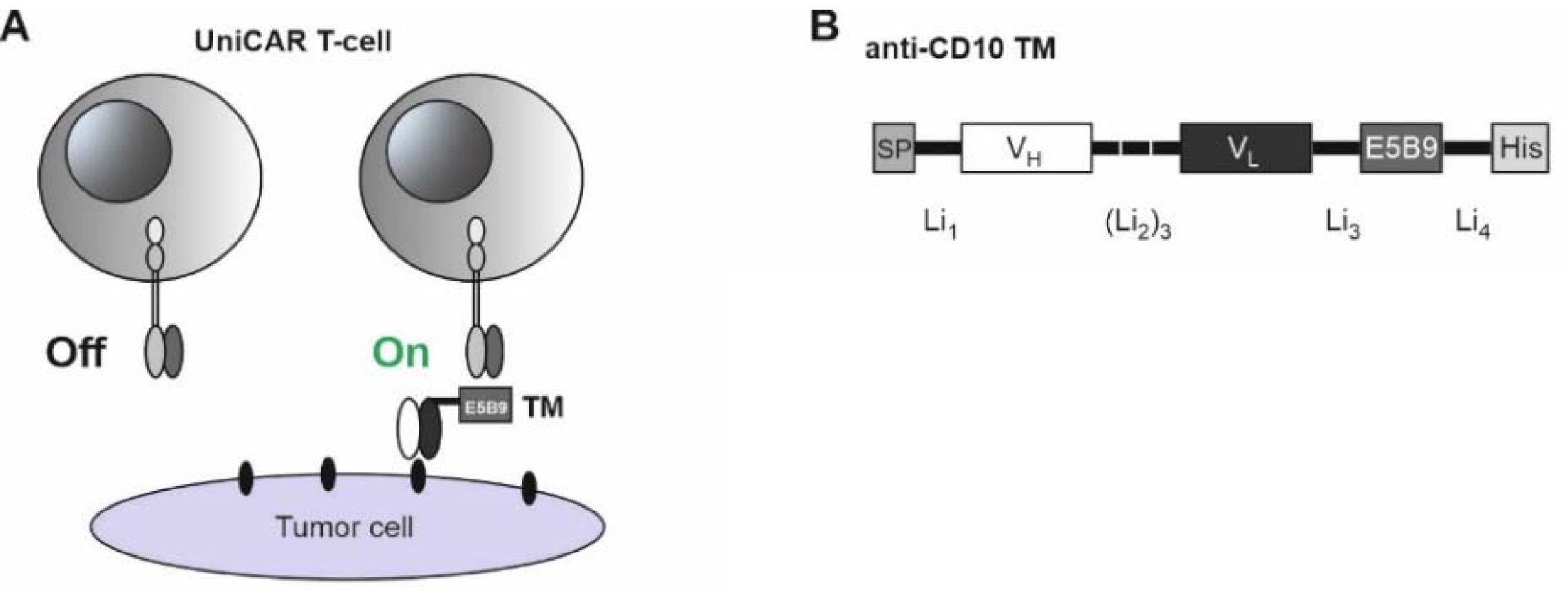 Fig.2 Schematic diagram of the targeting CD10 CAR T construction.2 A: Schematic diagram of a universal CAR T cell platform. B: Schematic diagram of the structure of B anti-CD10.
Anti-CD10 CAR-T Expression Test
Analyzing the expression level of the target protein is a critical step in the overall CAR cell therapy process. At Creative Biolabs, our scientists offer different assays for your protein expression levels, including SDS-PAGE, loss cytometry, western blotting, and more, based on high-level scientific research.
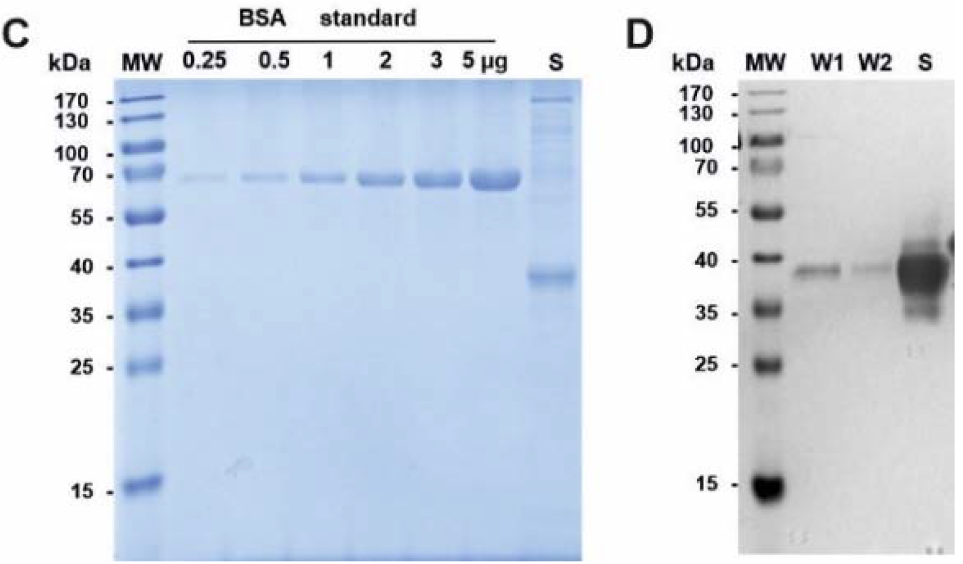 Fig.3 Analysis of CD10 target molecule by SDS-PAGE and western blotting.2
Anti-CD10 CAR-T Cytokine Release Test
Detecting the ability of anti-CD10 UniCAR T cells to release pro-inflammatory factors is an important part of studying T cell function. As shown in Figure 4, CD10 UniCAR T cells were able to significantly increase IFNγ, TNF, and IL-2 production.
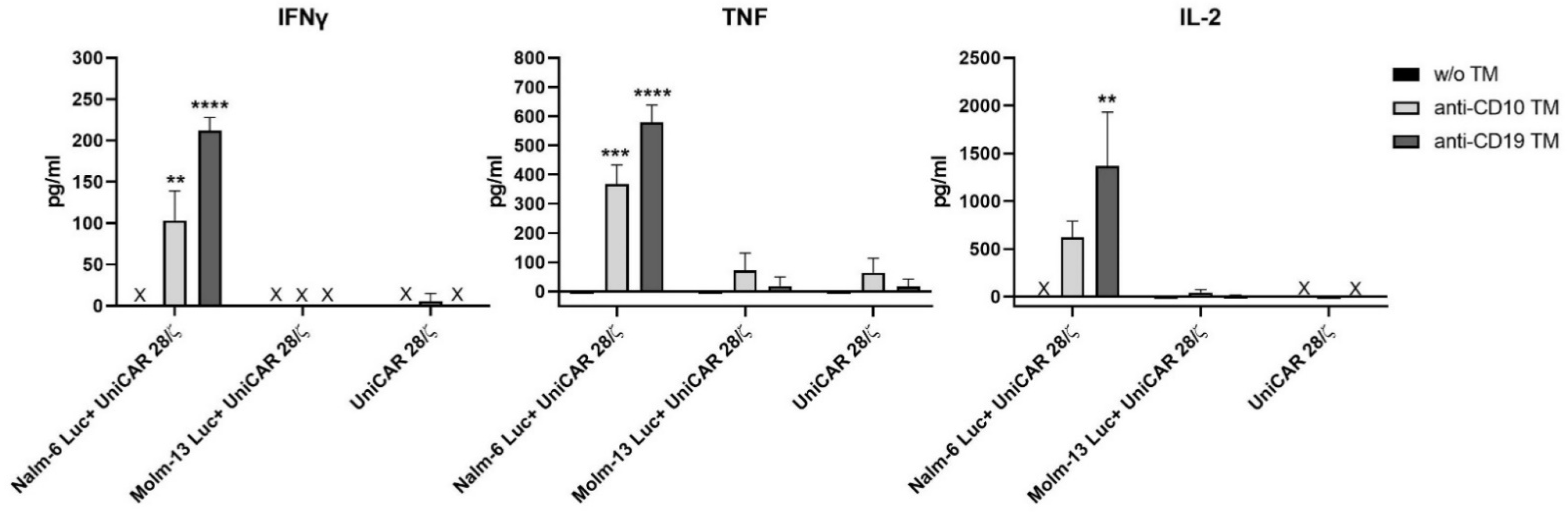 Fig.4 Detection of the level of cytokines released from CD10 UniCAR T cells by ELISA.2
Anti-CD10 CAR-T In Vitro Cytotoxicity Assay
To investigate the specific cytotoxic activity of anti-CD10 UniCAR T cells, Creative Biolabs offers in vitro cytotoxicity assays. Nalm-6 Luc cells and anti-CD10 UniCAR T cells were incubated together as shown in the figure below. CD10 UniCAR T cytotoxicity is assessed using a luminescence assay. The results showed that anti-CD10 UniCAR T cells specifically killed CD10-expressing leukemia cells.
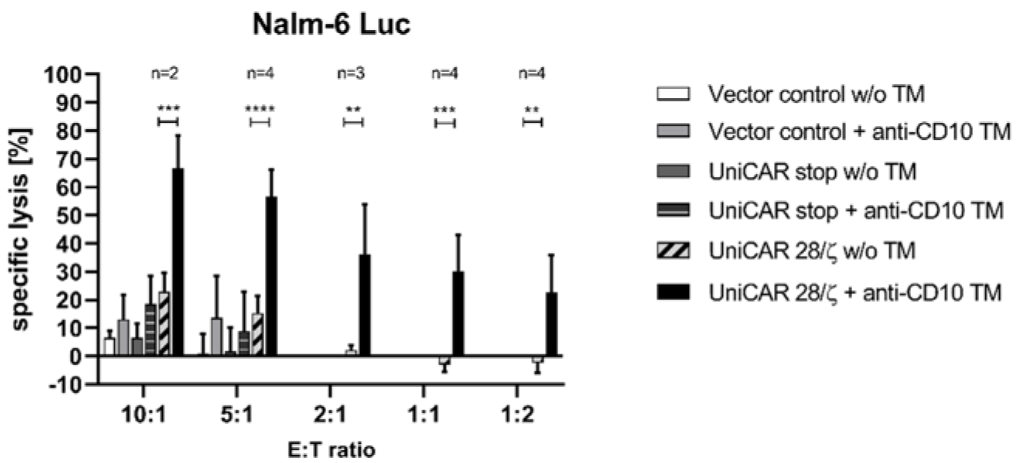 Fig.5 Anti-CD10 UniCAR T cell cytotoxicity in Nalm-6 Luc cells.2
In addition to CD10 CAR-T in vitro assay service, Creative Biolabs' one-stop CAR-T therapy development platform also provides you with preclinical in vivo assay services. These include the construction of xenograft animal models, effectiveness testing of CD10 CAR-T cells, strategies for utilizing cytokine release syndrome, in vivo efficacy testing of CD10 CAR-T, and in vivo toxicity evaluation, and so on. You can click on the link above for more information!
References
 Loading...
| CAT | Product Name | Target Species | Antibody Clone | Antibody Host | Receptor Construction | Vector Type | Targeting Cell Type | CAR Vector Type | Inquiry & Datasheet |
| CAR-YF173 | Anti-CD10 (CBL-YF056) h(4-1BB-CD3ζ) CAR, pCDCAR1 | Human | CBL-YF056 | Humanized | scFv-4-1BB-CD3ζ | Lentiviral vector | T cell | ||
| CAR-YF174 | Anti-CD10 (CBL-YF056) h(CD28-CD3ζ) CAR, pCDCAR1 | Human | CBL-YF056 | Humanized | scFv-CD28-CD3ζ | Lentiviral vector | T cell | ||
| CAR-0120ZP361 | Anti-CD10 (60656-7H5) h(CD28-CD3ζ) CAR, pCDCAR1 | Human | 60656-7H5 | Mouse | scFv-CD28-CD3ζ | Lentiviral vector | T Cell | ||
| CAR-0120ZP362 | Anti-CD10 (60656-7H5) h(4-1BB-CD3ζ) CAR, pCDCAR1 | Human | 60656-7H5 | Mouse | scFv-4-1BB-CD3ζ | Lentiviral vector | T Cell | ||
| CAR-SB-LX0050 | Anti-CD10 (J5) h(CD28-CD3ζ) CAR, pSBCAR1 | Human | J5 | Human | scFv-CD28-CD3ζ | Sleeping Beauty (SB) transposon | T cell | ||
| XS-0622-ZP3172 | Anti-CD10 h(VHH1-VHH2-CD28-CD3ζ) Biepitopic CAR, pCDCAR1 | Human | VHH1-VHH2-CD28-CD3ζ | Lentiviral vector | T Cell | ||||
| XS-0622-ZP3344 | Anti-CD10 h(VHH1-VHH2-4-1BB-CD3ζ) Biepitopic CAR, pCDCAR1 | VHH1-VHH2-4-1BB-CD3ζ | Lentiviral vector | T Cell | |||||
| XS-0622-LX200 | Anti-CD10 (X6X176) h(CD28-41BB-CD3ζ) CAR, pCDCAR1 | Human | X6X176 | mouse | scFv-CD28-41BB-CD3ζ | Lentiviral vector | T cell | ||
| XS-0622-LX409 | Anti-CD10 (X6X176) h(ICOS-4-1BB-CD3ζ) CAR, pCDCAR1 | Human | X6X176 | mouse | scFv-ICOS-4-1BB-CD3ζ | Lentiviral vector | T cell | ||
| XS-0622-LX618 | Anti-CD10 (X6X176) h(CD28-OX40-CD3ζ) CAR, pCDCAR1 | Human | X6X176 | mouse | scFv-CD28-OX40-CD3ζ | Lentiviral vector | T cell | ||
| XS-0622-LX823 | Anti-CD10 (X6X176) h(CD28-41BB-CD3ζ) CAR, pSBCAR1 | Human | X6X176 | mouse | scFv-CD28-41BB-CD3ζ | Sleeping Beauty (SB) transposon | T cell | ||
| XS-0622-LX1027 | Anti-CD10 (X6X176) h(ICOS-4-1BB-CD3ζ) CAR, pSBCAR1 | Human | X6X176 | mouse | scFv-ICOS-4-1BB-CD3ζ | Sleeping Beauty (SB) transposon | T cell | ||
| XS-0622-LX1231 | Anti-CD10 (X6X176) h(CD28-OX40-CD3ζ) CAR, pSBCAR1 | Human | X6X176 | mouse | scFv-CD28-OX40-CD3ζ | Sleeping Beauty (SB) transposon | T cell | ||
| XS-0822-YF646 | Anti-Human CD10 (XW-646) h(41BB-CD3ζ) CAR IVT Plasmid, pCARIVT | Human | XW-646 | Human | scFv-41BB-CD3ζ | In Vitro Transcription (IVT) Vector | |||
| XS-0822-YF647 | Anti-Mouse CD10 (XW-647) m(41BB-CD3ζ) CAR IVT Plasmid, pCARIVT | Mouse | XW-647 | Rat | scFv-41BB-CD3ζ | In Vitro Transcription (IVT) Vector | |||
| XS-0822-YF648 | Anti-Human CD10 (XW-648) h(41BB-CD3ζ) CAR IVT Plasmid, pCARIVT | Human | XW-648 | Mouse | scFv-41BB-CD3ζ | In Vitro Transcription (IVT) Vector | |||
| XS-0822-YF1566 | Anti-Human CD10 (XW-646) h(CD28-CD3ζ) CAR IVT Plasmid, pCARIVT | Human | XW-646 | Human | scFv-CD28-CD3ζ | In Vitro Transcription (IVT) Vector | |||
| XS-0822-YF1567 | Anti-Mouse CD10 (XW-647) m(CD28-CD3ζ) CAR IVT Plasmid, pCARIVT | Mouse | XW-647 | Rat | scFv-CD28-CD3ζ | In Vitro Transcription (IVT) Vector | |||
| XS-0822-YF1568 | Anti-Human CD10 (XW-648) h(CD28-CD3ζ) CAR IVT Plasmid, pCARIVT | Human | XW-648 | Mouse | scFv-CD28-CD3ζ | In Vitro Transcription (IVT) Vector |
 NEWSLETTER
The latest newsletter to introduce the latest breaking information, our site updates, field and other scientific news, important events, and insights from industry leaders
LEARN MORE NEWSLETTER NEW SOLUTION
CellRapeutics™ In Vivo Cell Engineering: One-stop in vivo T/B/NK cell and macrophage engineering services covering vectors construction to function verification.
LEARN MORE SOLUTION NOVEL TECHNOLOGY
Silence™ CAR-T Cell: A novel platform to enhance CAR-T cell immunotherapy by combining RNAi technology to suppress genes that may impede CAR functionality.
LEARN MORE NOVEL TECHNOLOGY NEW SOLUTION
Canine CAR-T Therapy Development: From early target discovery, CAR design and construction, cell culture, and transfection, to in vitro and in vivo function validation.
LEARN MORE SOLUTION