Creative Biolabs has a tradition of commitment. To achieve efficient execution and regulatory approval, we offer careful considerations of your program for the development of a cellular or gene therapy product – now and in the future.
EXPLORE MORE HighlightsWe focus on unmet needs and develop novel cellular and gene drugs and solutions that offer significant benefits over existing options.
EXPLORE MORE HighlightsThe advent of Chimeric Antigen Receptor T-cell (CAR-T) therapies has revolutionized the field of oncology, providing new avenues for treating various forms of cancer. Our 20 years of experience in the biotechnology sector have equipped us with the expertise and technological capabilities to support the entire lifecycle of CAR-T products, from early development to commercialization.
EXPLORE MORETo accelerate advanced breakthroughs of your projects, we offer broad range of platforms which enable our clients be free to tackle problems with cutting-edge technologies from different angles and in different methods.
EXPLORE MORE HighlightsUse the resources in our library to help you understand your options and make critical decisions for your study. We offer oncolytic virus, CAR-T, and dendritic cell related documents, as well as newsletter. If you don't find the answers you're looking for, contact us for additional assistance.
EXPLORE MORE HighlightsGet a real taste and understanding of the business and culture of one of the world's great research-based cellular and gene therapy discovery and development companies.
EXPLORE MORE
The tumor microenvironment (TME) consists of cancer cells, stromal tissue, and extracellular matrix. The immune system is an important determinant of the TME. Diverse immune cell types infiltrate the TME, and the dynamic tumor-immune cell interplay gives rise to a rich milieu of cytokines and growth factors. However, tumor surveillance by the immune system may eventually fail.
The infiltrated immune cells are broadly classified into two types: tumor-promoting immune cells and tumor-antagonistic immune cells depending on the composition of immune cells and their phenotypic states. The tumor-antagonizing immune cells mainly consist of effector T cells (including CD8+ cytotoxic T cells and effector CD4+ T cells), natural killer (NK) cells, dendritic cells (DCs), M1-polarized macrophages, and N1-polarized neutrophils. Notably, some infiltrated immune cells serve as tumor-associated immune cells, such as immature/tolerogenic dendritic cells (DCs), M2 macrophages, regulatory T (Treg) cells, and, myeloid-derived suppressor cells (MDSCs). However, numerous findings indicate that almost all types of immune cells present a self-contradictory function under different conditions, although the mechanisms are still unknown.
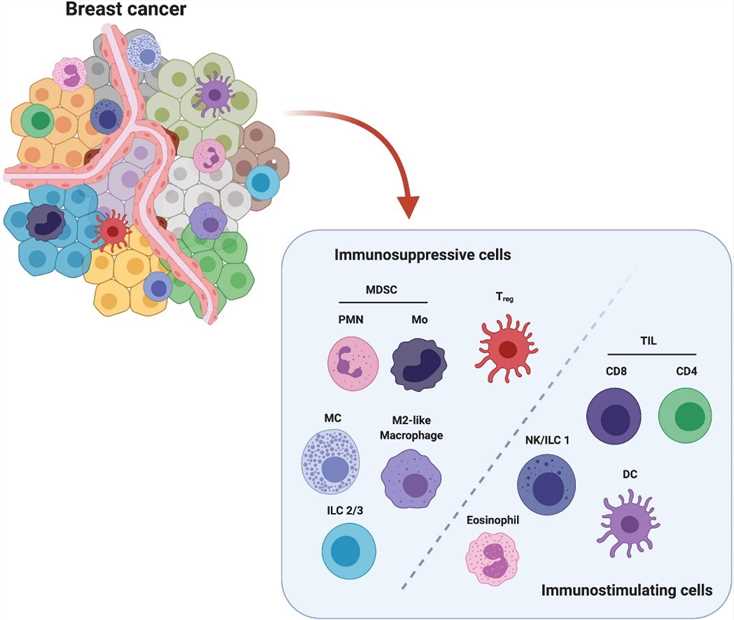 Fig.1 Major players in immune breast TME. (Salemme, 2021)
The immune cells and the cellular factors produced from them, including both immunosuppressive and inflammatory cytokines, play dual roles in promoting or discouraging cancer development which relies heavily on the TME. At the early stage of carcinogenesis, the immune system eliminates tumor cells via cytotoxic T cell and NK cell killing mechanisms. This is achieved with the help of antigen-presenting cells (APCs). However, with the progressive accumulation of tumor cell mutations and modifications to the TME, the tumor cells can eventually 'escape' from immune surveillance. Multiple lineages of tumor-associated immune cells and various immune mediators such as tumor necrosis factor-α (TNF-α), interleukin 6 (IL-6), C-X-C Motif Chemokine Ligand 1 (CXCL-1), CXCL-5, vascular endothelial growth factor (VEGF), and matrix metalloproteinases (MMPs), are responsible for shaping a favorable TME for tumor growth. Up-regulation of immune checkpoints is an important aspect of this process. Anti-tumor effector cells, such as CD8+ T cells and NK cells, are suppressed directly or indirectly by TME.
It has been proved that the TME is responsible for tumor immune escape and the ultimate treatment failure. Re-educating the TME to improve the response to cancer immunotherapies can be performed by targeting many cellular and immunosuppressive factors. Targeting immune cells can transform the TME to be pro-inflammatory and relieve immunosuppression. Immunotherapies for tumor suppressor-related immune cells, as well as tumor-promoting immune cells, are being developed one after another. Strategies for targeting immune cells in TME include
As a leading biotechnology company, Creative Biolabs is dedicated to being your trusted solution provider. We have developed a range of services targeting T/NK/ macrophages/MDSCs/DCs cells to reshape TME. Our scientists are always ready to provide the guidance you need to develop cutting-edge immune-modulating therapies. Please feel free to contact us with your requirements.
Reference
For any technical issues or product/service related questions, please leave your information below. Our team will contact you soon.
All products and services are For Research Use Only and CANNOT be used in the treatment or diagnosis of disease.
 NEWSLETTER
The latest newsletter to introduce the latest breaking information, our site updates, field and other scientific news, important events, and insights from industry leaders
LEARN MORE NEWSLETTER NEW SOLUTION
CellRapeutics™ In Vivo Cell Engineering: One-stop in vivo T/B/NK cell and macrophage engineering services covering vectors construction to function verification.
LEARN MORE SOLUTION NOVEL TECHNOLOGY
Silence™ CAR-T Cell: A novel platform to enhance CAR-T cell immunotherapy by combining RNAi technology to suppress genes that may impede CAR functionality.
LEARN MORE NOVEL TECHNOLOGY NEW SOLUTION
Canine CAR-T Therapy Development: From early target discovery, CAR design and construction, cell culture, and transfection, to in vitro and in vivo function validation.
LEARN MORE SOLUTION