Fully biodegradable and recognized as "self," evading RES clearance.
Lipoprotein Development Service for Targeted Drug Delivery
The successful translation of modern therapeutics relies heavily on overcoming physiological barriers to achieve precise, localized concentration at the site of action. At Creative Biolabs, our Lipoprotein Development Service provides an elegant, biomimetic solution to this challenge. By engineering nature's endogenous nanocarriers—such as High-Density Lipoprotein (HDL) and Low-Density Lipoprotein (LDL)—we facilitate the targeted delivery of complex payloads while bypassing the reticuloendothelial system (RES) and evading immune clearance. As a pioneering partner in advanced nanomedicine, Creative Biolabs provides the proprietary technology, scalable synthesis, and rigorous characterization necessary to accelerate your targeted drug delivery breakthroughs.
Biomimetic Nanocarriers: Evading Biological Barriers
The development of synthetic nanoparticles often encounters clinical roadblocks due to systemic toxicity, rapid immune recognition, or poor stability of sensitive payloads. Endogenous lipoproteins present a distinct advantage. Because they are naturally recognized by the body as lipid transport mechanisms, they serve as highly efficient, biocompatible vehicles for both research and targeted therapeutics.
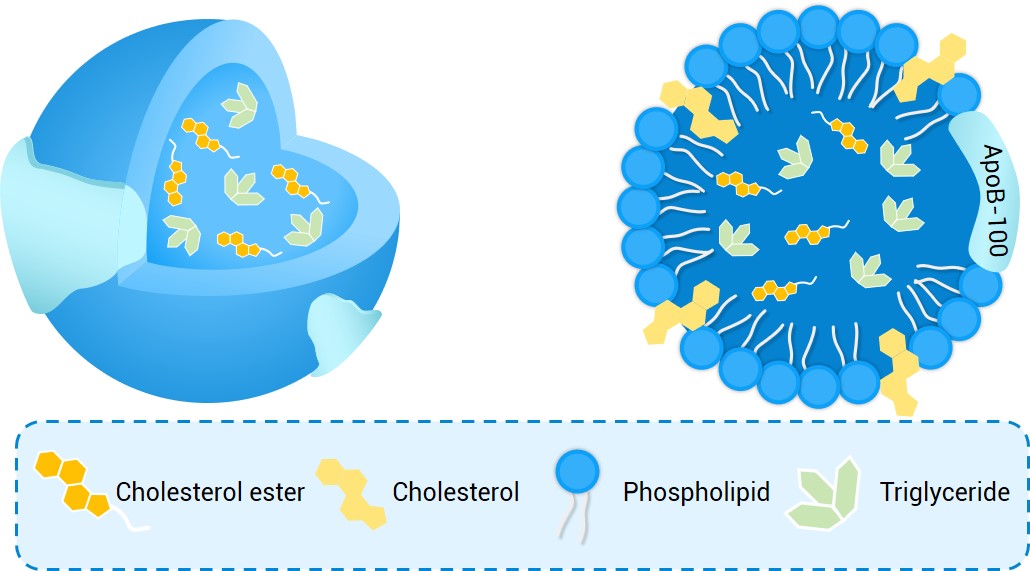 Fig. 1
Structural diagram of lipoprotein.
Fig. 1
Structural diagram of lipoprotein.
The Biology of Lipoproteins: Classification & Targeting
Lipoproteins are complex macromolecular assemblies of lipids and apolipoproteins. They are biologically categorized by their density, size, and specific protein-lipid compositions, which ultimately dictate their metabolic function and cellular receptor interactions.
| Lipoprotein Class | Particle Size (nm) | Primary Core Lipids (%) | Key Apolipoproteins |
|---|---|---|---|
| Chylomicrons (CM) | 75 – 1200 |
Triglycerides (83%) Cholesterol/Esters (8%) Phospholipids (7%) |
Apo B-48, Apo A-I, Apo C-II, Apo E |
| VLDL (Very-Low-Density) | 30 – 80 |
Triglycerides (50%) Cholesterol/Esters (22%) Phospholipids (18%) |
Apo B-100, Apo C-II, Apo E |
| IDL (Intermediate-Density) | 25 – 35 |
Triglycerides (31%) Cholesterol/Esters (29%) Phospholipids (22%) |
Apo B-100, Apo E |
| LDL (Low-Density) | 18 – 25 |
Triglycerides (10%) Cholesterol/Esters (46%) Phospholipids (22%) |
Apo B-100 |
| HDL (High-Density) | 5 – 12 |
Triglycerides (8%) Cholesterol/Esters (30%) Phospholipids (29%) |
Apo A-I, Apo A-II, Apo E |
Depending on these specific profiles, lipoproteins can be engineered as highly versatile vehicles for specific targeted delivery:

Chylomicrons
As the largest lipoproteins, these are engineered to mimic dietary lipid transport, making them ideal for targeting enterocytes, the lymphatic system, and bypassing first-pass hepatic metabolism for oral drug delivery.
Explore Chylomicron Services →
Very-Low-Density Lipoprotein (VLDL)
Engineered to leverage their natural hepatic origin, VLDL-based carriers are highly effective for targeted delivery of lipophilic drugs to hepatocytes, adipocytes, and muscle tissues.
Explore VLDL Targeted Systems →
Intermediate-Density Lipoprotein (IDL)
As transitional particles, IDL mimetics offer unique biodistribution profiles, bridging the delivery capabilities of VLDL and LDL for specialized metabolic targeting.
Explore IDL Targeted Systems →
Low-Density Lipoprotein (LDL)
Rich in cholesterol and complexed with ApoB-100. LDL interacts with the LDL receptor (LDL-R), facilitating delivery to hepatic tissues and enabling transcytosis across the blood-brain barrier (BBB).
Explore LDL Targeted Systems →
High-Density Lipoprotein (HDL):
Primarily complexed with Apolipoprotein A-I (ApoA-I). HDL naturally targets the Scavenger Receptor Class B Type 1 (SR-BI), which is heavily overexpressed in many aggressive carcinomas and macrophages.
Explore HDL Targeted Systems →
Unmatched Advantages as Targeted Delivery Systems
Compared to traditional synthetic polymers, lipoprotein-based carriers offer unparalleled advantages for payload delivery:
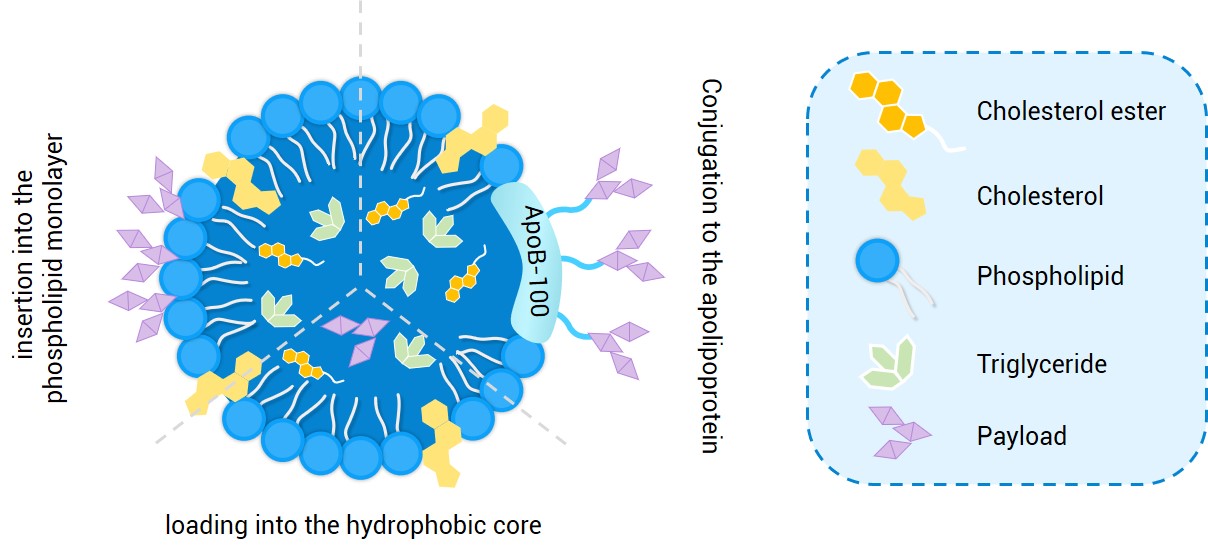 Fig. 2
Examples of Lipoproteins drug loading.
Fig. 2
Examples of Lipoproteins drug loading.
Zero Immunogenicity
Prolonged Circulation
Naturally engineered for extended half-life in the bloodstream.
Inherent Active Targeting
Receptor-mediated endocytosis via specific apolipoprotein-receptor interactions without the need for complex synthetic ligand conjugation.
Versatile Cargo Capacity
The hydrophobic core protects fragile nucleic acids, highly lipophilic chemotherapeutics, and sensitive imaging agents.
The true potential of ferritin as a targeted delivery system lies in its dynamic dual functionality: it serves as both a highly efficient, responsive cargo hold and an active, homing navigation system.
Representative Lipoprotein-Based Formulations
Extensive research has demonstrated the immense potential of synthetic and reconstituted lipoproteins. Below is a summary of highly successful lipoprotein-based targeting strategies modeled on recent translational breakthroughs:
| Carrier Platform | Lipid Matrix | Protein/Peptide Component | Encapsulated Cargo | Primary Target / Disease Model |
|---|---|---|---|---|
| Reconstituted HDL (rHDL) | DMPC / Egg yolk PC | Native ApoA-I | Chemotherapeutic (e.g., Paclitaxel, Curcumin) | SR-BI overexpressing tumor xenografts (Ovarian, Prostate) |
| Synthetic HDL (sHDL) | POPC / Modified Lipids | ApoA-I Mimetic Peptides | Small Molecules, Cholesterol | Endothelial cells, Myocardial Ischemia/Perfusion models |
| Cationic rHDL Nanodiscs | DMPC + Cationic Lipids | ApoA-I | Nucleic Acids (Chol-siRNA, mRNA) | Hepatocellular carcinoma (HCC) cell lines, Liver tissue |
| Engineered LDL/HDL | Phospholipid/Cholesterol | ApoE / Modified ApoA-I | Therapeutics / Gene Editors | Blood-Brain Barrier (BBB) penetration, Glioblastoma |
| Diagnostic HDL-NPs | PEG-modified Lipids | ApoA-I / Mimetic Peptides | Quantum Dots, Gold NPs, GBCA | Macrophages, Atherosclerotic plaques |
Comprehensive Lipoprotein Solutions
At Creative Biolabs, our capabilities extend far beyond basic formulation. We offer a full spectrum of lipoprotein-related services to support lipidomics research, diagnostic development, and advanced drug delivery.
Lipoprotein Extraction & Characterization
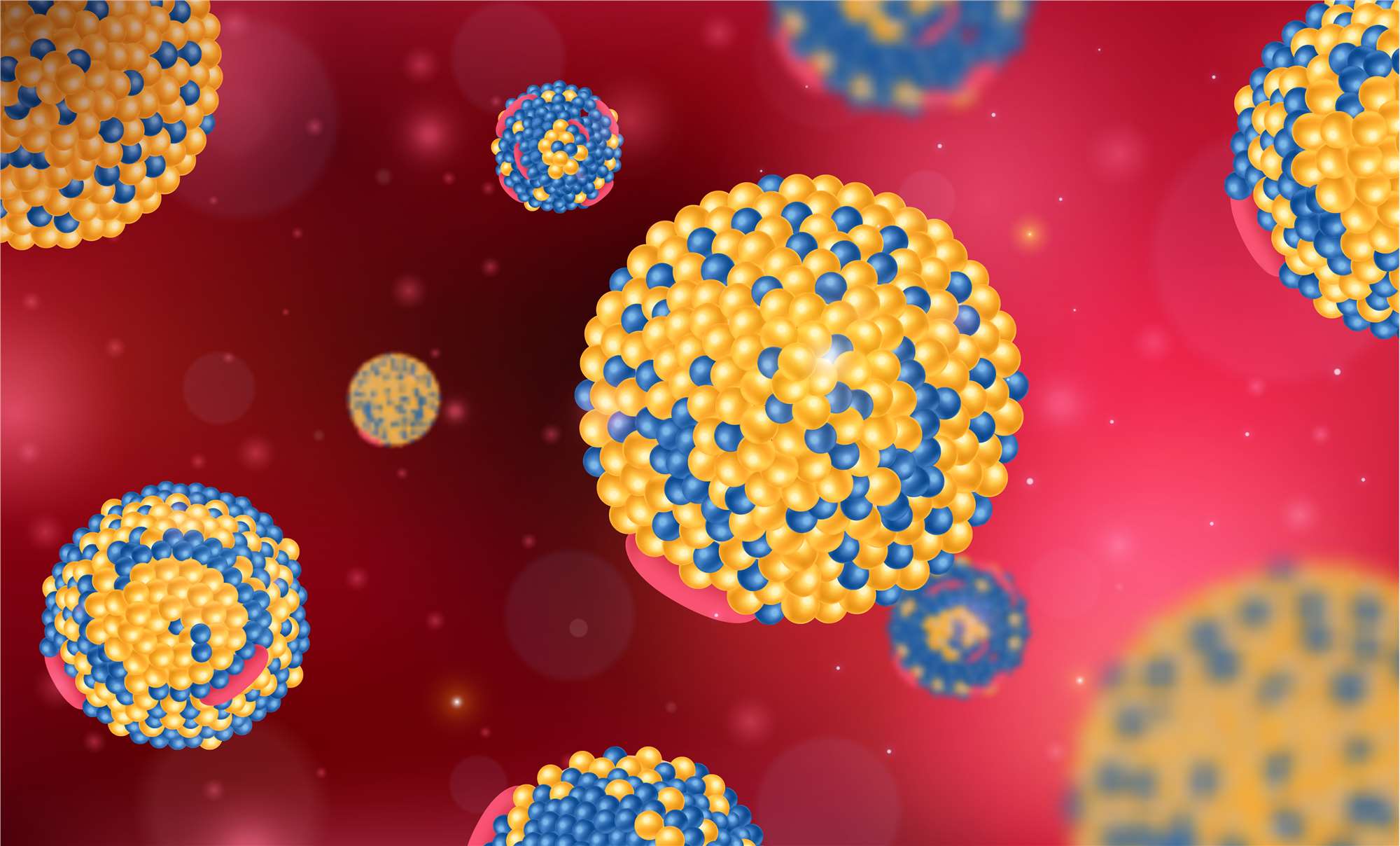
We provide highly purified, intact native lipoproteins isolated directly from biological samples, preserving their natural structural and functional integrity for your downstream research.
Sequential ultracentrifugation and affinity chromatography to isolate specific fractions (HDL, LDL, VLDL).
Rigorous quantification of apolipoprotein content (ApoA-I, ApoB, ApoE).
Comprehensive lipidomic profiling to define exact phospholipid and cholesterol ratios.
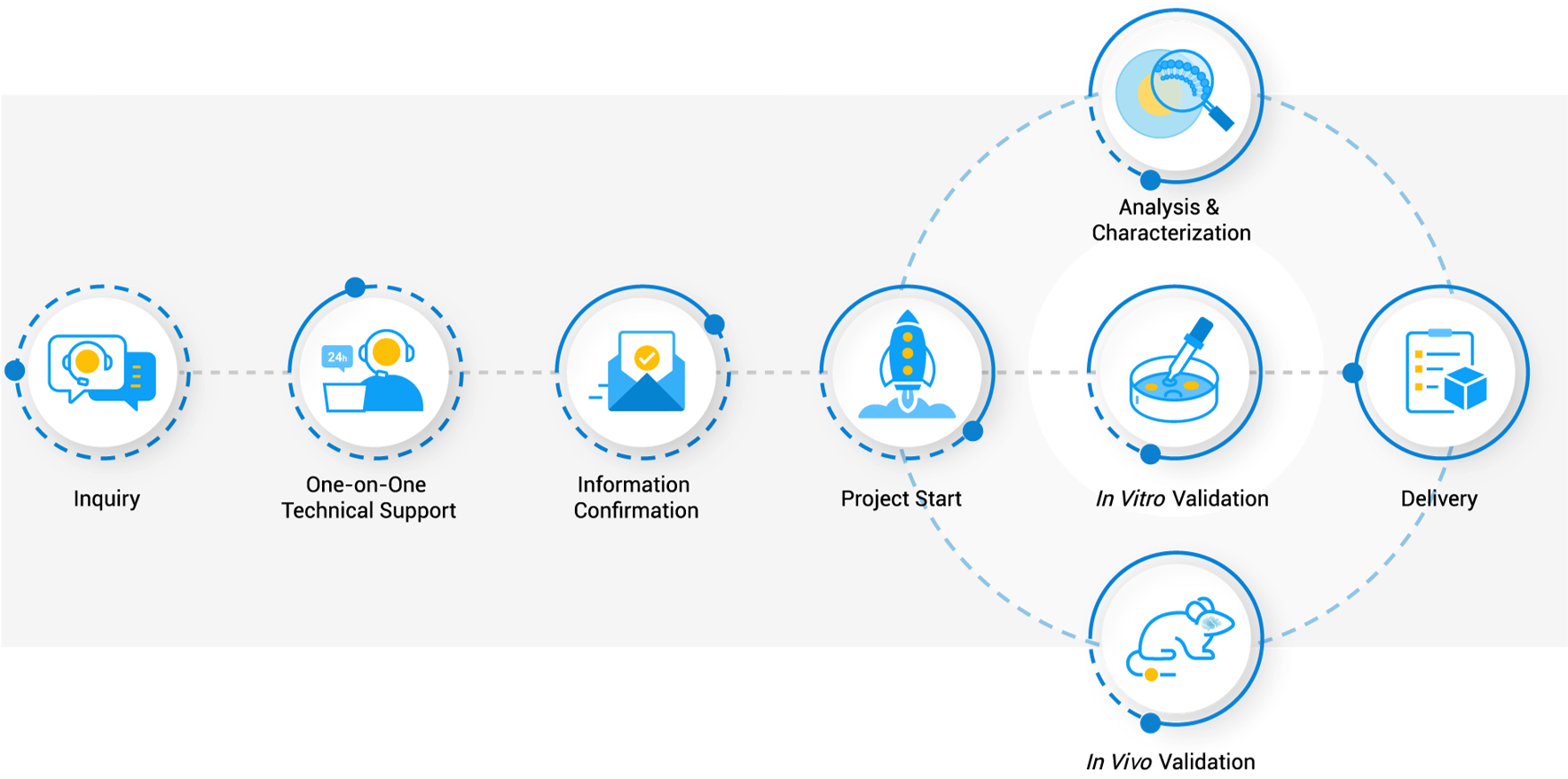
Workflow
Applications of Lipoprotein Technology
The inherent biocompatibility and modularity of lipoprotein systems allow them to solve critical delivery and tracking challenges across a wide spectrum of research, diagnostics, and industrial applications.
- Targeted Oncology & Cancer Therapeutics: Exploiting the high metabolic demand of tumors by delivering chemotherapeutics or siRNAs directly via SR-BI or LDL receptors, dramatically reducing off-target toxicities in healthy tissues.
- Neurological Disorders & CNS Delivery: Engineering ApoE-decorated carriers capable of facilitating transcytosis across the restrictive blood-brain barrier (BBB) to treat neurodegenerative diseases and brain tumors (e.g., Glioblastoma).
- Cardiovascular Disease Interventions: Utilizing the natural reverse cholesterol transport (RCT) pathway to deliver plaque-stabilizing agents or statins directly to atherosclerotic lesions and macrophages.
- Advanced Diagnostic Imaging: Loading highly lipophilic fluorophores, quantum dots, or MRI contrast agents into the hydrophobic core for unparalleled precision in in vivo tracking, cardiovascular imaging, and tumor localization.
- Metabolic & Liver Disease Research: Utilizing native liver-targeting pathways (e.g., HDL to hepatocytes) to deliver gene therapies, CRISPR components, or metabolic regulators directly to hepatic tissue.
Why Choose Creative Biolabs?
At Creative Biolabs, we are committed to helping you overcome the biological barriers that limit therapeutic efficacy and diagnostic precision. By leveraging the inherent biocompatibility and specific targeting mechanisms of endogenous carriers, our comprehensive Lipoprotein Services offer a superior platform for targeted drug delivery, lipidomics research, and advanced nanomedicine. From custom formulation design to native lipoprotein profiling, we provide the scalable, high-quality solutions required to advance your scientific pipeline.
Holistic Lipoprotein Expertise
We do not just encapsulate drugs; we understand the fundamental lipidomics, apolipoprotein biology, and receptor pathways that drive successful targeting.
Unmatched Biocompatibility
Our biomimetic platforms inherently evade the reticuloendothelial system (RES), ensuring near-zero immunogenicity and prolonged circulation times.
High Encapsulation Efficiency
We employ proprietary microfluidic and extrusion techniques to maximize the loading capacity of even the most notoriously hydrophobic compounds.
Scalable Synthesis
From milligram-scale academic discovery to gram-scale preclinical manufacturing, our processes are designed for seamless scalability.
Related Services & Products
Related Services
Chemical Synthesis Services
Nucleic Acid Synthesis Services
FAQs
What is the typical encapsulation efficiency for highly hydrophobic small molecules in your rHDL platform?
While it varies based on the specific physicochemical properties of the API, our proprietary loading protocols typically achieve encapsulation efficiencies between 75% and 95% for highly lipophilic compounds.
Can your lipoprotein carriers cross the blood-brain barrier (BBB)?
Yes. By specifically engineering the apolipoprotein composition—particularly by incorporating ApoE or specific LDL-receptor binding peptides—we can facilitate receptor-mediated transcytosis across the BBB for CNS-targeted therapeutics.
Do you offer extraction of native lipoproteins from non-human species for preclinical models?
Yes, in addition to human plasma, we can isolate and purify HDL, LDL, and VLDL from murine, bovine, and other animal plasmas to support species-specific preclinical investigations.
Are your synthetic lipoproteins prone to triggering an immune response?
No. Because we utilize endogenous apolipoproteins and naturally occurring phospholipids, our vehicles are highly biomimetic. They are generally recognized as "self" by the immune system, resulting in exceptionally low immunogenicity and avoidance of RES clearance.
What volume of material is required for an initial proof-of-concept formulation study?
For initial feasibility and loading optimization, we typically require between 5mg and 20mg of your active pharmaceutical ingredient (API), depending on the molecular weight and chosen analytical methods.
Our services are For Research Use Only. We do not provide services to individuals.
Online Inquiry