Nucleic Acid Encapsulation Service for Targeted Delivery
The realization of precision medicine hinges on the ability to safely and accurately deliver delicate genetic payloads to specific cellular targets. Nucleic Acid Targeted Delivery Services bridge the critical gap between groundbreaking genomic research and transformative commercial applications. By overcoming inherent biological barriers, enzymatic degradation, and the limitations of traditional systemic administration, we ensure that your therapeutics arrive intact and perform flawlessly at the designated site of action. Creative Biolabs' unparalleled expertise in engineering intelligent, cell-specific lipid and polymer-based delivery vehicles empowers researchers to turn complex nucleic acid concepts into viable, life-changing realities.
Request a Free Scientific Consultation
Conquering Biological Barriers for Precision Medicine
To fully leverage the potential of gene therapy and targeted interventions, researchers must address several highly complex pharmacokinetic and cellular hurdles. We break down the science of nucleic acid delivery into a logical, four-stage progression:
The Core Problem: The Inherent Vulnerability of Nucleic Acids
Before addressing how to deliver a payload, we must understand why nucleic acids (siRNA, mRNA, plasmid DNA, and CRISPR-Cas9 RNPs) are notoriously difficult to administer in their "naked" form.
- High Molecular Weight & Negative Charge: Cell membranes are naturally negatively charged lipid bilayers. The strong negative charge and large size of nucleic acids prevent them from passively crossing this membrane.
- Enzymatic Degradation: The bloodstream is rich in nucleases (enzymes that cleave RNA and DNA) designed to destroy foreign genetic material, leading to rapid degradation of unprotected therapeutic payloads.
Our specialized services support a range of therapeutic nucleic acids.

Plasmid DNA (pDNA)
Properties: Large, circular double-stranded DNA structure (5–15 kbp).
Target Site: Nucleus

Messenger RNA (mRNA)
Properties: Single-stranded linear transcript derived from DNA.
Target Site: Cytosol

Small Interfering RNA (siRNA)
Properties: Short, double-stranded RNA sequence (typically 21–25 bp).
Target Site: Cytosol

MicroRNA (miRNA)
Properties: Endogenous, short noncoding double-stranded RNA.
Target Site: Nucleus
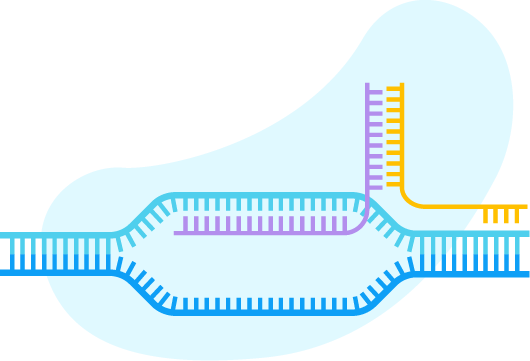
sgRNA (CRISPR guide RNA)
Properties: Short, noncoding RNA sequence complexed with Cas proteins.
Target Site: Nucleus

Antisense Oligonucleotides (ASO)
Properties: Chemically stabilized, short single-stranded DNA/RNA analogs.
Target Site: Cytosol / Nucleus
The Journey: Navigating the Three-Tiered Biological Barricade
Once a nucleic acid is introduced into the body, it must survive a perilous journey to its intracellular target. A successful delivery vehicle must overcome three distinct bottlenecks:
- 1. Systemic Circulation & Immune Clearance: The carrier must evade the reticuloendothelial system (RES) and macrophages, preventing premature clearance from the bloodstream while avoiding an adverse immunogenic response.
- 2. Cellular Internalization: Upon reaching the target tissue, the carrier must successfully bind to the cell surface and trigger endocytosis (cellular engulfment).
- 3. Endosomal Escape (The Critical Bottleneck): Once inside the cell, the payload is trapped in an acidic vesicle called an endosome. If the delivery system cannot rupture this endosome quickly, the nucleic acid will be trafficked to a lysosome and destroyed.
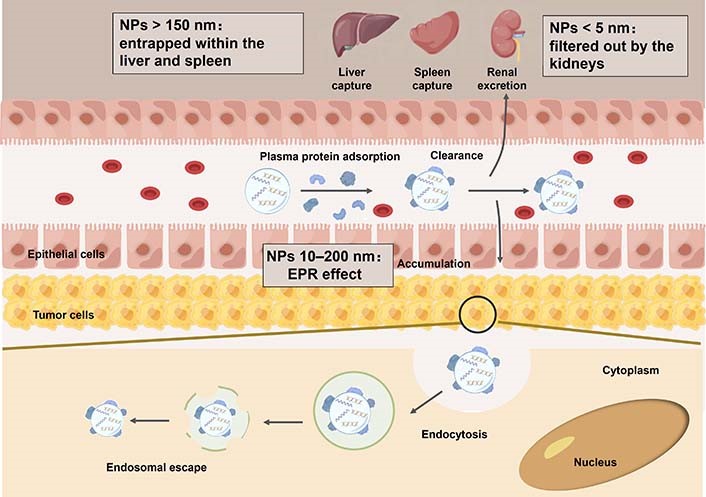 Fig. 1 The biological barriers of the nucleic acid delivery systems (NADS) in vivo.1,3
The Complexity of Formulation: Four Pillars of Delivery System Design
Designing a vector that successfully navigates the biological barricades is highly nuanced. At Creative Biolabs, our formulation scientists carefully optimize four critical parameters to ensure the clinical success of your targeted therapy:
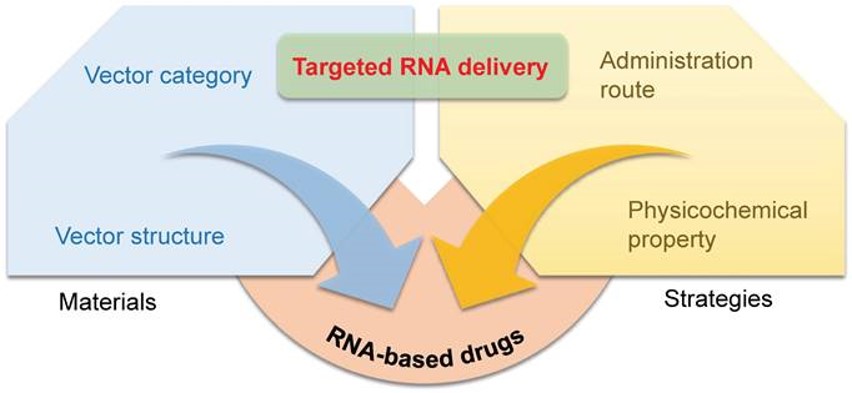 Fig. 2 Materials and strategies for targeted RNA delivery.2,3
- 1. Category of Vector Materials: The foundational choice of carrier, ranging from lipid-based (LNPs, liposomes) and polymeric vectors to inorganic materials or exosomes. This selection dictates the carrier's baseline safety profile, payload capacity, and inherent immunogenicity.
- 2. Chemical Structures of Vectors: The precise molecular architecture is important. For instance, the tail length of a lipid, the degree of branching in a polymer, or the exact pKa of an ionizable group will dictate how efficiently the vector binds the nucleic acid and releases it in response to intracellular pH changes.
- 3. Physicochemical Properties of Vectors: Macroscopic characteristics such as particle size (typically 50-150 nm for ideal cellular uptake), zeta potential (surface charge affecting stability and toxicity), and morphological shape must be rigorously controlled to ensure proper biodistribution and tissue penetration.
- 4. Administration Routes: The intended clinical route (e.g., Intravenous, Intramuscular, Subcutaneous, or Inhalation) drastically alters the pharmacokinetic barriers the vector will face. Formulations must be uniquely engineered to survive the specific physiological environment of the injection site.
Engineered Solutions: Our Targeted Delivery Service Portfolio
Creative Biolabs provides a suite of engineered solutions tailored to your unique payload and biological target. To ensure maximum precision and efficacy, we deploy two primary strategies for nucleic acid delivery:
- Carrier-Based Delivery Systems: Encapsulating the fragile nucleic acid payload within an advanced vehicle (e.g., LNPs, liposomes, exosomes) that is often decorated with specific targeting ligands to navigate biological barriers.
- Direct Ligand-Nucleic Acid Conjugation: Covalently linking the "naked" nucleic acid (e.g., siRNA, ASO) directly to a targeting moiety (e.g., GalNAc, aptamers, peptides) for precise, carrier-free cellular uptake.
Based on these core strategies, we offer the following specialized services:
Nucleic Acid Payload Design & Synthesis
Before delivery, the therapeutic cargo itself must be optimized for stability, efficacy, and minimal immunogenicity. We offer comprehensive design and synthesis services for various nucleic acid modalities, ensuring your payload is primed for successful targeted delivery.
- Sequence Optimization: Utilizing advanced bioinformatics tools to optimize codon usage and minimize secondary structures that could impede translation or silencing.
- Chemical Modification: Incorporating modified nucleotides (e.g., pseudouridine, 2'-O-methyl) to enhance nuclease resistance and evade immune detection in systemic circulation.
- Scalable Synthesis: Providing high-yield, high-purity synthesis of mRNA, siRNA, ASOs, and custom guide RNAs from research to preclinical scales.
Case Study
Case 1: Precision Delivery of EGFP mRNA via CD5 Antibody-Conjugated LNPs
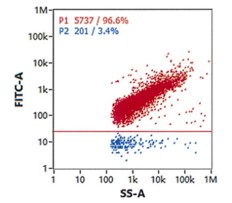
We developed a custom CD5 monoclonal antibody-conjugated LNP formulation, optimizing the lipid composition to overcome passive hepatic tropism and achieve active targeting. The final LNP product demonstrated exceptional quality, with uniform particle size, a low PDI, and high encapsulation efficiency, providing a stable and reliable vehicle for delivering the EGFP mRNA payload to specific immune cell populations
Size: < 100 nm
PDI: < 0.1
RNA Concentration: 0.2 mg/mL
Encapsulation Efficiency: > 90%
Protein Positivity Rate: > 90%
Workflow
Cross-Disciplinary Applications of Targeted Delivery Technologies
While originally pioneered for human therapeutics, our advanced Nucleic Acid Targeted Delivery Services are highly adaptable platforms driving innovation across multiple scientific industries.
- Precision Oncology & Gene Therapy: Enabling the precise delivery of CRISPR-Cas9 components and siRNA to solid tumors while sparing healthy tissues, drastically improving the therapeutic window.
- Agrigenomics & Crop Protection: Delivering RNA interference (RNAi) molecules to targeted agricultural pests or specific plant tissues to enhance crop resilience without the use of broad-spectrum chemical pesticides.
- Veterinary Therapeutics: Developing advanced mRNA vaccines and targeted gene therapies for the prevention and treatment of complex diseases in livestock and companion animals.
- Advanced Cosmeceuticals: Utilizing functionalized liposomes for the deep, targeted delivery of bioactive peptides and nucleic acids into specific dermal layers for anti-aging and skin repair applications.
- Biomanufacturing & Synthetic Biology: Precisely modifying production cell lines by delivering plasmids and gene-editing tools to enhance the yield of recombinant proteins and valuable biologics.
Why Choose Creative Biolabs?
Creative Biolabs stands at the forefront of biochemical engineering, providing the definitive tools and expertise necessary to conquer the challenges of systemic administration and cellular targeting. Whether you are delivering a novel mRNA therapeutic to the lungs, a gene editor to a specific tumor microenvironment, or an agricultural RNAi to a plant system, our bespoke Nucleic Acid Targeted Delivery Services ensure your payload arrives safely, stably, and effectively.
Proprietary Targeting Libraries
Access to an extensive, validated library of functionalized lipids and targeting ligands designed to overcome complex biological barriers.
Payload Agnostic Expertise
Proven success encapsulating a vast array of modalities, from small siRNAs to massive CRISPR-Cas9 ribonucleoproteins (RNPs) and plasmids.
Seamless Scalability
Our microfluidic platforms ensure that the high-quality results achieved at the bench scale translate perfectly to preclinical batch manufacturing.
Complete Turnkey Partnership
From the initial consultation to final lyophilization, we act as an integrated extension of your R&D team, providing full analytical support at every milestone.
Related Services & Products
Related Services
Chemical Synthesis Services


Nucleic Acid Synthesis Services
Related Products
| Product Name | Description | Inquiry |
|---|---|---|
| Targeted CD7 Ab-LNP | Ready-to-use CD7 antibody-conjugated LNPs, available as empty vehicles or custom-loaded with various mRNA payloads for specific T-cell targeting. | |
| Targeted CD3 Ab-LNP | Engineered LNPs decorated with anti-CD3 antibodies, optimized for the highly specific delivery of nucleic acids to CD3+ T lymphocytes. | |
| Targeted CD5 Ab-LNP | Precision-formulated CD5 antibody-conjugated LNPs designed for efficient transfection and robust payload delivery into CD5+ immune cells. | |
| Targeted CD8 Ab-LNP | Specialized LNPs featuring surface-conjugated CD8 antibodies, ensuring precise and robust delivery directly to cytotoxic T cells. | |
| Lipid-Protein Conjugation Kit (Universal) | An easy-to-use kit providing essential reagents for the efficient covalent conjugation of custom targeting proteins or antibodies to lipid carriers. | |
| Targeted LNP Formulation Kit | Advanced, ready-to-use formulation kits featuring specifically optimized lipid ratios and ligands for precise in vivo targeting to the liver, lung, spleen, or muscle. | |
| LNP Formulation Kit (Universal) | A versatile, benchtop-ready kit containing optimized ionizable and helper lipids for rapid, high-efficiency mRNA encapsulation. |
FAQs
What types of payloads can your delivery systems encapsulate?
We successfully encapsulate a wide range of payloads, including siRNAs, mRNAs, ASOs, DNA plasmids, CRISPR-Cas9 components, proteins, peptides, and various small molecule therapeutics.
How do your delivery systems overcome default liver accumulation?
We achieve extrahepatic delivery by meticulously adjusting the physical properties of the particle (e.g., surface charge, lipid ratios) and by conjugating specific targeting ligands (aptamers/peptides) that actively direct the carrier to non-liver tissues.
Can you scale up the formulation for preclinical animal studies?
Yes. We utilize highly scalable microfluidic mixing technologies that ensure the exact physical characteristics of bench-scale formulations are maintained during larger preclinical batch productions.
What are the primary advantages of your lyophilization service?
Lyophilization removes the strict requirement for ultra-low temperature (cold chain) storage. It provides a highly stable powder that extends shelf life, facilitates easier global shipping, and reconstitutes rapidly without losing encapsulation efficiency.
How do you verify the encapsulation efficiency of my payload?
We utilize industry-standard, rigorous analytical methods, such as RiboGreen fluorescence assays, combined with dynamic light scattering (DLS) to provide exact data on encapsulation efficiency and particle integrity.
References
- Ye, Mengyun, et al. "Effect of the size of nucleic acid delivery systems on their fate in cancer treatment." Exploration of Drug Science 2.1 (2024): 38-49.https://doi.org/10.37349/eds.2024.00035.
- Lin, Lixin, et al. "Targeting materials and strategies for RNA delivery." Theranostics 13.13 (2023): 4667. https://doi.org/10.7150/thno.87316.
- Distributed under Open Access license CC BY 4.0, without modification.