
Gene Editing System Encapsulation Service for Targeted Delivery
The revolutionary potential of genome engineering is no longer limited by the "scissors" themselves, but by the "vehicle" that carries them. Transporting large, multi-component gene editing machineries—such as CRISPR-Cas9, Base Editors, or Prime Editors—to specific cell populations remains the industry's most significant hurdle. Creative Biolabs provides premier Gene Editing Targeted Delivery Services, offering specialized non-viral platforms designed to protect your editing cargo and ensure its precise release within the target cell's nucleus.
Request a Free Scientific Consultation
Overcoming the Delivery Bottleneck in Genome Engineering
What is Genome Editing and How Does it Function?
Genome editing is a group of technologies that give scientists the ability to change an organism's DNA by adding, removing, or altering genetic material at particular locations in the genome. The fundamental principle relies on the creation of targeted Double-Strand Breaks (DSBs) or precise chemical modifications. Once the DNA is cut or modified, the cell's natural repair mechanisms take over. To achieve these modifications, the genome editing "toolbox" has evolved from complex protein engineering to programmable RNA-guided systems:
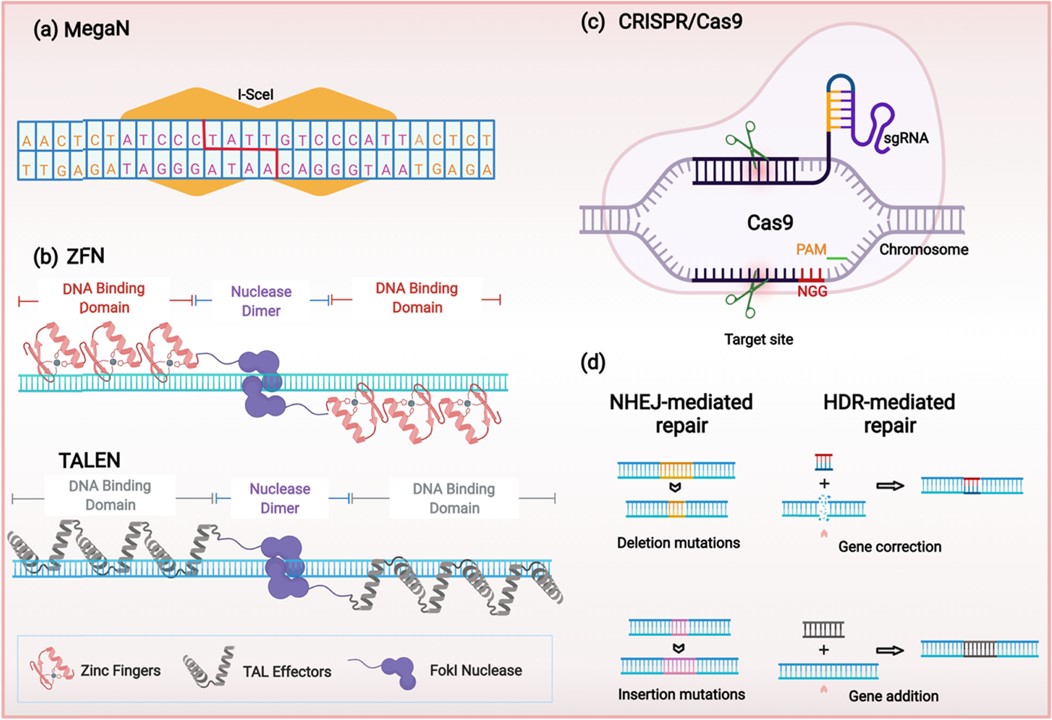 Fig. 1 Schematic diagram of the four genome editing tools (GETs) and the basic mechanisms of genome editing.1
Early "first-generation" tools using programmable protein domains to recognize DNA. While effective, they are difficult to engineer and deliver due to their large size.
The current industry standard. It uses a guide RNA (sgRNA) to lead the Cas protein to the target site. Its simplicity makes it the primary candidate for large-scale therapeutic development.
A breakthrough that allows for single-nucleotide conversions (e.g., C to T) without creating DSBs, significantly reducing the risk of genomic instability.
The "search-and-replace" tool. It offers unparalleled versatility, allowing for all types of substitutions, insertions, and deletions without the need for DSBs or donor DNA templates.
Why is Targeted Delivery Essential for Genome Editing?
While editing tools offer high molecular precision, clinical success depends on navigating complex physiological barriers. Specialized targeted delivery is required to overcome the following critical bottlenecks:
- Systemic Stability: Shields large, immunogenic CRISPR components from nuclease degradation and clearance by the Mononuclear Phagocyte System (MPS), extending circulation half-life.
- Tissue Penetration: Facilitates the crossing of the vascular endothelium and dense extracellular matrices to ensure the payload accumulates specifically at the lesion site.
- Endosomal Escape: Mediates efficient cellular uptake and critical escape from endosomes. Without rapid escape, the editing machinery is trapped and degraded within lysosomes.
- Precision & Safety: Incorporates Nuclear Localization Signals (NLS) for genomic access while restricting activity to target cells to minimize off-target mutagenesis and systemic toxicity.
What are the primary Delivery Systems for Genome Editing Tools?
Selecting the right delivery system is as critical as selecting the editing tool itself. Current delivery strategies are broadly categorized into three modalities:
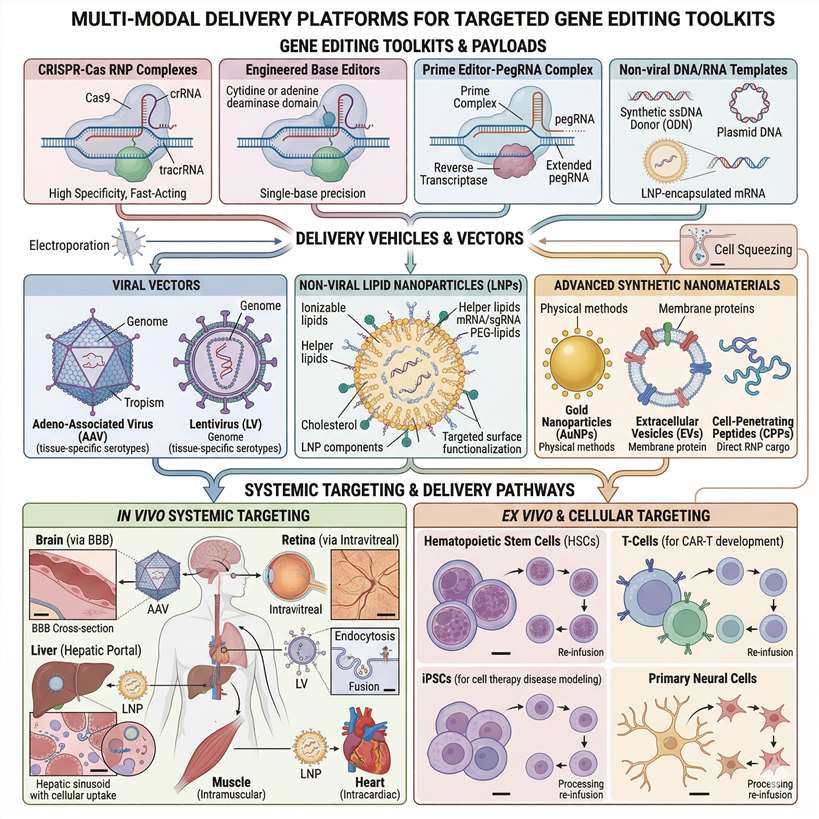 Fig. 2 Advanced delivery systems for gene editing.
Viral Vectors
- AAV & Lentivirus: Widely used for their high transduction efficiency. However, they face challenges such as limited payload capacity (approx. 4.7kb for AAV), potential immunogenicity, and the risk of prolonged expression leading to off-target effects.
Non-Viral Vector
- Lipid Nanoparticles (LNPs): The current frontrunner for mRNA delivery, providing excellent protection and transient expression.
- Polymeric/Hybrid Nanoparticles: Versatile carriers that can be engineered for specific stimuli-responsive release and high-capacity payload stability.
- Exosomes: Natural extracellular vesicles used for biocompatible and low-immunogenicity transport.
Physical Methods
- Electroporation & Microinjection: Primarily used for ex vivo cell engineering (e.g., CAR-T). While efficient, these methods can be harsh on cell viability and are difficult to apply for in vivo systemic therapy.
Our Specialized Gene Editing Delivery Portfolio
Custom Payloads & Editor Synthesis
To ensure optimal delivery compatibility, we provide high-purity, IVT-grade mRNA and sgRNA synthesis, incorporating chemical modifications that enhance stability and reduce cellular immune recognition.
- Advanced Editor Synthesis: Specialized production of large-format mRNA for Base Editors (BE) and Prime Editors (PE).
- Chemical Modification: Strategic incorporation of 2'-OMe, 2'-F, and phosphorothioate (PS) to shield RNA from intracellular nucleases.
- Stringent Quality Control: Rigorous testing for purity, integrity, endotoxin levels, and biological activity.
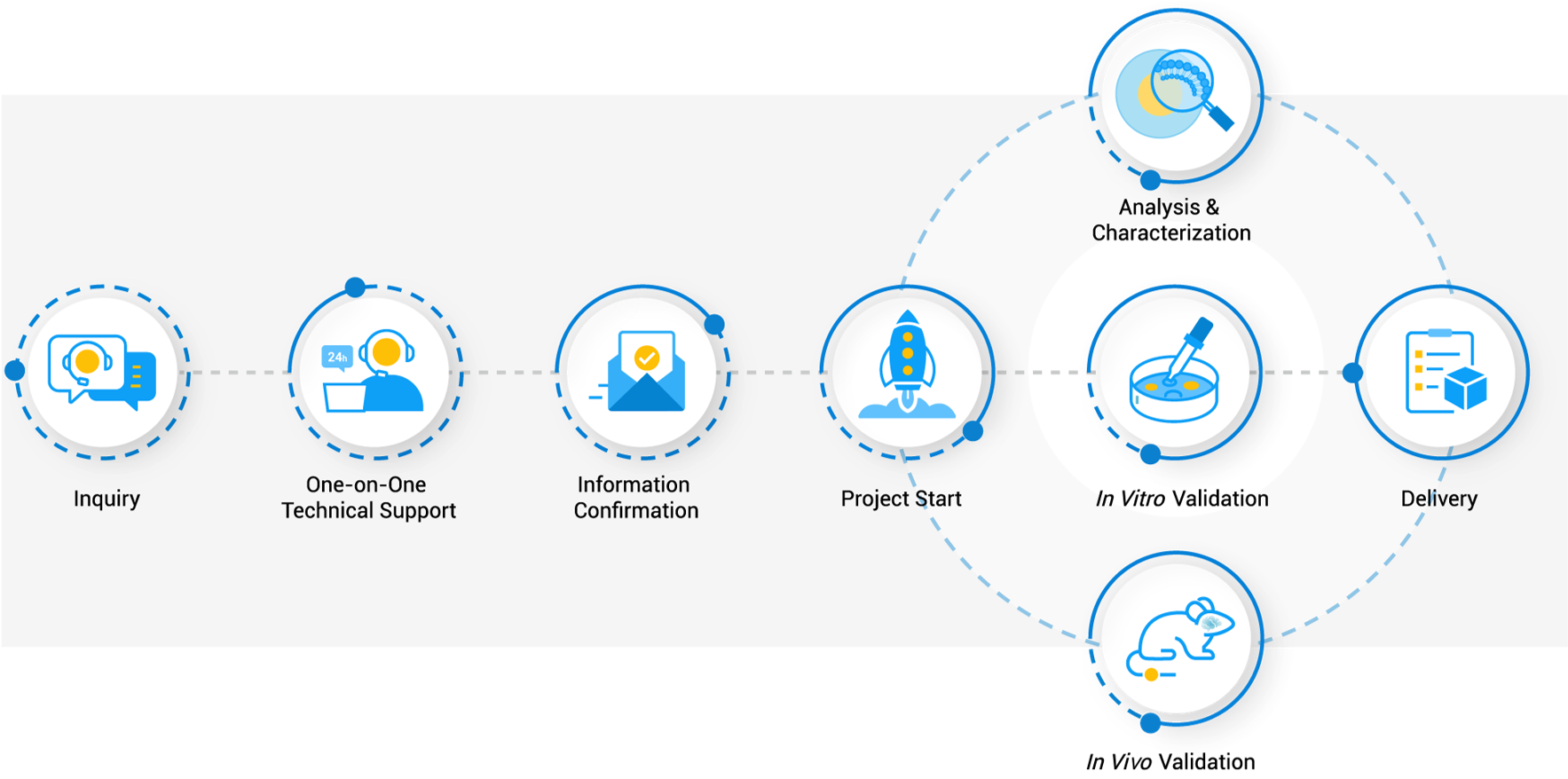
Workflow
Expanding the Frontiers of Genome Engineering
Human Precision Medicine & Gene Surgery
Our platforms enable the development of "one-and-done" cures for monogenic disorders and advanced in vivo oncology treatments.
Agricultural Innovation & Non-GMO Editing
Non-viral delivery to plant cells enables the creation of resilient crops. By using RNP delivery, we bypass DNA-based regulatory hurdles.
Advanced Cell Therapy & Synthetic Biology
Highly efficient multiplex editing of primary immune cells for CAR-T/NK production or metabolic engineering of microbial "bio-factories."
Environmental & Veterinary Biotechnology
Enabling invasive species control via gene-drive systems or enhancing disease resistance in livestock and animal health projects.
Why Choose Creative Biolabs?
Creative Biolabs is your dedicated partner in overcoming the most difficult challenge in modern biology: the targeted delivery of gene editing tools. Our Gene Editing Targeted Delivery Services combine chemical innovation with biological precision to ensure your research achieves its full potential.
Superior Endosomal Escape Efficiency
Our pH-responsive motifs achieve a 5-fold increase in cytosolic release compared to standard LNP benchmarks.
Optimized RNP Structural Protection
Unlike generic carriers, our hybrid platforms are specifically engineered to maintain the delicate protein-RNA interface.
Minimal Immunogenicity & Toxicity
We prioritize biodegradable non-viral lipids that ensure transient editor expression.
Scalable Precision
Our microfluidic-based formulation process allows for seamless scale-up from R&D screening to pre-clinical production.
Related Services & Products
Related Services



Chemical Synthesis Services


Nucleic Acid Synthesis Services

FAQs
Why is RNP delivery preferred over viral vectors for gene editing?
RNP delivery provides transient activity and is non-integrative. This significantly reduces the window for off-target cleavage and eliminates the risk of insertional mutagenesis, which are common concerns with long-term viral expression.
How do you achieve tissue-specific delivery outside of the liver?
We utilize a combination of proprietary ionizable lipid chemistry and ligand-mediated targeting (antibodies, peptides, or aptamers). By modifying the surface charge and tropism, we can direct payloads to the lungs, brain, spleen, or hematopoietic cells.
What measures are taken to ensure RNP stability during microfluidic mixing?
We use specialized stabilizer buffers and precise flow rate control to prevent mechanical shear stress. This ensures that the delicate protein-RNA interaction remains intact throughout the encapsulation process, maintaining 100% enzymatic activity.
How do your delivery systems handle the Blood-Brain Barrier (BBB)?
Our BBB-crossing vehicles utilize receptor-mediated transcytosis (RMT). By decorating nanoparticles with ligands targeting receptors like Transferrin (TfR) or LRP1, we facilitate active transport into the CNS for neurodegenerative applications.
Reference
- Lan, Tianxia, et al. "Genome editing via non-viral delivery platforms: current progress in personalized cancer therapy." Molecular Cancer 21.1 (2022): 71. https://doi.org/10.1186/s12943-022-01550-8. Distributed under Open Access license CC BY 4.0, without modification.