Creative Biolabs has a tradition of commitment. To achieve efficient execution and regulatory approval, we offer careful considerations of your program for the development of a cellular or gene therapy product – now and in the future.
EXPLORE MORE HighlightsWe focus on unmet needs and develop novel cellular and gene drugs and solutions that offer significant benefits over existing options.
EXPLORE MORE HighlightsThe advent of Chimeric Antigen Receptor T-cell (CAR-T) therapies has revolutionized the field of oncology, providing new avenues for treating various forms of cancer. Our 20 years of experience in the biotechnology sector have equipped us with the expertise and technological capabilities to support the entire lifecycle of CAR-T products, from early development to commercialization.
EXPLORE MORETo accelerate advanced breakthroughs of your projects, we offer broad range of platforms which enable our clients be free to tackle problems with cutting-edge technologies from different angles and in different methods.
EXPLORE MORE HighlightsUse the resources in our library to help you understand your options and make critical decisions for your study. We offer oncolytic virus, CAR-T, and dendritic cell related documents, as well as newsletter. If you don't find the answers you're looking for, contact us for additional assistance.
EXPLORE MORE HighlightsGet a real taste and understanding of the business and culture of one of the world's great research-based cellular and gene therapy discovery and development companies.
EXPLORE MORE
Creative Biolabs provides an AI-Powered Neoantigen Prediction Service for TCR-T Development to address key challenges in precision immunotherapy target discovery, including the identification of truly immunogenic neoepitopes from large-scale sequencing datasets, limited predictive accuracy of conventional algorithms, and difficulties in selecting optimal targets for TCR-T therapy. This service enables rapid identification of high-confidence personalized neoepitopes through advanced machine learning models, multi-omics data integration, and predictive antigen-presentation analytics. By delivering data-driven target prioritization, Creative Biolabs supports efficient discovery of clinically relevant neoantigens and accelerates the development of next-generation TCR-T immunotherapies.
Neoantigens generated from tumor-specific mutations represent highly attractive targets for T-cell–based immunotherapies due to their tumor specificity and reduced risk of off-target toxicity. Recent studies demonstrate that integrating genomic sequencing with machine learning-based peptide presentation prediction significantly improves neoepitope discovery efficiency. Computational models can analyze mutation data, peptide processing, antigen presentation, and immunogenicity to identify potential T-cell targets. These advances support the rapid identification of personalized neoantigens, enabling more precise design of TCR-T therapies and next-generation cancer immunotherapies.
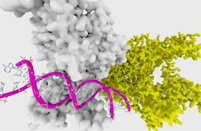
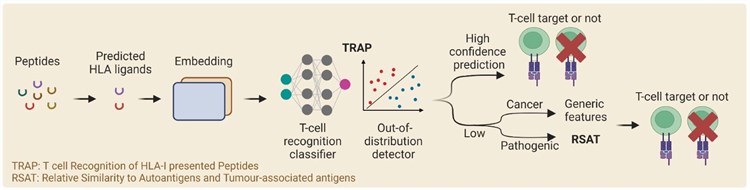 Fig.1 Deep learning predicts pathogenic peptides from MHC-I presentation. 1
At Creative Biolabs, we transform raw genomic data into validated therapeutic targets. Our service is designed to bridge the gap between mutation discovery and TCR-T engineering, ensuring that your candidate receptors target peptides with the highest probability of T-cell recognition. We solve the HLA bias problem by focusing on contact-position residues, providing a realistic assessment of immunogenicity across diverse patient backgrounds.
Our platform leverages advanced algorithms and machine learning for high-confidence neoepitope identification by analyzing tumor mutation profiles and peptide presentation characteristics. It employs AI-driven models to prioritize immunogenic antigens based on peptide processing, presentation likelihood, and T cell recognition potential. By integrating multi-omics data, it supports personalized TCR-T target discovery for patient-specific neoepitopes, while its scalable computational pipeline enables automated, high-throughput analysis of large-scale sequencing data across multiple tumor samples.
Discover How We Can Help - Request a Consultation.
Computational models analyze somatic mutations and translate them into potential mutant peptides that may serve as neoepitopes.
Advanced algorithms evaluate peptide affinity and stability with patient-specific HLA molecules to identify peptides likely to be presented on tumor cell surfaces.
Integrated prediction models assess proteasomal cleavage, peptide transport, and cellular presentation probability.
Machine learning models estimate the likelihood that a presented peptide can be recognized by T cells, improving prioritization of functional targets.
Genomic mutation data, transcriptomic expression profiles, and HLA typing results are combined to refine candidate neoantigen lists.
Required Starting Materials: To initiate the service, clients typically provide raw Whole Exome Sequencing or RNA Sequence data from tumor and matched normal samples, along with the patient's HLA typing information (if known).
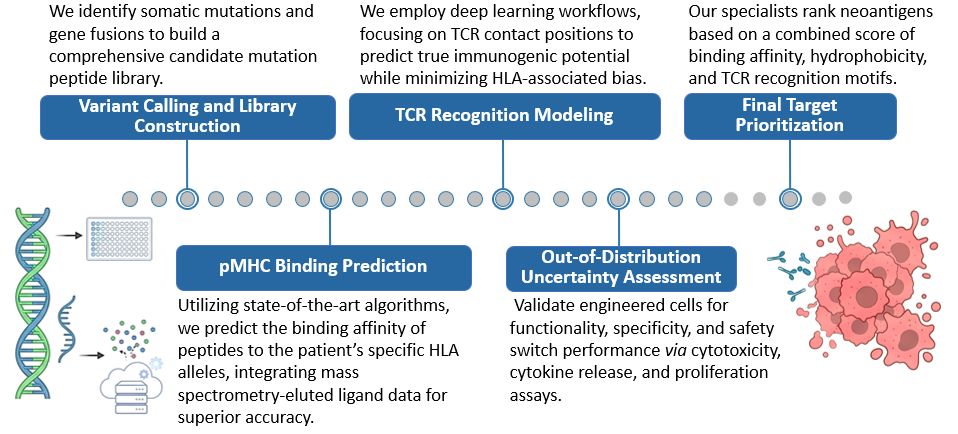
Final Deliverables:
Clients receive a Comprehensive Neoepitope Prioritization Report, raw Immunogenicity Scoring Data, and a Validated List of Top-Tier TCR-T Targets suitable for immediate synthesis and testing.
Q: How does your AI service differ from public tools?
A: Our service adds a proprietary layer of TCR recognition modeling and out-of-distribution detection to filter out non-immunogenic binders that public tools often misclassify as positives.
Q: Can you predict neoantigens for MHC Class II responses?
A: Yes. Although MHC-II binding is more heterogeneous, we employ specialized algorithms to deconvolve complex HLA motifs.
Q: What is the minimum tumor purity required for accurate prediction?
A: Higher purity is preferred for variant calling; however, our pipeline can account for tumor heterogeneity by integrating multi-region sequencing data to alleviate prediction bias.
Q: How do you handle rare HLA alleles?
A: We use pan-specific models that leverage pseudo-sequence encoding of the MHC binding groove, allowing us to provide accurate predictions even for alleles with limited experimental data.
Creative Biolabs delivers a comprehensive, AI‑powered strategy for neoantigen identification and prioritization. By integrating key biological principles such as thymic selection with state‑of‑the‑art deep learning models, we enable researchers to design highly potent, specific, and personalized TCR‑T therapies. Our AI‑enhanced platform supports robust target discovery, driving safer and more effective immunotherapy development. Contact our team today to discuss your project and explore tailored solutions.
Reference
For any technical issues or product/service related questions, please leave your information below. Our team will contact you soon.
All products and services are For Research Use Only and CANNOT be used in the treatment or diagnosis of disease.
 NEWSLETTER
The latest newsletter to introduce the latest breaking information, our site updates, field and other scientific news, important events, and insights from industry leaders
LEARN MORE NEWSLETTER NEW SOLUTION
CellRapeutics™ In Vivo Cell Engineering: One-stop in vivo T/B/NK cell and macrophage engineering services covering vectors construction to function verification.
LEARN MORE SOLUTION NOVEL TECHNOLOGY
Silence™ CAR-T Cell: A novel platform to enhance CAR-T cell immunotherapy by combining RNAi technology to suppress genes that may impede CAR functionality.
LEARN MORE NOVEL TECHNOLOGY NEW SOLUTION
Canine CAR-T Therapy Development: From early target discovery, CAR design and construction, cell culture, and transfection, to in vitro and in vivo function validation.
LEARN MORE SOLUTION