Creative Biolabs has a tradition of commitment. To achieve efficient execution and regulatory approval, we offer careful considerations of your program for the development of a cellular or gene therapy product – now and in the future.
EXPLORE MORE HighlightsWe focus on unmet needs and develop novel cellular and gene drugs and solutions that offer significant benefits over existing options.
EXPLORE MORE HighlightsThe advent of Chimeric Antigen Receptor T-cell (CAR-T) therapies has revolutionized the field of oncology, providing new avenues for treating various forms of cancer. Our 20 years of experience in the biotechnology sector have equipped us with the expertise and technological capabilities to support the entire lifecycle of CAR-T products, from early development to commercialization.
EXPLORE MORETo accelerate advanced breakthroughs of your projects, we offer broad range of platforms which enable our clients be free to tackle problems with cutting-edge technologies from different angles and in different methods.
EXPLORE MORE HighlightsUse the resources in our library to help you understand your options and make critical decisions for your study. We offer oncolytic virus, CAR-T, and dendritic cell related documents, as well as newsletter. If you don't find the answers you're looking for, contact us for additional assistance.
EXPLORE MORE HighlightsGet a real taste and understanding of the business and culture of one of the world's great research-based cellular and gene therapy discovery and development companies.
EXPLORE MORE
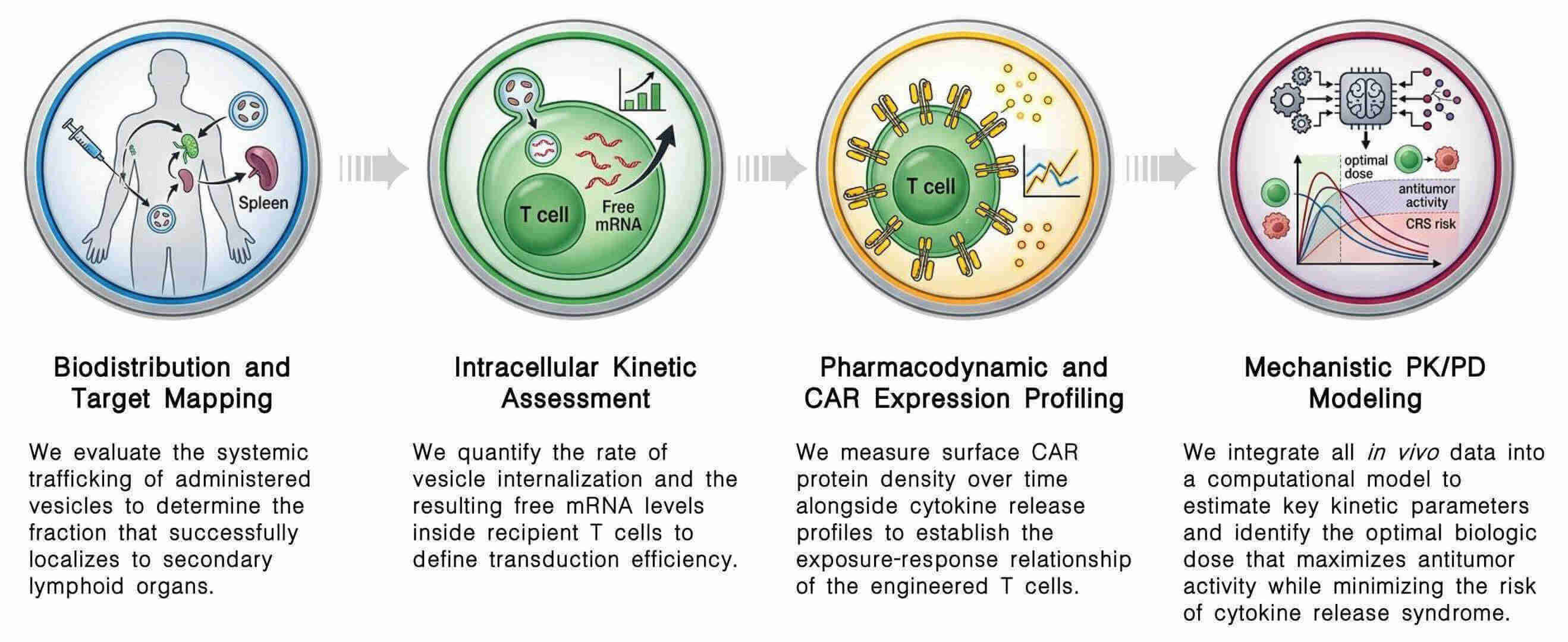
Developing vesicle-based in vivo CAR-T platforms faces critical challenges, including transient mRNA expression kinetics, erratic nanoparticle biodistribution, and poorly defined dose-response relationships that frequently lead to suboptimal efficacy or on-target toxicity. Creative Biolabs' In vivo PK/PD Profiling of Vesicle-CAR-T Combinations provides a systematic framework to characterize the dynamic interplay between nanoparticle carriers, CAR expression kinetics, and T cell engagement within the living organism. We offer integrated modeling and longitudinal bioanalytical services that map exposure–response relationships across time, tissue compartments, and functional endpoints. Our approach uniquely enables you to identify optimal biologic doses.
The in vivo journey of a therapeutic, how it spreads, persists, and exerts effects, is captured by pharmacokinetic (PK) and pharmacodynamic (PD) profiling. Applied to vesicle-CAR-T combinations, this approach highlights a complementary system in which vesicles, characterized by their tiny size, weak immunogenicity, and inability to undergo exhaustion, compensate for CAR-T deficits: they improve solid-tumor access, reduce T cell burnout, and foster epitope spreading, culminating in longer-lasting and less toxic antitumor activity relative to CAR-T monotherapy.
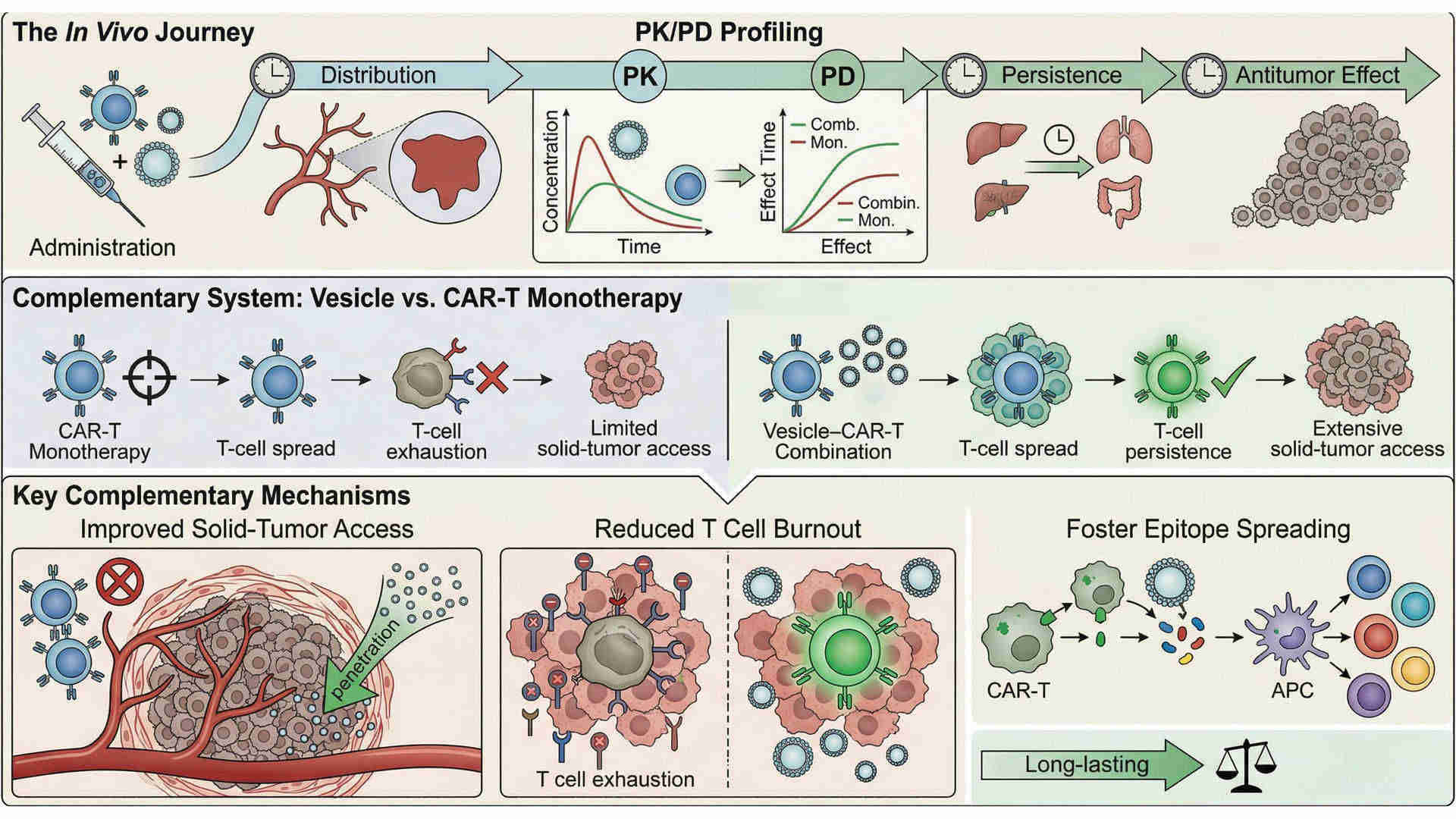 Fig.1 Systemic PK/PD characterization of vesicle-CAR-T cotreatment.
Creative Biolabs offers a complete analytical platform that connects early vesicle engineering efforts with real-world clinical use. By mapping how vesicle-CAR-T exposures translate into biological responses, we help clients move beyond static, time-point based pharmacokinetic assessments toward a model-guided development approach. Our work ensures that each dosing choice stems from quantifiable biological outcomes instead of purely experimental guesswork.
This service focuses on real-time, whole-body visualization of how both therapeutic components localize and interact within the tumor microenvironment. By leveraging advanced imaging modalities, this approach tracks the dynamic trafficking of vesicles and the concurrent homing behavior of CAR-T cells. Applications include determining whether vesicles preferentially accumulate at tumor sites prior to CAR-T arrival, assessing the impact of vesicle-induced chemokine gradients on T cell infiltration, and identifying optimal time windows for combination dosing.
Learn More →This service addresses the cellular-level consequences of vesicle co-administration within tumor-infiltrating lymphocytes (TILs). Through flow cytometry, multiplex immunohistochemistry and other advanced technologies, this analysis quantifies not only the absolute density of CAR-T cells that have successfully infiltrated the tumor bed but also their functional and exhaustion phenotypes. Applications include determining whether vesicle treatment enhances CAR-T persistence, reverses terminal exhaustion, or promotes a more stem-like memory phenotype.
Learn More →This service provides a quantitative framework for translating preclinical PK/PD observations into clinically actionable dosing regimens. By systematically varying both CAR-T cell numbers and vesicle concentrations, this mapping defines the multidimensional relationship between administered doses and key biological outcomes, including tumor regression, cytokine release, and T cell exhaustion thresholds.
Learn More →
Final Deliverables:
Q1: How does vesicle modeling differ from traditional small molecule PK?
A1: Traditional pharmacokinetics typically assumes steady-state drug levels and first-order elimination kinetics. In contrast, vesicle-mediated CAR-T delivery involves transient mRNA expression followed by a delayed and cell-dependent production of CAR proteins.
Q2: Can you model specific T-cell subsets, such as CD8+ vs. CD4+?
A2: Yes. Our platform distinguishes between major T-cell subsets using antibody-conjugated vesicles targeting CD8 or CD4 surface markers. These labeled vesicles allow us to track transduction efficiency separately in each population. Combined with high-resolution flow cytometry, we can monitor how CAR expression kinetics and persistence differ between cytotoxic and helper T cells, offering subset-specific PK/PD insights that are critical for predicting antitumor efficacy and immune balance.
We combine mechanistic modeling with advanced bioanalytics to decode the dynamic behavior of vesicle-CAR-T combinations. Our platform captures transient mRNA expression, subset-specific transduction, and exposure–response relationships, delivering actionable PK/PD insights that reduce trial risk and accelerate your path to clinical development.
Ready to accelerate your vesicle-based CAR-T program with predictive PK/PD insights? Reach out to our expert team today. Share your project goals, and we will provide a tailored modeling strategy and a competitive quote. Contact us now to move beyond empirical dosing.
For any technical issues or product/service related questions, please leave your information below. Our team will contact you soon.
All products and services are For Research Use Only and CANNOT be used in the treatment or diagnosis of disease.
 NEWSLETTER
The latest newsletter to introduce the latest breaking information, our site updates, field and other scientific news, important events, and insights from industry leaders
LEARN MORE NEWSLETTER NEW SOLUTION
CellRapeutics™ In Vivo Cell Engineering: One-stop in vivo T/B/NK cell and macrophage engineering services covering vectors construction to function verification.
LEARN MORE SOLUTION NOVEL TECHNOLOGY
Silence™ CAR-T Cell: A novel platform to enhance CAR-T cell immunotherapy by combining RNAi technology to suppress genes that may impede CAR functionality.
LEARN MORE NOVEL TECHNOLOGY NEW SOLUTION
Canine CAR-T Therapy Development: From early target discovery, CAR design and construction, cell culture, and transfection, to in vitro and in vivo function validation.
LEARN MORE SOLUTION