Creative Biolabs has a tradition of commitment. To achieve efficient execution and regulatory approval, we offer careful considerations of your program for the development of a cellular or gene therapy product – now and in the future.
EXPLORE MORE HighlightsWe focus on unmet needs and develop novel cellular and gene drugs and solutions that offer significant benefits over existing options.
EXPLORE MORE HighlightsThe advent of Chimeric Antigen Receptor T-cell (CAR-T) therapies has revolutionized the field of oncology, providing new avenues for treating various forms of cancer. Our 20 years of experience in the biotechnology sector have equipped us with the expertise and technological capabilities to support the entire lifecycle of CAR-T products, from early development to commercialization.
EXPLORE MORETo accelerate advanced breakthroughs of your projects, we offer broad range of platforms which enable our clients be free to tackle problems with cutting-edge technologies from different angles and in different methods.
EXPLORE MORE HighlightsUse the resources in our library to help you understand your options and make critical decisions for your study. We offer oncolytic virus, CAR-T, and dendritic cell related documents, as well as newsletter. If you don't find the answers you're looking for, contact us for additional assistance.
EXPLORE MORE HighlightsGet a real taste and understanding of the business and culture of one of the world's great research-based cellular and gene therapy discovery and development companies.
EXPLORE MORE
Key hurdles confronting CAR-T therapy encompass T cell exhaustion, limited solid tumor infiltration, and the rapid clearance associated with allogeneic off-the-shelf products. Through our Exosome Protein Engineering for CAR-T Persistence Payloads platform, we overcome these obstacles by leveraging sophisticated surface display and precision cargo loading to deliver persistence-enhancing factors. The resulting engineered exosomes provide CAR-T cells with sustained cytokine support, metabolic modulation, and prolonged circulation. By combining scaffold-based protein engineering, targeted RNA encapsulation, and glycan-based shielding, our approach drives next-generation cell therapies toward greater functional durability, improved resilience within the tumor microenvironment, and an enhanced therapeutic window.
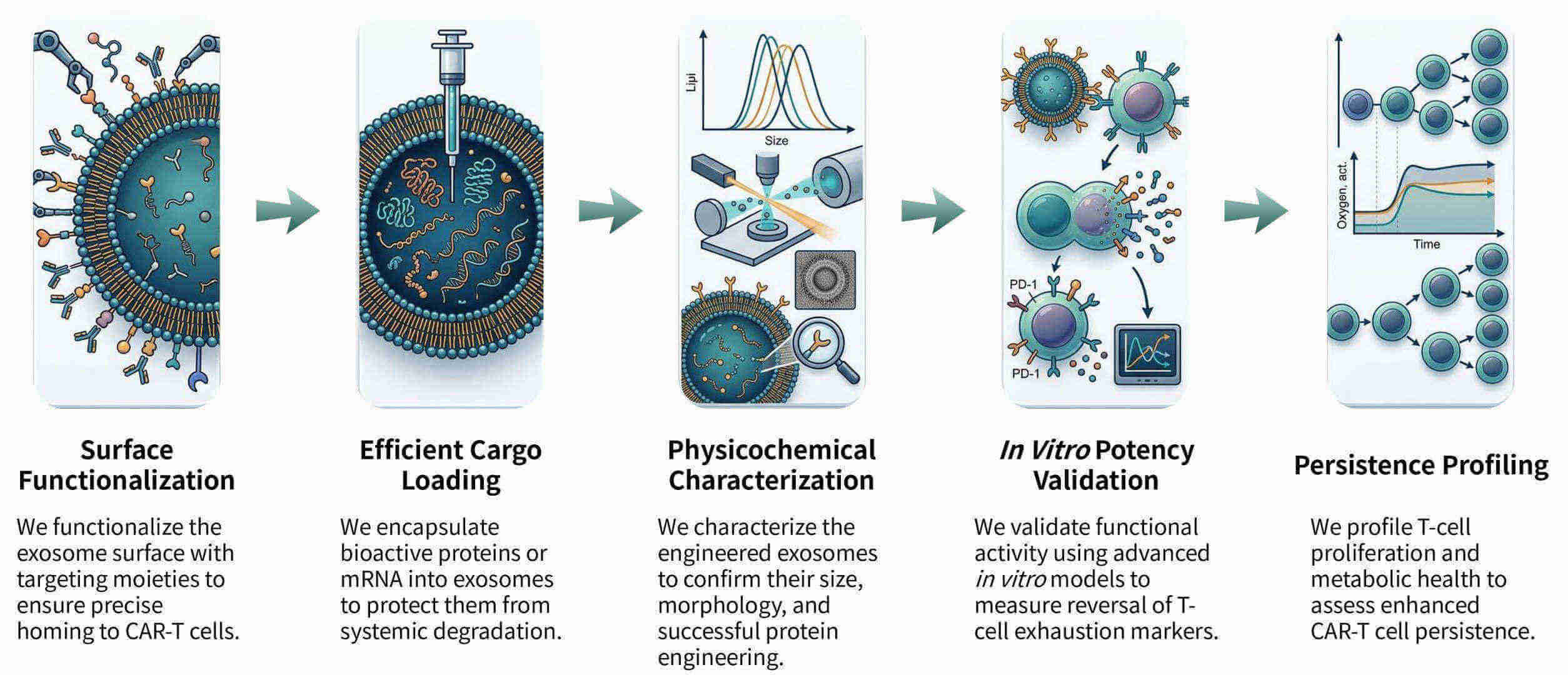
Exosome protein engineering integrates glycan-based surface modification with precision cargo loading to generate tailored extracellular vesicles capable of targeted molecular delivery. Applied to CAR-T persistence payloads, this platform enables sustained delivery of durability-enhancing factors that mitigate T cell exhaustion, improve tumor infiltration, and extend therapeutic function.
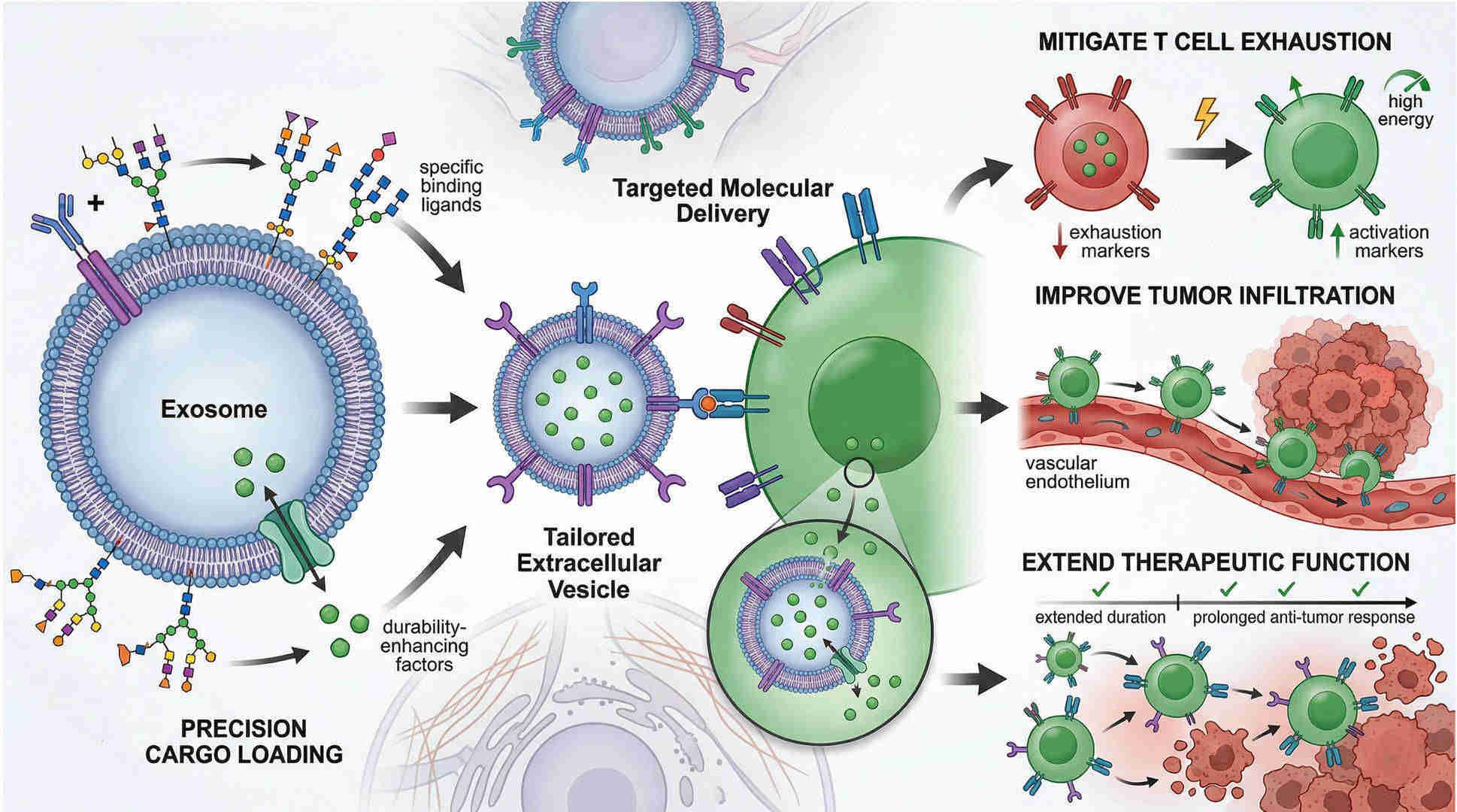 Fig.1 Exosome-based protein engineering for durable CAR-T therapy.
Creative Biolabs provides a specialized system for designing exosomes as modular carriers that reinvigorate CAR-T cells in vivo. Through functionalization of the exosomal surface with targeted protein ligands and incorporation of payloads such as glycan-remodeling agents or IL-15 to support homeostatic proliferation, this platform addresses the central challenge of T cell senescence.
This platform focuses on the genetic fusion of therapeutic cytokines to the intraluminal or extracellular domains of exosome-anchoring scaffolds, specifically Lamp2b and CD63. By leveraging these high-density membrane proteins, engineered exosomes display functional cytokines such as IL-7 or IL-15 directly on their surface. This design enables sustained, localized delivery of survival signals to CAR-T cells, effectively replacing systemic cytokine administration with a targeted support mechanism that enhances T cell persistence while minimizing off-target toxicity.
Learn More →This technology exploits the natural RNA-loading capacity of exosomes to deliver genetic potentiators directly into CAR-T cells. Producer cells are engineered to overexpress specific mRNA or non-coding RNA sequences that are actively sorted into exosomal cargo via endogenous machinery, yielding Exo-Load vesicles. Upon fusion with CAR-T cells, these exosomes deliver regulatory RNA capable of reprogramming cellular metabolism, preventing exhaustion, or sustaining memory phenotypes, thereby providing a non-viral and reversible strategy for dynamically modulating T cell fitness over time.
Learn More →To address the rapid clearance of therapeutic exosomes by the reticuloendothelial system, this module employs advanced surface glycan engineering. Modification of the exosomal membrane with hyper-sialylated or precisely patterned glycocalyx structures creates a stealth coating that reduces opsonization and phagocytic uptake. This glycan shielding markedly prolongs the circulatory half-life of exosome payloads, ensuring sustained bioavailability for CAR-T support and enabling lower, less frequent dosing regimens while preserving therapeutic efficacy in both peripheral compartments and the tumor microenvironment.
Learn More →
Final Deliverables:
Q1: What types of payloads can be loaded into the exosomes?
A1: A broad range of functional cargo can be encapsulated, including protein-based therapeutics, immunomodulatory cytokines, messenger RNA, and even CRISPR-Cas9 ribonucleoprotein complexes for transient, targeted genome editing.
Q2: How do you ensure the exosomes target the CAR-T cells specifically?
A2: The exosome surface is functionalized with targeting moieties such as single-chain variable fragments or synthetic ligands that recognize T-cell lineage markers like CD3 or CD8, or alternatively, they can be designed to directly bind the CAR structure itself for enhanced specificity.
Our platform leverages precision exosome protein engineering to deliver optimized persistence payloads directly to CAR-T cells. We uniquely combine advanced molecular design with targeted delivery, ensuring sustained effector function, enhanced in vivo durability, and superior therapeutic potential for next-generation cell immunotherapy.
Creative Biolabs offers an advanced platform for exosome protein engineering designed to deliver persistence payloads for CAR-T therapy. By integrating glycan-based engineering with exosome-mediated delivery, we address key obstacles in CAR-T functional persistence and solid tumor infiltration.
To discuss project details or request a custom proposal, contact our scientific team.
For any technical issues or product/service related questions, please leave your information below. Our team will contact you soon.
All products and services are For Research Use Only and CANNOT be used in the treatment or diagnosis of disease.
 NEWSLETTER
The latest newsletter to introduce the latest breaking information, our site updates, field and other scientific news, important events, and insights from industry leaders
LEARN MORE NEWSLETTER NEW SOLUTION
CellRapeutics™ In Vivo Cell Engineering: One-stop in vivo T/B/NK cell and macrophage engineering services covering vectors construction to function verification.
LEARN MORE SOLUTION NOVEL TECHNOLOGY
Silence™ CAR-T Cell: A novel platform to enhance CAR-T cell immunotherapy by combining RNAi technology to suppress genes that may impede CAR functionality.
LEARN MORE NOVEL TECHNOLOGY NEW SOLUTION
Canine CAR-T Therapy Development: From early target discovery, CAR design and construction, cell culture, and transfection, to in vitro and in vivo function validation.
LEARN MORE SOLUTION