Creative Biolabs has a tradition of commitment. To achieve efficient execution and regulatory approval, we offer careful considerations of your program for the development of a cellular or gene therapy product – now and in the future.
EXPLORE MORE HighlightsWe focus on unmet needs and develop novel cellular and gene drugs and solutions that offer significant benefits over existing options.
EXPLORE MORE HighlightsThe advent of Chimeric Antigen Receptor T-cell (CAR-T) therapies has revolutionized the field of oncology, providing new avenues for treating various forms of cancer. Our 20 years of experience in the biotechnology sector have equipped us with the expertise and technological capabilities to support the entire lifecycle of CAR-T products, from early development to commercialization.
EXPLORE MORETo accelerate advanced breakthroughs of your projects, we offer broad range of platforms which enable our clients be free to tackle problems with cutting-edge technologies from different angles and in different methods.
EXPLORE MORE HighlightsUse the resources in our library to help you understand your options and make critical decisions for your study. We offer oncolytic virus, CAR-T, and dendritic cell related documents, as well as newsletter. If you don't find the answers you're looking for, contact us for additional assistance.
EXPLORE MORE HighlightsGet a real taste and understanding of the business and culture of one of the world's great research-based cellular and gene therapy discovery and development companies.
EXPLORE MORE
CAR-T cell therapy faces significant clinical hurdles due to on-target, off-tumor toxicity, where engineered T cells attack healthy tissues expressing similar antigens, leading to severe organ damage and potential trial failure. Creative Biolabs' CAR-T On-Target Off-Tumor Toxicity Assessment Service is designed to systematically evaluate and mitigate this critical risk early in development. Utilizing high-fidelity human induced pluripotent stem cell (hiPSC)-derived tissue models and advanced affinity-profiling platforms, we provide physiologically relevant, human-specific preclinical data. This enables you to de-risk candidate selection, optimize therapeutic windows, and strengthen regulatory submissions by delivering robust, human-predictive safety assessments.
On-target, off-tumor toxicity remains a major challenge in CAR-T cell therapy, as normal cells expressing similar antigens can be attacked, leading to organ damage. Current NSCLC targets include MSLN, EGFR, ROR1, MUC1, PSCA, and HER2, while emerging antigens like LUNX and B7-H3 show promise due to their tumor-restricted expression. To mitigate this toxicity, several strategies are being explored: pre-blocking antigen sites on normal tissues, reducing scFv affinity, engineering inhibitory or dual-target CAR-T cells, and developing locally activatable CAR-T cells. These approaches aim to enhance safety without compromising antitumor efficacy.
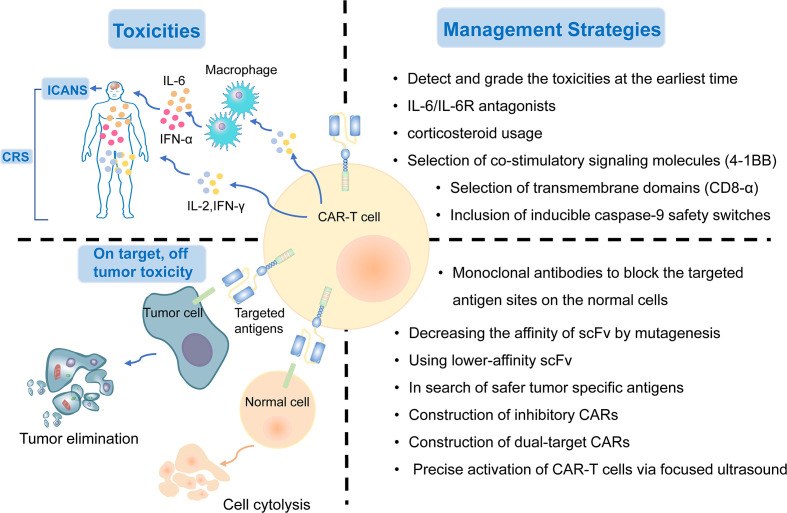 Fig.1 Toxicities associated with CAR-T cell therapy: on-target/off-tumor events and intervention strategies.1
Creative Biolabs provides a comprehensive suite of human-relevant assays designed to identify potential toxicities before they reach the clinic. We specialize in detecting "hidden" antigen expression in vital organs that animal models often miss due to species-specific expression patterns. By utilizing our platform, you receive a detailed safety profile that directly informs dose escalation and patient selection strategies.
Our CAR-T On-Target Off-Tumor Toxicity Assessment Service provides a comprehensive, human-relevant testing suite to de-risk your CAR-T cell therapy by predicting and quantifying potential adverse effects on healthy tissues.
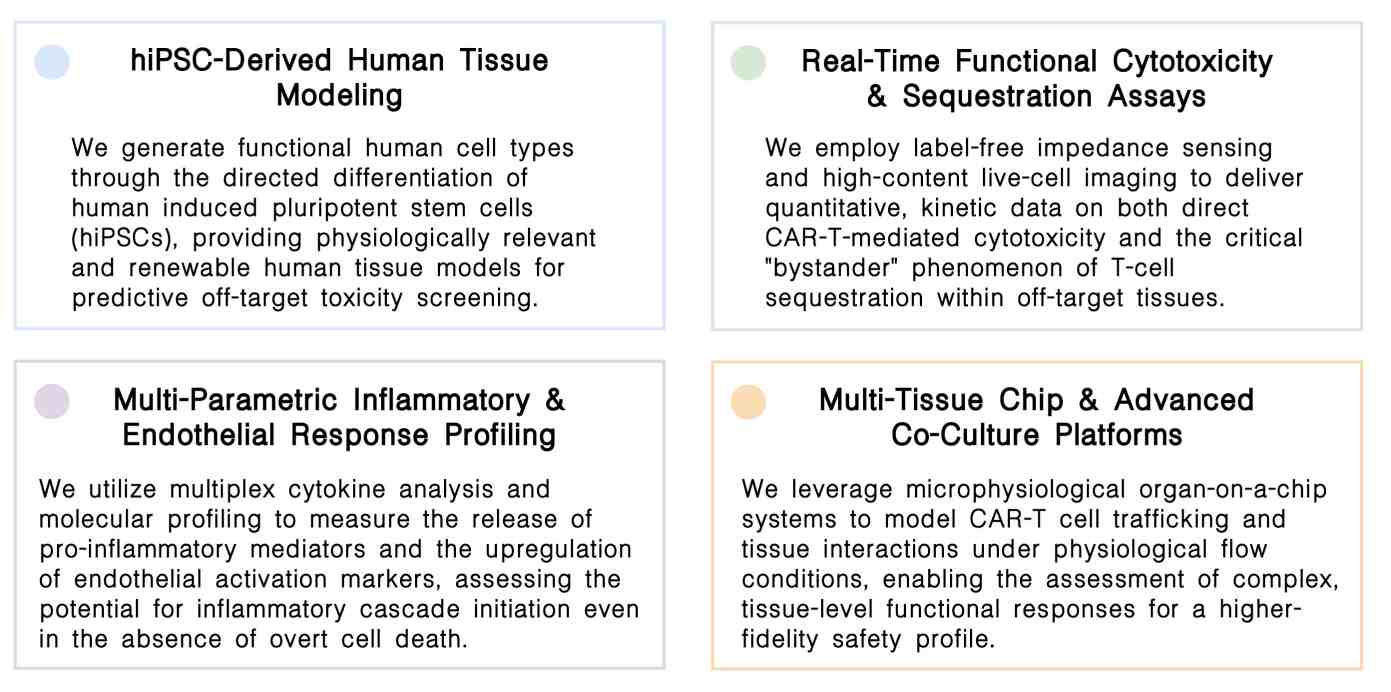
Required Starting Materials:
Key Steps:
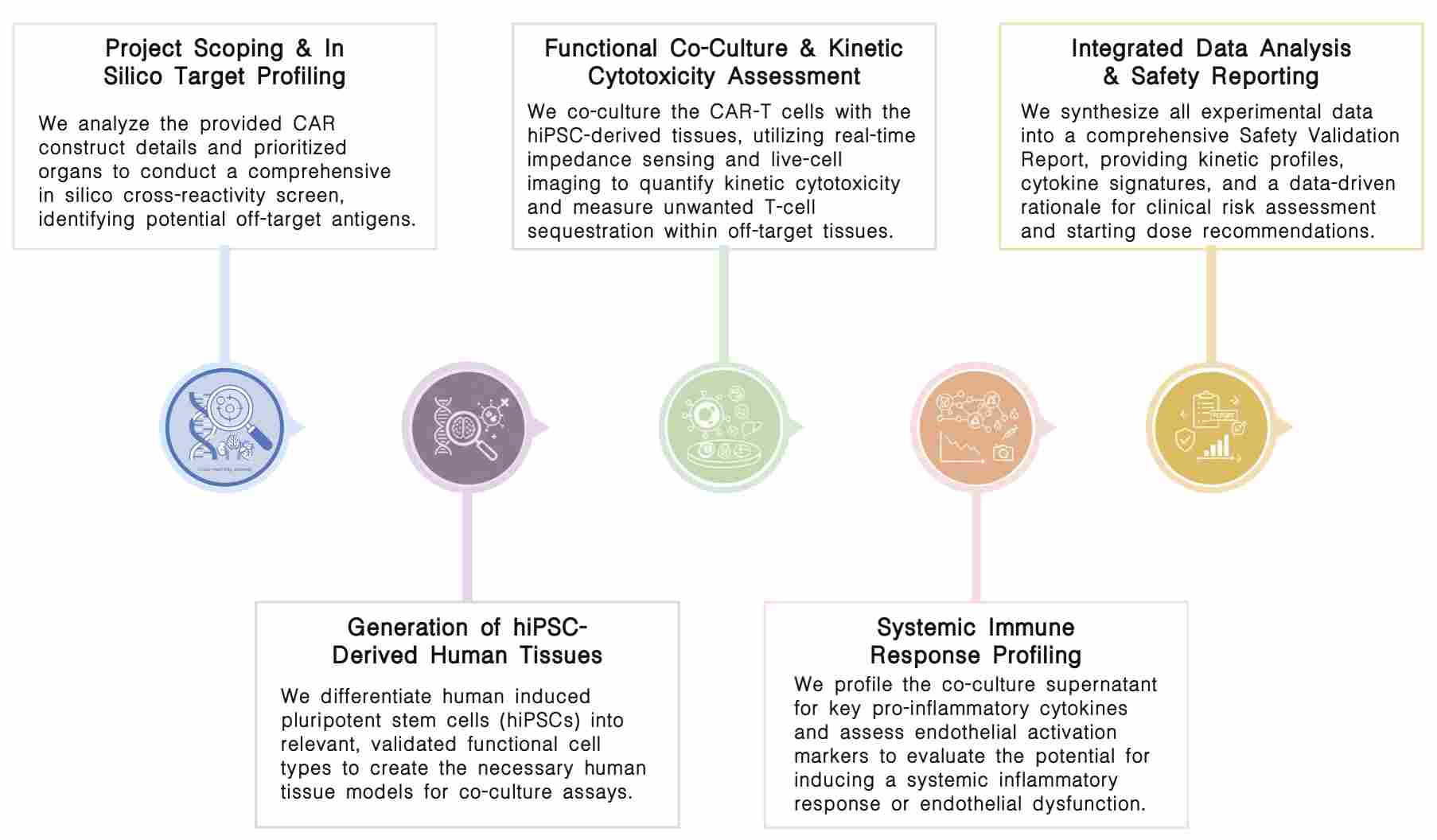
Estimated Timeframe: The standard project timeline typically spans 6 to 10 weeks. The specific duration is contingent upon the intricacy of the required tissue models and the total number of CAR constructs undergoing comparative evaluation.
Q1: What is the advantage of employing hiPSC-derived models over conventional animal studies for OTOT evaluation?
A1: Animal models are frequently limited by cross-species differences in target antigen sequences and expression patterns. Our hiPSC-derived human tissue models express the native, full-length human protein targets, thereby providing a species-relevant, high-fidelity platform to accurately assess the risk of your CAR construct binding to unintended healthy tissues.
Q2: Does your platform have the capability to assess potential delayed adverse effects that manifest post-infusion?
A2: Absolutely. We have established extended longitudinal co-culture systems that support the sustained monitoring of CAR-T cell viability, persistence, and functional activity alongside tissue health for up to 28 days. This extended timeline is critical for modeling the "persistence paradox," where durable therapeutic cells may also pose a risk of late-onset toxicity.
We uniquely integrate the latest clinical insights, such as delayed neurotoxicity and affinity-dependent sequestration, into a human-relevant "Bedside-to-Bench" testing paradigm. Our platform utilizes hiPSC-derived human tissues and advanced co-culture systems to accurately assess cross-reactivity and functional toxicity against native human antigen sequences, providing a critical safety bridge from CAR design to clinical translation.
"Superior Sensitivity in Neurotoxicity Detection. Using Creative Biolabs' hiPSC-derived neural models in our research has significantly improved our ability to detect low-level antigen cross-reactivity that was completely absent in our NHP studies."
"Crucial for Solid Tumor Lead Selection. The 3D organoid co-culture system facilitated our understanding of CAR-T sequestration in the liver, helping us choose a binder with a better therapeutic index."
"Reliable Cytokine Profiling. The integrated secretome analysis using the CAR-T Toxicity Service significantly improved our CRS risk assessment for a novel bispecific construct."
To obtain a customized project proposal and quotation for our CAR-T Off-Tumor Toxicity Assessment Service, please contact our cell therapy safety specialists. We will promptly schedule a technical consultation to discuss your specific CAR construct, target organs, and project timeline, providing a tailored solution to de-risk your clinical development.
Reference
For any technical issues or product/service related questions, please leave your information below. Our team will contact you soon.
All products and services are For Research Use Only and CANNOT be used in the treatment or diagnosis of disease.
 NEWSLETTER
The latest newsletter to introduce the latest breaking information, our site updates, field and other scientific news, important events, and insights from industry leaders
LEARN MORE NEWSLETTER NEW SOLUTION
CellRapeutics™ In Vivo Cell Engineering: One-stop in vivo T/B/NK cell and macrophage engineering services covering vectors construction to function verification.
LEARN MORE SOLUTION NOVEL TECHNOLOGY
Silence™ CAR-T Cell: A novel platform to enhance CAR-T cell immunotherapy by combining RNAi technology to suppress genes that may impede CAR functionality.
LEARN MORE NOVEL TECHNOLOGY NEW SOLUTION
Canine CAR-T Therapy Development: From early target discovery, CAR design and construction, cell culture, and transfection, to in vitro and in vivo function validation.
LEARN MORE SOLUTION