Creative Biolabs has a tradition of commitment. To achieve efficient execution and regulatory approval, we offer careful considerations of your program for the development of a cellular or gene therapy product – now and in the future.
EXPLORE MORE HighlightsWe focus on unmet needs and develop novel cellular and gene drugs and solutions that offer significant benefits over existing options.
EXPLORE MORE HighlightsThe advent of Chimeric Antigen Receptor T-cell (CAR-T) therapies has revolutionized the field of oncology, providing new avenues for treating various forms of cancer. Our 20 years of experience in the biotechnology sector have equipped us with the expertise and technological capabilities to support the entire lifecycle of CAR-T products, from early development to commercialization.
EXPLORE MORETo accelerate advanced breakthroughs of your projects, we offer broad range of platforms which enable our clients be free to tackle problems with cutting-edge technologies from different angles and in different methods.
EXPLORE MORE HighlightsUse the resources in our library to help you understand your options and make critical decisions for your study. We offer oncolytic virus, CAR-T, and dendritic cell related documents, as well as newsletter. If you don't find the answers you're looking for, contact us for additional assistance.
EXPLORE MORE HighlightsGet a real taste and understanding of the business and culture of one of the world's great research-based cellular and gene therapy discovery and development companies.
EXPLORE MORE
While CAR-T therapies hold significant promise, their efficacy in solid tumors remains constrained by T cell exhaustion, immunosuppressive tumor-derived vesicles, and limited platforms for evaluating vesicle–cell combination strategies. Creative Biolabs' In vitro Potency Assays for Vesicle-CAR-T Synergy Validation captures the functional crosstalk between engineered vesicles and CAR-T cells. Our system merges high-resolution metabolic profiling, standardized kinetic cytotoxicity assessments, and advanced multi-omic analysis within a cohesive framework. With robust, reproducible, and biologically grounded potency metrics, we help streamline your development path and reduce program risk.
Extracellular vesicles (EVs) are nanoscale, membrane-bound particles secreted by cells that serve as natural mediators of intercellular communication, delivering bioactive cargo, including proteins, nucleic acids, and lipids, to recipient cells to modulate their function. The synergy between engineered vesicles and CAR-T cells represents an emerging paradigm in cellular immunotherapy, wherein vesicles are strategically designed to either display target antigens for selective CAR-T cell engagement or deliver immunomodulatory payloads such as cytokines, thereby enhancing CAR-T cell activation, proliferation, and anti-tumor potency in a coordinated and antigen-specific manner.
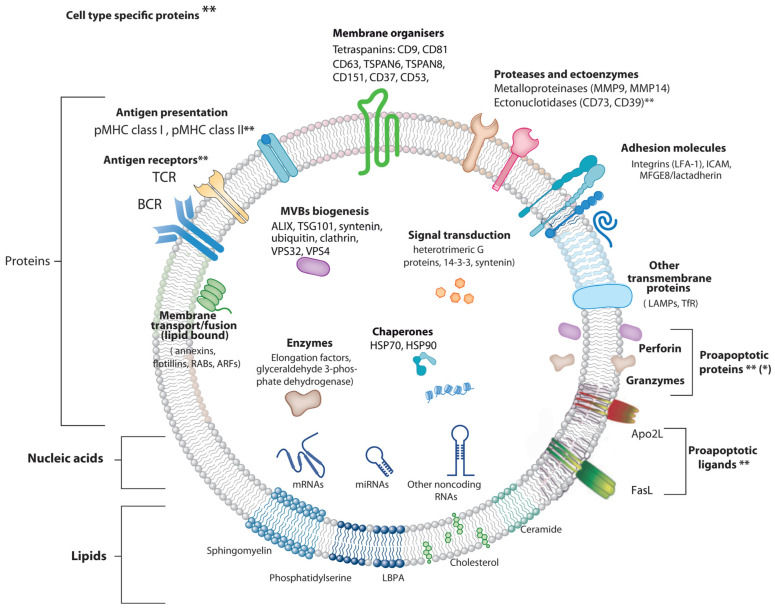 Fig.1 Extracellular vesicle-enhanced CAR-T cell potentiation.1
Creative Biolabs delivers a full range of analytical solutions to characterize the functional interplay between therapeutic vesicles and CAR-T cells. We help assess whether engineered vesicles help curb tumor-induced fratricide or boost T cell infiltration and activation within suppressive microenvironments. Our assays extend beyond basic cytotoxicity curves, offering mechanistic insights into the molecular synergy essential for clinical success.
This assay evaluates the co-localization and infiltration efficiency of vesicle-primed CAR-T cells within three-dimensional tumor organoid models that recapitulate the architectural and stromal complexity of solid malignancies. By tracking the spatial distribution and depth of penetration of both vesicles and CAR-T components, we determine whether vesicle co-administration enhances tumor homing and overcomes physical barriers that often limit conventional CAR-T efficacy. Our platform is particularly valuable for solid tumor indications where poor infiltration remains a primary obstacle, enabling clients to rank-order synergistic formulations and optimize delivery strategies prior to in vivo studies.
Learn More →This assay quantifies the functional durability of CAR-T cells when repeatedly exposed to target tumor cells in the presence of synergistic vesicles, measuring key parameters such as cumulative killing capacity, cytolytic reloading speed, and the onset of exhaustion markers over multiple challenge cycles. We determine whether vesicle priming preserves or enhances CAR-T effector function, delays terminal differentiation, and maintains proliferative reserve under chronic stimulation conditions. This application is essential for predicting in vivo persistence and long-term anti-tumor activity, particularly for hematologic malignancies or high-tumor-burden settings where CAR-T cells face sustained antigen exposure.
Learn More →This assay provides a preclinical safety assessment that profiles the inflammatory risk associated with combining vesicle-based delivery systems and CAR-T cell therapies. By monitoring dynamic release of key cytokines such as IL-6, TNF-α, IFN-γ, and GM-CSF in high-density immune cell co-cultures, we identify synergistic amplification patterns that may predict cytokine release syndrome liability. Our screening platform enables early-stage risk stratification, comparison of different vesicle formulations or CAR-T constructs, and the development of mitigation strategies, thereby supporting regulatory submissions and clinical trial safety monitoring.
Learn More →
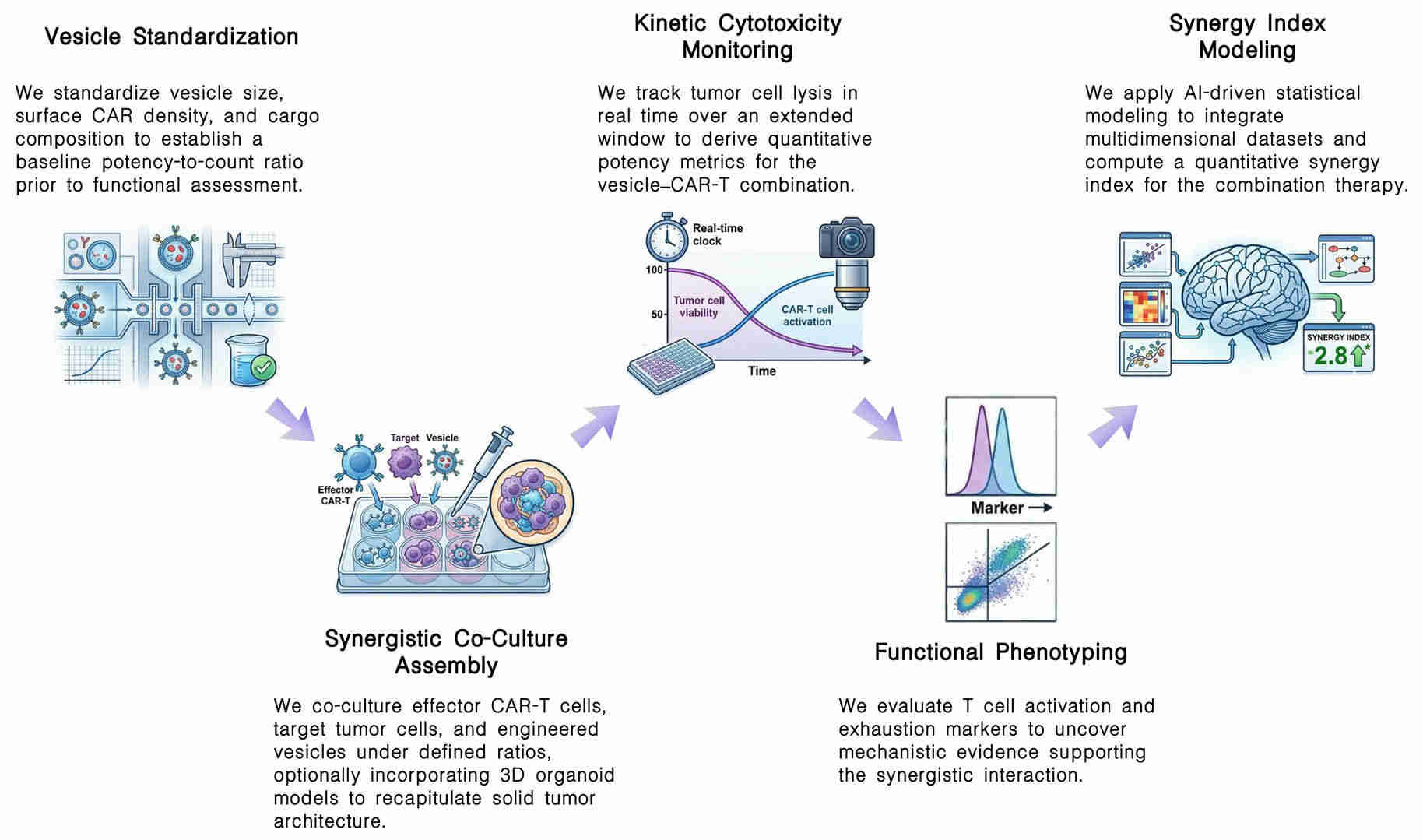
Final Deliverables:
Q1: Can these assays predict the risk of CRS?
A1: Yes. We monitor the release kinetics of key pro-inflammatory cytokines such as IL-6 and IFN-γ within our co-culture systems. These measurements generate a safety-related profile that helps estimate the likelihood of CRS, offering valuable insight for risk assessment before moving into in vivo studies.
Q2: Do you offer assays for 3D tumor models?
A2: Yes. Our platform includes tumor spheroids and organoid-on-a-chip systems to evaluate how engineered vesicles support CAR-T cell infiltration and activity within complex, densely packed tumor microenvironments. These models more accurately reflect the physical barriers encountered in solid tumors.
We combine deep expertise in CAR-T biology and extracellular vesicle engineering with advanced analytical platforms to deliver actionable potency data. Our integrated approach, from high-resolution profiling to AI-driven synergy modeling, provides the mechanistic insights needed to de-risk development and accelerate your path to clinical translation.
Ready to validate your vesicle–CAR-T combination with confidence? Our team of immunotherapy specialists is here to help design an assay strategy tailored to your program. Contact us today to discuss your project, request a quote, or schedule a technical consultation. Let's accelerate your pipeline together.
Reference
For any technical issues or product/service related questions, please leave your information below. Our team will contact you soon.
All products and services are For Research Use Only and CANNOT be used in the treatment or diagnosis of disease.
 NEWSLETTER
The latest newsletter to introduce the latest breaking information, our site updates, field and other scientific news, important events, and insights from industry leaders
LEARN MORE NEWSLETTER NEW SOLUTION
CellRapeutics™ In Vivo Cell Engineering: One-stop in vivo T/B/NK cell and macrophage engineering services covering vectors construction to function verification.
LEARN MORE SOLUTION NOVEL TECHNOLOGY
Silence™ CAR-T Cell: A novel platform to enhance CAR-T cell immunotherapy by combining RNAi technology to suppress genes that may impede CAR functionality.
LEARN MORE NOVEL TECHNOLOGY NEW SOLUTION
Canine CAR-T Therapy Development: From early target discovery, CAR design and construction, cell culture, and transfection, to in vitro and in vivo function validation.
LEARN MORE SOLUTION