Creative Biolabs has a tradition of commitment. To achieve efficient execution and regulatory approval, we offer careful considerations of your program for the development of a cellular or gene therapy product – now and in the future.
EXPLORE MORE HighlightsWe focus on unmet needs and develop novel cellular and gene drugs and solutions that offer significant benefits over existing options.
EXPLORE MORE HighlightsThe advent of Chimeric Antigen Receptor T-cell (CAR-T) therapies has revolutionized the field of oncology, providing new avenues for treating various forms of cancer. Our 20 years of experience in the biotechnology sector have equipped us with the expertise and technological capabilities to support the entire lifecycle of CAR-T products, from early development to commercialization.
EXPLORE MORETo accelerate advanced breakthroughs of your projects, we offer broad range of platforms which enable our clients be free to tackle problems with cutting-edge technologies from different angles and in different methods.
EXPLORE MORE HighlightsUse the resources in our library to help you understand your options and make critical decisions for your study. We offer oncolytic virus, CAR-T, and dendritic cell related documents, as well as newsletter. If you don't find the answers you're looking for, contact us for additional assistance.
EXPLORE MORE HighlightsGet a real taste and understanding of the business and culture of one of the world's great research-based cellular and gene therapy discovery and development companies.
EXPLORE MORE
Current challenges in immuno-oncology include the inability of traditional preclinical models to reliably predict life-threatening CRS, leading to high clinical attrition and safety risks. Creative Biolabs' Preclinical Trial-on-Chip-based Cytokine Release Syndrome (CRS) Assessment Service directly addresses this translational gap. This service leverages advanced microfluidic organ-on-chip platforms that integrate human vascular endothelium, patient-relevant immune cells, and physiological flow to create a dynamic, human-relevant model of systemic inflammation. By providing high-fidelity, mechanistic data on cytokine storm kinetics and endothelial activation, we empower you to de-risk your immunotherapy candidates, optimize therapeutic windows, and accelerate safer therapies into the clinic.
Advances in immuno-oncology are critically impeded by the life-threatening risk of CRS, a systemic hyperinflammatory complication triggered by immune-activating therapies. To address this, the field of safety assessment is transitioning decisively from conventional, low-predictivity models, including static peripheral blood cell assays and non-translational animal studies, to sophisticated, human-relevant in vitro systems. These next-generation platforms are engineered to model the sequential key events of the CRS adverse outcome pathway, spanning initial T-cell engagement, endothelial cell activation, and the ensuing cytokine storm. By facilitating precise, mechanism-driven hazard characterization and predictive biomarker identification, such advanced models are indispensable for de-risking drug candidates, establishing safer first-in-human (FIH) dosing, and enhancing the clinical safety profile of T-cell engagers and related immunotherapies.
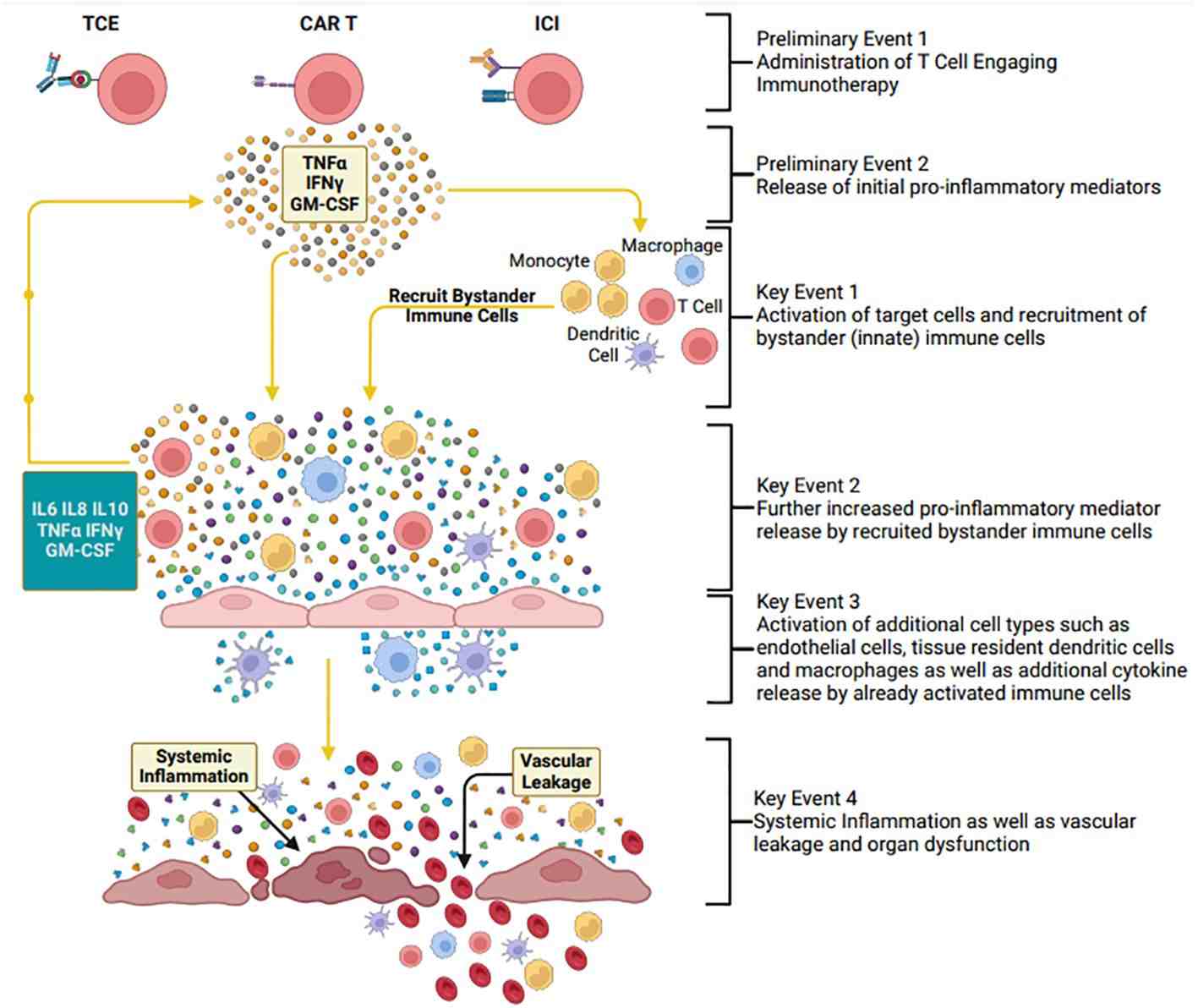 Fig.1 Mechanistic cascade of immunotherapy-induced cytokine release syndrome.1
Our platform offers an unparalleled view into the intricate immune dynamics driving systemic inflammatory responses. Leveraging Trial-on-Chip technology, we generate kinetic cytokine release profiles and identify clinically relevant "off-target" immune activation prior to first-in-human studies. This approach directly resolves the "speed-safety paradox" inherent to accelerated immunotherapy development by detecting early pro-inflammatory signals, including those induced by residual manufacturing components or hypermetabolic activity, that could precipitate cytokine release syndrome.
Our Preclinical Trial-on-Chip-based CRS Assessment Service integrates cutting-edge technologies into a holistic, physiologically relevant testing platform designed to predict and de-risk the complex inflammatory cascade of Cytokine Release Syndrome.
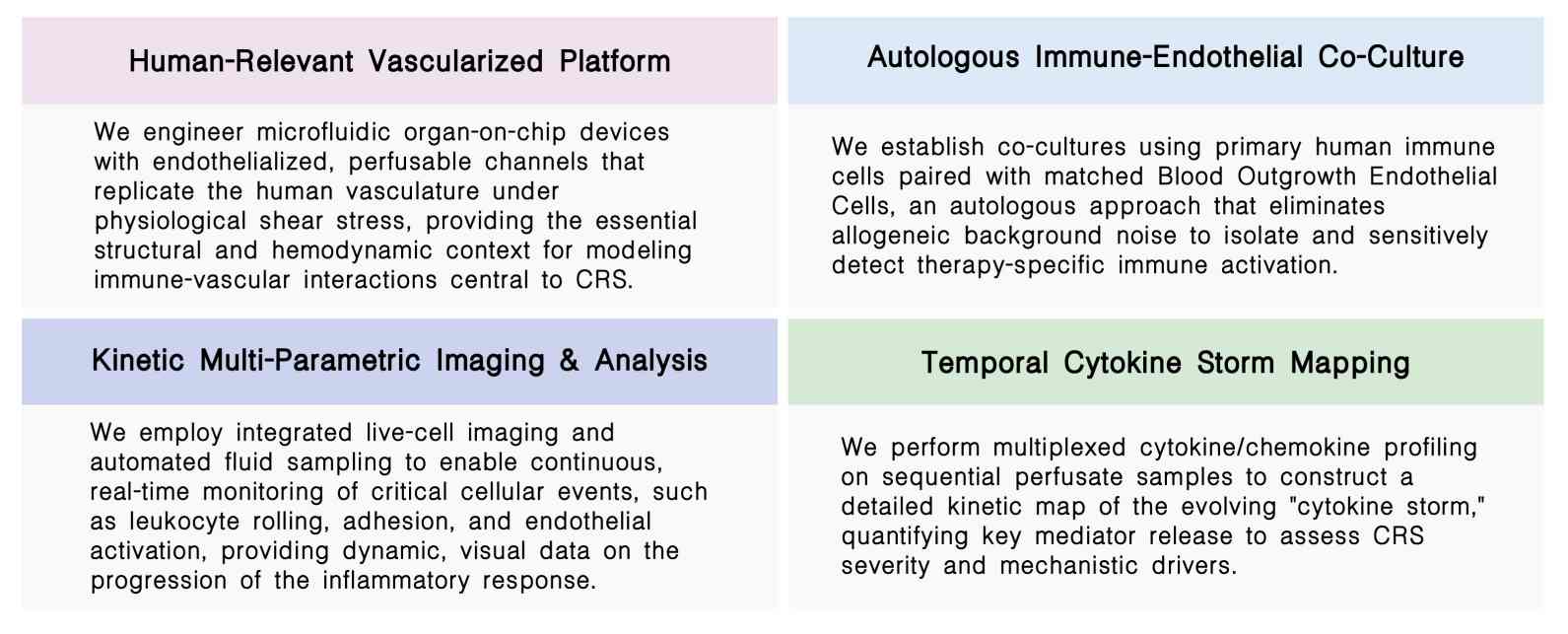
Required Starting Materials:
Key Steps:
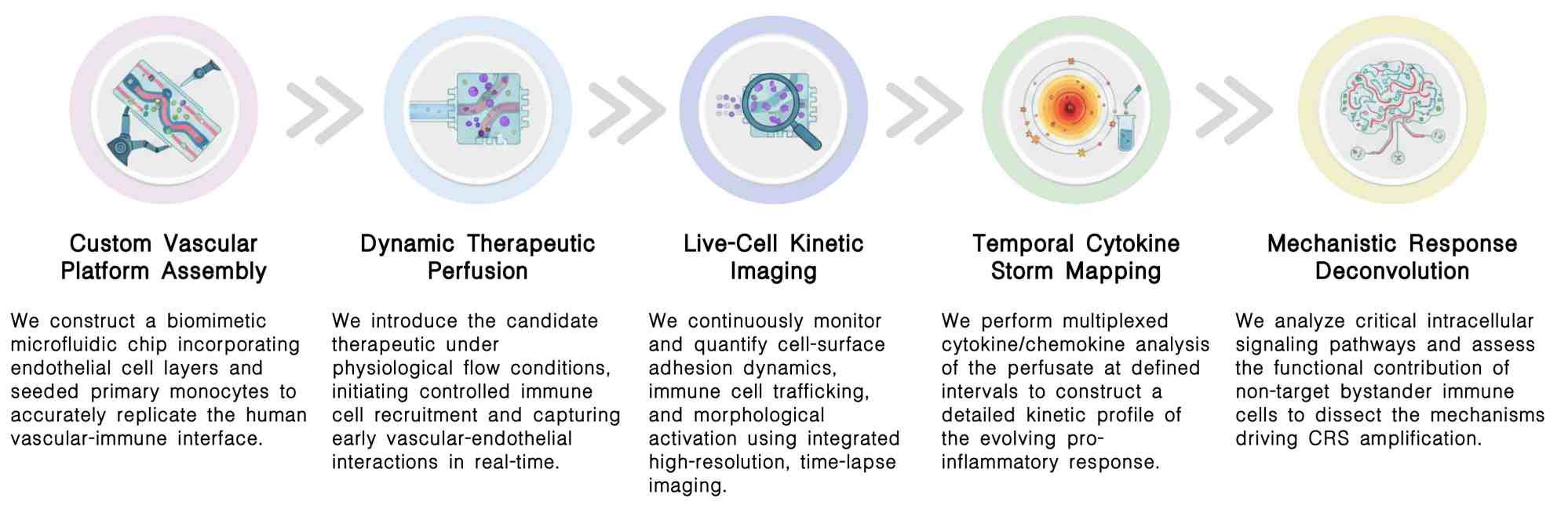
Final Deliverables: Upon completion of the analysis, you will be provided with an integrated Safety Profile Assessment Report. This document presents a comprehensive dossier containing multiplexed cytokine/chemokine profiling data and a standardized toxicity grading evaluation.
Q1: How does your Trial-on-Chip model compare to standard NHP (Non-Human Primate) studies?
A1: While NHP models are traditionally the gold standard, they often lack human-specific cytokine kinetics. Our chip-based system utilizes human primary cells, providing a higher degree of immunological fidelity for human-specific targets at a fraction of the cost.
Q2: Can this service help predict neurotoxicity (ICANS) as well?
A2: Yes. By incorporating blood-brain barrier (BBB) components into the chip architecture, we can monitor cytokine penetration and endothelial activation related to ICANS.
We offer the most physiologically relevant CRS assessment by uniquely integrating vascular endothelium and physiological shear stress in a microfluidic platform, moving beyond static PBMC assays. This system provides a human-vascularized model that can differentiate manageable from severe cytokine storm profiles, validated against clinical outcomes. Choose us to de-risk your immunotherapy candidates with predictive, actionable safety data for precise dosing and molecular optimization.
"Integrating the Trial-on-Chip CRS platform provided crucial insight into tumor-specific versus off-target cytokine activation. The physiological flow dynamics revealed context-dependent responses absent in conventional static assays."
"The platform enabled a more efficient translational pathway. Its detailed analysis of monocyte-mediated TNF‑α signaling was explicitly noted as a strength during our pre‑IND regulatory review."
"The system critically informed our candidate triage. We deprioritized a lead that appeared safe in murine models but elicited a pronounced IL‑1β response in the human‑relevant chip environment."
To obtain a customized quote for our Preclinical Trial-on-Chip CRS Assessment Service, please contact our expert team. We will promptly provide a detailed proposal, including scope, timelines, and pricing tailored to your specific candidate and target.
Reference
For any technical issues or product/service related questions, please leave your information below. Our team will contact you soon.
All products and services are For Research Use Only and CANNOT be used in the treatment or diagnosis of disease.
 NEWSLETTER
The latest newsletter to introduce the latest breaking information, our site updates, field and other scientific news, important events, and insights from industry leaders
LEARN MORE NEWSLETTER NEW SOLUTION
CellRapeutics™ In Vivo Cell Engineering: One-stop in vivo T/B/NK cell and macrophage engineering services covering vectors construction to function verification.
LEARN MORE SOLUTION NOVEL TECHNOLOGY
Silence™ CAR-T Cell: A novel platform to enhance CAR-T cell immunotherapy by combining RNAi technology to suppress genes that may impede CAR functionality.
LEARN MORE NOVEL TECHNOLOGY NEW SOLUTION
Canine CAR-T Therapy Development: From early target discovery, CAR design and construction, cell culture, and transfection, to in vitro and in vivo function validation.
LEARN MORE SOLUTION