Exosome Engineering Services for Targeted Drug Delivery
Unlocking the full therapeutic potential of extracellular vesicles requires more than just isolation; it demands precision engineering. At Creative Biolabs, we bridge the gap between biological potential and clinical reality by transforming native exosomes into smart, targeted delivery vehicles. Our platform integrates advanced surface display technologies with high-efficiency cargo loading strategies to overcome the limitations of natural vesicles, such as poor targeting and rapid clearance. Whether you are targeting the central nervous system or solid tumors, Creative Biolabs provides the expertise and proprietary technology to accelerate your therapeutic development with our comprehensive custom exosome engineering service.
Request a Free Scientific Consultation
The Science of Exosome Engineering
What is Exosome Engineering?
Exosome engineering refers to the technological modification of natural extracellular vesicles to equip them with specific therapeutic properties that native exosomes lack. By employing genetic, chemical, or physical methods, researchers can functionalize the exosome surface for precise targeting or actively load specific cargoes into the lumen. While native exosomes serve as nature's intercellular messengers, their application in clinical settings is often hindered by limited cargo loading capacity and a lack of tissue specificity. Engineering these vesicles is essential to transform them from biological byproducts into potent drug delivery systems (DDS).
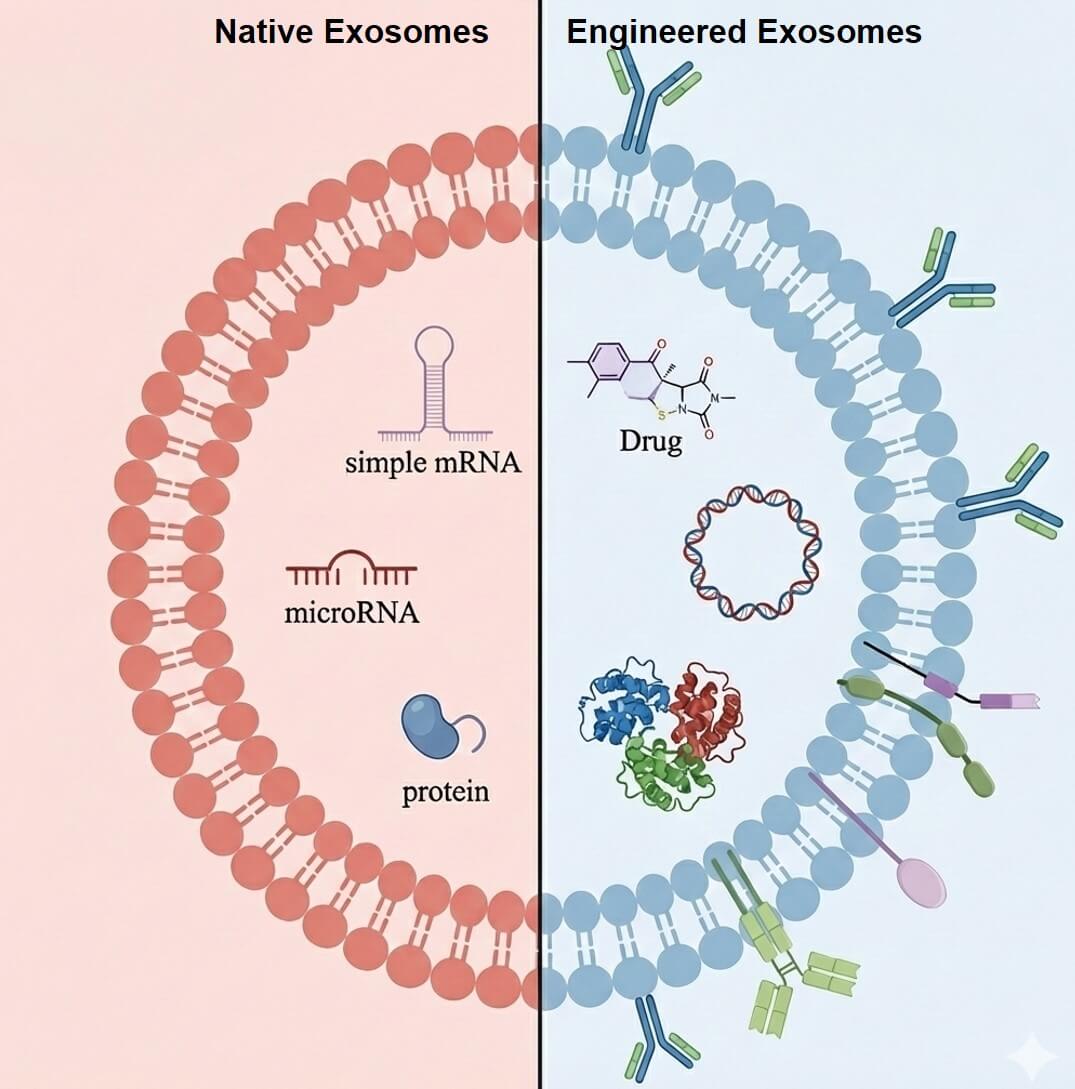
Engineering provides several critical advantages over both native vesicles and synthetic nanoparticles:
Engineering Strategies: Loading & Functionalization
Strategies for exosome engineering fundamentally revolve around two core objectives: payload loading (maximizing therapeutic potency) and surface functionalization (optimizing biodistribution). These objectives can be achieved through a variety of genetic, chemical, and physical methodologies depending on the specific application.
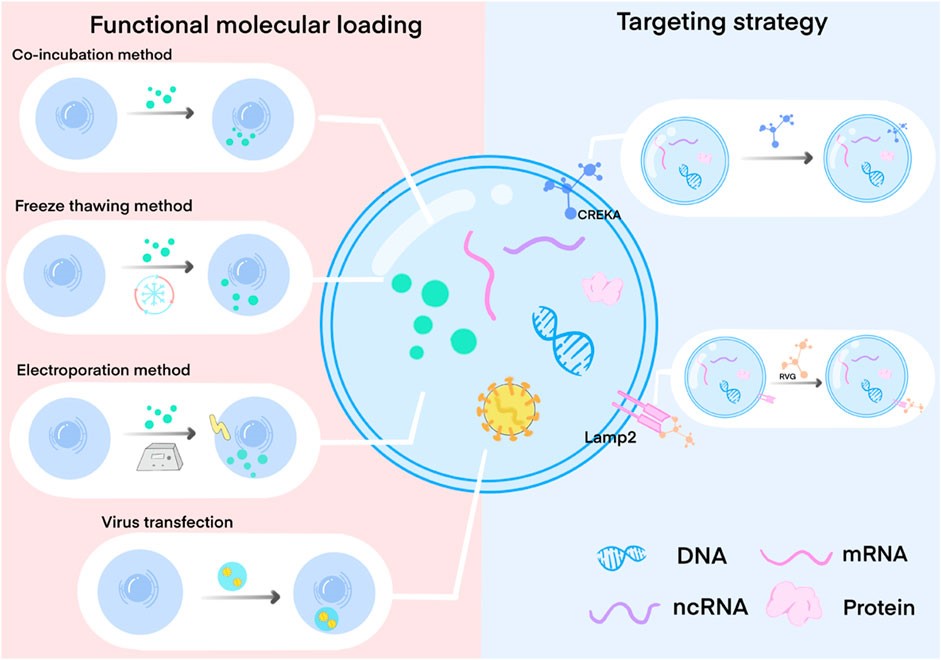 Fig. 1 Exosome engineering method by loading functional molecules and surface targeted modification.1
Payload Loading Strategies (Cargo Encapsulation)
This strategy focuses on efficiently encapsulating a diverse array of therapeutic agents, ranging from small molecules to large nucleic acids, inside the exosome lumen.
- Endogenous Loading (Genetic): Manipulating the parental cell (e.g., via transfection) to express and package specific RNAs or proteins into exosomes during their natural biogenesis. This maintains the cargo in a native‑like state.
- Exogenous Loading (Physical/Chemical): Actively introducing cargo into purified exosomes. Methods like electroporation and sonication are essential for loading synthetic drugs (e.g., Chemotherapeutics) or high concentrations of siRNA/miRNA that cannot be achieved biologically.
| Method | Mechanism | Ideal Cargo Types | Key Advantages |
|---|---|---|---|
| Genetic Engineering | Cellular machinery naturally packages cargo during biogenesis. | mRNA, miRNA, Proteins | Preserves native folding; high stability; no membrane damage. |
| Electroporation | Electrical pulses create transient pores in the membrane. | siRNA, DNA Plasmids, miRNA | Industry standard for nucleic acids; high efficiency. |
| Sonication | Ultrasound energy physically disrupts the membrane temporarily. | Hydrophilic Drugs, Proteins, Enzymes | High loading capacity; excellent for large proteins. |
| Co‑incubation | Passive diffusion along concentration gradients. | Hydrophobic Small Molecules (e.g., Curcumin) | Simple; non‑destructive; scalable. |
| Saponin/Surfactant | Chemical permeabilization of the membrane. | Catalase, Large Proteins | High efficiency for enzymes without denaturation. |
Advanced Exosome Engineering & Modification Services
Creative Biolabs offers an integrated ecosystem for exosome research, combining bespoke engineering services with a vast library of off-the-shelf products. Our platform supports the entire development lifecycle, providing not only custom modification of client-derived vesicles but also immediate access to high-quality stock exosomes and specialized assay kits, including advanced fluorescent labeling solutions. This dual approach ensures that whether you require a turnkey engineering project or validated reagents for in-house optimization, we have the tools to accelerate your discovery and preclinical timelines.
Visualizing the journey of exosomes is crucial for validating targeting efficiency and biodistribution. We provide professional labeling services using diverse modalities to suit your specific imaging equipment and sensitivity requirements.
- Fluorescent Membrane Labeling: Utilization of stable lipophilic dyes (PKH67/26, DiR, DiI) for confocal microscopy and in vivo fluorescence imaging.
- Protein-Specific Labeling: Covalent conjugation of fluorophores to surface proteins (e.g., CD63-GFP fusion or amine-reactive dyes) for highly specific tracking.
- Bioluminescent Engineering: Loading or expression of Luciferase enzymes for highly sensitive bioluminescence imaging (BLI) in animal models.
- Radioisotope Labeling: Integration of radioisotopes for quantitative pharmacokinetic (PK) and biodistribution analysis.
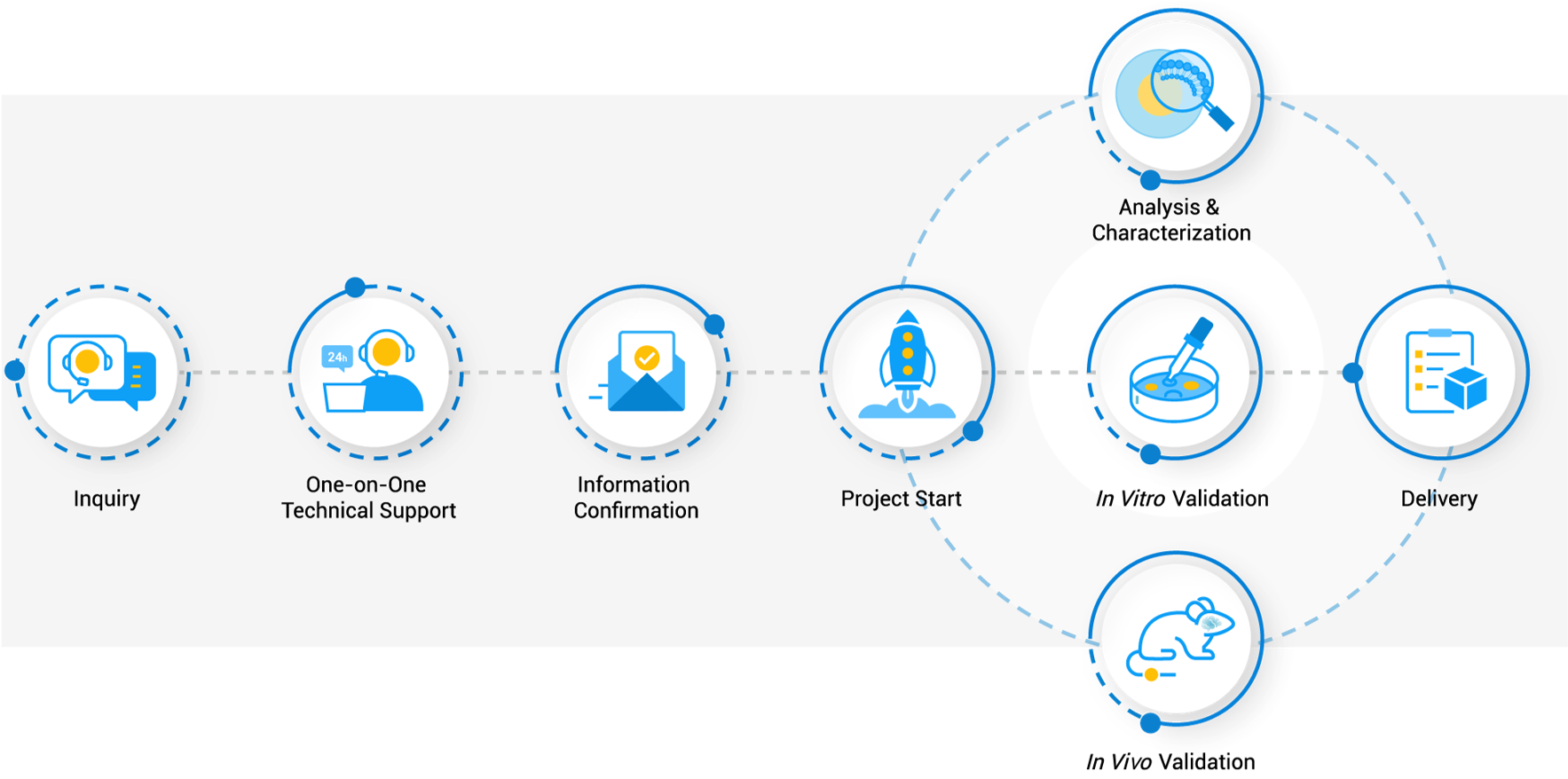
Workflow
Broad Applications of Engineered Exosomes
Our versatile platform empowers research across diverse biological fields, from targeted therapy to tissue regeneration.
- Precision Oncology: Deliver chemotherapeutics or RNAi specifically to tumor microenvironments (TME) to maximize potency and minimize systemic toxicity.
- Neuroscience & CNS Delivery: Overcome the Blood-Brain Barrier (BBB) using receptor-targeting peptides (e.g., RVG) to treat neurodegenerative conditions and brain injuries.
- Wound Healing & Skin Regeneration: Harness the power of bio-enhanced MSC exosomes to expedite tissue closure, mitigate fibrosis, and stimulate collagen deposition for superior cutaneous repair.
- Gene Editing & Gene Therapy: Securely encapsulate and transport sensitive genetic tools (e.g., mRNA, CRISPR-Cas9) to refractory cell types, enabling precise correction of genetic anomalies.
- Immunology & Vaccine Development: Leverage engineered exosomes as tunable immunomodulators to pioneer novel cancer vaccines and therapeutic interventions for autoimmune conditions.
Why Choose Creative Biolabs?
At Creative Biolabs, we are dedicated to pushing the boundaries of drug delivery. Our custom exosome engineering service combines cutting-edge surface display technology with robust cargo loading capabilities to provide you with a superior therapeutic vehicle. Whether you need to cross the blood-brain barrier, target the tumor microenvironment, or simply improve the stability of your RNA payload, our team is equipped to deliver a solution tailored to your specific scientific needs.
Proprietary Loading Technologies
We achieve industry-leading encapsulation efficiency for difficult-to-load cargoes, including large mRNA molecules and hydrophilic drugs.
Rigorous Quality Control
We don't just deliver particles; we deliver data. Every batch undergoes stringent physicochemical and biological validation.
Customizable Surface Display
Our library of validated targeting peptides and scaffold proteins allows for rapid "plug-and-play" design of tissue-specific exosomes.
Scientific Partnership
Our team consists of PhD-level scientists who provide consultative support on experimental design, ensuring your engineered exosomes meet the specific needs of your project.
Related Services & Products
Related Services
Chemical Synthesis Services
Nucleic Acid Synthesis Services
Related Products
| Product Name | Description | Inquiry |
|---|---|---|
| Exosome Modification Kits Series | Comprehensive surface engineering kits including Biotin, Folate, Streptavidin, SA-Biotin, and Targeting Protein conjugation systems. | |
| Exosome Fluorescent Labeling Kits Series | High-stability membrane dyes for tracking (PKH26, PKH67, DiR, DiI, DiO) covering visible to near-infrared spectra. | |
| Exosome Isolation & Purification Kits Series | Specialized kits optimized for diverse sample types including urine, serum/plasma, milk, tissue, and body fluids. | |
| Exosome Cargo Loading Kit (siRNA/miRNA) | Optimized reagents for active loading of siRNA and miRNA. |
FAQs
Can you engineer exosomes from my own specific cell line?
Yes, we accept client-provided cell lines. We will first perform a pilot study to assess the cell line's exosome secretion profile and viability before proceeding to large-scale engineering and production.
How do you ensure the surface proteins are properly displayed on the exosomes?
We validate surface display using Western Blotting and Flow Cytometry to confirm that the targeting ligand is exposed on the outer membrane surface.
Do you offer GMP-grade exosome engineering services?
Currently, we offer research use only (RUO) services suitable for preclinical studies. However, our manufacturing workflows utilize scalable, GMP-compliant technologies, facilitating a smooth tech transfer to GMP facilities when you are ready for clinical trials.
What is the stability of the engineered exosomes after lyophilization?
When formulated with our proprietary cryoprotectants, lyophilized exosomes remain stable at 4°C or -20°C for up to 12 months. Upon reconstitution, they retain >90% of their original particle size distribution and functional activity.
Reference
- Ye, Hailian, et al. "Advancements in engineered exosomes for wound repair: current research and future perspectives." Frontiers in bioengineering and biotechnology 11 (2023): 1301362. https://doi.org/10.3389/fbioe.2023.1301362. Distributed under Open Access license CC BY 4.0, without modification.