
Protein-Liposome Conjugation Service
Unlocking versatile applications in targeted delivery, biomimetic modeling, and controlled release platforms with our robust protein-liposome conjugation service.
Partnered by Industry Leaders & Trusted by Innovators





The Importance of Protein-Liposome Conjugation
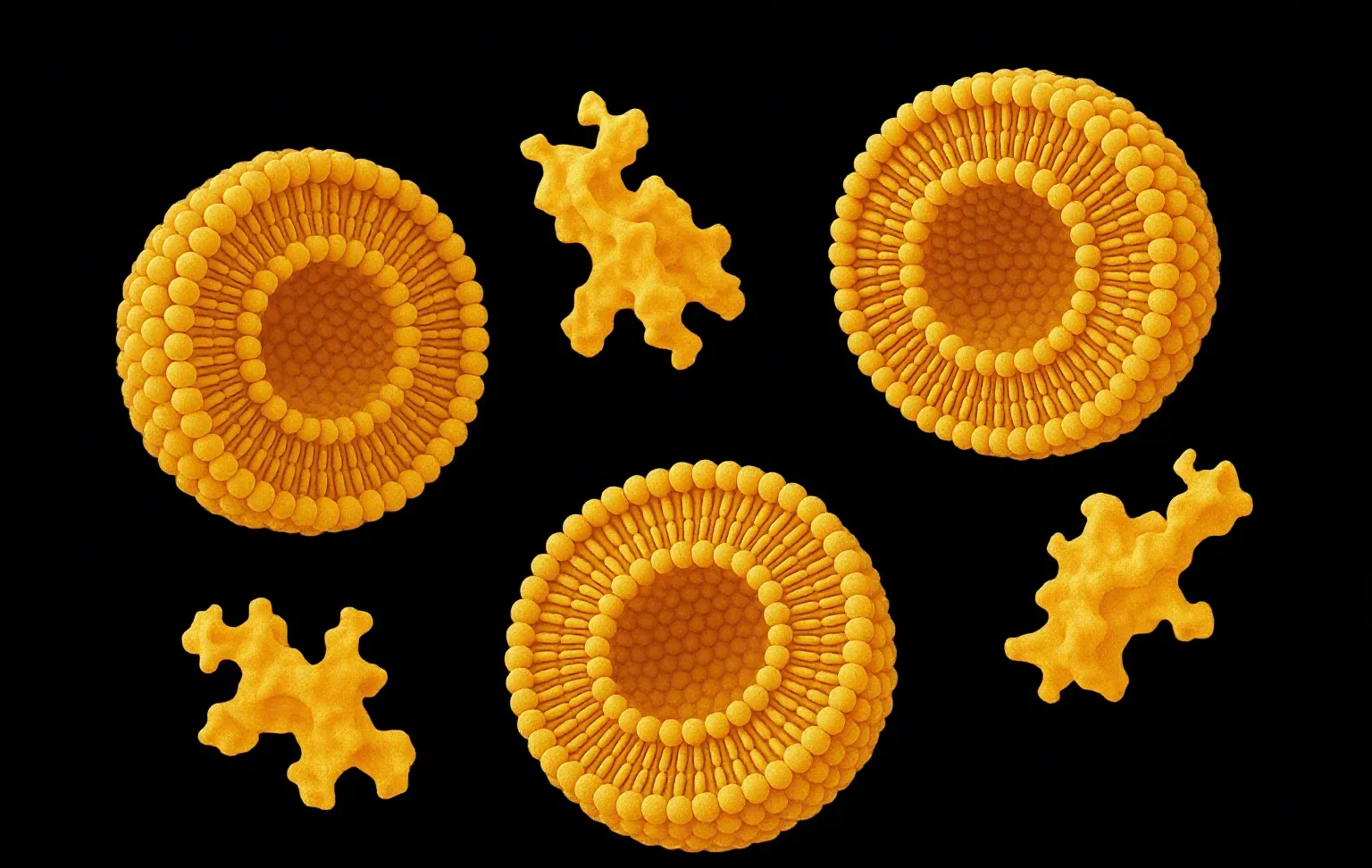
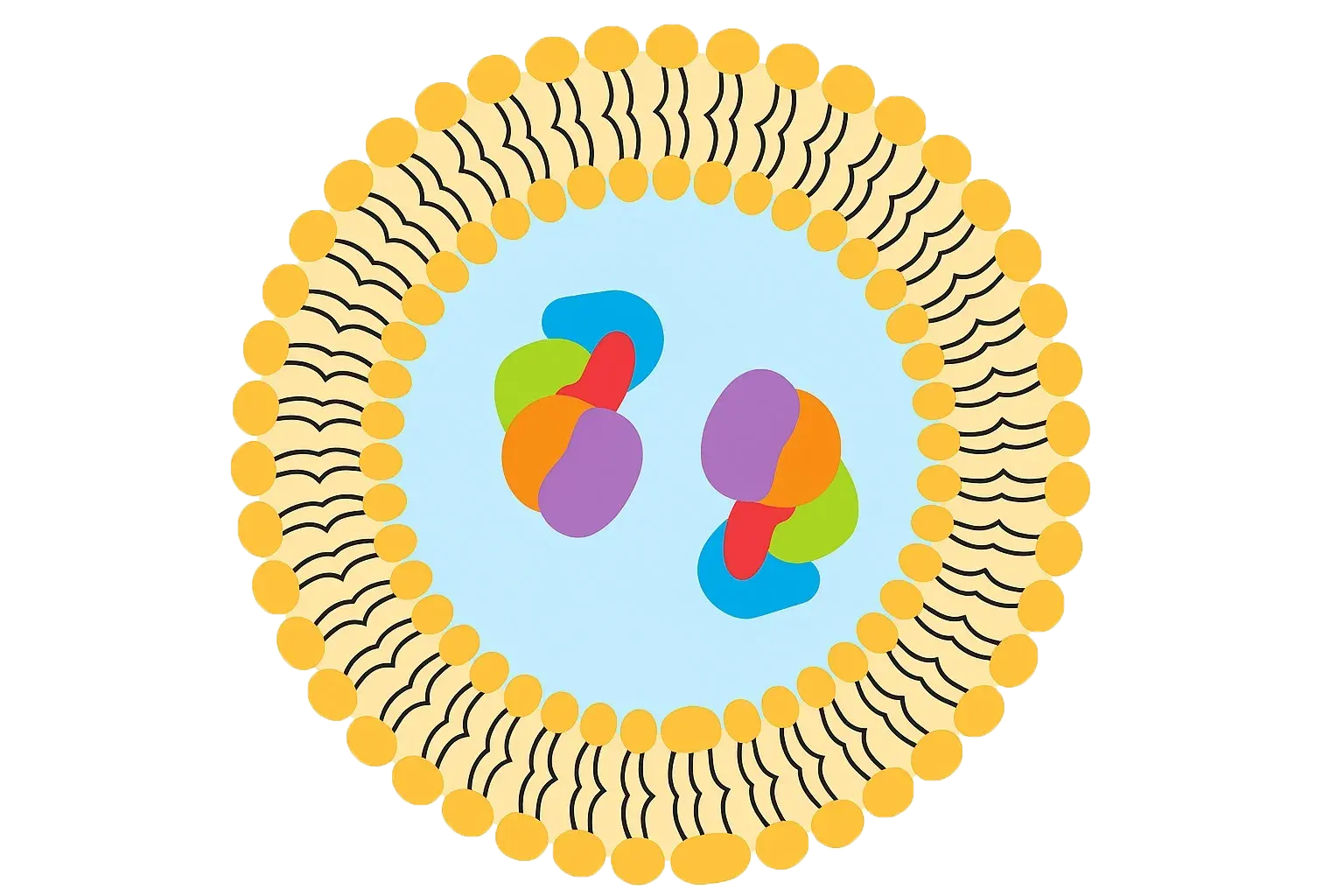
Protein-liposome conjugation plays a pivotal role in addressing challenges in targeted delivery and biomolecular interface engineering. Unlike simple encapsulation, conjugation provides spatial control and stable association of proteins on the liposome surface, expanding the application scope from vaccine development and biosensor design to receptor-mediated targeting systems.
This precision-oriented approach has become indispensable in an era where controlled molecular presentation and site-specific binding are critical. Creative Biolabs helps researchers overcome key technical barriers, including maintaining protein functionality, ensuring orientation specificity, and achieving consistent conjugation efficiency.
Protein-Liposome Conjugation Methods
We employ a range of advanced conjugation strategies to meet the specific demands of your project, ensuring stability, specificity, and functionality.
Chemical Conjugation
Offers highly efficient and stable protein attachment via covalent bonds. Popular chemistries include click reactions, maleimide-thiol coupling, and disulfide exchange, known for their robustness and controllability.
Enzyme-Mediated Conjugation
Provides site-specific protein conjugation through biologically driven mechanisms. Enzymes like sortase A enable oriented linkage, maintaining protein functionality and minimizing off-target effects.
Non-Covalent Interactions
Utilizes hydrophobic domains, electrostatic forces, or affinity pairs (like biotin-streptavidin) to anchor proteins without altering their structure, ideal for reversible assembly and biosensor applications.
Capabilities of Protein-Liposome Conjugation Service
We offer a fully integrated service combining precise lipid formulation, advanced protein engineering, and thorough analytical validation.
Lipid Preparation & Modification
- Custom synthesis of functionalized lipids.
- Precise control over particle size, composition, and charge.
- Stability tuning via cholesterol and PEGylation.
Protein Functionalization & QC
- Mild, site-directed chemical modification.
- Enzymatic tagging for oriented conjugation.
- Purity and structural confirmation (SDS-PAGE, SEC).
Conjugation Strategy Development
- Optimal coupling strategy selection.
- Optimization of reaction conditions for max yield.
- Scalability from micrograms to milligrams.
Comprehensive Analytical Validation
- Size and charge characterization (DLS, zeta).
- Surface protein density quantification.
- Functional testing and stability assessment.
Workflow for Protein-Liposome Conjugation Service
We follow a standardized yet customizable process to ensure success at every stage of your project.
Project Consultation & Design
Define research objectives, target proteins, and conjugation strategies tailored to specific applications.
Protein & Liposome Preparation
Perform protein modification (e.g., thiol, azide) and formulate functionalized liposomes with defined size, charge, and composition.
Conjugation Execution
Conduct optimized coupling reactions under controlled conditions to ensure high conjugation efficiency and preserved protein function.
Purification & Quality Assessment
Remove unreacted components and validate size, charge, and protein activity via advanced analytical techniques.
Data Reporting & Delivery
Deliver conjugated product with full documentation, including protocols, analytical results, and application recommendations.
Deliverables
Each project concludes with a detailed technical package, including:
- ✓Conjugated protein-liposome samples
- ✓Certificate of Analysis (CoA)
- ✓SDS-PAGE, SEC or DLS data for confirmation
- ✓Conjugation efficiency report
- ✓Optional functional validation data
All services are strictly For Research Use Only. Not For Clinical Use.
Why Choose Our Service?
Customized Conjugation Strategy
We tailor each project based on protein characteristics, liposome composition, and application needs to ensure optimal orientation, stability, and bioactivity.
Comprehensive Technical Platform
Our capabilities span chemical, enzymatic, and non-covalent conjugation methods, backed by proven protocols and flexible design options.
Rigorous Analytical Validation
Every conjugate undergoes thorough characterization, including DLS, zeta potential, efficiency measurement, and functional assays to ensure performance you can trust.
Scalable and Expert-Guided Service
From feasibility studies to scaled production, our team delivers high-quality results with responsive technical support at every stage.
Applications of Protein-Liposome Conjugation
Our services empower research across a wide spectrum of cutting-edge biomedical applications.
Targeted Delivery Systems
Enable receptor-mediated endocytosis in specific cell types for site-specific delivery of imaging agents, payloads, or modulators in experimental systems.
Vaccine Development Platforms
Serve as synthetic virus-like particles (VLPs) that present antigens in multivalent formats, enhancing immunogenicity without requiring live vectors.
Biosensor and Diagnostic Design
Conjugated proteins (e.g., enzymes or antibodies) on liposome surfaces can act as recognition elements in biosensors, amplifying detection signals.
Biomimetic Membrane Studies
Allow the study of native protein function in a controlled lipid environment, facilitating mechanistic investigations in biophysics and cell biology.
Controlled Release Systems
Create responsive systems for sequential release, enzyme activation, or signal triggering in artificial biological circuits.
Related Services from Creative Biolabs
Whether you're engineering targeted nanocarriers, studying membrane protein behavior, or designing responsive biosensors, Creative Biolabs is your reliable partner.
Frequently Asked Questions
Protein-liposome conjugation is a technique that combines proteins with lipid-based vesicles to form hybrid structures for targeted delivery, diagnostics, or immune modulation. This enhances protein stability, circulation time, and specificity in complex biological systems.
Conjugating proteins to liposomes improves their protection from enzymatic degradation, enhances bioavailability, and enables cell-specific targeting. This conjugation can also boost immunogenicity or reduce unwanted immune responses depending on the design goals.
Yes. The lipid composition, surface charge, and functional groups on liposomes influence conjugation efficiency, protein orientation, and biological activity. Proper design ensures optimal interaction and stability of the protein-liposome construct under physiological conditions.
Yes. Our service includes thorough characterization such as DLS, zeta potential, conjugation efficiency, and bioactivity assays to confirm the integrity, stability, and functionality of the final protein-liposome construct.
Our platform supports small-scale feasibility studies to larger-scale batches for extended research. All conjugation processes are fully optimized and reproducible, ensuring consistent quality across different production volumes.
Other Resources
References
- Laura Immordino, Maria, Franco Dosio, and Luigi Cattel. "Stealth liposomes: review of the basic science, rationale, and clinical applications, existing and potential." International journal of nanomedicine 1.3 (2006): 297-315. https://doi.org/10.2147/DIJN.1.S633
- Reulen, Sanne WA, et al. "Protein− liposome conjugates using cysteine-lipids and native chemical ligation." Bioconjugate chemistry 18.2 (2007): 590-596. https://doi.org/10.1021/bc0602782
- Estrada, LP Herrera, and J. A. Champion. "Protein nanoparticles for therapeutic protein delivery." Biomaterials science 3.6 (2015): 787-799. https://doi.org/10.1039/C5BM00052A
Online Inquiry
This site is protected by reCAPTCHA and the Google Privacy Policy and Terms of Service apply.