
This is the primary and most developed application. Hypoxia-responsive systems are critical for improving outcomes in cancers characterized by severe hypoxia, such as pancreatic, glioblastoma, and certain lung and head/neck cancers. They are utilized to deliver traditional chemotherapeutics, sensitizers for radiotherapy, and novel gene therapies directly to the resistant tumor core.
Hypoxia-Responsive Delivery Solution for Targeted Drug Delivery
In the pursuit of groundbreaking therapies, the journey from a promising molecule to a viable treatment often stalls at a single, formidable obstacle: highly selective, on-demand delivery. Protecting fragile payloads and guiding therapeutics to their precise site of action are challenges that Hypoxia-Responsive Targeted Delivery systems are uniquely designed to overcome. Our Hypoxia-Responsive Targeted Delivery System helps you maximize therapeutic efficacy while minimizing systemic toxicity through innovative bioreductive nanocarriers and smart prodrug design.
Click Here to View more about our Service
Introduction of Hypoxia-Responsive Targeted Delivery
Hypoxia, defined as a state where the oxygen supply is insufficient to meet metabolic demand (typically <14 mmHg partial pressure of oxygen), is a foundational characteristic of numerous pathological conditions, most notably the core of solid tumors. This microenvironmental stress triggers the stabilization and nuclear translocation of Hypoxia-Inducible Factor-1 (HIF-1), a master regulator that induces a cascade of cellular changes, including altered metabolism (anaerobic glycolysis), angiogenesis, and metastasis.
Targeting this unique environment exploits the presence of highly upregulated reductases (such as NADPH:cytochrome P450 reductase) and low oxygen levels within the pathological site. Hypoxia-responsive systems are broadly categorized into two main types:
Hypoxia-Activated Prodrugs (HAPs)
Small molecules, such as those derived from nitroaromatics (like nitroimidazole) or quinones, that are non-toxic until they undergo an enzyme-catalyzed bioreductive transformation in the absence of oxygen, yielding a potent cytotoxic agent.
Hypoxia-Responsive Nanocarriers (HRNCs)
Nanoscale delivery vehicles (liposomes, polymersomes, micelles) that utilize hypoxia-sensitive linkers or structural elements. Upon reduction in the hypoxic microenvironment, these links cleave or change polarity, leading to the rapid and localized destabilization of the carrier and subsequent burst release of the encapsulated drug.
This strategy offers high intrinsic selectivity, enhancing the therapeutic index by selectively destroying the most aggressive, poorly vascularized cell populations that drive relapse and resistance.
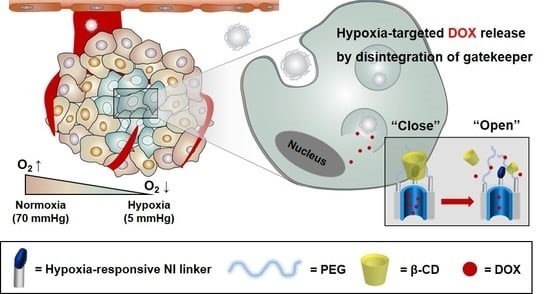 Fig.1 Hypoxia-responsive mesoporous silica nanoparticles.1
Key Hypoxia-Responsive Materials
The core of successful hypoxia-responsive delivery lies in the selection and engineering of the trigger molecule. These moieties are chemically stable under normal oxygen levels but undergo a predictable, irreversible reduction reaction when oxygen is scarce and reductases are abundant. Key material classes include:
| Material | Introduction |
|---|---|
| Nitroimidazole Derivatives | These are the most established triggers. The nitro group (-NO2) is reduced under hypoxia via one-electron transfer, typically leading to the formation of a highly reactive cytotoxic radical or an amine, which is then used to cleave a covalent bond within the carrier structure. |
| Azobenzene (Azo) Moieties | Azo-groups (-N=N-) are commonly used as biodegradable linkers. Under low-oxygen conditions, the azo bond is reduced by azoreductase enzymes, yielding two aniline derivatives. This reduction often results in a significant change in the material's hydrophilicity/hydrophobicity, triggering nanocarrier dissociation and drug release. |
| Quinone Derivatives | Similar to nitroimidazoles, these structures are reduced under low oxygen tension to form semiquinone radicals, which can be tailored to trigger the release of an attached drug or alter the surrounding polymer structure. |
| Metal Complexes | Certain complexes of transition metals, such as cobalt (III), can be reduced to a lower oxidation state (cobalt (II)) in a hypoxic environment. This change in oxidation state can lead to the dissociation of the complex and the liberation of the coordinated drug or a destabilizing ligand. |
Applications of Hypoxia-Responsive Delivery Systems
The ability to selectively target low-oxygen regions offers transformative potential across a broad spectrum of clinical and preclinical applications, particularly where hypoxia drives disease progression or limits treatment efficacy.
Oncology (Solid Tumors)
Combination Therapies (Chemo-PDT)
Hypoxia-responsive carriers are often integrated into multimodal strategies. For instance, photodynamic therapy (PDT) consumes oxygen, thereby intensifying the local hypoxia. This secondary effect can then be used as a cascading trigger to maximize the activation and release of a co-delivered hypoxia-activated chemotherapeutic agent, achieving synergistic cell killing.
Inflammatory and Ischemic Diseases
Beyond cancer, localized hypoxia is a marker of severe inflammatory conditions (e.g., rheumatoid arthritis) and ischemic injury (e.g., myocardial infarction, stroke). Hypoxia-responsive carriers can be designed to deliver anti-inflammatory drugs or pro-regenerative agents specifically to the oxygen-deprived tissues, limiting systemic immunosuppression or off-target effects.
In vivo Imaging and Diagnosis
By encapsulating or covalently linking hypoxia-responsive imaging agents (e.g., fluorescent probes or MRI contrast agents), these systems allow for the precise, non-invasive visualization of hypoxic regions in real-time, greatly aiding in diagnosis, prognosis, and treatment planning.
What We Can Offer:Comprehensive Hypoxia-Responsive System Development
The pathological microenvironment, particularly the low oxygen tension (hypoxia) prevalent in solid tumors, chronic inflammation, and ischemic tissues, represents a critical barrier to conventional drug performance but an unparalleled opportunity for targeted nanomedicine. At Creative Biolabs, we leverage this inherent physiological difference to design systems that are inert in healthy, normoxic tissue but actively release their payload only when they encounter the reducing conditions of a hypoxic site.
Specific Deliverables and Problem-Solving Capabilities:
Enhanced Therapeutic Window
We engineer systems (such as polymeric micelles, liposomes, or prodrugs) using specific hypoxia-sensitive moieties (e.g., nitroimidazole, azobenzene) that undergo predictable bioreduction only in low-oxygen environments. This ensures site-specific drug activation, dramatically narrowing the gap between therapeutic effectiveness and systemic side effects.
Overcoming Drug Resistance
Hypoxia is a major driver of resistance to traditional chemo- and radiotherapy. By delivering and activating agents directly within these drug-resistant, quiescent hypoxic zones, our platforms can re-sensitize hard-to-treat tumors and significantly improve overall therapeutic outcomes.
Payload Versatility
Our expertise extends to formulating hypoxia-responsive carriers for diverse therapeutic cargos, including small-molecule cytotoxics, imaging agents, nucleic acids, and even co-delivery systems for combination therapies (e.g., combining chemotherapy with photodynamic therapy, which exacerbates local hypoxia).
FAQs
How do these systems maintain stability in the bloodstream before reaching the low-oxygen target site?
Stability in circulation is paramount and achieved through careful surface engineering, most commonly through PEGylation or by designing the core carrier structure with amphiphilic molecules that create a highly stable thermodynamic structure. The chemical trigger moiety is selected specifically for its resistance to reduction by normal physiological reductases present in normoxic tissues, ensuring the system remains inert until it encounters the higher reductase activity and lower oxygen environment characteristic of the disease site.
Are there specific drugs or payloads that are best suited for this type of delivery mechanism?
Payloads that benefit the most are highly potent cytotoxics or gene therapies where off-target effects are a major concern. Because the delivery is highly localized and on-demand, you can often administer a higher dose equivalent to the target site than would be systemically tolerated. This system is also ideal for agents that are intrinsically sensitive to bioreduction or those that synergize with the hypoxic tumor microenvironment.
What is the primary difference between a hypoxia-activated prodrug (HAP) and a hypoxia-responsive nanocarrier (HRNC)?
The core difference lies in the activation mechanism. A HAP is a single small molecule where the drug component itself is caged and released upon reduction. An HRNC is a larger nanostructure—like a micelle or liposome—that physically encapsulates the drug. The hypoxia trigger in an HRNC is a structural component of the carrier shell, and its cleavage leads to the disassembly of the carrier, releasing the already-active drug payload. Both aim for site-specific activation, but via different molecular targets.
What regulatory or safety challenges are unique to stimuli-responsive nanomedicines?
The main challenge involves rigorously demonstrating the precise and selective nature of the trigger mechanism in vivo. Regulators require robust data confirming minimal drug release in normal tissues and efficient release at the target. This necessitates meticulous characterization of the dose-response relationship between oxygen tension and drug activation, as well as thorough biocompatibility and clearance studies of the disassembled carrier components.
Can this technology be combined with other targeting strategies to improve specificity even further?
Absolutely. Integrating an additional targeting ligand—such as a peptide or antibody fragment that binds to a tumor-specific surface receptor (e.g., an overexpressed integrin)—with the hypoxia-responsive nanocarrier creates a "dual-targeting" system. This approach provides an initial layer of active targeting (homing to the receptor) followed by a secondary, local activation step (triggered by hypoxia), significantly boosting both accumulation and spatial control of drug release.
Creative Biolabs stands at the forefront of stimuli-responsive nanomedicine. Our specialized Hypoxia-Responsive Targeted Delivery services provide the sophisticated engineering, robust characterization, and translational support necessary to transform your therapeutic candidate into a highly precise, clinically viable product. We are ready to custom-design and validate a system that exploits the pathological microenvironment for unprecedented drug selectivity.
Reference
- Khatoon, Shakera et al. "Hypoxia-Responsive Mesoporous Nanoparticles for Doxorubicin Delivery." Polymers vol. 10,4 390. 1 Apr. 2018, Distributed under Open Access license CC BY 4.0, without modification. https://doi.org/10.3390/polym10040390
Our services are For Research Use Only. We do not provide services to individuals.
Online Inquiry