
The most compelling application is in oncology, specifically for solid tumors that can be subjected to localized heating. TRTD allows for the co-delivery of chemotherapy agents with hyperthermia, maximizing drug concentration within the tumor interstitium and microvasculature. This is particularly effective for treating deep-seated or difficult-to-treat tumors, such as liver, breast, and prostate cancers. The ability to achieve intravascular triggered release—releasing the drug into the tumor's blood vessels upon heating—can significantly bypass the limitations of the Enhanced Permeability and Retention (EPR) effect and maximize drug bioavailability within the tumor environment.
Temperature-Responsive Delivery Solution for Targeted Drug Delivery
The challenge of modern therapeutics is not merely finding effective drugs, but ensuring they reach the disease site without causing systemic harm. Our Thermo-Sensitive Delivery Solutions help you achieve unparalleled spatial and temporal control over drug release through advanced thermosensitive liposomes and polymer engineering. This technology is crucial for maximizing therapeutic efficacy while drastically minimizing exposure to healthy tissues, paving the way for safer and more potent treatments.
Click Here to View more about our Service
Introduction of Temperature-Responsive Targeted Delivery
Temperature-Responsive Targeted Delivery systems represent a paradigm shift from passive drug accumulation to active, on-demand drug release. This technology leverages materials that exhibit a sharp physical change in response to a subtle shift in temperature. The two major types of carriers in this field are:
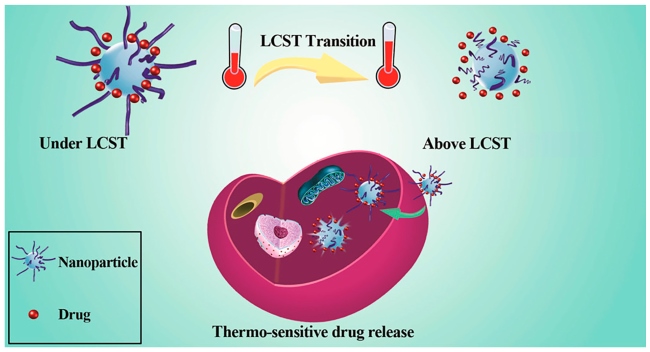 Fig.1 Drug release under/above LCST in a temperature-responsive manner.1
Thermosensitive Liposomes (TSLs)
These are liposomal vesicles composed of specific phospholipids, such as dipalmitoylphosphatidylcholine (DPPC), which exhibit a gel-to-liquid crystalline phase transition temperature (Tm) slightly above physiological body temperature (37°C). When exposed to hyperthermia (mild heating), the lipid bilayer momentarily destabilizes and undergoes a rapid pore-forming event, leading to a burst release of the encapsulated agent. Newer generations often incorporate lysolipids or polymers to fine-tune the release temperature and kinetics.
Temperature-Responsive Polymers (TRPs)
These systems, including polymeric micelles and nanogels, often utilize materials with a Low Critical Solution Temperature (LCST), such as poly(N-isopropylacrylamide) (PNIPAAm). Below the LCST, the polymer is hydrophilic and hydrated (swollen). Above the LCST, it becomes hydrophobic, leading to dehydration, aggregation, and a volume phase transition (VPTT), which rapidly expels the therapeutic payload.
The combination of TRTD systems with externally controlled local heating is powerful. Hyperthermia, often used as an adjuvant therapy in oncology, not only triggers the drug release but also sensitizes cancer cells to chemotherapy and radiation, creating a synergistic therapeutic effect.
Key Temperature-Responsive Materials
Developing effective TRTD platforms relies on selecting materials with precise and reproducible transition characteristics. Some of the most widely utilized examples include:
| Material | Introduction |
|---|---|
| Dipalmitoylphosphatidylcholine (DPPC) | A common lipid component in TSLs, used to establish a Tm near 41.5°C when combined with other lipids (like MSPC) and membrane destabilizers (like lysolipids). |
| Poly(N-isopropylacrylamide) (PNIPAAm) | The gold standard in TRPs, exhibiting an LCST around 32°C. Co-polymerization with other monomers is essential to raise this LCST to the therapeutically relevant range of 40°C to 43°C. |
| Pluronic F127 (Poloxamer 407) | A biocompatible triblock copolymer often used in injectable hydrogels. It transitions from a solution to a gel state at physiological or slightly elevated temperatures, making it ideal for localized, sustained drug delivery. |
| Poly(ethylene glycol) (PEG) derivatives | Often conjugated to TSLs or TRPs to increase circulation time and stability (stealth properties), while maintaining temperature sensitivity in the underlying structure. |
The combination of TRTD systems with externally controlled local heating is powerful. Hyperthermia, often used as an adjuvant therapy in oncology, not only triggers the drug release but also sensitizes cancer cells to chemotherapy and radiation, creating a synergistic therapeutic effect.
Applications of Temperature-Responsive Delivery Systems
The precision offered by TRTD technology makes it highly valuable across several challenging biomedical applications, where localized and temporal control is paramount.
Oncology and Combination Therapies
Treatment of Localized Inflammation
TRTD holds immense promise beyond cancer. Chronic inflammatory diseases, such as rheumatoid arthritis or inflammatory bowel disease, are characterized by localized sites of pathology. By incorporating targeted heating (e.g., using light or magnetic particles) in conjunction with TRTD systems, anti-inflammatory drugs can be released exclusively at the site of inflammation, minimizing systemic immunosuppression and side effects associated with conventional treatments.
Regenerative Medicine and Tissue Engineering
In tissue engineering, TRPs in the form of injectable hydrogels are utilized. These systems can be designed to transition from a liquid to a stable gel state in situ at body temperature, serving as scaffolds. Conversely, systems engineered with an LCST near 37°C can be used to release growth factors or cells in a controlled, time-dependent manner to guide tissue regeneration.
What We Can Offer: Comprehensive TRTD Development Solutions
At Creative Biolabs, we specialize in overcoming the limitations of passive targeting, which often results in suboptimal drug concentrations at the target site. Our Temperature-Responsive Targeted Delivery (TRTD) systems are precisely engineered to remain inert during systemic circulation and initiate a rapid, localized payload release only upon application of a mild thermal trigger (typically 40°C to 43°C).
Specific Deliverables and Problem-Solving Capabilities:
Controlled Release Kinetics
We solve the problem of premature drug leakage and inefficient tumor penetration by tuning the phase transition temperature (Tm or LCST) of our carriers. This ensures the drug is released in a concentrated burst precisely when and where the heat is applied.
Payload Versatility
Our platforms are customized to encapsulate a wide variety of payloads, including small-molecule chemotherapeutics (like Doxorubicin), nucleic acids, and proteins, ensuring stability and bioavailability upon release.
Enhanced Therapeutic Index
By combining a TRTD nanocarrier with localized hyperthermia (e.g., using MRI-guided focused ultrasound or microwave systems), we can achieve drug uptake concentrations in the target tissue that are up to 25 times higher than those achieved with free or passively targeted drugs. This dramatically improves efficacy while protecting healthy organs.
FAQs
What is the primary advantage of a temperature-responsive system compared to a standard liposome?
Standard liposomes rely on passive accumulation through leaky tumor vasculature (the EPR effect), which results in slow, uncontrolled drug release. A temperature-responsive system adds a critical layer of spatiotemporal control. It acts as a sealed container until a localized external heat source is applied, forcing a burst release precisely at the target site, dramatically increasing local drug concentration and minimizing systemic exposure.
How do you ensure the cargo is released only at the intended target site and not prematurely?
Premature release is mitigated by engineering the carrier material to have a phase transition temperature (Tm or LCST) that is safely above normal body temperature (37°C). For example, thermosensitive liposomes are often designed to destabilize between 40°C and 43°C. This small difference provides a strong thermal barrier that maintains carrier stability during circulation while allowing for rapid, triggered release under controlled hyperthermia conditions.
Can these systems be used for large biological payloads, such as gene therapies or therapeutic proteins?
Yes, the encapsulation mechanism is highly versatile. Liposomes and polymeric nanogels are excellent for encapsulating both hydrophilic and hydrophobic molecules. For large biopharmaceuticals like plasmid DNA or large proteins, the carrier structure (often large polymers or specifically structured lipid nanoparticles) is designed to protect the cargo and maintain its functional integrity until the heat-triggered breakdown occurs, ensuring the therapeutic agent remains active.
What level of heat is required, and is it safe for surrounding healthy tissue?
The systems are designed to respond to mild hyperthermia, typically 40°C to 43°C. This temperature range is well-tolerated by healthy tissue and is significantly lower than temperatures that cause thermal ablation. The key is the localized application of heat, often achieved using focused energy modalities (like high-intensity focused ultrasound or radiofrequency), which ensures precise heating of only the target volume while surrounding tissue remains at physiological temperature.
How can I choose between a thermosensitive liposome and a temperature-responsive polymer-based nanogel?
The choice depends entirely on your therapeutic payload and desired release kinetics. Liposomes often provide a rapid, immediate burst release upon reaching Tm and are excellent for small-molecule drugs. Polymer-based nanogels offer tunable release rates and can be advantageous for very large proteins or for localized, sustained delivery in injectable forms. We recommend consulting with our scientific team to model the optimal carrier architecture based on your drug's properties and target disease profile.
Creative Biolabs' Temperature-Responsive Targeted Delivery solutions offer the essential bridge between potent therapeutic candidates and successful clinical outcomes. We provide custom-engineered thermosensitive liposomes and responsive polymer systems, coupled with proven scientific rigor, to guarantee controlled, efficient, and highly localized drug release. Leverage our expertise to minimize off-target effects and maximize the impact of your therapeutic program.
Reference
- Wei, Wanying, and Ping Lu. "Designing Dual-Responsive Drug Delivery Systems: The Role of Phase Change Materials and Metal-Organic Frameworks." Materials (Basel, Switzerland) vol. 17,13 3070. 22 Jun. 2024, Distributed under Open Access license CC BY 4.0, without modification. https://doi.org/10.3390/ma17133070
Our services are For Research Use Only. We do not provide services to individuals.
Online Inquiry