
Due to the high glycolytic rate of cancer cells (the Warburg effect) and poor vascularization, tumors generate excess lactic acid, resulting in an extracellular pH typically ranging from 6.5 to 7.0.
pH-Responsive Delivery Solution for Targeted Drug Delivery
In the pursuit of groundbreaking therapies, controlled drug release is the defining challenge. Protecting fragile therapeutics and guiding them to a precise site of action are critical hurdles that determine project success. Our Targeted Delivery System Development services help you enhance therapeutic efficacy and minimize systemic toxicity through smart polymeric materials and advanced nanocarrier design. Creative Biolabs offers fully integrated, customized solutions to transform your therapeutic candidates into highly selective and potent medicines.
Click Here to View more about our Service
Introduction of pH-Responsive Targeted Delivery
pH-responsive targeted delivery is a leading strategy within the field of stimuli-responsive nanomedicine. It utilizes materials that undergo predictable and rapid physicochemical transformations in response to changes in the surrounding proton concentration (H+). This mechanism is based on the exploitation of intrinsic physiological pH gradients within the human body.
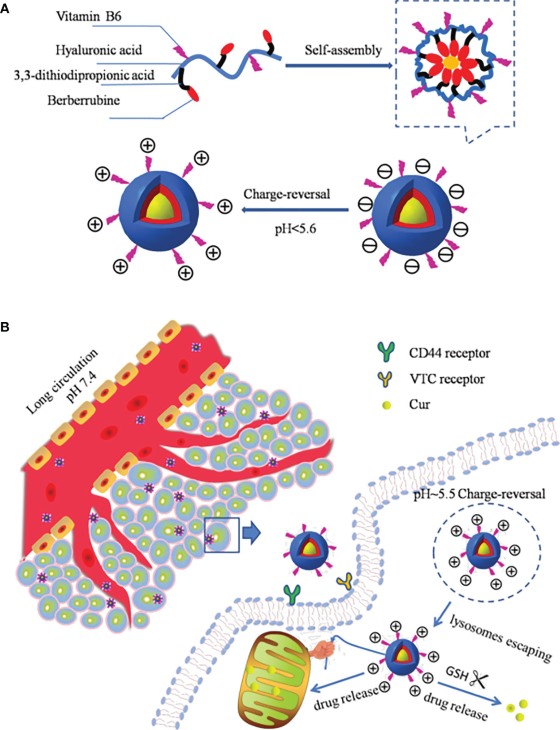 Fig.1 pH-Responsive targeted delivery.1
The Biological Rationale: Exploiting pH Gradients
Normal tissues and blood plasma maintain a narrow, slightly alkaline pH of approximately 7.4. However, pathological sites often exhibit distinct, lower pH levels:
Extracellular Tumor Microenvironment (TME)
Intracellular Endosomes and Lysosomes
These organelles responsible for cellular uptake and degradation possess an increasingly acidic environment, starting at about pH 6.0 in early endosomes and dropping to pH 4.5-5.5 in lysosomes.
Inflammatory and Ischemic Tissues
Sites of infection, inflammation, or ischemia also experience localized acidosis, creating opportunities for targeted delivery outside of oncology.
Mechanisms of pH-Triggered Release
The materials used in these systems contain functional groups (often weak acids like carboxyl or weak bases like amino groups) with specific acid dissociation constants pKa. When the environmental pH shifts relative to the carrier's pKa, these groups protonate or deprotonate, leading to:
Charge Reversal
A neutral or negatively charged nanocarrier surface becomes positively charged in the acidic TME, enhancing electrostatic attraction and subsequent uptake by the tumor cells.
Conformational Change and Swelling
Cationic polymers, such as chitosan, swell at low pH due to protonation and increased electrostatic repulsion, leading to the disassembly or pore opening of the carrier and rapid drug release.
Acid-Labile Bond Cleavage
The therapeutic cargo may be conjugated to the carrier via chemical bonds (e.g., hydrazone, acetal, or orthoester linkages) that are stable at pH 7.4 but hydrolyze quickly under acidic conditions, resulting in drug liberation.
The ability to switch from a stable, circulating state to a drug-releasing state based on a precise biological cue gives pH-responsive delivery its high specificity and therapeutic potential.
Key pH-Responsive Materials and Delivery Systems
Creative Biolabs employs a diverse and customized portfolio of materials to achieve precise pH-triggered delivery, engineering the nanocarrier system to match the pKa of the target pathology.
| Material Class | Example Materials | Responsive Mechanism (pKa Range) | Applications |
|---|---|---|---|
| pH-Sensitive Lipids | DOPE (Dioleyoylphosphatidylethanolamine) derivatives, CHEMS (Cholesteryl Hemisuccinate) | Phase transition and membrane destabilization/fusion driven by protonation of polar heads (pKa 5.5-7.0) | Liposome-based delivery, endosomal escape. |
| Cationic/Anionic Polymers | Poly(L-lysine) (pKa≈10.5), Chitosan (pKa≈6.5), PEI(Polyethyleneimine) (pKa≈6.5) | Protonation of amino groups (cationic polymers) or deprotonation of carboxyl groups (anionic polymers) causing swelling, disassembly, or charge reversal. | Polymeric micelles, hydrogels, gene delivery (proton sponge effect). |
| Acid-Labile Linkers | Hydrazone, Cis-Aconityl, Acetal, Orthoester bonds | Hydrolysis of the chemical bond under acidic pH (pKa tuned between 5.0-6.5) to cleave the drug from the carrier. | Drug-polymer conjugates, prodrug systems, gate-keeping in mesoporous silica. |
| pH-Sensitive Peptides | HDPs (Histidine-rich peptides) | Histidine imidazole side chain protonation (pKa ≈6.0) facilitates membrane pore formation or destabilization. | Targeted cellular uptake and endosomal escape for biologics. |
| Inorganic Carriers | Calcium phosphate nanoparticles (CaP), ZnO nanoparticles | Dissolution and release of cargo due to the acid-catalyzed breakdown of the inorganic matrix. | Bone targeting, general tumor delivery. |
Key Applications of pH-Responsive Delivery Systems
The utility of pH-responsive delivery extends across multiple therapeutic areas by enabling precise spatial and temporal control over drug action.
Oncology and Cancer Therapy
This is the primary application, exploiting the acidic TME and the endosomal/lysosomal compartments. pH-sensitive nanocarriers improve the delivery of traditional chemotherapeutics (e.g., doxorubicin, paclitaxel) by reducing systemic toxicity and accumulating the drug selectively within the tumor. Furthermore, they are vital for overcoming Multidrug Resistance (MDR) by facilitating the intracellular delivery of agents like siRNA or therapeutic peptides that suppress resistance mechanisms.
Delivery of Biologics and Gene Therapy
Fragile biological molecules, including proteins, peptides, and nucleic acids (such as mRNA vaccines or siRNA for gene knockdown), are rapidly degraded in the bloodstream or trapped within endosomes after cellular uptake. pH-responsive systems are essential for:
- Protecting Payloads: Maintaining the stability and integrity of the biologic during circulation.
- Endosomal Escape: Utilizing acid-triggered disruption mechanisms (like the proton sponge effect) to release the payload into the cytoplasm before it can be destroyed by lysosomes.
Gastrointestinal and Oral Drug Delivery
The large pH variations along the gastrointestinal tract (highly acidic stomach, slightly basic small intestine) are leveraged for oral delivery and targeting specific segments.
- Stomach Protection/Enteric Coating: pH-responsive materials are designed to be insoluble in the low pH of the stomach (pH 1.0-3.0) but dissolve rapidly when the pH rises in the small intestine (pH 5.5-7.0), allowing for targeted release and increased bioavailability.
- Colonic Targeting: Further specialization can target the colon (pH 7.0), useful for treating inflammatory bowel diseases (IBD) such as ulcerative colitis.
What We Can Offer: Comprehensive pH-Sensitive Nanocarrier Services
Traditional drug delivery often suffers from poor pharmacokinetics, rapid systemic clearance, and non-specific toxicity, which limit dosage and therapeutic windows. Creative Biolabs' pH-Responsive Targeted Delivery systems overcome these limitations by exploiting the subtle but critical pH differences between healthy tissues and diseased microenvironments, such as tumors, ischemic areas, or sites of inflammation.
We specialize in designing nanocarriers—including liposomes, polymeric micelles, and inorganic nanoparticles—that remain stable at neutral physiological pH (around 7.4) but undergo a rapid, triggered release or conformational change when exposed to lower pH (typically pH 5.5–6.8). This ensures the therapeutic payload is released precisely where it is needed, maximizing local drug concentration and drastically reducing off-target effects.
Specific Deliverables and Solutions:
Custom Nanocarrier Formulation
We develop bespoke lipid or polymer-based formulations (e.g., chitosan, poly(acrylic acid) derivatives) tailored to the physicochemical properties of your drug (small molecules, proteins, or nucleic acids).
Controlled Release Kinetics
Our designs allow for fine-tuning the pKa of responsive components, dictating the exact pH threshold at which the payload is released. This achieves either extracellular targeting (pH 6.5–7.0) or intracellular targeting (pH 5.0–6.0 in endosomes/lysosomes).
Enhanced Intracellular Escape
We engineer carriers that leverage the "proton sponge effect" or membrane destabilization at endosomal pH to facilitate endosomal escape, a critical step for delivering biologics and gene therapies into the cytosol.
Comprehensive Characterization
We provide rigorous characterization of particle size, zeta potential, drug loading capacity (DLC), and in vitro release profiles under varying pH conditions, ensuring regulatory-ready data packages.
Choosing a smart delivery system is choosing precision. Our goal is to provide a delivery system that turns a challenging therapeutic molecule into a viable, high-impact clinical candidate.
FAQs
How do nanocarriers ensure the drug is released exclusively at the disease site and not prematurely?
These intelligent carriers are engineered with components (polymers or lipids) that have a specific pKa value, which acts like a molecular switch. They are stable at the neutral pH of the bloodstream (7.4). Only upon encountering the specific, lower pH environment of the diseased tissue (e.g., pH 6.5 in tumors or pH 5.5 in endosomes) does the carrier undergo the necessary chemical or conformational change—like swelling or bond cleavage—to trigger the rapid and localized release of the therapeutic payload.
Can this delivery strategy be used for large, complex molecules like peptides or nucleic acids, or is it limited to small-molecule drugs?
pH-responsive systems are exceptionally well-suited for large, complex molecules, especially nucleic acids and large proteins. For these challenging payloads, the critical step is often escaping the endosome after cellular uptake. By designing the carrier to rapidly destabilize the endosomal membrane at its low pH, we can efficiently release the macromolecule into the cytoplasm where it can exert its therapeutic effect, thereby protecting it from lysosomal degradation.
What is the main benefit of using a pH-responsive system compared to a traditional passive targeting approach like EPR (Enhanced Permeability and Retention)?
While passive EPR enhances accumulation in the tumor, it lacks the 'release' control. A pH-responsive system adds an active, triggered release mechanism. This means that once the carrier reaches the target area via EPR, the local acidity acts as a second lock-and-key mechanism, causing a burst release precisely where needed. This significantly boosts local drug concentration, potentially overcoming drug resistance, and preventing the drug from leaching back out.
Are there any challenges regarding the long-term stability and shelf life of these pH-sensitive formulations?
Stability is a primary consideration during development. The key challenge lies in balancing the required sensitivity to a low pH trigger with sufficient stability during storage and circulation (pH 7.4). We address this by optimizing the choice of stabilizing agents, lipid/polymer ratios, and manufacturing conditions. Comprehensive stability testing under various temperature and pH conditions is conducted early on to ensure a viable, scalable product with an acceptable shelf life.
How is the optimal pH-triggering range determined for a specific therapeutic application?
The optimal pH range is determined by the target pathology. For instance, if the goal is to target the extracellular tumor microenvironment, we aim for a trigger point near pH 6.5. If the therapeutic requires cytosolic delivery (e.g., gene therapy), the trigger point is set lower, often pH 5.0-6.0, to exploit endosomal acidity. This is achieved through careful selection of pKa-modifying chemistries, ensuring maximum release specificity for the intended biological site.
pH-Responsive Targeted Delivery represents a paradigm shift in precision medicine, offering the critical control necessary to unlock the full potential of complex therapeutics and minimize patient side effects. Creative Biolabs is your trusted partner, providing the scientific depth and customized platform required to develop, characterize, and optimize these intelligent delivery systems for your specific project needs. Our dedication to pKa engineering and comprehensive formulation support ensures your success.
Reference
- Chu, Shunli et al. "pH-Responsive Polymer Nanomaterials for Tumor Therapy." Frontiers in oncology vol. 12 855019. 22 Mar. 2022, Distributed under Open Access license CC BY 4.0, without modification. https://doi.org/10.3389/fonc.2022.855019
Our services are For Research Use Only. We do not provide services to individuals.
Online Inquiry