
The most prominent application lies in cancer therapy. Tumor cells exhibit the Warburg effect, leading to elevated intracellular ATP levels due to highly active glycolysis. By designing carriers that release Doxorubicin or Paclitaxel only when internalized into these high-ATP environments, systemic toxicity is dramatically reduced. Furthermore, the elevated extracellular ATP in the tumor microenvironment (TME) can be converted into immunosuppressive adenosine by enzymes like CD39 and CD73, making the local ATP levels a complex and rich target for multi-modal drug activation.
ATP-Responsive Delivery Solution for Targeted Drug Delivery
In the pursuit of groundbreaking therapies, the journey from a promising molecule to a viable treatment often stalls at a single, formidable obstacle: achieving precise, controlled drug release only at the disease site. Our ATP-Responsive Targeted Delivery platform helps you accelerate the development of highly specific nanomedicines through innovative nucleic acid and supramolecular engineering techniques. By leveraging the inherent metabolic differences between healthy and diseased cells, we unlock a level of therapeutic precision that minimizes off-target toxicity and maximizes efficacy, transforming the landscape of challenging drug candidates.
Click Here to View more about our Service
Introduction of ATP-Responsive Targeted Delivery
Adenosine triphosphate (ATP) is the universal energy currency of life, but its concentration varies dramatically across biological compartments. This difference provides a powerful and selective trigger for drug release. In normal, healthy tissues, the extracellular ATP concentration is typically very low (in the nanomolar to low micromolar range, <400 μM). Conversely, the intracellular concentration in the cytosol of actively metabolizing or diseased cells, particularly highly glycolytic cancer cells or cells undergoing chronic inflammation, is significantly elevated, often reaching 1-10 mM. This sharp, orders-of-magnitude concentration gradient is the fundamental basis for ATP-responsive delivery systems.
Mechanism and Structure of Responsive Systems
ATP-responsive nanocarriers typically integrate one of the following key mechanisms:
Aptamer-based systems
Utilizing DNA or RNA aptamers that specifically bind to ATP. Upon binding, the aptamer undergoes a conformational switch (e.g., from a linear duplex or hairpin structure to a G-quadruplex), which triggers the disassociation or disassembly of the nanocarrier, releasing the drug cargo.
Supramolecular Assemblies
Employing linkages, often involving phenylboronic acid (PBA) derivatives, that can specifically recognize and bind to the cis-diol groups on the ribose ring of ATP. This binding leads to a change in hydrophilicity, often causing a hydrophobic nanocarrier to dissociate into water-soluble components.
Enzyme-sensitive Systems
Incorporating ATP-hydrolyzing enzymes (ATPases) or components that are sensitive to the byproducts of ATP metabolism, leading to a controlled degradation of the carrier structure.
This highly selective release mechanism is critical for addressing diseases where intracellular delivery is essential, such as gene therapy (siRNA, shRNA, pDNA) and certain chemotherapy regimens.
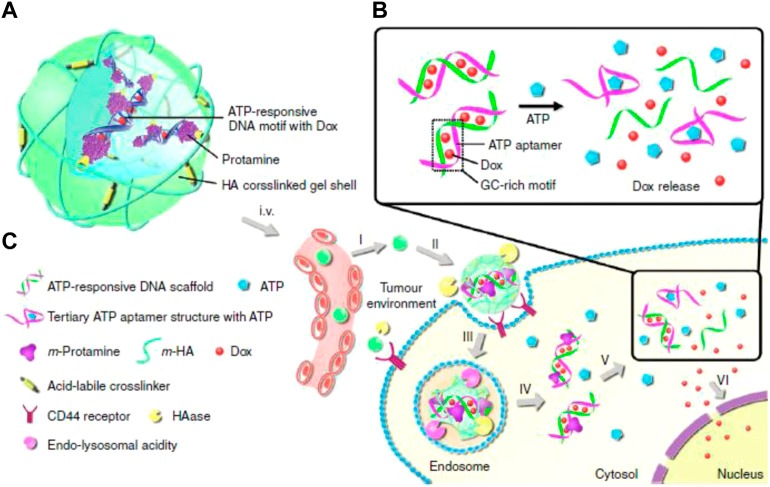 Fig.1 The ATP-triggered dox release system.1
Applications of ATP-Responsive Nanomedicines
The ability to exploit the ATP gradient offers translational potential across several challenging therapeutic areas.
Precision Chemotherapy in Solid Tumors
Intracellular Delivery of Nucleic Acids
Delivering sensitive payloads like siRNA, microRNA, or plasmid DNA (pDNA) requires overcoming multiple barriers, including endosomal escape and protection from nuclease degradation. ATP-responsive systems can be engineered to disassemble specifically within the cytosol, effectively bypassing the lysosomal degradation pathway, which is a common failure point for gene delivery vectors. This ensures the rapid and efficient release of the genetic material directly to its site of action.
Inflammatory and Ischemic Disease Targeting
Pathological conditions characterized by cellular stress, such as severe inflammation, ischemia-reperfusion injury, and neurodegenerative disorders, often involve the rapid release of massive amounts of extracellular ATP (the "find me" signal for damaged cells). Responsive systems can be designed to target these sites, offering a mechanism for localized delivery of anti-inflammatory or regenerative agents, broadening the scope beyond oncology.
What We Can Offer
Achieving a high therapeutic index—maximizing drug concentration at the target while minimizing systemic exposure—is the central goal of modern pharmacology. Creative Biolabs' ATP-Responsive Targeted Delivery solutions are specifically engineered to solve the most critical problems in complex drug development, including poor cellular uptake, premature cargo leakage, and lack of specificity.
We move beyond traditional passive or actively-targeted systems by incorporating an endogenous molecular switch into the delivery vehicle. This allows the nanocarrier to remain stable in the low-ATP environment of healthy tissues and the bloodstream, but undergo a rapid conformational change or disassembly upon encountering the high-ATP concentrations characteristic of certain pathological sites, such as the intracellular cytosol of metabolically active tumor cells or sites of severe inflammation.
Specific deliverables our clients can expect include:
Tailored Carrier Design
Development of nanoparticles, liposomes, or polymeric micelles functionalized with ATP-aptamers, ATP-cleavable linkers (e.g., boronate esters), or ATPase-sensitive components tailored to your specific drug payload (small molecules, nucleic acids, or peptides).
Validated Release Kinetics
Rigorous in vitro testing to confirm on-demand drug release profiles, demonstrating minimal leakage in physiological buffers and rapid, high-yield release upon introduction to clinically relevant ATP concentrations.
Enhanced Cell Cytotoxicity
Proof-of-concept studies showing significantly increased cytotoxicity or therapeutic effect in target cells compared to non-responsive controls, often achieving a multi-fold reduction in the half-maximal inhibitory concentration (IC50).
Comprehensive Formulation Reports
Detailed documentation on synthesis methods, physiochemical characterization (size, zeta potential, loading capacity), and stability under various storage and biological conditions.
Our approach transforms non-specific therapies into highly precise nanomedicines, offering a clear competitive advantage in the race to clinic.
FAQs
How do these delivery systems distinguish between healthy cells and disease sites like tumors?
The distinction relies on the significant difference in adenosine triphosphate (ATP) concentration. Healthy tissues, including the general circulation, maintain a low extracellular ATP concentration. In contrast, tumor cells, inflammatory cells, and injured cells often release high amounts of ATP or maintain a high internal ATP concentration (1-10 mM). The nanocarriers are engineered to only undergo structural changes and release their payload when they encounter these pathologically elevated ATP levels, acting as a molecular lock that only the disease-specific environment can unlock.
What types of therapeutic payloads are compatible with an ATP-responsive nanocarrier?
This technology is highly versatile. It has demonstrated success with various small molecule chemotherapeutics (like Doxorubicin), large therapeutic biomolecules (peptides and proteins), and particularly challenging nucleic acid payloads (such as siRNA and pDNA). The nanocarrier structure is customized based on the chemical properties (hydrophobicity, charge) of the specific cargo to ensure high loading efficiency and protection until the point of release.
Are these stimulus-responsive systems more complicated or costly than simple PEGylated liposomes?
While they involve more sophisticated chemical engineering, the primary goal is not complexity, but efficacy and safety. Simple PEGylated systems rely on passive accumulation and often release drugs non-specifically along the circulation route, leading to systemic side effects. Responsive systems offer significantly improved therapeutic index and reduced off-target toxicity, which translates to superior clinical outcomes and reduced costs associated with managing adverse events during clinical trials.
What is the primary stability concern for a responsive delivery system?
The main challenge is achieving sufficient stability in the bloodstream to prevent premature leakage, while maintaining high sensitivity to the ATP trigger at the target site. This requires meticulous optimization of the responsive component's dissociation constant (KD) to ensure the system is stable at physiological ATP concentrations (low μM) but rapidly disassembles at pathological concentrations (high mM), balancing long circulation time with fast on-demand release kinetics.
Can this technology be combined with other targeting methods, such as surface ligands?
Absolutely. Integrating the ATP-responsive trigger with active targeting ligands (like antibodies or peptides) creates a powerful dual-targeting strategy. The ligand guides the nanocarrier to the specific cell type (e.g., cancer cells), and once internalized, the high cytosolic ATP level acts as the secondary, non-leaky release mechanism. This combination dramatically increases accumulation and ensures that the payload is released where it is most needed, enhancing overall therapeutic specificity.
Creative Biolabs' expertise in ATP-Responsive Targeted Delivery offers a critical edge for developing next-generation therapeutics. By skillfully engineering nanocarriers to leverage the natural metabolic differences of diseased tissue, we provide solutions that deliver unparalleled specificity, efficacy, and safety across oncology, gene therapy, and inflammatory diseases.
Reference
- Cong, Xiufeng et al. "Recent Progress in Bio-Responsive Drug Delivery Systems for Tumor Therapy." Frontiers in bioengineering and biotechnology vol. 10 916952. 29 Jun. 2022, Distributed under Open Access license CC BY 4.0, without modification. https://doi.org/10.3389/fbioe.2022.916952
Our services are For Research Use Only. We do not provide services to individuals.
Online Inquiry