
This is the most prevalent application. Carriers are designed to remain stable at the physiological pH of blood (7.4) but rapidly destabilize in the acidic tumor microenvironment or upon endosomal uptake within cancer cells. This maximizes the concentration of cytotoxic agents at the site of malignancy while dramatically reducing cardiotoxicity and myelosuppression.
Ion-Responsive Delivery Solution for Targeted Drug Delivery
Our Ion-Responsive Targeted Delivery service helps you unlock the full therapeutic potential of unstable or highly potent payloads by engineering smart nanocarriers that selectively release drugs only at the disease site. At Creative Biolabs, we specialize in advanced formulations that leverage subtle ionic changes, such as pH or specific ion gradients, within tissues to ensure highly specific, on-demand drug action, dramatically improving efficacy and reducing systemic toxicity.
Click Here to View more about our Service
Introduction of Ion-Responsive Targeted Delivery
Ion-responsive targeted delivery systems represent the zenith of smart drug delivery technology. These systems are defined by their ability to undergo a physical or chemical transformation—such as swelling, gelling, dissociation, or membrane destabilization—in response to a change in the concentration or type of specific ions in the surrounding medium.
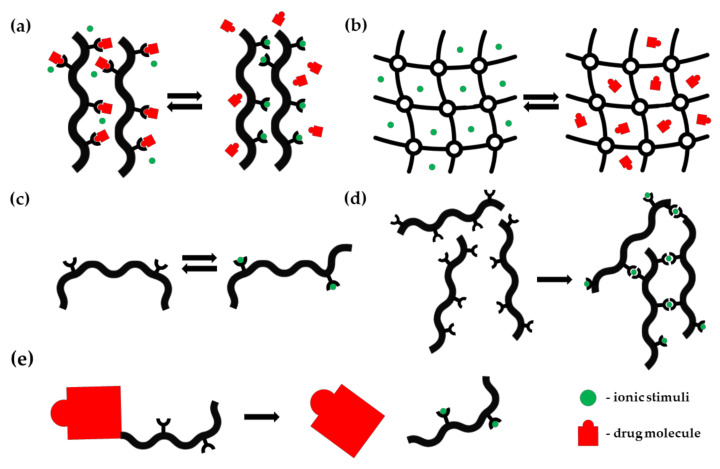 Fig.1 Possible mechanisms of ion-dependent response of pharmaceutical systems.1
The Biological Trigger
Pathological states, such as tumor growth, inflammation, or infection, create microenvironments with altered ionic and pH homeostasis, providing highly localized triggers that are absent in healthy tissue. For instance, solid tumors often exhibit an extracellular pH that is mildly acidic (pH≈6.5-7.0) compared to normal blood (pH≈7.4). Furthermore, specific intracellular compartments, particularly endosomes (pH≈5.0-6.0) and lysosomes (pH≈4.5-5.0), present stark pH gradients.
These ion gradients can be leveraged by incorporating specific functional groups into the carrier structure:
pH-Sensitive Components
Materials containing ionizable groups (e.g., poly(amino esters), phospholipids like DOPE) that protonate or deprotonate in response to changes in proton concentration (H+). This change in charge can destabilize the carrier membrane, leading to rapid drug release.
Metal Ion-Sensitive Components
Systems designed to respond to specific metal cations (e.g., Zn2+, Ca2+, or Fe2+) often rely on coordination chemistry or chelating agents embedded in the carrier. These ions may induce cross-linking or cleave specific prodrug linkages, offering another layer of precise control.
Cited literature supports that integrating these responsive elements into carriers—such as liposomes, polymeric nanoparticles, or hydrogels—is crucial for maximizing therapeutic efficacy by ensuring site-specific drug bioavailability and minimizing systemic exposure.
Key Ion-Responsive Materials Used in Delivery Systems
Creative Biolabs employs a wide range of specialized materials to achieve highly tuned ion responsiveness, depending on the therapeutic application and the target microenvironment:
| Material Category | Examples | Mechanism of Action | Common Application/Trigger |
|---|---|---|---|
| pH-Sensitive Components | Ionizable Lipids (e.g., DLin-MC3-DMA, DOPE) | Remain neutral in blood (pH≈7.4), become protonated (cationic) in acidic environments (endosomes/tumors), inducing carrier destabilization and drug release. | Endosomal escape and tumor microenvironment targeting (pH≈5.0-7.0). |
| pH-Sensitive Components | Poly(amino esters) (PAEs) | Protonate at endosomal pH, leading to the "proton sponge effect" (osmotic swelling) which facilitates endosomal rupture and intracellular release. | Intracellular delivery of nucleic acids and proteins (pH≈5.5-6.5). |
| Metal Ion-Sensitive Components | Chelating Polymers/Moieties | Contain coordination sites that bind specific metal cations (e.g., Zn2+, Ca2+, or Fe2+), inducing hydrogel formation or cleavage of chemical bonds (prodrug activation). | Diagnostics or activation in specific enzyme-rich/high metal ion concentration environments. |
| Metal Ion-Sensitive Components | Alginates | Natural polymers that undergo rapid in situ gelling (formation of a stiff hydrogel) in the presence of divalent cations like Ca2+. | Ophthalmic, nasal, or oral delivery systems requiring prolonged retention at the administration site. |
| Ionic Strength Components | Polyelectrolyte Complexes | Systems formed by mixing oppositely charged polymers. Changes in ionic strength (salt concentration) disrupt the electrostatic interactions holding the complex together. | Controlled release in environments with variable salt concentrations, such as the gastrointestinal tract. |
Applications in Advanced Therapeutics
The fine control offered by ion-responsive systems makes them indispensable across several challenging therapeutic areas:
Oncology (Cancer Therapy)
Gene and Nucleic Acid Delivery
The successful delivery of mRNA, siRNA, or plasmid DNA hinges on escaping the endosome, a highly acidic compartment that degrades nucleic acids. Ion-responsive LNPs are engineered to protonate inside the endosome, promoting membrane fusion and facilitating the necessary "endosomal escape" into the cytoplasm where the therapeutic payload can function.
Anti-Inflammatory and Autoimmune Treatments
Inflamed tissues, like tumors, often show a lowered pH due to local metabolic shifts. Ion-responsive carriers can target chronic inflammation (e.g., in arthritis or inflammatory bowel disease) by releasing high doses of anti-inflammatory drugs precisely at the inflamed site, thus avoiding gastrointestinal or renal side effects common with conventional treatments.
Localized Infection Treatment
Specific ion concentrations or pH changes resulting from bacterial or fungal activity can be used as triggers for localized release of antimicrobial agents, improving efficacy and potentially combating antimicrobial resistance by achieving high local drug concentrations.
What We Can Offer: Comprehensive Ion-Responsive Delivery Solutions
Inefficient drug release at the target site and excessive systemic exposure remain the primary bottlenecks in translating promising drug candidates, particularly nucleic acids and highly toxic small molecules, into clinical realities. Traditional passive targeting systems rely solely on the Enhanced Permeability and Retention (EPR) effect, which is often insufficient for robust, localized drug action.
Creative Biolabs addresses this critical limitation by moving beyond passive accumulation to active, stimuli-driven drug release. Our expertise in ion-responsive systems enables us to design nanocarriers—including advanced liposomes and LNPs—that remain stable during circulation but undergo a predictable phase transition or structural rearrangement only when exposed to the pathological ionic fingerprint of the target tissue.
Specific deliverable solutions include:
Tailored Release Kinetics
Achieving a defined 'burst' release profile immediately upon reaching the diseased microenvironment, such as the low-pH environment of a tumor or an inflamed site.
Protection of Fragile Payloads
Maximizing the therapeutic half-life of sensitive molecules like mRNA, siRNA, or peptides by safeguarding them from degradation in the plasma until the moment of cellular uptake.
Intracellular Escapement
Engineering carriers that respond to the distinct ionic environment (e.g., lower pH, high concentration of specific ions) within endosomes or lysosomes, ensuring the payload successfully escapes degradation and reaches its subcellular target.
This precise, on-demand functionality translates directly to reduced off-target toxicity and a significant enhancement in the therapeutic index of your candidate.
FAQs
How can my drug delivery system differentiate between healthy and diseased tissues?
Responsive delivery relies on harnessing intrinsic biological differences. Pathological tissues, such as tumors, inflamed joints, or localized infection sites, exhibit biochemical signatures distinct from healthy tissue. For ion-responsive systems, this signature is often a change in the local concentration of ions (like H+, resulting in lower pH) or specific metal ions. By engineering the nanocarrier materials to have a specific chemical sensitivity (e.g., a pKa value) that aligns perfectly with the diseased environment's unique ionic profile, the drug release is highly localized and minimizes off-target activity.
Are these responsive carriers more prone to leakage or stability issues during storage?
Not if they are expertly formulated. The primary challenge in developing these carriers is ensuring they are exceptionally stable under normal physiological conditions (neutral pH, physiological salt concentrations) but highly unstable when triggered. Through precise lipid composition selection and structural stabilization techniques, the resting state stability is rigorously maintained, ensuring long shelf life and negligible premature drug release in the bloodstream. The responsiveness is an engineered vulnerability, not a fundamental flaw in stability.
What types of therapeutic agents are best suited for ion-responsive delivery?
Systems that require a concentrated, rapid intracellular action benefit the most. This includes highly potent cytotoxic small molecules where even minimal systemic leakage is unacceptable, and nucleic acids (mRNA, siRNA) that must escape the endosomal pathway to be functional. Any payload that requires precise, on-demand release to prevent degradation or off-target effects is an ideal candidate.
How do these systems compare to temperature-responsive or light-responsive delivery methods?
Ion-responsive (endogenous) systems offer a key advantage over externally triggered methods (temperature, light, ultrasound): they do not require any external apparatus or patient intervention. They leverage the disease state itself as the non-invasive trigger. While external methods offer ultimate control, endogenous ion-responsive systems provide high specificity and convenience, relying on natural biological cues, such as the pH gradient between the blood and tumor microenvironment, for activation.
What is the typical process for tailoring a carrier to a specific ionic trigger?
The process begins with an in-depth analysis of the target site's biochemical environment, including pH range and specific ion concentrations. We then screen and select specialized ionizable lipids or polymers. Finally, we meticulously adjust the ratio of these materials in the formulation. This optimization process tunes the carrier's critical transition point (e.g., its pKa) to ensure maximum stability at circulating pH and maximum disruption and release at the specific pathological pH or ion concentration, providing truly customized delivery.
Creative Biolabs' Ion-Responsive Targeted Delivery platform provides the scientific rigor and specialized formulation expertise necessary to advance your complex therapeutic candidates. By engineering nanocarriers that respond precisely to localized ionic changes, we solve the twin challenges of payload stability and targeted release, translating to safer, more effective treatments. Our capabilities span from novel material synthesis and high-efficiency encapsulation to cGMP-compliant scale-up, ensuring your project moves forward successfully.
Reference
- Rudko, Michał et al. "Recent Developments in Ion-Sensitive Systems for Pharmaceutical Applications." Polymers vol. 13,10 1641. 18 May. 2021, Distributed under Open Access license CC BY 4.0, without modification. https://doi.org/10.3390/polym13101641
Our services are For Research Use Only. We do not provide services to individuals.
Online Inquiry